So we are ready with our next paper! And we are EXCITED is an understatement! Join us as we countdown to the release 🎉 I could not be prouder of the team that pulled off this manuscript, they go by Team NRTF (IYKYK). 🙌🏻🙌🏻
Ok vibe coded something I’ve been meaning to for a while. An explicit 101 on 1 year training listed under the lab website - https://t.co/sfsZ1CAi1w. 1-year trainees invest sig money and time, but what can they expect in return? A thorough breakdown of data below 👇🏼
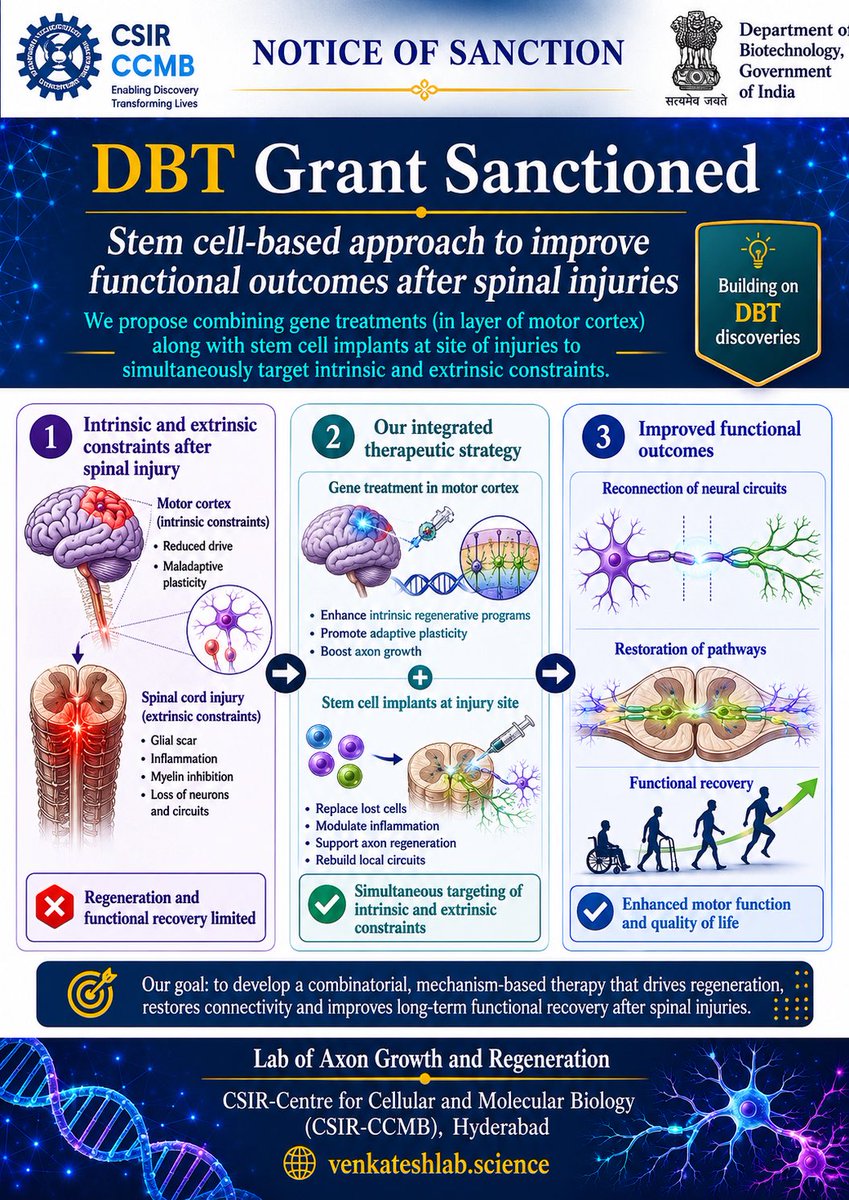
We’re looking for a 1 year (not 6 month) Dissertee for our funded stem cell project! If you’re interested check out CCMB DRTP program https://t.co/W8CfhKWJZk. Full disclosure- there’s a fee associated with this. But the payback is 👌🏼esp if you’re looking to do a PhD right after.
We made it to the 1% preprints of @qedScience !!! Only 2 from 🇮🇳 and one is @Yogeshsahu2030’s preprint! I’ve always said geographical bias exists in peer review and total blinding would give us the review we actually deserve. Now I have receipts to back it up! Curious who else made the cut? Check out https://t.co/4lolAsAuCw
We are looking for 2 Dissertees (Start date July 2026- July 2027) and 1 Project-based trainee (1 yr) for exciting projects at the intersection of Stem cell therapy, Gene therapy, and Epigenetics! We will not accept 6-month trainees whatsoever, so pls don't email!
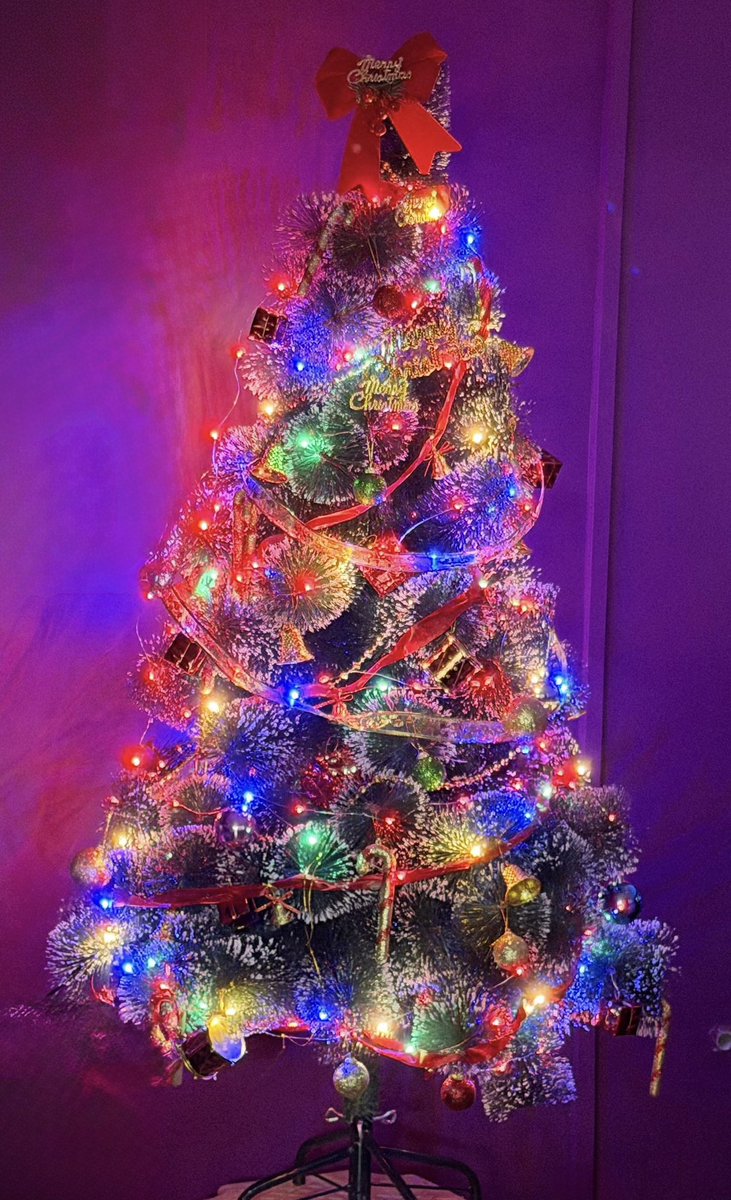
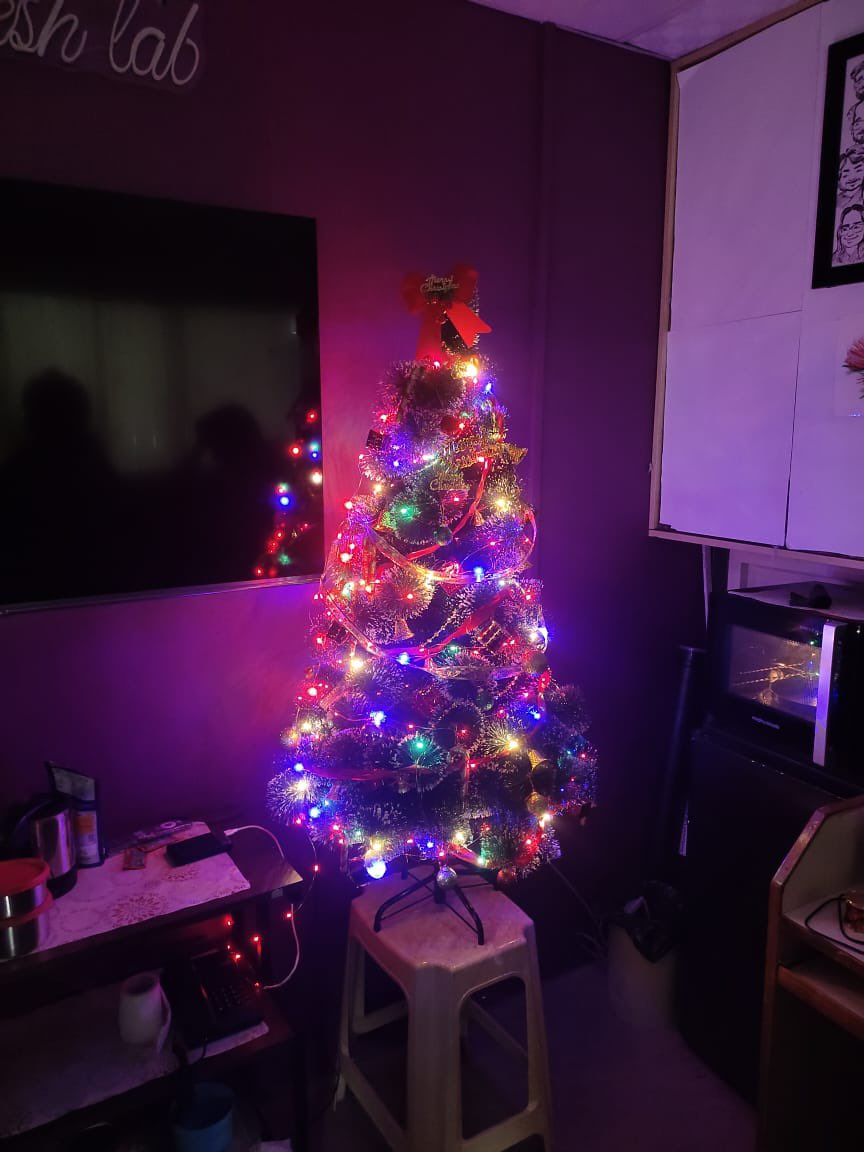
Ok our Lab tree 🌲 is up so Xmas season has officially set in our lab 🎄🎅🏻 First tree decoration for @TheLostTAD , @dhanuush_ , @Athulnarayanps and @AarthiSukumar27 ❤️ missing all lab alum this day, one of the fav days in lab for everyone ❤️❤️
Take two cells and place them side by side. Both cells have the same genome. And yet, oddly enough, they behave in different ways. They divide at different times and their RNA levels are distinct.
Now let’s go one step further. Take those same two cells. But this time, imagine that they have not only the same genome, but completely identical molecules at identical concentrations. Will these two cells behave in the same way?
The answer is no.
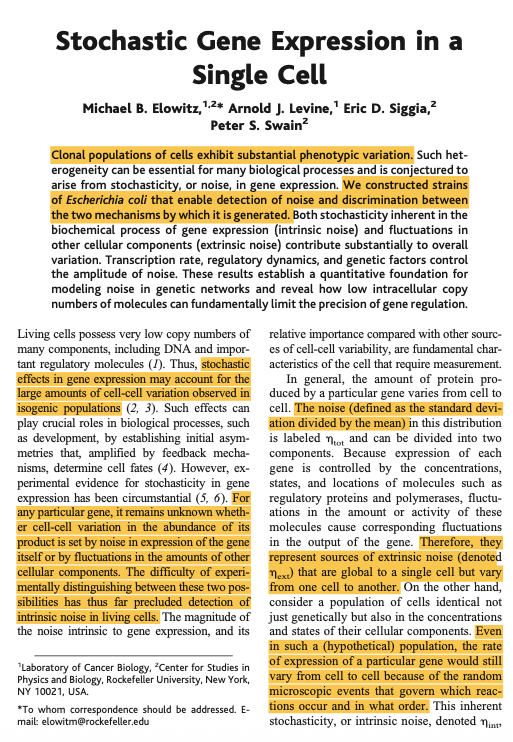
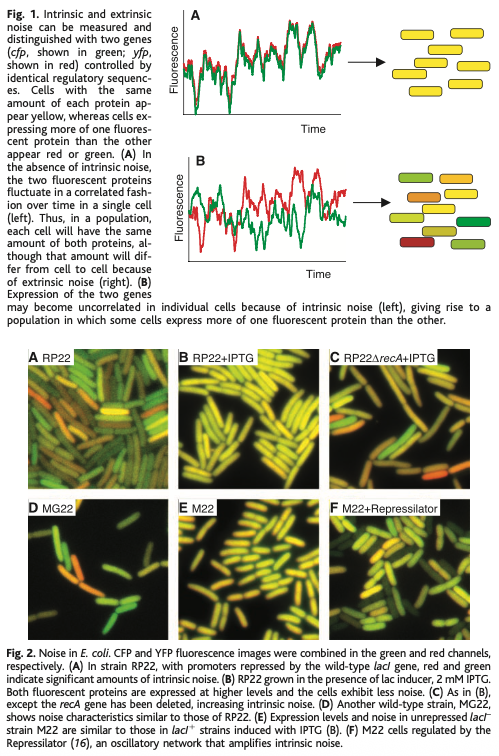
This is because there are two types of "noise" inside of living cells; intrinsic and extrinsic. In the first example, the two cells act differently because of subtle differences in their gene levels. Not all genes are expressed at the same time or in the same amount, and this leads to slight differences. This is extrinsic noise, because it is “global to a single cell” but varies “from one cell to another.”
In the second example, which is so statistically unlikely as to be basically impossible, the two cells would still have different gene expression patterns “because of the random microscopic events that govern which reactions occur and in what order.” This is intrinsic noise or stochasticity; it is an inalienable part of biology.
I’m pulling these quotes from one of my all-time favorite papers, called “Stochastic Gene Expression in a Single Cell.” The first author is @ElowitzLab (of synthetic biology fame) and it was published in August 2022. It’s worth reading.
For this paper, Elowitz & co. designed a simple experiment to separate intrinsic and extrinsic noise in a cell. Their goal was measure each source of noise to figure out which one dominates in different scenarios, like exposure to IPTG or the addition of a plasmid. So here’s what they did:
First, they took E. coli cells and inserted two genes into the genome; one encoding a fluorescent cyan protein, and another encoding a fluorescent yellow protein. Each gene had the same promoter, and was placed equidistant from the genome’s origin of replication (but on opposite sides.)
Next, they grew these cells in LB broth and photographed them using a microscope with color filters. The brightness of each color, in each cell, was quantified.
If the variability between different E. coli cells stems from shared cellular conditions (like ribosome levels or extrinsic noise), then both colors in a single cell would fluctuate together. If the variability instead arises from random molecular events (intrinsic noise), then even within the same cell, the cyan and yellow levels would differ.
If you plot these changes out on a scatterplot, then you can literally decode which “signals” or “triggers” are dominated by intrinsic or extrinsic noise, and by how much.
This is a “beautiful experiment” because the experiment is so simple, yet it retrieves a huge amount of information. All they did was put two genes into an E. coli cell at symmetrical locations in the genome! And from that alone, they deconvoluted noise and its origins.
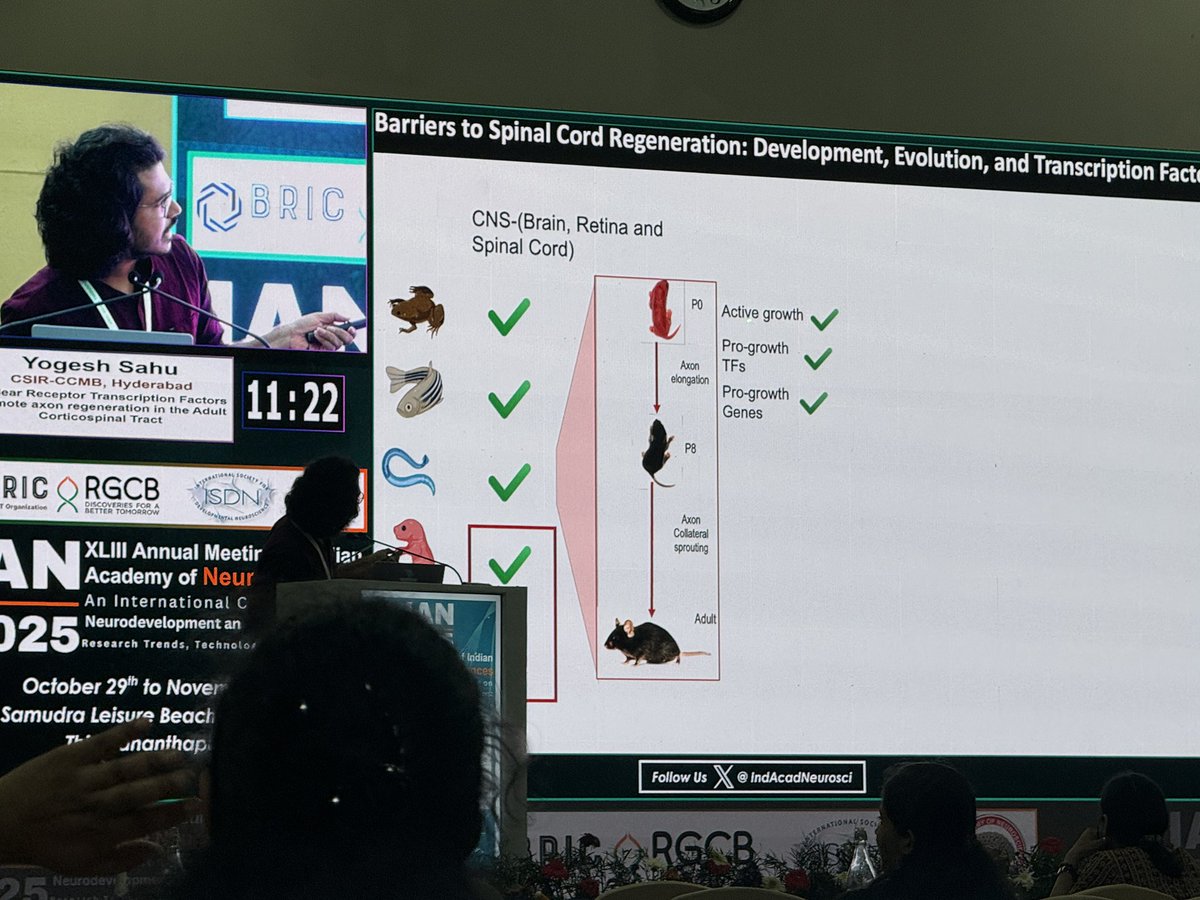
Mentor milestone 2. @Yogeshsahu2030 my first PhD student, summarizes his recent preprint as a talk @IndAcadNeurosci. When the lab was months old, he took a chance and came onboard as the 1st student. Happy to say the experiment is going well for both parties 👏🏼 congrats Yogesh!
So happy that our 3rd preprint of the year is now out! https://t.co/U55knbSwDb led by our postdoc @manoj290991, we develop an automated method for growth measurements using a deep learning framework. 10x Faster✅ accurate ✅ reproducible ✅ demo video
👇🏼👇🏼
Last year, 3 trainees flew out from our lab to start their PhDs. As we begin prepping the next cohort, I thought it might be helpful to write it all down somewhere. If you're considering doing a PhD, deciding whether to, or have decided and need more clarity, follow along! See👇
In a month, we will have two Project Associate positions opening up in our lab! We are looking for folks with 1 yr experience in Molecular Work, Mammalian Cell Culture & Animal Handling. Exp. w/ ordering and indenting +++ Email [email protected] ONLY if you have the above 👆
🚨🚨Dropping our 2nd V-Lab preprint, this time on work led by @Yogeshsahu2030 🥳! We identify 2 novel regulators of CNS axon regeneration post spinal injuries in 🐭 and dive into the underlying Mol.mechanisms. Incredibly proud of the whole team (tagged). https://t.co/28HEYAA3SD