@gift_fash_flair@ugo_nwokolo_ This is powerful, Ugo!
Not everybody will see the vision at the beginning some will laugh, some will doubt, but the results will silence them all
Gemini 3.1 Pro has arrived 🚀
We are beginning to roll it out within Gemini CLI. You will see gemini-3.1-pro-preview appear via /model once you have access.
It may take a few days for the roll out to reach every single user.
If you are using our model router feature (Auto), Gemini 3.1 Pro will start being used as the 3 Pro model.
For the best experience upgrade to the v0.29.4 release.
Excited to see what everyone builds 💎
I think it must be a very interesting time to be in programming languages and formal methods because LLMs change the whole constraints landscape of software completely. Hints of this can already be seen, e.g. in the rising momentum behind porting C to Rust or the growing interest in upgrading legacy code bases in COBOL or etc. In particular, LLMs are *especially* good at translation compared to de-novo generation because 1) the original code base acts as a kind of highly detailed prompt, and 2) as a reference to write concrete tests with respect to. That said, even Rust is nowhere near optimal for LLMs as a target language. What kind of language is optimal? What concessions (if any) are still carved out for humans? Incredibly interesting new questions and opportunities. It feels likely that we'll end up re-writing large fractions of all software ever written many times over.
I've never felt this much behind as a programmer. The profession is being dramatically refactored as the bits contributed by the programmer are increasingly sparse and between. I have a sense that I could be 10X more powerful if I just properly string together what has become available over the last ~year and a failure to claim the boost feels decidedly like skill issue. There's a new programmable layer of abstraction to master (in addition to the usual layers below) involving agents, subagents, their prompts, contexts, memory, modes, permissions, tools, plugins, skills, hooks, MCP, LSP, slash commands, workflows, IDE integrations, and a need to build an all-encompassing mental model for strengths and pitfalls of fundamentally stochastic, fallible, unintelligible and changing entities suddenly intermingled with what used to be good old fashioned engineering. Clearly some powerful alien tool was handed around except it comes with no manual and everyone has to figure out how to hold it and operate it, while the resulting magnitude 9 earthquake is rocking the profession. Roll up your sleeves to not fall behind.
New post: nanochat miniseries v1
The correct way to think about LLMs is that you are not optimizing for a single specific model but for a family models controlled by a single dial (the compute you wish to spend) to achieve monotonically better results. This allows you to do careful science of scaling laws and ultimately this is what gives you the confidence that when you pay for "the big run", the extrapolation will work and your money will be well spent. For the first public release of nanochat my focus was on end-to-end pipeline that runs the whole LLM pipeline with all of its stages. Now after YOLOing a few runs earlier, I'm coming back around to flesh out some of the parts that I sped through, starting of course with pretraining, which is both computationally heavy and critical as the foundation of intelligence and knowledge in these models.
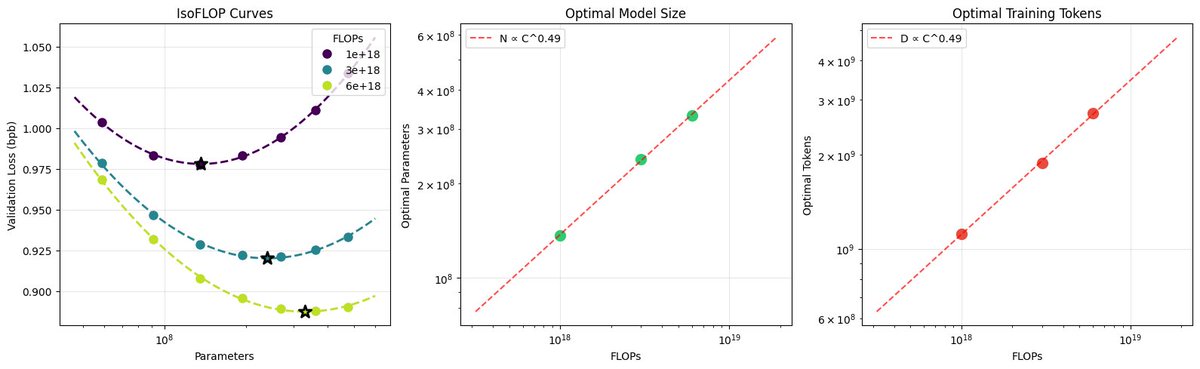
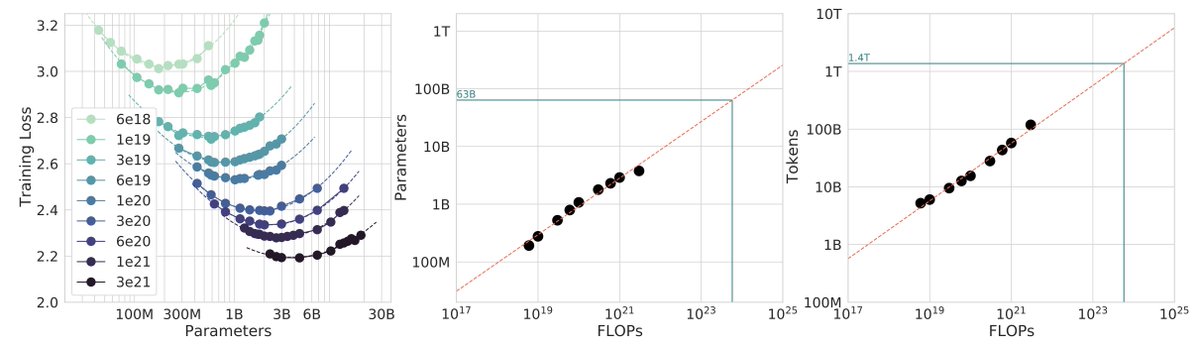
After locally tuning some of the hyperparameters, I swept out a number of models fixing the FLOPs budget. (For every FLOPs target you can train a small model a long time, or a big model for a short time.) It turns out that nanochat obeys very nice scaling laws, basically reproducing the Chinchilla paper plots:
Which is just a baby version of this plot from Chinchilla:
Very importantly and encouragingly, the exponent on N (parameters) and D (tokens) is equal at ~=0.5, so just like Chinchilla we get a single (compute-independent) constant that relates the model size to token training horizons. In Chinchilla, this was measured to be 20. In nanochat it seems to be 8!
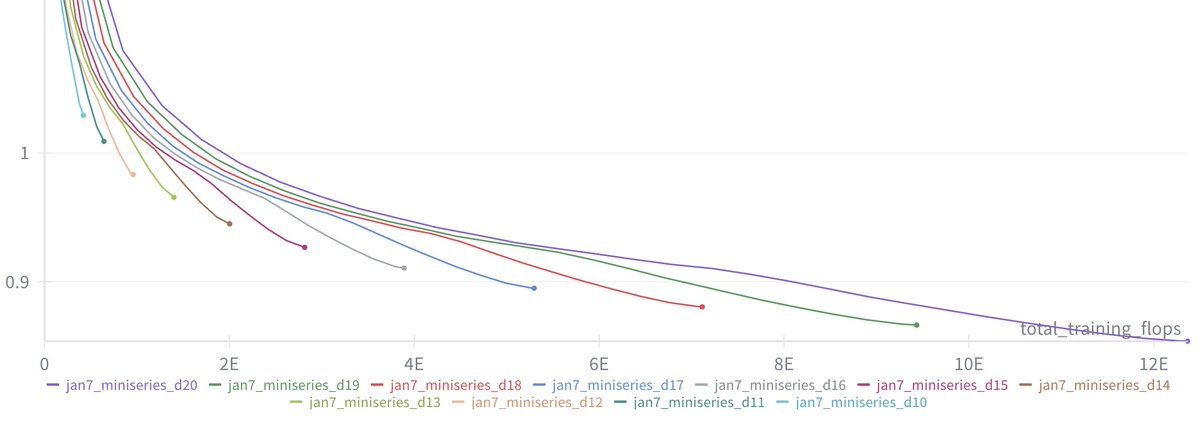
Once we can train compute optimal models, I swept out a miniseries from d10 to d20, which are nanochat sizes that can do 2**19 ~= 0.5M batch sizes on 8XH100 node without gradient accumulation. We get pretty, non-itersecting training plots for each model size.
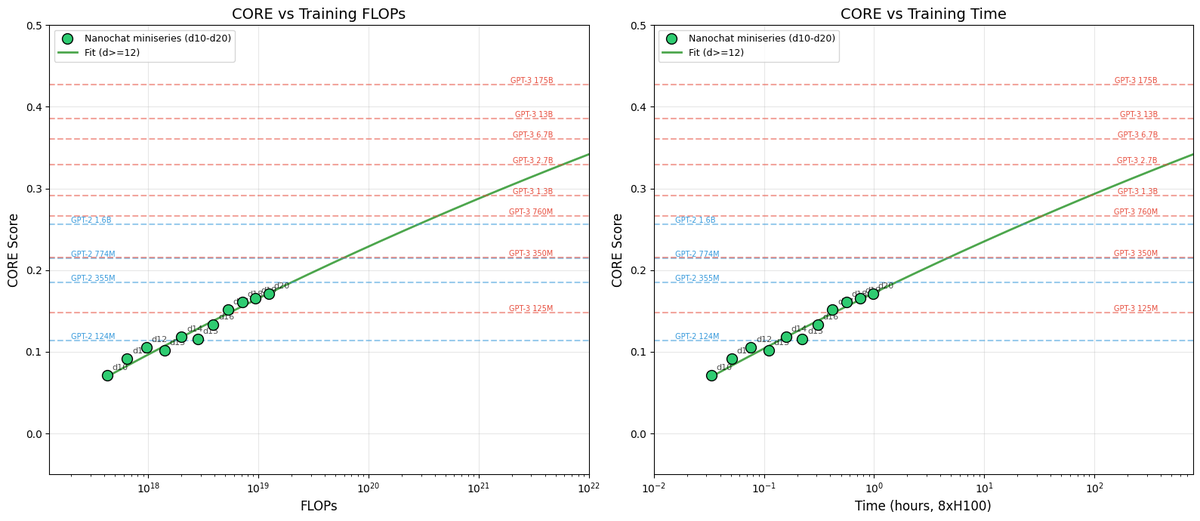
Then the fun part is relating this miniseries v1 to the GPT-2 and GPT-3 miniseries so that we know we're on the right track. Validation loss has many issues and is not comparable, so instead I use the CORE score (from DCLM paper). I calculated it for GPT-2 and estimated it for GPT-3, which allows us to finally put nanochat nicely and on the same scale:
The total cost of this miniseries is only ~$100 (~4 hours on 8XH100). These experiments give us confidence that everything is working fairly nicely and that if we pay more (turn the dial), we get increasingly better models.
TLDR: we can train compute optimal miniseries and relate them to GPT-2/3 via objective CORE scores, but further improvements are desirable and needed. E.g., matching GPT-2 currently needs ~$500, but imo should be possible to do <$100 with more work.
Full post with a lot more detail is here:
https://t.co/na8zVLqWLf
And all of the tuning and code is pushed to master and people can reproduce these with scaling_laws .sh and miniseries .sh bash scripts.
The internet is your classroom, your workplace, and your launchpad.
Age, background, and location no longer define what you can build your actions do.
Start. Learn. Build.
From Pain Point to Powerhouse: Bildup AI Raises $400K to Redefine Learning in Africa
We started with a pain point. Now we’re building a movement.
I’m proud to share that Bildup AI has closed an oversubscribed $400K angel round — a bold vote of confidence in our mission to transform how Africa learns and builds.
This is not just a funding milestone.
It’s a signal that the world is paying attention to what we’re building — a platform that delivers personalized, purpose-driven, AI-powered learning at a fraction of the cost and time of traditional education.
We’re scaling our team.
We’re expanding to Abuja and Lagos with new AI Learning Centres.
And we’re doubling down on our commitment to help every young African discover their path, build real skills, and shape the future.
To every investor who believed early — thank you.
To every learner who trusted us — we’re just getting started.
Let’s stop raising job seekers.
Let’s start raising builders.
Let’s Bildup the future.
Bildup AI...empowered to make a difference.
Read the full story on Techpoint: https://t.co/bxsQTtWZQr
#BildupAI #AIStartup #EdTech #AIforAfrica
While the World Builds, We Gossip: A Call to Reclaim Nigeria’s National Focus – Part 2
Every morning, as students walk to school and return home, they pass a landscape that silently teaches them what we value.
They see hotels, bars, filling stations, shopping plazas, provision stores, and furniture showrooms—structures built for consumption, not creation.
Not one science lab. Not one innovation hub. Not one space that whispers, “You can build something here.”
And when they come online, the story doesn’t change.
Their screens are flooded with gossip, comics, celebrity drama, and endless distractions.
Rarely do they stumble upon conversations about AI, biotech, or the breakthroughs shaping the future of humanity.
This is not just about what they see.
It’s about what they begin to believe is possible.
And if we don’t change the narrative, we are silently telling them: “This is all there is.”
And somehow, we think a miracle will happen.
That they will magically become productive.
That they will somehow lead innovation.
Make no mistake: we are not preparing the next generation. We are betraying them. And the nation will pay a heavy price if we do not act now.
At Bildup AI, we are not just building software. We are building a lifeline.
A pathway. A promise.
Every day, our team sacrifices long nights, relentless iteration—not because it’s easy, but because it’s necessary.
We believe that every Nigerian child deserves more than gossip and guesswork.
They deserve mastery.
They deserve relevance.
They deserve a future where they don’t just consume innovation—they create it.
Let’s talk about:
- AI literacy
- Scientific breakthroughs
- Local innovation
- Youth empowerment
- National transformation
Let’s make these the headlines.
Let’s make these the trends.
Let’s make these the heartbeat of our nation.
To every parent, educator, school owner, and visionary reading this:
- Sign up your child on Bildup AI
- Talk to your school about integrating our platform
- Partner with us to open more AI learning centres across Nigeria
- Start conversations that build, not break
Let’s not wait for the future to arrive. Let’s build it together.
Let’s build up Nigeria.
Bildup AI… empowered to make a difference.
#bildupai #AIStartup #Education #NextGenAI
The Cost of Late Exposure: Why Nigeria Must Rethink How We Prepare Our Youth for the Future
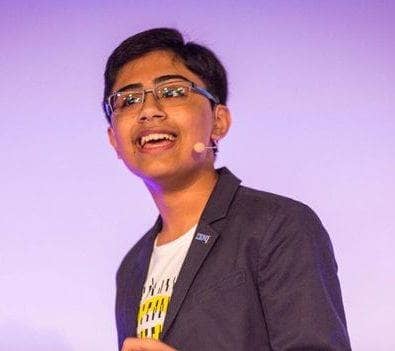
Look at the image below.
That’s Tanmay Bakshi—an AI prodigy who started working with IBM Watson at just 11 years old.
By 14, he was speaking at global summits, publishing books, and building real-world solutions.
Not after graduation.
Not after NYSC.
At 11.
Now pause.
Look around.
Think about the average Nigerian teenager.
What kind of exposure are we giving them?
In Nigeria, we’ve normalized a dangerous delay.
We wait until after secondary school.
After JAMB.
After university.
After NYSC.
Then we ask young people to start thinking critically about their future.
By then, many are already disillusioned.
They’ve spent years memorizing outdated content, chasing grades, and surviving an academic calendar so packed it leaves no room for exploration, creativity, or work experience.
We must say it clearly:
This is a great error.
In many parts of the world, teenagers are building apps, interning at startups, and contributing to open-source projects.
They’re not just studying—they’re working while they study.
And that’s why they’re ready.
In Nigeria, we treat work and study like oil and water.
We overpack academic calendars, discourage internships, and stigmatize alternative learning paths.
But here’s the truth:
If we don’t normalize work and study, we will never build a workforce-ready youth.
To be continued...
Let's build up Nigeria. Bildup AI...empowered to make a difference
@bod_zsn @PMTNigeria
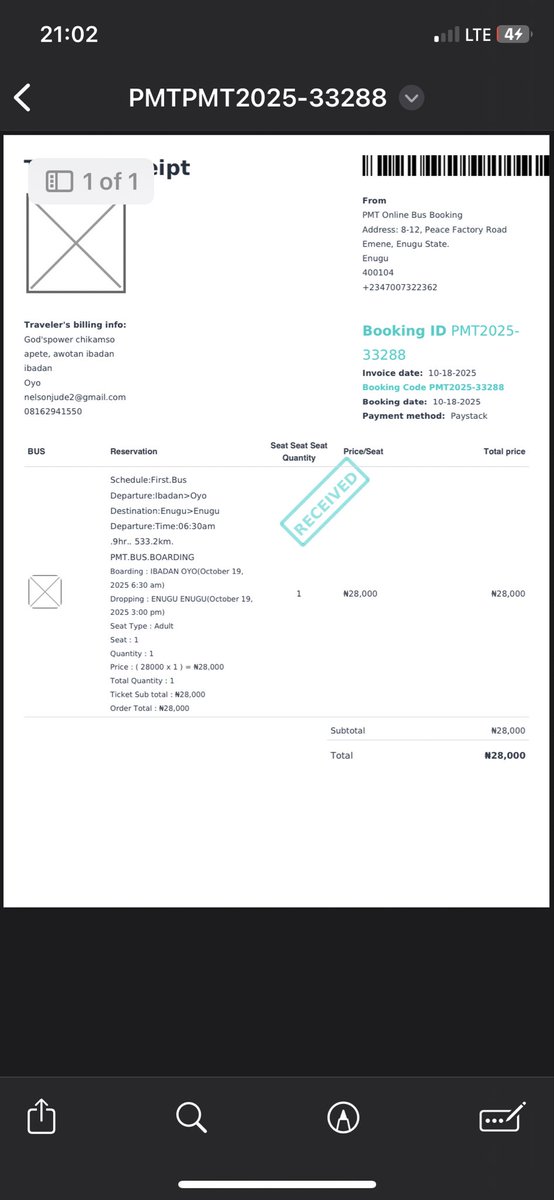
My brother booked you guys for his journey from Ibadan to Enugu today scheduled for 6:am. First you guys told them the first bus was bad and they had to wait till 11am to fix the bus before leaving Ibadan. It’s 9pm now and at Benin and you guys left them stranded.
@Prince_NedNwoko @PMTNigeria
My brother booked you guys for his journey from Ibadan to Enugu today scheduled for 6:am. First you guys told them the first bus was bad and they had to wait till 11am to fix the bus before leaving Ibadan. It’s 9pm now and at Benin and you guys left them stranded.
@PMTNigeria You collected money from people and told them they can’t sleep in the park. You didn’t provide any form of accommodation for the passengers you messed up their plans. @PMTNigeria
@PMTNigeria My brother booked you guys for his journey from Ibadan to Enugu today scheduled for 6:am. First you guys told them the first bus was bad and they had to wait till 11am to fix the bus before leaving Ibadan. It’s 9pm now and at Benin and you guys left them stranded.
I want to thank the management team of Adorable British College Enugu, led by Mr. Chris Terry, for making a significant contribution to transforming the education system in Africa by being the first school to formally integrate Bildup AI into their classrooms. This is a win for Nigeria and Africa. A great school with brilliant students and excellent teachers.
We just lunched Nigeria's first indigenous education AI! Built with vision capabilities, real-time video generation & audio communication.
So excited to be part of the team, and also the lead AI engineer who pioneered this.
https://t.co/4XfwDhUSvE