Most people only notice: ChatGPT, Claude, Gemini, DeepSeek, Agents, etc....
They miss something BIG,
Like Gigga BIG
$TAO:
The AI base layer.
The grid everything plugs into.
The Settlment Layer
Routing models.
Routing compute.
Routing intelligence.
Routing economic incentives.
In 1998, nobody realized that the internet would become the economy.
JUST IN: Tim Tebow shows horrific map of New York showing every location a person has downloaded CP over the past month, calls for more funding for law enforcement.
"This year, somewhere between 300k to a million people will be trafficked in the US."
"When you defund [the police], you're not actually caring for these boys and girls."
"We are the number one buyer of [CP] for boys and girls around the world. America is."
"In peer-to-peer sharing of this information, we're third worst in the world."
"On our hearts is to get this message out to be able to make a change and support our law enforcement and task forces that are working on this."
"There are some freaking heroes that are fighting us every single day."
God bless him.
On @theallinpod, @chamath spoke about Peter Thiel predicting socialism and student loan forgiveness:
"This is the first time in years where I've now become sympathetic to student loan forgiveness.
"We have Palantir today saying they're not going to hire from college anymore."
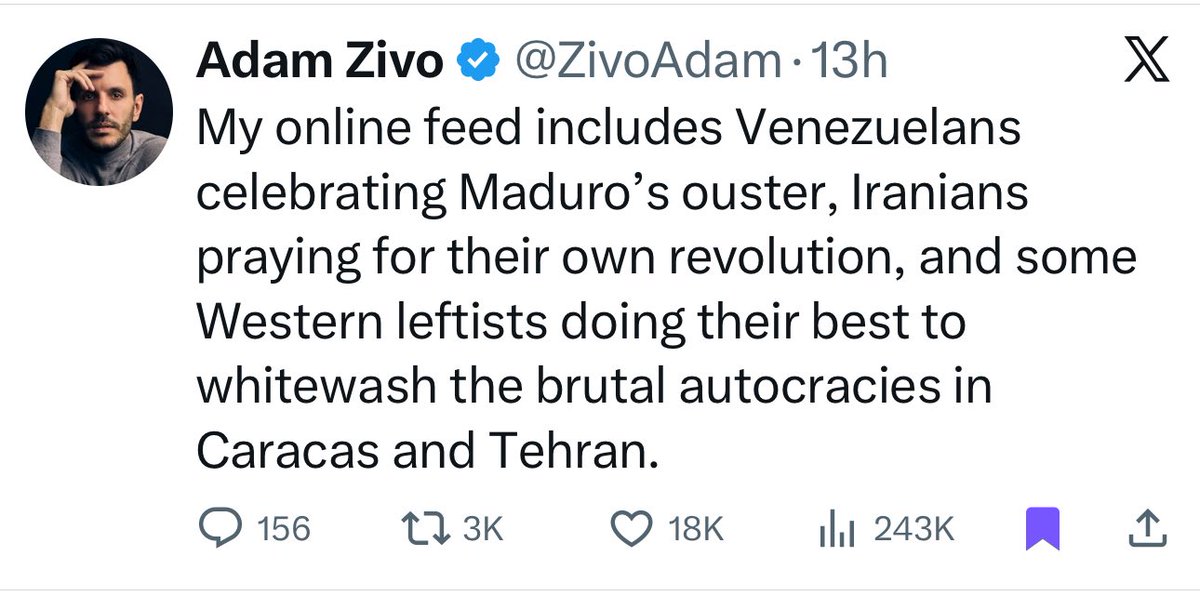
Christians pray for people to find Christ and some traditions of Christianity evangelicalize. If this is news to some people, then they need to spend more time learning about Western civilization. This isn’t exactly hidden information.
I get why people are skeptical. Most crypto projects chase hype.
But Bittensor $TAO is different it’s aiming at a problem that’s about to define the decade.
We’re heading toward an AI monopoly that makes Big Tech look tame.
Right now:
Only 3–4 companies can train frontier models:
OpenAI, Google DeepMind, Anthropic, Meta.
Training costs are exploding.
GPT-4: $100M.
GPT-5: $1B.
By 2030, $10B+ runs.
That means only 2–3 entities.
Will control all meaningful AI.
And that’s where the real danger starts:
1. Corporate Alignment Problem
Google decides what’s “true.” No competition. No alternative viewpoints.
2. Innovation Gatekeeping
You want AI for research? Pay their price, follow their rules, accept their limits.
3. Data Slavery
We train their models for free, they own the value.
4. Single Points of Failure
One AWS outage. One regulator. And half the world’s AI goes dark.
Bittensor exists as infrastructure insurance. It doesn’t need to be perfectly decentralized just decentralized enough to:
• Prevent single-entity control
• Enable permissionless innovation
• Distribute value fairly
Think Linux vs Windows. Linux didn’t win the market, but it forced competition, powered critical infrastructure, and gave the world a real alternative.
Bittensor is the Linux of AI.
Real use cases are already emerging:
– Sovereign AI for nations too small to build their own.
– Specialized models Big Tech ignores.
– Uncensorable research.
– Economic participation for contributors GPUs, data, validation work paid in $TAO.
Without Bittensor by 2030:
– 2–3 companies own intelligence itself
– Prices rise
– Innovation is permissioned
– Nations get locked out
– “AI safety” becomes corporate policy
With Bittensor:
– Constant competition
– Open innovation
– Shared infrastructure
– Value flows to contributors
– Multiple safety approaches
$TAO it’s the coordination mechanism. No incentives, no network. No network, back to monopolies.
Bittensor might fail. It’s hard tech. But the alternative total corporate control of intelligence is worse.
The question isn’t “Will Bittensor beat Google?”
It’s “Do we really want to live in a world where Google has no competition?”
We’ve seen this movie before.
Oil. Banks. Big Tech.
This time, it’s intelligence itself.
And that’s why I think $TAO matters.