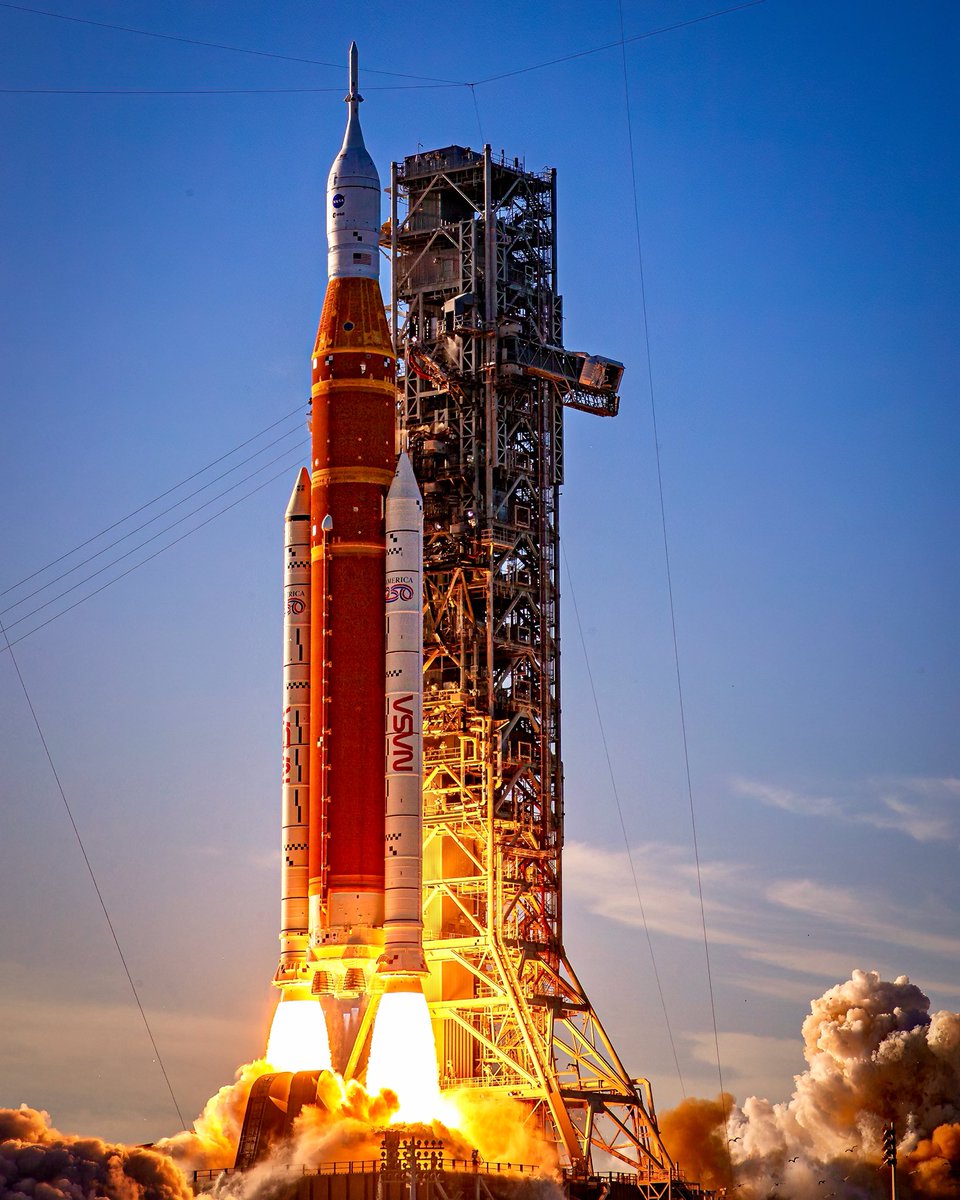
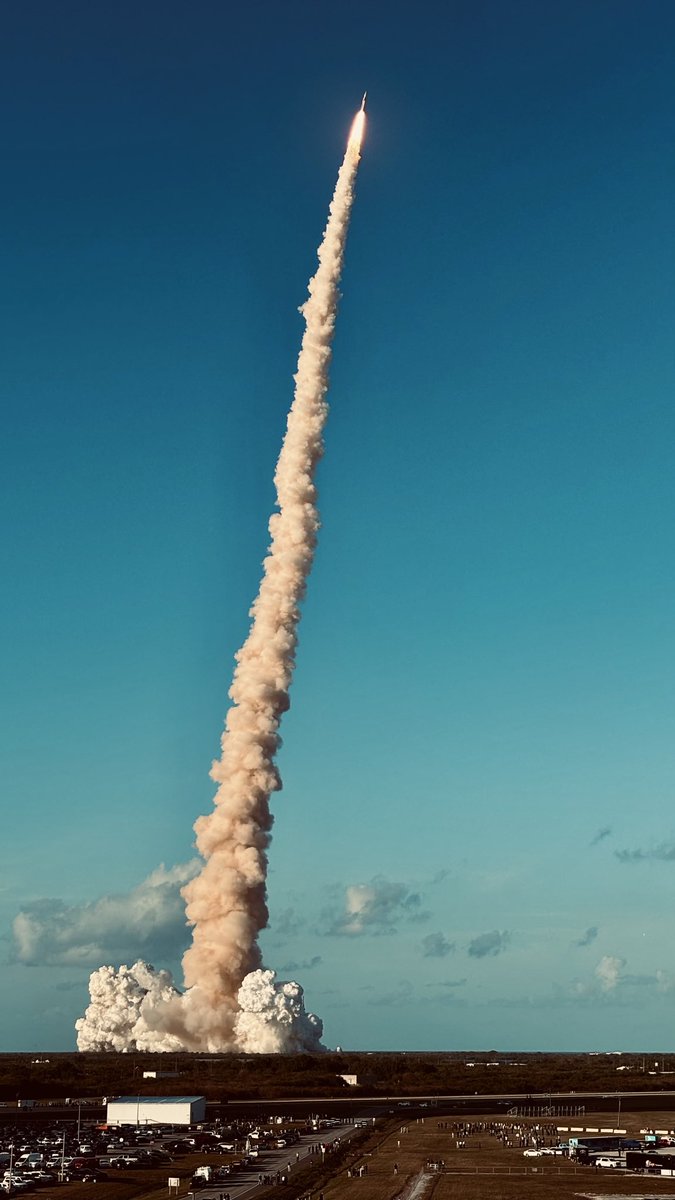
This is the shot you can’t get from the press site. This camera was sitting a few football fields from the SLS rocket at Pad 39B for days before launch, baking in the Florida sun, surviving rain, humidity, and whatever else the Cape threw at it. No photographer behind the viewfinder. Just a camera, a sound trigger, and a bet.
The way pad remotes work: you set your camera up days in advance, dial in your composition, lock everything down, and walk away. You don’t touch it again until after the launch. The shutter fires on sound activation
with a @MiopsTrigger smart+ trigger. With SLS, the four RS-25 engines ignite six seconds before the solid rocket boosters, so the camera is already firing before the vehicle even leaves the pad. You get home, pull the card, and find out if you nailed it or if a bird landed on your lens two days ago and left your a present and you got 400 photos of soemthing crappy.
There’s no formula for protecting your gear this close. Some photographers build wooden boxes with doors that pop open. Some use plastic bags and tape. Some do plastic or metal barn door rigs on hinges. I tend to leave mine open just in plastic rain covers because boxes limit my composition and setup time, but that means your cameras are more exposed to the elements and whatever energy and debris comes off the pad. You’re basically gambling a camera body every time you set one.
That’s what I love about this genre. There’s no playbook. You make it up as you go. Every time is an adventure.
📸 credit: me for @SuperclusterHQ - Artemis II pad remote | ~1,000 ft from Pad 39B | Kennedy Space Center
@RedCollie1 Going to set this up in our labs @RedCollie1 and try and replicate this if you get stuck for parts dm us! Literally building a supply chain database for parts
@TheProjectUnity But if those other entities are popping in and out of other dimensions that would point to a higher level of Physics which we still need to get our heads around and is totally plausible
@TheProjectUnity Totally not true Jay! Radio Astronomy surveys show the matter is visible! Also infrared and UV wavelengths surveys, what we call multiwavelength surveys, show a different story of where the matter exists.
@dennis_asberg Perhaps Earth Observation data can help verify what the phenomenon was that you encountered, if it was heat or smoke based that would show up in the satellite data but if it id Godzilla we are not sure how to verify that!
I highly recommend this article for anyone who still thinks that LLMs are still "only predicting the next token". It's long and unsettling but worth the read.
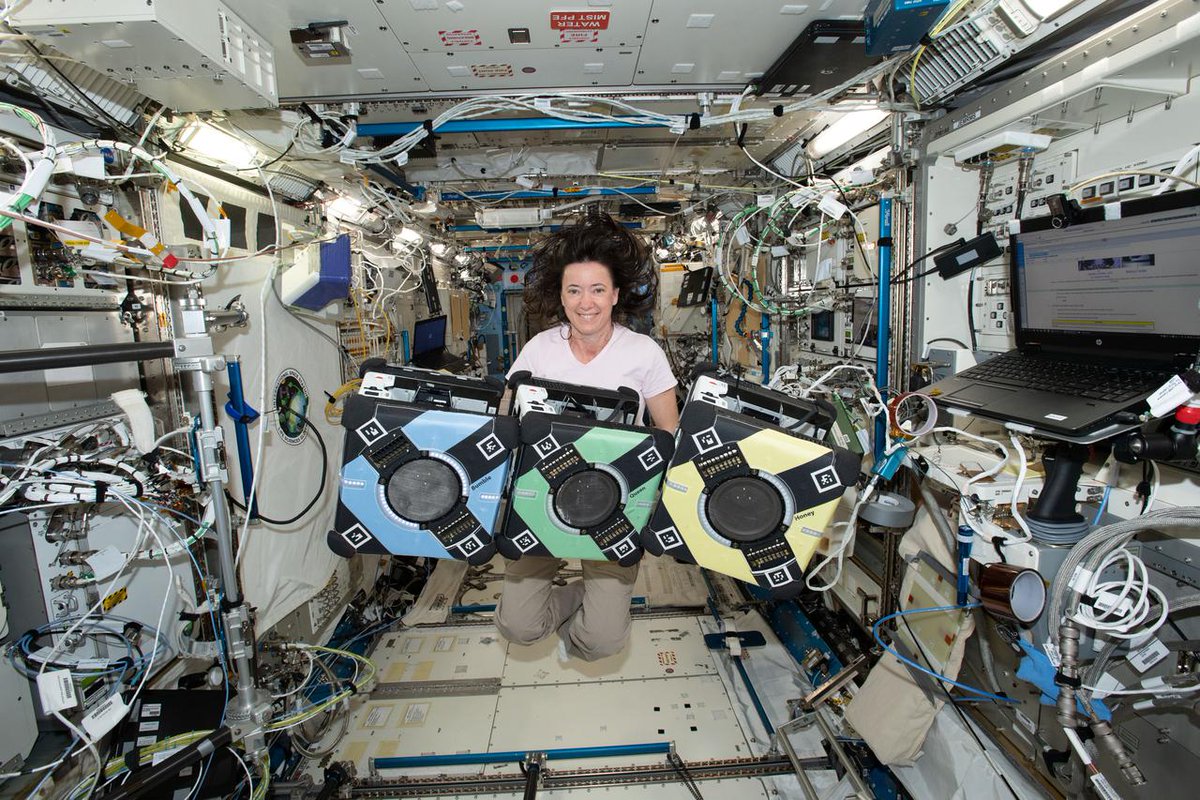
Buzz, buzz! Our Astrobee robots have been buzzing around the @Space_Station for six years!
From creating 3D maps to detecting and alerting astronauts about a simulated anomaly, the free-flying robots have marked multiple first-in-space milestones.
Discover what’s next:https://t.co/eXGzAgrEPv
@YannisTzortzis The human body can sense frequencies and spectra on many levels, and the Shumann Resonance has been off the scales this week due to the Sun's Coronal Hole right now!
@RedCollie1 Most astronomers unfortunately loose their research positions if they think outside the box and go against the establishment, including some of our team at Artemis who had a similar experience, we've had some amazing new crop circles pop this year in the UK with new messages!
Beatriz Villarroel is going viral because there is data strongly suggesting that the correlation between the observed light transients in the sky and UFO activity is not a FLUKE. This was the article no journal wanted to touch because of stigma (i.e CIA):
https://t.co/rTxevv6w8K