Dear @WhiteHouse, my name is Rodney Smith Jr., founder of Raising Men & Women Lawn Care Service in Huntsville, Alabama. Through our 50 Yard Challenge, over 6,000 kids across the country have signed up to mow free lawns for the elderly, disabled, veterans, active-duty military, first responders, and single parents. With America celebrating its 250th birthday this year and me also being born on July 4th, I wanted to humbly ask if a few kids from our program and myself could travel to Washington, D.C. to help mow the White House lawn for this historic celebration.
More than anything, I want these kids to see how a simple act of service something as ordinary as mowing a lawn for someone in need can lead to extraordinary places. What better lesson in community service than showing them that helping others can take them all the way to our nation’s capital? I’d also love to bring my American flag-themed mower in hopes that the President might sign it, so I can later auction it off and donate 100% of the proceeds to a nonprofit supporting veterans. It would be a once-in-a-lifetime opportunity to highlight the importance of service, patriotism, and the impact young people can have when they choose to make a difference. 🇺🇸
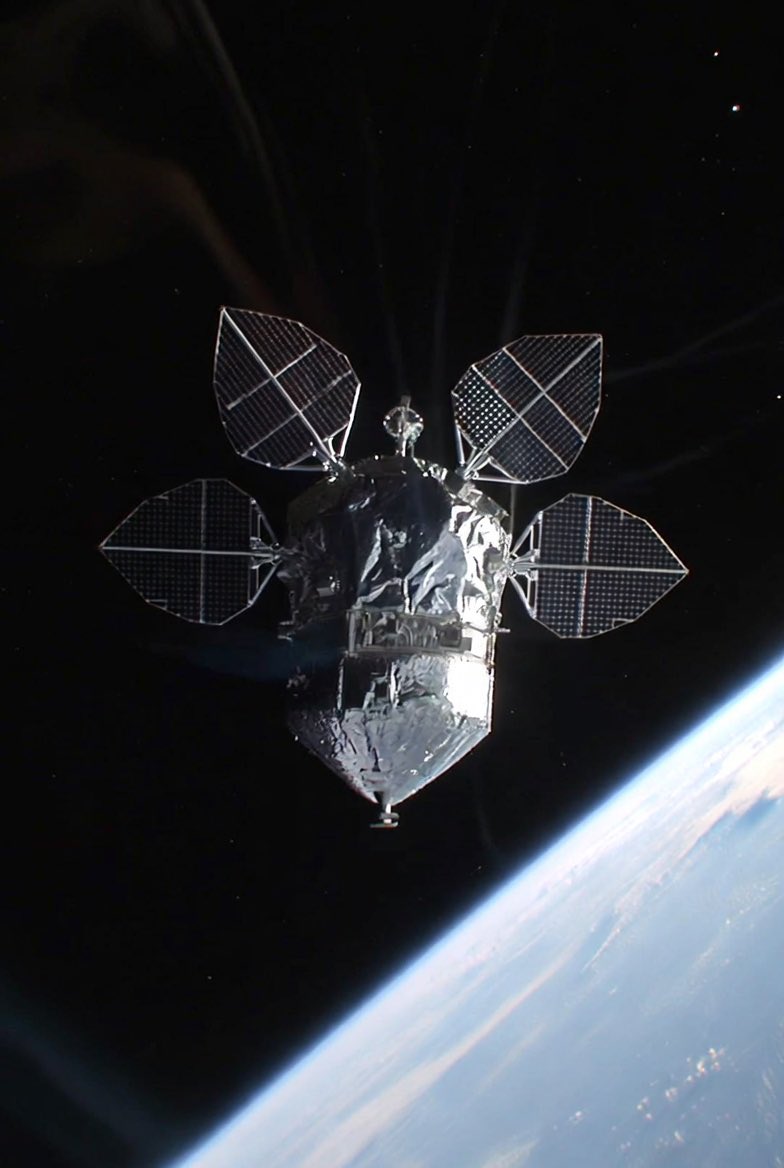
🚨 SPACEX JUST GOT FAA APPROVAL TO TEST ITS NEW “STARFALL” CAPSULES.
These are not regular reentry vehicles.
SpaceX’s new circular Starfall capsules are designed to bring up to 1,000 kg of payload back from orbit safely, repeatedly, and at scale.
They can launch on either Falcon 9 or Starship, perform in-space manufacturing, then reenter and splash down in the Pacific for rapid recovery.
Why this matters:
• Enables true commercial in-space manufacturing (microgravity + vacuum) that can be returned to Earth
• Could become a “proliferated successor” to the ISS for self-sustaining space industry
• Opens the door to rapid point-to-point cargo delivery from orbit to anywhere on Earth
• Directly competes with companies like Varda that have been flying similar missions on SpaceX rockets
The deeper implication is massive:
We are moving from “occasional experiments in space” to routine manufacturing and logistics in orbit.
If Starfall works at scale, companies could build factories in space, produce high-value materials that can’t be made on Earth, and ship them back down regularly all without needing a full space station.
This is one of the clearest steps yet toward a real, self-sustaining commercial space economy.
What do you think will in-space manufacturing finally become a serious industry, or is this still too early?
Follow for more frontier space and future technology.
We’re inside an interstellar cloud. This helps explain the uptick in asteroids and fireball impacts?
Radioactive Spacedust In Antarctic Ice Means We're Inside a Massive Spac... https://t.co/sG9BKAY921 via @YouTube
our knee can heal itself. It just needed Germany to hand it the blueprint.
Doctors in Stuttgart did something quietly radical. They built a gel that lets damaged joint cartilage rebuild itself, no implants, no metal, no major reconstruction.
It's called ChondroFiller liquid.
Here's how it works.
A surgeon injects the liquid into the damaged spot during a single minimally invasive arthroscopic procedure. Within 3 to 5 minutes, it hardens into a stable matrix, molding perfectly to the exact shape of the lesion.
Then the real magic starts.
That matrix becomes a scaffold. Your own repair cells migrate in from the surrounding tissue, multiply, and slowly transform into chondrocytes, the cells that actually build cartilage. Over the following months, your body replaces the gel with brand-new tissue grown from you.
No fibrin glue. No drilling into the bone.
This isn't a fringe experiment, either.
The device is made by Meidrix Biomedicals, developed alongside scientists at the Fraunhofer Institute for Interfacial Engineering and Biotechnology in Stuttgart. It's been CE-certified since its market launch in 2013 and has already been implanted in more than 20,000 patients worldwide.
The numbers back it up.
In one study of 26 patients with hip cartilage defects larger than 2 cm², 81% achieved good or excellent results. MRI scans confirmed significant healing in over 90% of cases.
One important caveat: it's built for small, focal cartilage defects, not advanced arthritis. Patients with severe osteoarthritis saw weaker results.
But for the right injury, this flips the script entirely.
Instead of replacing the joint, you give it the tools to repair itself.
Source: Meidrix Biomedicals / Fraunhofer Institute IGB, Stuttgart; clinical data via Kazinform News Agency