This post resonates so much. Nothing I can’t stand more than a program that just sits there spinning while I wait for a menu to open or a button to push. Pathetic on computers literally a million times faster than what’s pictured below.
UX latency is the most frustrating (lack of) advancement in computing over the last ~50 years.
IBM, way back in the 80s, found that user productivity shot up *exponentially* as system response time dropped. The "Doherty Threshold" was defined as ~400 milliseconds; the maximum amount of tolerable UX latency before interrupting user flow state.
It's unbelievable how many modern operating systems (*cough* win11) violate this threshold constantly.
Literally all you need to do as a Dev is pay attention. Add a "Doherty Threshold" to your test suite. There's so many different profiling tools, and especially with how good models are, really no excuse. Sure, some stalls are unavoidable, but that's when you pull out other UX tricks to at least give the illusion of responsiveness.
Crazy how much vintage computing hardware feels immeasurably more responsive despite having thousands of times less overall performance.
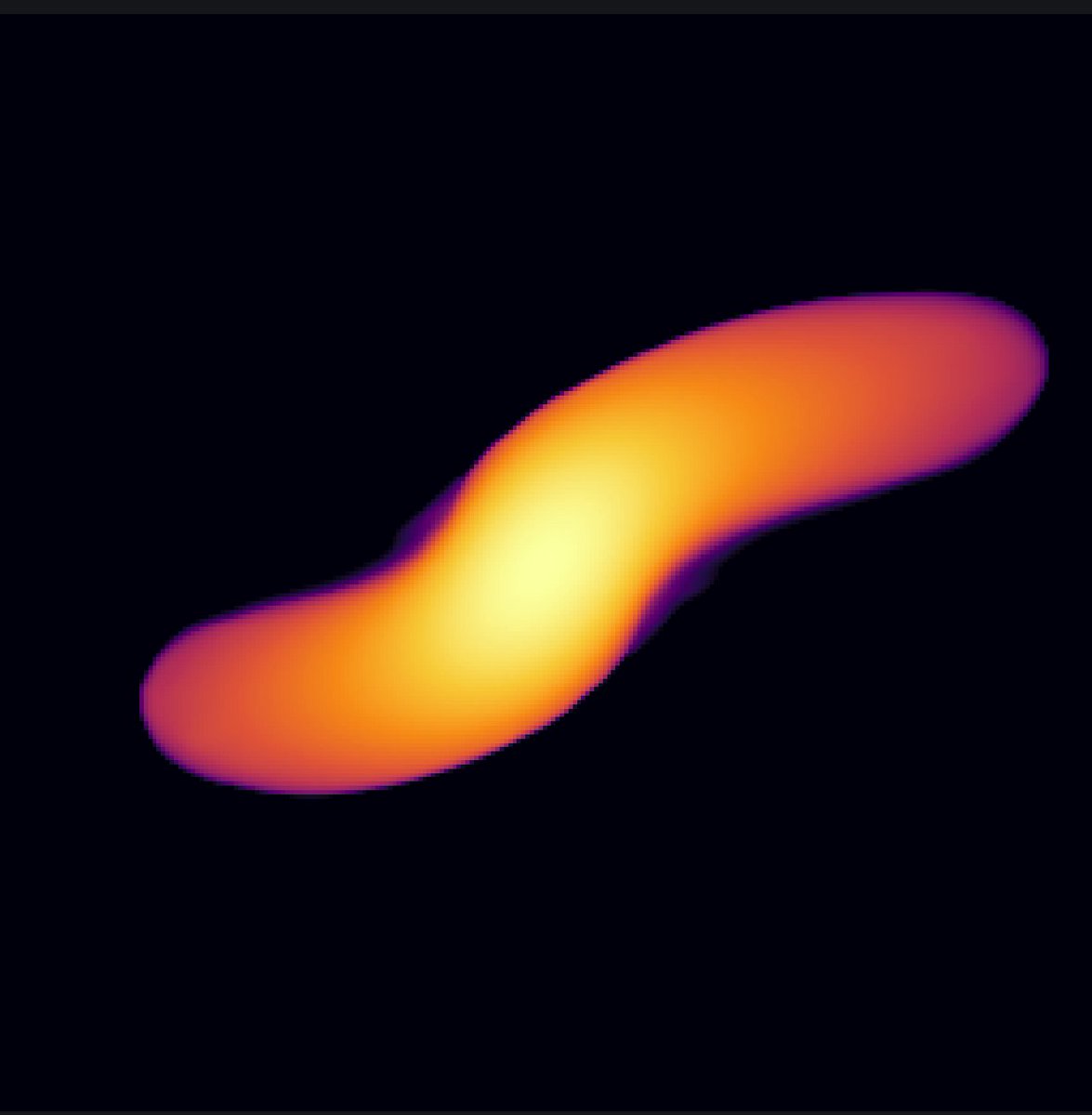
Adaptive mesh refinement has been added to Shaderous. This is running in real-time on a consumer-grade GPU. Can even run on your phone. Would have taken hours back in the day! https://t.co/z7F4p7Kjhy
Adaptive mesh refinement has been added to Shaderous. This is running in real-time on a consumer-grade GPU. Can even run on your phone. Would have taken hours back in the day! https://t.co/z7F4p7Kjhy
Back in the day I used to run this simulations on a local university cluster and a supercomputer administered by NASA, Pleiades. Now I can reproduce the same simulations (not even using adaptive mesh here), same resolution, on my consumer-grade 3080, in 1/100th the time.
This is completely wild. My PhD was studying the tidal disruptions of stars by supermassive black holes with 3D fluid simulations. Each simulation would take days to run. Thanks to Fable 5.2 I got the same simulations using GPU shaders in a web browser finishing in *minutes*.
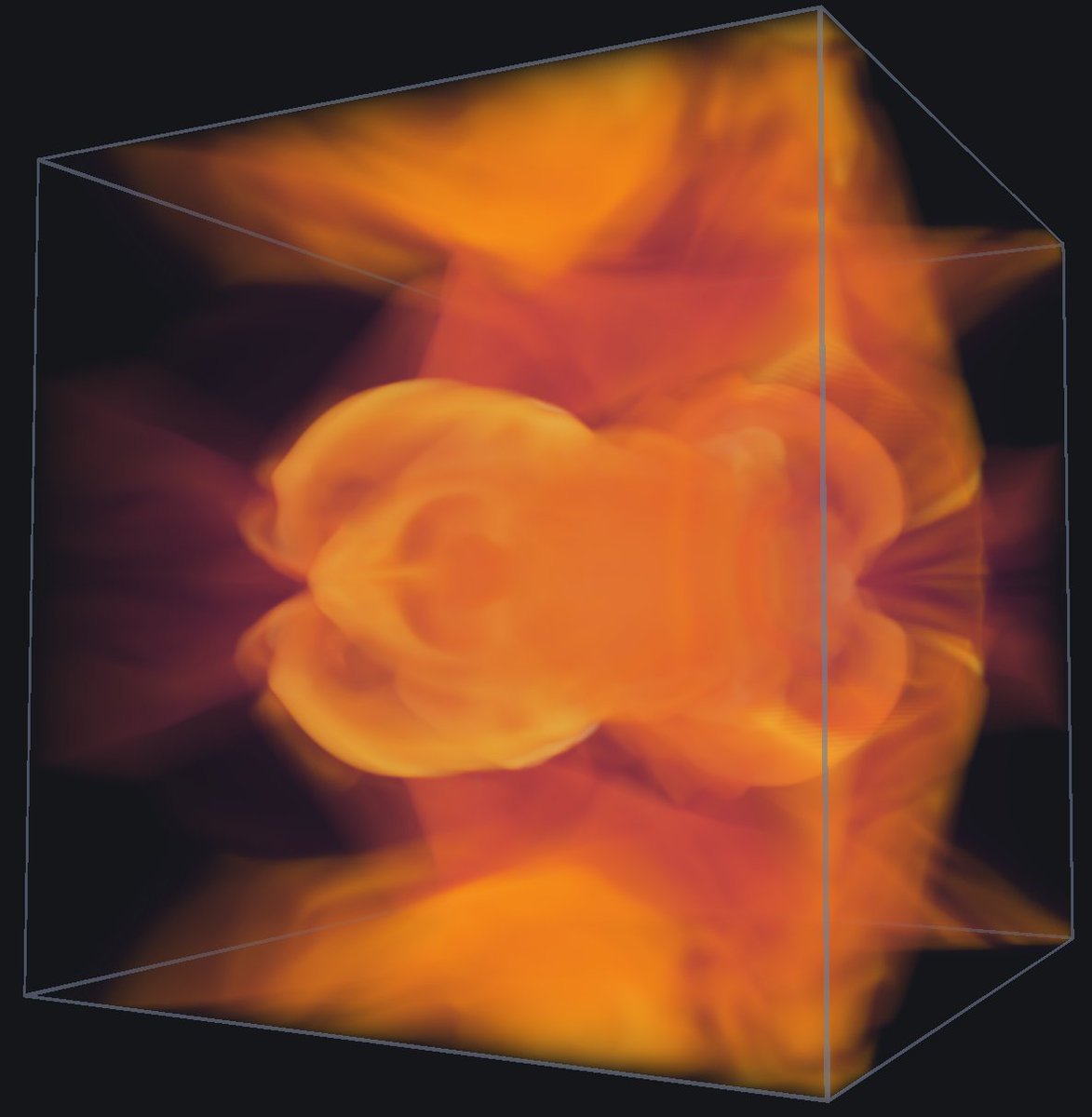
Well this is fun: a fully 3D astrophysics hydrodynamics simulator computed real-time in your web browser using shaders. I remember when I use to run test simulations of such things on supercomputers and it would take hours. Now it's real time. Fable 5.2. https://t.co/wHuPykZkjH
Well this is fun: a fully 3D astrophysics hydrodynamics simulator computed real-time in your web browser using shaders. I remember when I use to run test simulations of such things on supercomputers and it would take hours. Now it's real time. Fable 5.2. https://t.co/wHuPykZkjH
@notadampaul@Beefshaver@juniordaytrade1 As someone who played all the mainline FPS back in the day, DOOM was exciting because it was brand new...but then Quake was even more exciting because it did things even better (even though it's the same idea). Then Unreal, etc etc. DOOM had plenty of addressable flaws.
Academia has repeatedly framed themselves as enablers of the common person to involve themselves in science. Citizen science being one of the more direct representations of that. Yet there was always a barrier to citizens doing “real” science in the form of limited data access, limited tool access, limited insider knowledge. That barrier made academics feel comfortable letting randoms into their zone.
Now that citizens are enabled by AI to make real contributions without the involvement of these academics, suddenly the tone has shifted — stay in your lane, you don’t know what you’re talking about, etc. Kinda makes you think that the prior overtures to the public were mostly self-serving. Looks good on your resume to involve the public. Now that it has been devalued, suddenly there’s much less legitimate interest in that goal.
@Beefshaver@juniordaytrade1 Devil is in the details. If you zoom into each of these, they all have their flaws. Some have addressed those flaws more thoroughly than others. The “idea” yes, reproduced many times…but not the overall execution.
Equal mass merging black holes, 5M apart, one black hole with spin 0.9 in the orbital plane pointing right, the other with -0.9 spin, orbit 39° off the disk. Drawn in the style of Luminet 1979. Getting some truly wild black hole shadows now.
Raytracing now conserves momentum and energy to a part in a trillion.