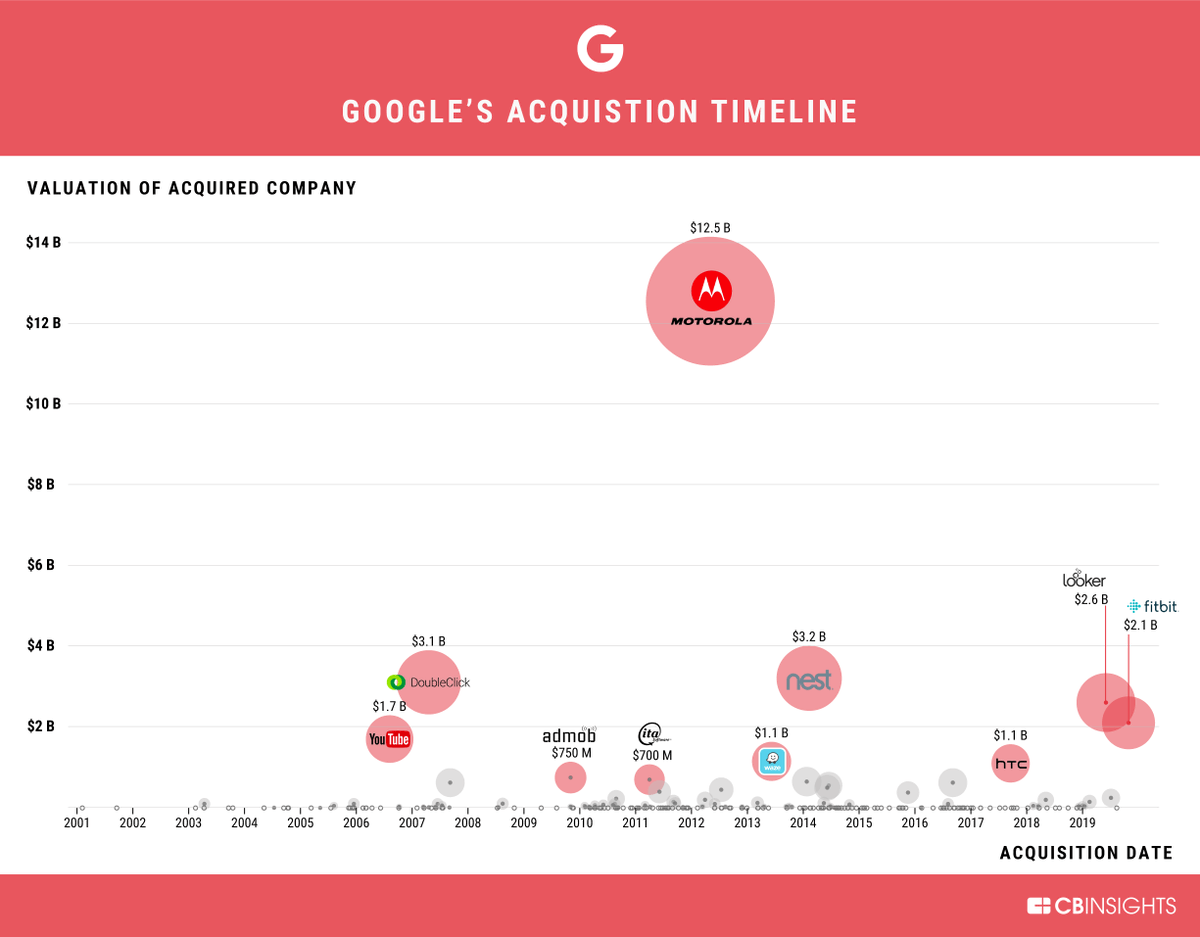
I worked on Google's M&A team when we were doing 40+ acquisitions a year
21 things founders should know about getting acquired
1. your team will likely have to pass interviews at the new company, so hire well.
2. every time your valuation increases, the number of potential acquirers decreases.
3. deals that come in through the corp dev team have a <1% success rate, so talk to actual product people.
4. build relationships with product teams years in advance of a potential acquisition.
5. your largest customers and partners are the best potential acquirers.
6. M&A is a FOMO game, so it's good to play acquirers off each other (when you are legally able to).
7. the deal isn't over until the $$ is in the bank (lots of deals dying very far along these days).
8. don't let your team know you're running a process until the very end. they'll leak the news or become wildly unproductive when they find out and even more unproductive when the deal falls through.
9. the best time to get acquired is when you don't need to or want to be.
10. when you talk to acquirers, you need to show them how you will supercharge their product/business – this can involve actual design and code.
11. full acquisition prices you see in the headlines often come with strings attached – usually integration, revenue/user growth, and employee retention milestones.
12. decide with your cofounder what the conditions would be (e.g., $$) for you to accept an acquisition offer before you have your first conversation. cofounder misalignment here can really really hurt.
13. running a fundraiser at the same time as an M&A process can help both – buyers can offer more if your fundraising options are good and investors love to see real exit opportunities.
14. there are 3 types of deals: acquihire (just the team), asset (just the tech), and full (entire company, team & assets).
15. acquihires can range from just getting a normal job (and the ability to say you were "acquired") to also including $10M+ payouts. don't trust folks bragging about getting acquihired because it's usually the former.
16. your liquidation preferences will largely determine your financial outcome. your investors get their money back before you get your payout from an acquisition, so if you've raised a lot (on bad terms) and you don't have traction, you're probably not going to make much at all.
17. some acquirers will hold back equity you've already vested as part of the deal. some will accelerate unvested equity AND throw in retention bonuses.
18. falling into depression after an acquisition is not uncommon. take care of your mental health and make friends who have gone through it.
19. make sure you're clean legally and financially. investing in good bookkeeping early on can save you tons of time and prevent your deal to get derailed.
20. acquisitions have complex personal tax consequences. hire someone good for that.
21. the best acquired founders at Google only stayed an average of 2.5 years before leaving to start their next thing. life isn't over after you sell!!
Lots of companies coming to market...The Big Slowdown: M&A Involving US-based Startups Weakest Since 2013 https://t.co/hpznHJe5cO via @crunchbasenews
In 10 years I've been in venture, I continue to observe that a lot of founders are
SCARED TO ASK INVESTORS QUESTIONS.
Thats not right.
EVERY SINGLE MEETING Founders should ask investors questions.
Here are the questions to ask and when to ask them.
Let's go! 🧵 👇
Carta is proud to join industry leaders to urge policymakers to preserve the QSBS tax treatment. QSBS incentivizes long-term investment in startups and early-stage companies and helps employee-owners realize the full value of their ownership. https://t.co/c3tfhEBxqb
“don’t be afraid to dream and be optimistic about where the world is going”...COVID Accelerated the Future: Now Seize It” by @sequoia
https://t.co/TO2oLI94y5
Coding is right up there with math and reading as a basic skill today. Check out the new book Read Write Code from @CodeHS CEO @jkeesh, now available on Amazon. https://t.co/p7v1HXjeoe
Highlight: @RushTix CEO Jill Bourque, RushTix CEO explains how the company has developed a platform for comedians to interact with a virtual studio audience:
I am excited to launch Frugal Founder Academy, offering a masterclass and community for #entrepreneurs seeking to build a #business during changing times. Below is a clip from one of my Frugal Founder interviews with founder and angel investor David Hehman. See: @Frugal_Founder
We've unlocked our LinkedIn Learning course on "How to Work Remotely" so it's free for anyone and everyone to watch and use! #remotework#remoteworkforce#howtoworkremotely#linkedin#workremotely
Please share with your HR teams, managers, and coworkers 👉 https://t.co/rI0mWXa7Dh