Evil calls for expiation, otherwise the wicked will destroy the world utterly, or the good will suffocate in the rage which they cannot vent, and in either case no good will come of it.
C.G. Jung Civilization in Transition (Vol 10 of the Collected Works)
Tonight I plan to give Notice of Intent to bring forth a Privileged Resolution this week to force the release of all names of U.S. Representatives who have used your tax dollars to settle sexual misconduct claims.
Do you want your Representative to vote for this disclosure?
🚨 The Supreme Court ruled that police conduct a Fourth Amendment search when they obtain data through a geofence warrant, holding that people have a reasonable expectation of privacy in their cell phone location data.
THE EYE IN THE HEART
One first sees the eternal with the ‘inner eye’ and then actually experiences the eternal with the heart- ‘the eye in the heart’.
From Dr John Pordage, Theologia Mystica, 1683, animated
If the road is kind, walk it gently.
Do not rush to know the last page.
Some stories touch us deeply
not because they last forever,
but because they make us feel alive.
"Life will break you. Nobody can protect you from that, and living alone won't either, for solitude will also break you with its yearning. You have to love. You have to feel. It is the reason you are here on earth. You are here to risk your heart. You are here to be swallowed up. And when it happens that you are broken, or betrayed, or left, or hurt, or death brushes near, let yourself sit by an apple tree and listen to the apples falling all around you in heaps, wasting their sweetness. Tell yourself you tasted as many as you could."
— Louise Erdrich
On June 30, five planets and a Full Strawberry Moon will share your sky at the same time. Here is exactly what to look for and when.
The sky on June 30 splits into two separate shows.
After sunset, face west and look for Venus. It is the brightest object in the night sky after the Moon and is unmissable. It will dominate the western horizon for roughly an hour to an hour and a half after sundown.
Below Venus, Jupiter is still visible but sitting low in the bright twilight, sinking a little further toward the horizon every night now.
Mercury, the third evening planet this month, has faded significantly since its June 15 peak and will be very faint and very low.
Venus is the reliable anchor.
Jupiter requires an unobstructed western horizon to catch. Mercury is a bonus for anyone with binoculars and a perfectly clear view to the west.
Before sunrise, face east. Saturn glows steadily in the southeast, yellowish and calm. Mars sits reddish and low near the Pleiades star cluster, one of the most visually striking morning pairings of June. Binoculars transform that view.
Then there is the Moon.
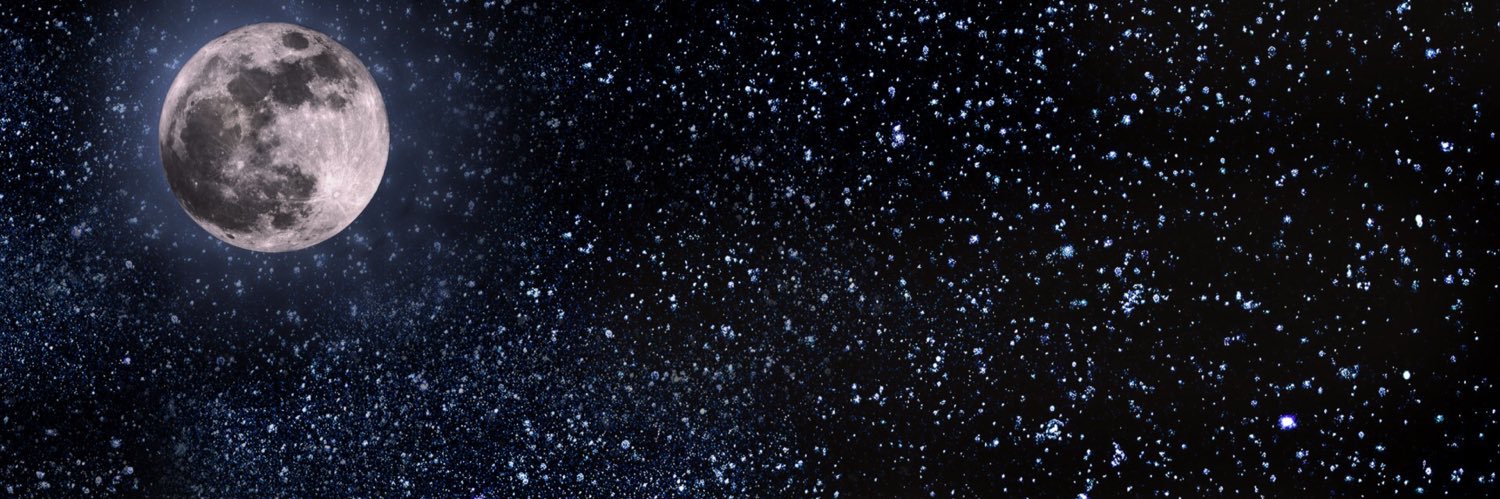
The Full Strawberry Moon reaches its exact peak at 23:57 UTC on June 29, meaning by the time June 30 begins across most of the world it is technically one day past full but visually indistinguishable from full.
It rises in the southeast near the Teapot asterism of Sagittarius, which points roughly toward the center of the Milky Way. It will be huge and orange near the horizon as it rises, then bright white as it climbs. At 405,251 kilometers from Earth, it is the last of three consecutive distant full moons in 2026, farther than the average Moon distance of 384,472 kilometers.
That extra distance is why astronomers call it a micro Moon, the opposite of a supermoon. It appears very slightly smaller than average, though most people will not notice the difference with the naked eye.
The name Strawberry Moon comes from the Algonquin tradition and refers to the wild strawberries that ripen in the Northern Hemisphere this time of year.
The honest context on rarity: this is a real and beautiful sky event but not the rarest night of the year.
Seeing multiple planets in the sky together is fairly common because all planets orbit the Sun along roughly the same flat plane. That plane appears in our sky as an arc called the ecliptic, and planets naturally bunch up along it at different speeds.
What made June 2026 genuinely notable was the June 9 Venus-Jupiter conjunction, when the two brightest planets closed to within 1.5 degrees of each other, the nearest they will appear in the Northern Hemisphere until late 2028.
June 30 is the quiet, beautiful end of that same month-long story. The next truly rare tight grouping of five naked-eye planets is projected for September 2040, when Mercury, Venus, Mars, Jupiter, and Saturn cluster within about 10 degrees of each other, the tightest gathering in over 800 years.
How to see the June 30 sky:
Step outside 30 to 45 minutes after sunset and face west for Venus and Jupiter.
Use binoculars before sunrise for Mars near the Pleiades in the east.
Look southeast after sunset for the Strawberry Moon rising near the Teapot of Sagittarius.
No telescope needed for any of it.
Sources: NASA What's Up June 2026, https://t.co/qRd3ywjFQX. EarthSky visible planets guide June 2026, https://t.co/C2xt5rHXks. National Geographic night sky June 2026, https://t.co/BVJwPyAkoZ. The Planetary Society night sky June 2026, https://t.co/05r9rBv2Y2. StarWalk planets guide June 2026, https://t.co/vhWAag7yRB. Strawberry Moon full phase: 23:57 UTC June 29, 2026. Moon distance June 30: 405,251 km. Venus-Jupiter June 9 conjunction closest until late 2028 per National Geographic.
Video credits:
https://t.co/RMQBDAVEka
If you enjoy looking up, the next couple of nights will offer plenty to see. The June Strawberry Moon will brighten the evening sky, and while it isn't the rarest celestial event of the year, it will share the stage with several visible planets, making for a beautiful way to end the month. 🌝
Here's what to watch for, and when to step outside for the best views.
https://t.co/DJLb7pomCE
"There are lovers who gaze into love as into the sun, and simply become blind;
while there are others who, with amazement, discover life for the first time when love illuminates it."
Robert Musil,
The Man Without Qualities