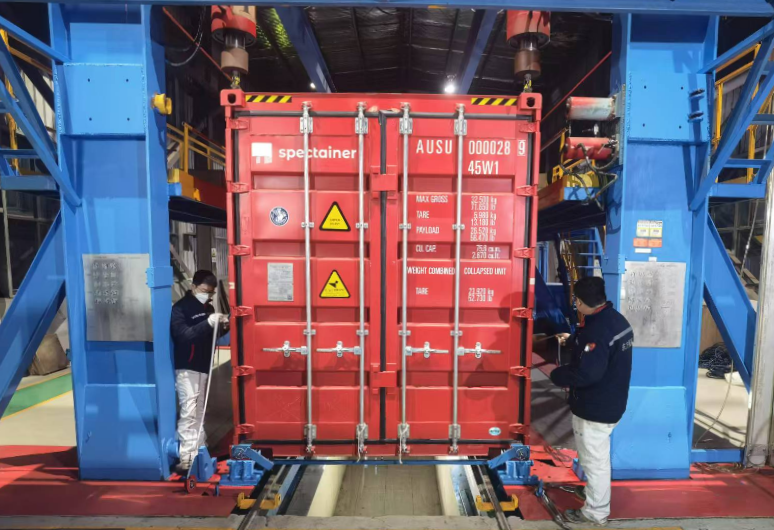
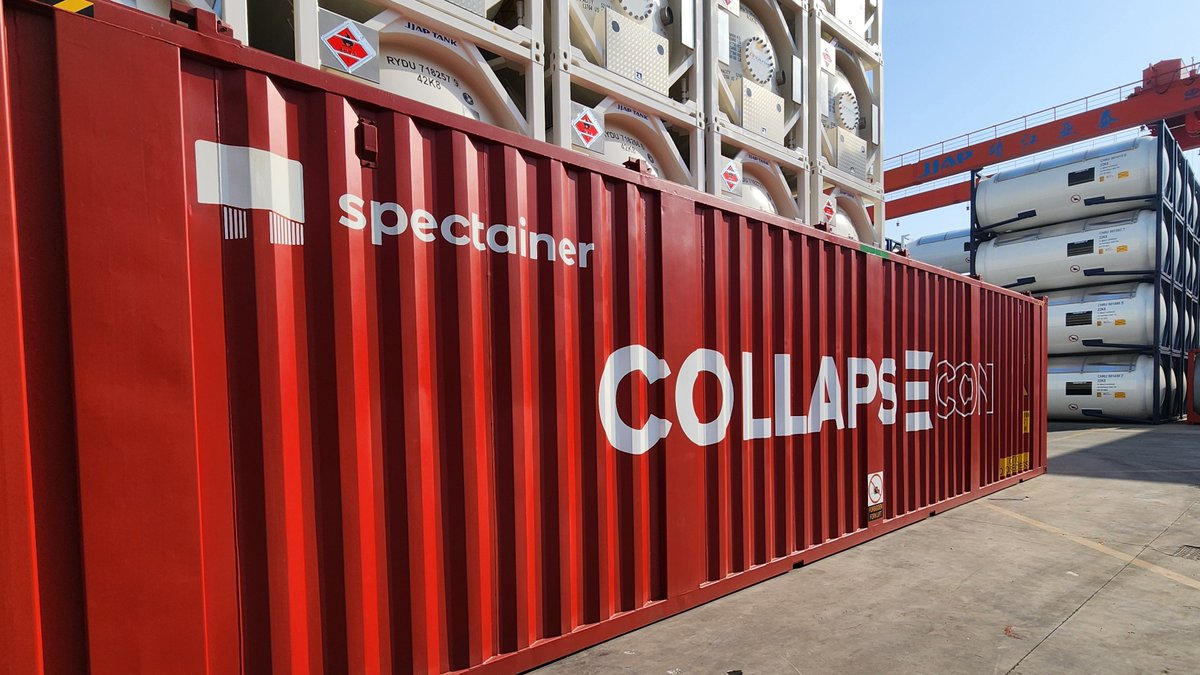
Spectainer is hiring!
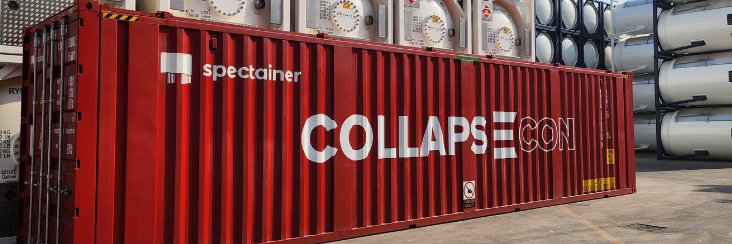
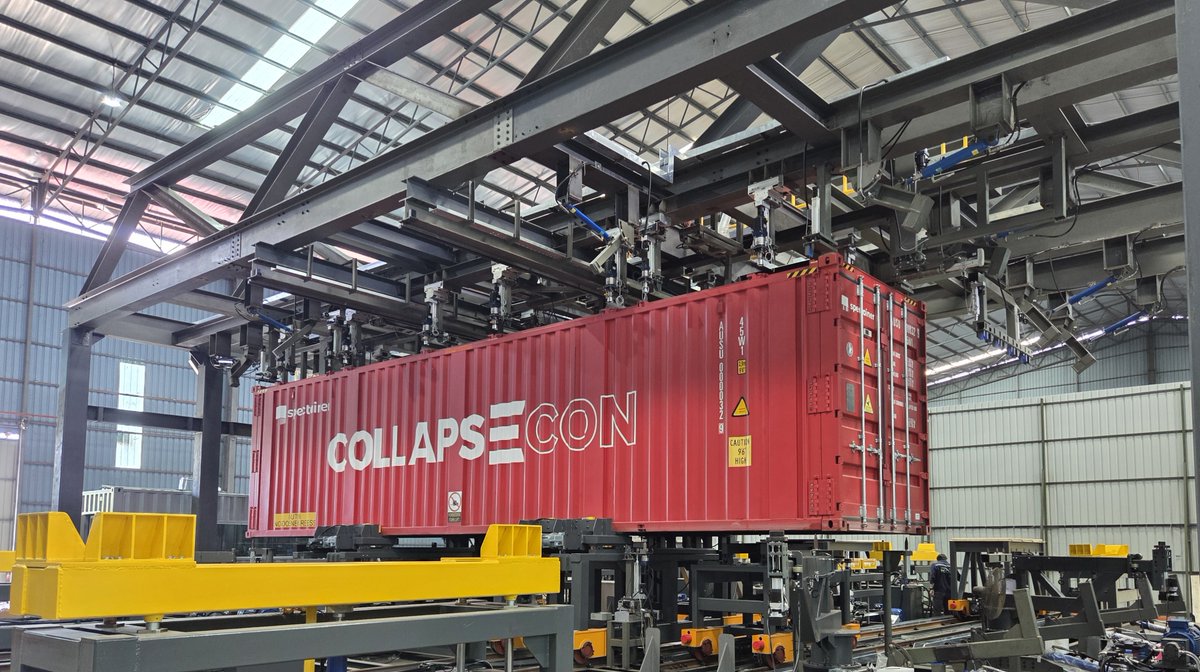
We are on the look out for a Mechatronics Systems Engineer to work directly on the COLLAPSECON Operating Stations (COS) automation architecture.
https://t.co/aPr8OgCPn9
@JOC_Updates reports that the NY-NJ port has updated its tariff to extend its $100 per container imbalance fee to off-dock depots.
📰 https://t.co/rDuTXYTVvZ
Two major articles in the space of a few weeks. Different angles, but clearly the same underlying problem.
The first looked at #emptycontainer repositioning overwhelming European ports, particularly the Port of Rotterdam. The volume of extra moves is reducing port fluidity and efficiency.
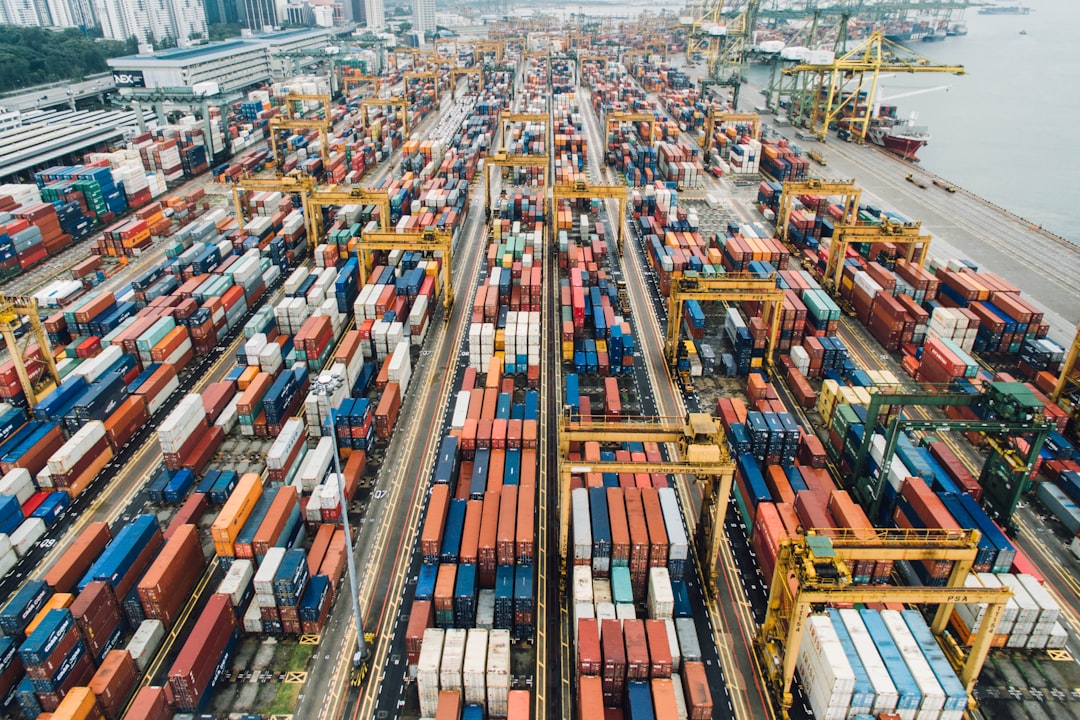
The second, published this week in https://t.co/7O9Gv31qlf, identifies landside infrastructure as "container shipping's next great chokepoint". The newbuilding pipeline for ultra-large vessels has already outpaced the berths being built to receive them.
Vessels continue to get bigger. Carriers continuing add more containers to service the trade lanes. But ports, berths, and landside connections take years and billions to build. Infrastructure is seemingly always playing catch-up, and the gap is expanding.
One consequence is more empty containers circulating through a system already at capacity. Empties are not the cause. They are an unnecessary inefficiency that adds strain on top of strain.
The answer is not more containers. It is containers that do more.
#COLLAPSECON #stopshippingair #container #shipping #portinfrastructure
@spectainer
https://t.co/EF4S60eEMl
#Containers are seen as settled. Networks adjust, but the underlying model remains anchored to a more stable era. Yet recent events show #disruption is no longer a black swan, it is the norm. The container model needs a reset to operate in a world defined by uncertainty.
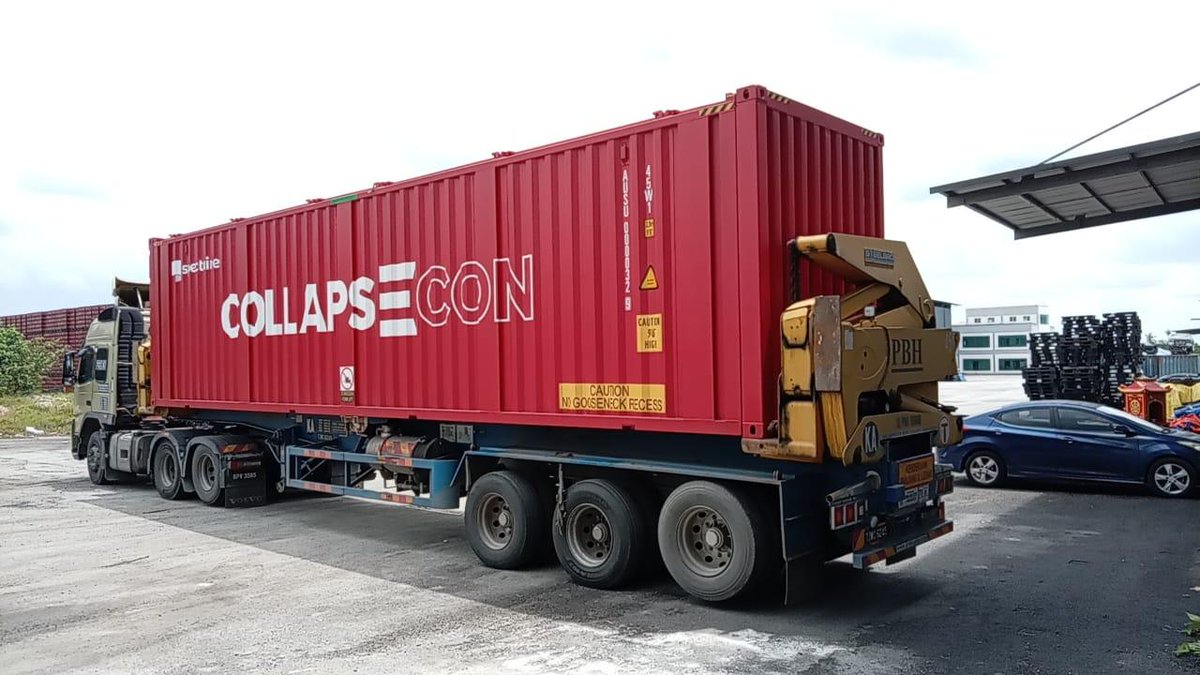
#COLLAPSECON® containers and #COS® work together as a unified system, collapsing and combining through controlled automated processes. Spectainer’s newest generation of COS pushes that architecture further still.
🎆 Gong Xi Fa Cai! As the vibrant Year of the Fire Horse gallops in, Spectainer extends our warmest wishes for a prosperous and joyful Chinese New Year to our valued customers, partners, and friends!
🔎Collapsing the Collapsible Container Myths:
“Collapsibles are just a passing fad.”
They looked like a fad when the industry could absorb inefficiency. It no longer can. Empties now burns $25b p/a.
👉Collapsibles are not hype. They are the next evolution of containerisation.
🔎Collapsing the Collapsible Container Myths:
“Collapsible containers will never get beyond prototypes”
Past attempts stayed prototypes because they were never built for scale.
👉 With industrial production, fleet integration and real durability, collapsibles become true enablers
🔎 Collapsing the Collapsible Container Myths:
“Shippers do not care about collapsible containers.”
Shippers now track cost, carbon, and resilience across the whole chain. Empty flows affect all three.
👉 Collapsibles matter because the whole system now matters to shippers.
✴️ Shippers define responsibility upstream. Procurement, manufacturing emissions, labour standards. These are measured, governed, and disclosed through ESG frameworks. Once products ship, responsibility narrows...
🚛 Shipping and logistics are treated as execution, not consequence. Containers are used, delivered, and returned. When cargo is discharged, the transaction is considered complete. But containers keep moving. Often empty. Costs and emissions accumulate. Imbalance compounds. This sits outside the shipper’s definition of responsibility.
📊 This is structural. Logistics is treated as neutral. Movement is background, not accountability. If responsibility ends at delivery while the container continues circulating, what part of the supply chain is actually being governed?
📄 This essay, The Other Half of the Supply Chain, explores that blind spot, and why responsibility in global trade can no longer stop halfway.
👉 Read here: https://t.co/Wp8o2pLgnu
#shipping #container #CSR #sustainability
🔎Collapsing the Collapsible Container Myths:
“Carbon savings do not count.”
A container does not emit anything. The unnecessary moves around it do.
👉Collapsible containers cut empty trips, depot lifts, and wasted slots. That reduces both cost and CO₂. Carbon is now financial.
🔎 Collapsing the Collapsible Container Myths:
“Collapsibles will not fit into existing systems.”
They fit the same way reefers and flat racks do, through ISO standards, defined touchpoints, and fleet integration.
👉 Collapsibles are specialised assets, not a system exception.
🔎 Collapsing the Collapsible Container Myths: “Collapsibles will replace all standard containers.” They are not meant for the whole fleet. They are built for the lanes with the largest imbalance, where most empty cost sits.
👉 Collapsibles create impact where empties hurt most.
Tis the season of sustainable solutions 🎄🎅
At Christmas, it feels fitting to remember that the only thing that should be full of air is the gift box after it has been opened🎁
Wishing all a Merry Christmas and every success in the year ahead ✨
🔎 Collapsing the Collapsible Container Myths:
“Collapsibles cannot meet ISO standards.”
Early designs failed the basics and created the perception that collapsibility and ISO compliance were incompatible.
👉 Collapsible containers meet ISO requirements in both states.
🔎 Collapsing the Collapsible Container Myths:
“Collapsibles cost too much to buy or lease.”
Of course they cost more upfront. They are specialist assets.
👉 Over time, they can save 10–20% across the USD 25 B empty-repositioning problem — fewer assets, lower costs.
🔎 Collapsing the Collapsible Container Myths:
“Manual collapse is good enough.”
It looks practical. No new equipment. But manual collapse slows operations, adds risk, and kills adoption.
👉Collapsible containers don’t need labour. They need automation, precision and consistency
🔎 Collapsing the Collapsible Container Myths:
“The savings are too small to matter.”
Each part sees only a slice. Viewed alone, the savings look small.
👉Across a system, collapsibles cut cost, free capacity, and strengthen trade. The numbers are not small, only the perspective