Founder & CEO @Spectainer | Co-Founder @Spojit | On a mission to stop shipping air — turning structural waste into efficient, resilient, sustainable trade
The Container Asymmetry Principle
Every efficient container movement creates an equal and opposite inefficient movement.
Directional optimisation does not remove inefficiency. It displaces it across the network.
Building new industrial products is rarely about a single breakthrough. It is about solving hundreds of practical engineering problems along the way.
@spectainer, we are developing the hardware and systems to change how the global container industry handles empty repositioning. Our engineering team works on complex physical products, solving the challenges required to make new technology reliable, practical, and ready for real-world operations.
We are looking to grow our Product Engineering team by hiring a Product Engineer (Mechanical) to help develop and improve our products through design, prototyping, testing, and practical engineering problem solving.
If you are a mechanical engineer who enjoys working on complex physical systems, getting hands-on with real hardware, and contributing to products moving from development into global deployment, check out the role below.
https://t.co/OXyK3uHUMe
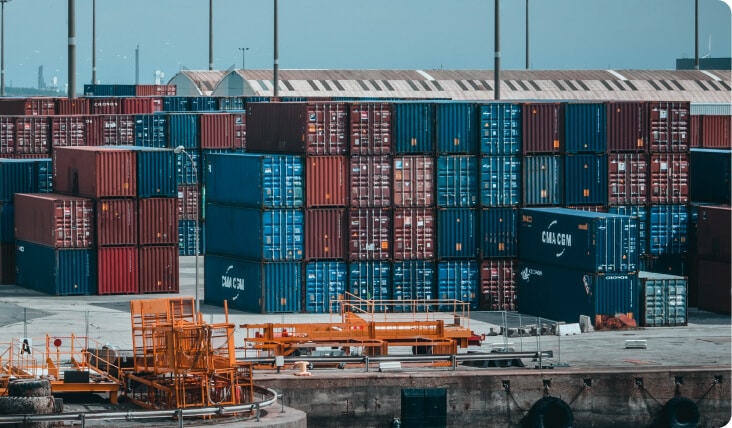
Global shipping moves millions of empty containers every year, repositioning them to rebalance trade flows. Not cargo. Air. That is a structural problem baked into how the industry operates. @spectainer, we are building the hardware and automation systems to change it.
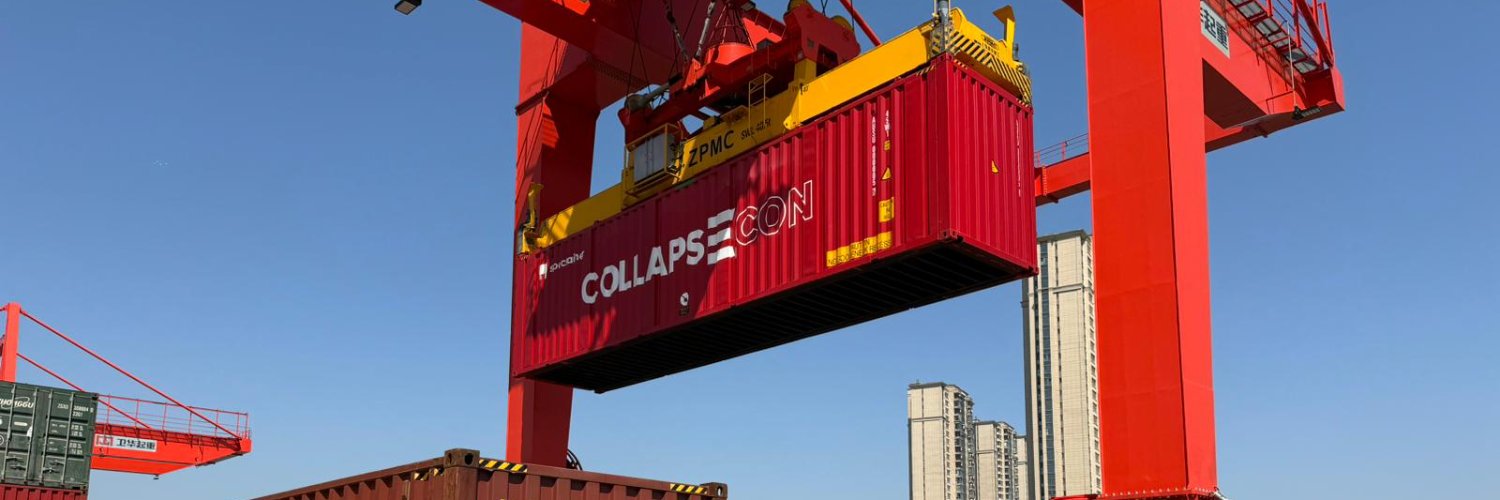
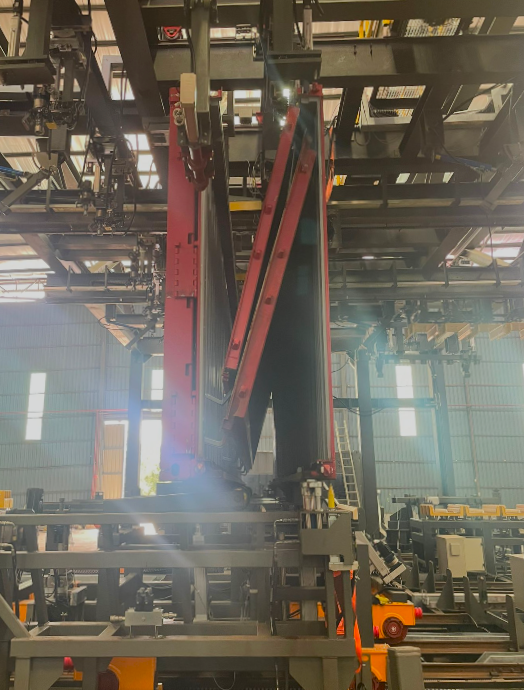
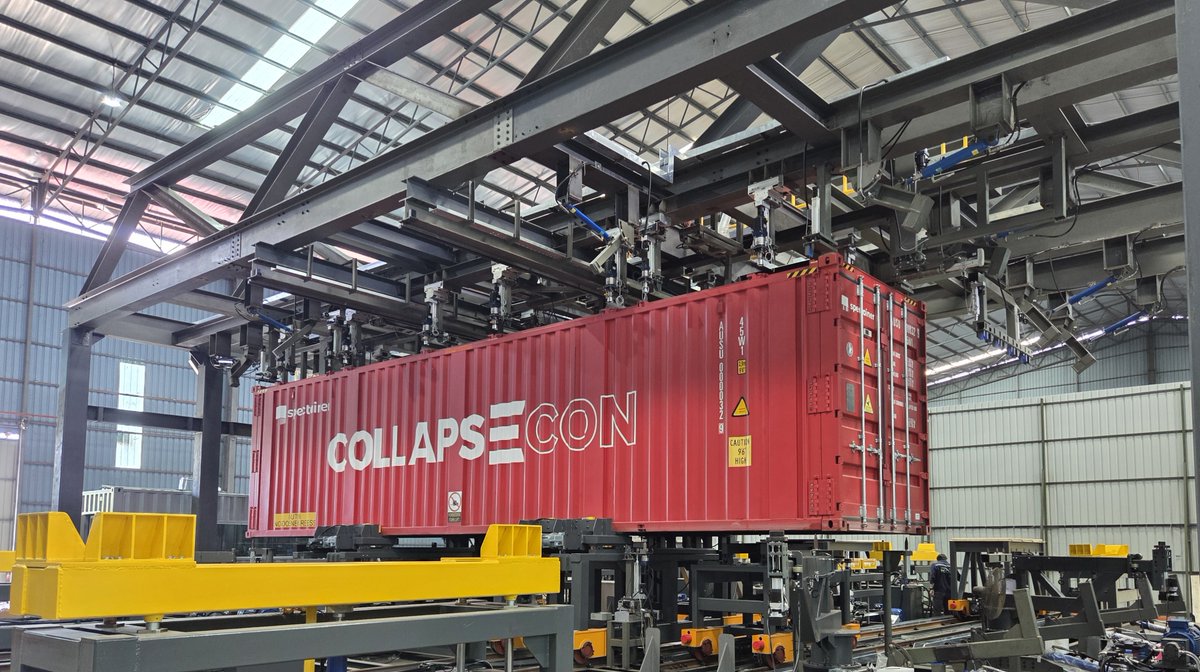
Our COLLAPSECON Operating Stations (COS) collapse, combine, and process COLLAPSECON containers at scale, fully automated. The engineering underneath that is hard, and we are continuously improving it.
We are hiring a Mechatronics Systems Engineer to work directly on the COS automation architecture. Sensors, actuators, control systems, real industrial hardware under real operational conditions.
If you are a mechatronics engineer who wants to work on complex industrial systems with genuine scope to experiment, develop new approaches, and contribute to how the platform continues to evolve, check out the role below.
https://t.co/IbWVkQQAhy
Proud to share this from the Spojit team.
Most #automation tools help you connect systems. Spojit is built for what happens after that, turning the intent behind a process into real, executed, production-grade outcomes across every system a business runs on.
Spojit has been quietly solving that for years, embedded in the operations of some genuinely great businesses. What launches today is not a continuation of that chapter. It is a new one entirely.
The platform is now #AI-native, and the shift is fundamental. Teams can move from describing a process to having it built, tested, and running in a fraction of the time it used to take. Where precision matters, real code is available in the same environment. Miraxa, the AI layer, does not just help you build. It helps you operate, surfacing failures, explaining behaviour, and identifying where your automations can be doing more.
To the Spojit team: Most people will see a product launch. What they will not see is everything that sits behind it. The years of hard work, dedication and problem solving that turned an idea into reality. What launched today is not just a new platform. It is the product of sticking to a belief and building something that addresses a real market need. Congratulations!
➡️ Explore the platform at https://t.co/51tN7C6fhG
https://t.co/jp0xAg9byD
#WorkflowAutomation #ArtificialIntelligence #BusinessAutomation #NoCode #JavaScript #Python #SaaS
@spectainer is hiring!
If you are a mechatronics engineer who wants to work on complex industrial systems with genuine scope to experiment, develop new approaches, and contribute to how the platform continues to evolve, check out the role below.
https://t.co/EHCZWnjwDI
From @SupplyChain247: Nearly One-Third of Global Container Shipments Now Travel Empty
30% of all container shipping work now consists of moving empty boxes. Before the pandemic, it was at 24%.
In just a few years, empty container movements have gone from 1 in 4 to 1 in 3! The trajectory is clear.
At what point does the industry stop applying bandaids and start asking structural questions?
https://t.co/ea9nRfhPfc
There have been no shortage of folding container companies trying to solve the empty container problem over the decades. Unfortunately, their approach has not changed much. Forklifts, cranes, external parts, and a container that folds and combines manually with people in and around it.
For collapsible containers to ever reach the scale that can meaningfully impact the empty container problem, automation is not a nice addition. It is a prerequisite for an industry of this size and complexity.
It is considerably harder and more complicated to achieve a fully automated collapse and combining sequence — but without it, collapsible containers, no matter how well engineered, will continue to be a niche solution to a systemic problem.
#COLLAPSECON
The Port of New York and New Jersey has been charging carriers $100 per excess #emptycontainer since 2023, yet the congestion is still there.
For most carriers, passive accumulation of empty containers has always been the cheaper option. A fee shifts the threshold, yet the industry has consistently demonstrated it will absorb the cost before it changes the behaviour.
So if the current fee is not achieving the desired outcome, what price does it need to reach before carriers change their approach? At what point does the penalty exceed the inertia?
🤔 Perhaps that is the wrong question entirely. The answer to congestion is not higher fees forcing different behaviour. It is requiring fewer boxes in the first place.
Collapsible containers do not just change the economics of repositioning; they reduce the total inventory burden that creates congestion in the first place.
#ContainerShipping #Spectainer #COLLAPSECON
@JOC_Updates reports that the NY-NJ port has updated its tariff to extend its $100 per container imbalance fee to off-dock depots.
📰 https://t.co/rDuTXYTVvZ
Two major articles in the space of a few weeks. Different angles, but clearly the same underlying problem.
The first looked at #emptycontainer repositioning overwhelming European ports, particularly the Port of Rotterdam. The volume of extra moves is reducing port fluidity and efficiency.
The second, published this week in https://t.co/7O9Gv31qlf, identifies landside infrastructure as "container shipping's next great chokepoint". The newbuilding pipeline for ultra-large vessels has already outpaced the berths being built to receive them.
Vessels continue to get bigger. Carriers continuing add more containers to service the trade lanes. But ports, berths, and landside connections take years and billions to build. Infrastructure is seemingly always playing catch-up, and the gap is expanding.
One consequence is more empty containers circulating through a system already at capacity. Empties are not the cause. They are an unnecessary inefficiency that adds strain on top of strain.
The answer is not more containers. It is containers that do more.
#COLLAPSECON #stopshippingair #container #shipping #portinfrastructure
@spectainer
https://t.co/EF4S60eEMl
The day the world changed.
No headlines, no fanfare, just 58 boxes and a quiet departure. Today, that moment underpins how the entire world moves. What began unnoticed now powers global trade itself.
https://t.co/53DamB1hAG
🇺🇸 WARREN BUFFETT: "I can end the U.S. deficit problem in 5 minutes."
“You just pass a law that says that anytime there’s a deficit of more than 3% of GDP, all sitting members of Congress are ineligible for re-election.”
🇦🇺 🇳🇿 ANZAC Day is a day in which we pause to remember those who served and those who never returned. It is a reminder of sacrifice, resilience, and the cost behind the freedoms often taken for granted.
📯 Lest we forget.
The #shipping industry keeps responding to #disruption by adding more #containers.
Even as networks are reworked, sailings are pulled, routes are redrawn, the core response remains the same. More boxes.
That made sense in a world where volatility was the exception. It makes less sense when volatility is the baseline.
At some point, it is worth asking whether the issue is scale, or whether the model itself is misaligned with the environment it now operates in.
If disruption is constant, a system built on static assets will always be reacting, never adapting.
The answer is not more containers. It is containers that do more.
#Containers are seen as settled. Networks adjust, but the underlying model remains anchored to a more stable era. Yet recent events show #disruption is no longer a black swan, it is the norm. The container model needs a reset to operate in a world defined by uncertainty.
As expected, it was ignored in favour of easier questions about where to find more information.
That response, or lack of it, says everything. The question exposes a clear structural gap in how Australia treats IP, and there is no answer because there is no policy depth behind it. No real understanding of what it takes and costs to develop new IP, let alone protect it. No vision for supporting #Startups and SMEs through that process. And clearly no intent to fix it.
This rant is not about one session or one agency. It is a systemic failure across successive governments, on both sides, and the public service over more than a decade. Australian SMEs have been raising this issue repeatedly, and it continues to be ignored. And for the life of me, I do not understand why.
It is sad to say, but Australia’s approach to IP is fundamentally broken. Until that changes, Australian companies will continue to build, protect, and scale offshore.
#Australia talks a big game on #IntellectualProperty. It is fair given the country’s history of globally impactful inventions.
However, I just sat through a session with @IPAustralia and to be blunt; it was bad. Really bad.
Same script. "#IP is critical to #innovation, competitiveness, and growth". Followed by generic advice and surface level commentary. No substance. No engagement with real issues.
So, to actually get some value out of it, I asked a specific question:
"If intellectual property is recognised as a foundational economic asset, why does Australia not support its protection in any meaningful way across the policy stack?
It is not just that the R&D Tax Incentive excludes patenting and trademark costs, there are effectively no dedicated mechanisms to offset the cost of securing and maintaining IP at all.
This gap disproportionately impacts #SMEs, which account for around 87% of IP applications, yet are the least able to absorb these costs. In contrast, other jurisdictions offer patent box regimes, preferential tax treatment on IP derived income, and targeted support for filing and defence.
Why has Australia taken a position that supports the creation of ideas, but not their protection or commercial capture, particularly for the very cohort driving most IP activity?"
COS was developed to automate #COLLAPSECON's collapsing and bundling process. Two capabilities engineered to work together as a unified system.
@spectainer newest generation of #COS represents another significant step forward in the technology. A more capable system designed to manage the complexity required to operate collapsible containers safely and consistently at scale.
#COLLAPSECON® containers and #COS® work together as a unified system, collapsing and combining through controlled automated processes. Spectainer’s newest generation of COS pushes that architecture further still.