Reflective learning platform. Believe in Research. A Knight in the Digital Society. Learning and sharing AI, Maths & Robotics. Prev. LBSNAA and IIPA. alum iitb
1. Bengaluru does not have an IIT of its own. But it is home to more than 50,000 IIT alumni—and now, a centre that is trying to bring all 23 IITs together under one roof.
2. The IIT Alumni Centre Bengaluru, or IITACB, serves as a platform that links the IIT ecosystem with industry players and the government. Firms bring their “pain points” to the centre, which then circulates those among 23 IITs for solutions.
3. IITACB does not get involved in the technical details or commercial agreement between the company and the IIT. Its role is to widen the pool of expertise available to both sides. It essentially works as “a facilitator or matchmaker.”
4. Take Tathyakosh for example. It’s a public-data discovery platform launched by ACSEL Technology Forum in collaboration with IITACB. It brings over 1.5 million public datasets onto one searchable platform.
5. A startup, which built an AI model to automate health-risk assessments for insurance firms, not only benefited from the mentorship but also raised Rs 1 crore in funding. Read the full story by Vitasta Kaul:
https://t.co/pzoEJWgJ7P
If you look at the issue in a broader context, it’s not just about vote chori only.
It’s also about ...
political party chori as is the case in Maharashtra, Bengal,
neta chori,
political funding chori,
and much more.
The chori runs deep, operating at multiple levels and across several layers of the Indias' so called democratic political system.
"अगर अमेरिका और पाकिस्तान में युद्ध हुआ तो हम पाकिस्तान के साथ हैं"
-राजस्थान BJP अध्यक्ष मदन राठौर
क्या रिपब्लिक टीवी के रिपोर्टर की टीम अब मदन जी के घर जाएंगे ?
@Sujata1978 You can become Prime Minister by buying off and breaking up other political parties. You can also become pm through manipulation of the anti-defection law, electoral rolls, political party funding, the Pegasus spyware controversy, and much more. Everyone knows it.
The application of data science (DS) is being used to manipulate outcomes, as alleged by the opposition and supported by evidence. While elsewhere, data science (DS) and machine learning (ML) are driving innovation, in India, people have allegedly been disenfranchised or added to voter lists to influence political outcomes.
Finally, ECI agrees to provide a soft copy of the final electoral rolls in a readable format to political parties.
Several political parties had requested ECI for a soft copy of electoral rolls in a readable format and Congress even moved SC in 2018 requesting the same but ECI opposed it.
A family is devastated, yet you will find certain people speaking against them. The concept of empathy is what you all need to understand, and justice is what society demands for the cruelty inflicted upon them.
To understand the context, let me take you back to the protest site, where you’ll find many Gen Z protesters and other young individuals cleaning the area. This isn’t a performative exercise like the Swachh Bharat campaigns often conducted by VIPs for publicity. That’s not Swaraj. Swaraj, in its true sense, is about young, self-motivated individuals taking ownership and responsibility voluntarily.
So many of us are truly embarking on Gandhian way when we showcase civic sense.
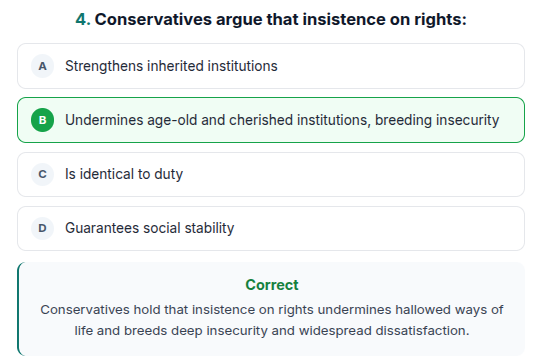
Why do conservatives think the way they do? Why do they seem to oppose rights? For instance, when you argue that protest is a fundamental right and a means of expression, especially when all other avenues are closed, conservatives often oppose it. Those who oppose people like @neha_aisa and @pbhushan1 tend to be conservatives. Check more at https://t.co/gINpVmBDBV 😉
@IEhindi How dare you appoint someone with such a foul mouth as a spokesperson for a political party? Who gave this person the authority to question any citizen about unfurling the Tricolour?
@TheRedMike@Saurabh_Unmute This is what happens when you sabotage national institutions and make them serve you and your party.
The BJP has cut off funding avenues for other parties while making itself the richest political party in the country. This reflects its understanding of democracy.
There is no such thing as nationalism or national interest for these troublemakers. It is all about self-interest and vested interests. The interests of a channel like Republic, the interest in turning India into the preserve of a privileged few, and the interest in manufacturing narratives of national versus anti-national and Hindu versus Muslim, GCs versus OBCs or OBCs vs SC/ST, putting one against other.
The fact is that this government is increasingly anti-democratic and opposed to meritocracy. It does not stand for equality or against injustice.
Look for the underlying interests behind every issue, and the picture becomes much easier to understand. These people are paid to promote such narratives, sabotage young emerging politician, to manipulate public opinion, and mislead ordinary citizens.
Abhijit Dipke, Neha Bora और दूसरे छात्र संगठनों की प्रेस कांफ्रेंस में Republic Channel का हंगामा
जैसे ही Neha Bora ने बोलना शुरू किया वैसे ही Republic चैनल वाले चिल्लाने लगे
फिर बाकी पत्रकारों ने एकजुट हो उन्हें बाहर किया
What if Ankita were your daughter or someone close to you?
Do you really think we are doing the right thing and making progress when there is virtually no innovation in our society? The truth is, we are not even good at copying.
Your own life does not determine the quality of life for people across India.
The government has increasingly promoted contractual employment in teaching and healthcare. Think about the long-term consequences of this approach and its repercussions for society. With low salary, government is not saving but impacting negatively. This was well understood by late PM Dr. MMS. Anyways.
@IndiaToday The only way to raise your voice in contemporary India is to speak out fearlessly against injustice. The culture of blind personal loyalty and the political incompetence resulting from Modi and Shah’s capture of the party have brought India to this juncture.
Just think about it. We are living in a society where the powerful ignore the victims, and unless an incident becomes national news, we often fail to stand up for those who suffer.
The recent actions of the BJP are not only against the democratic ethos of our country but also reflect how little they value ordinary citizens, as if we were insects with no worth.
Under the leadership of PM Modi, the BJP has witnessed a severe decline in social, moral, and democratic values. The Prime Minister seems unable to see the tears of others, even as he frequently speaks about his own struggles and appeals to people's emotions during election campaigns. His actions and silence show a disturbing disregard for the lives, dignity, and suffering of ordinary citizens.
एक मां दहाड़े मारकर रो रही है और अपनी बेटी के लिए इंसाफ मांग रही है .
ये अंकिता भंडारी की मां हैं .
उत्तराखंड की बेटी अंकिता भंडारी के माता - पिता इंडिया गेट के पास धरने पर बैठे हैं . उनकी मांग है कि राज्यपाल के तौर पर दुष्यंत गौतम की नियुक्ति रद्द की जाए . CJI जांच का इंतज़ार किया जाए.
इस VIP के रहस्य का खुलासा हो , जिसकी वजह से अंकिता की हत्या हुई .
अभी कुछ देर पहले राहुल और प्रियंका भी उनसे मिलने पहुंचे हैं .
@IndianExpress We have sunk so low as a democracy that people have to sit in protest just to seek justice.
Are those in power unaware of the allegations against the individual?
Why are individuals facing such serious allegations in public life rewarded with positions of power?
China is on a trajectory to lead the world in science, a development that will reshape technological advancement, innovation and the balance of global power
https://t.co/P3RlDDc76W
When Governance Becomes a Grievance: Kautilya’s Warning to the Indian State
Summary: Discontent does not emerge overnight. It accumulates through repeated experiences of injustice, deprivation, arrogance, and neglect. A government may control the machinery of the state, but it cannot indefinitely command the trust of its people. And when rulers stop listening to the people, they should not be surprised when the people stop believing in their rulers.
What happens when a government elected to protect its people gradually becomes a source of their sufferings?
What happens when individual loyalty takes precedence over competence, and there is over -centralization of power, public welfare is overshadowed by political interests, and legitimate grievances are met with indifference, denial, or intimidation? The greatest threat to a government may not always come from its political opponents, but from the resentment it creates among the very people it is meant to serve.
In todays' India, the BJP’s practice of inducting political leaders from across parties and ideological backgrounds, including individuals facing allegations of corruption or other misconducts, raises important questions about political accountability and ethical consistency. Allegations must not be confused with proven guilt, nevertheless, the public is entitled to ask whether integrity, competence, and a clean record receive the importance they deserve. Winning elections and expanding political influence cannot become substitutes for delivering good governance. In this backdrop, you can see the whole process just strengthens the power in the hands of a few individuals. Those individuals do not care for anything other than expansion and over-concentration of individual power and influence.
Centuries ago, Kautilya, in his Arthashastra, recognised the dangers of oppressive policies, the arrogance of rulers, and the growing disaffection of the people. His insights remain remarkably relevant to modern India. When appointments to positions of responsibility appear to reward individual allegiance rather than administrative ability, institutions risk losing credibility. When those entrusted with public welfare lack the competence or integrity required to discharge their duties, the consequences are borne not by political leaders alone, but by millions of ordinary citizens.
The disconnect between political promises and public experience is often most visible in everyday life. For a family struggling to receive its entitled ration, governance is not a grand slogan. It is a question of survival, dignity, and justice. Delayed pensions, the exclusion of eligible beneficiaries from welfare schemes, corruption in local administration, difficulties in accessing essential public services and more can turn promises of inclusive development into sources of frustration. Similarly, farmers facing delayed payments, inadequate access to irrigation, or uncertainty over remunerative prices may feel abandoned despite repeated assurances of support.
Urban India presents a different but equally pressing set of challenges. Unreliable electricity, deteriorating roads, water shortages, inadequate drainage, traffic congestion, and urban flooding expose the gap between the promise of modern infrastructure and the reality of everyday life. A city may boast flyovers, expressways, and impressive skylines, yet fail its citizens when a few hours of heavy rain bring traffic to a standstill or when neighbourhoods struggle with contaminated water and overflowing drains. Development must be measured not merely by the infrastructure inaugurated, but by the quality of life it delivers. For example, yesterday, Bihar witnessed boat tragedy. What all these incidents point out about promises, delivery? Cost of human lives is INR 50K.
The middle class, often regarded as an engine of economic growth, faces its own growing anxieties. Rising food prices, expensive housing, quality education and healthcare costs, taxation, insecure employment, and stagnant real incomes can place enormous pressure on household budgets. A salaried family may pay taxes diligently, educate its children, save for retirement, and contribute to the economy, yet find itself increasingly burdened by the cost of basic security. Meanwhile, the poor and marginalised face even harsher consequences when employment opportunities are scarce, public healthcare is inadequate, or essential welfare benefits fail to reach them.
The question, therefore, is not whether one section of society suffers more than another. It is whether the state is fulfilling its responsibility towards all sections of society. When citizens contribute to the state but increasingly struggle to access its promised benefits, the social contract begins to weaken.
Equally troubling is the perception that political patronage sometimes takes precedence over merit and administrative competence. When appointments and promotions are influenced more by loyalty than performance, public institutions can become instruments of political convenience rather than effective mechanisms of service delivery. Poor implementation of welfare schemes, delays in government offices, weak accountability, and the failure to act against corruption can all reinforce the perception that those connected to power enjoy privileges unavailable to ordinary citizens.
The treatment of dissent is another important test of governance. Peaceful protests by farmers, students, workers, or other sections of society need engagement and a serious examination of their grievances. Excessive or disproportionate force, indiscriminate restrictions, or the casual dismissal of legitimate concerns may deepen resentment instead of resolving it. A strong democracy does not demonstrate its strength by preventing every expression of disagreement. It demonstrates its strength by addressing disagreement through dialogue, accountability, and lawful institutions.
When Citizens Begin to Question the Referee?
Perhaps the most consequential grievance arises when public confidence in the electoral process itself begins to weaken. In a democracy, elections are not merely a mechanism for transferring power, they are the foundation of political legitimacy. If citizens begin to suspect that electoral rules are being applied selectively, eligible voters are being excluded, or complaints of malpractice are not receiving impartial scrutiny, the damage extends beyond any political party or election. It strikes at the credibility of the democratic system itself.
India’s ongoing controversy over the Special Intensive Revision (SIR) of electoral rolls provides a contemporary example. Opposition parties and protesters have alleged that the exercise risks excluding eligible voters and have questioned its transparency and implementation. In this month, protests intensified, with demonstrators demanding the resignation or removal of CEC Gyanesh Kumar. The Election Commission and the BJP have denied allegations of political bias, maintaining that voter-list revisions are intended to remove ineligible entries. There are competing claims regarding transparency, independent verification and accessible remedies and those are important from the point of legitimacy.
The fundamental question is, if an eligible citizen cannot find their name on the electoral roll, who is responsible for correcting the error and how quickly can that citizen obtain justice? Recently conducted, West Bengal election is very important example in this regard.
And even when exclusions arise from administrative mistakes rather than deliberate manipulation, the consequences can be serious. An individual denied the opportunity to vote loses more than a procedural entitlement. They lose a voice in choosing the government that will shape their future. Electoral roll revisions must therefore combine legitimate verification with safeguards against wrongful exclusion, clear public explanations, and effective appeals.
The controversy also raises a broader institutional question. What happens when citizens or political parties lose confidence in the neutrality of the body responsible for conducting elections? Demands for the removal of the CEC reflect the intensity of the current dispute, but allegations alone cannot establish misconduct. They require scrutiny through evidence, due process, and constitutionally prescribed procedures. U/A 324 of the Constitution, the Chief Election Commissioner enjoys specific protection against removal, which follows the procedure applicable to a SC judge. This safeguard is intended to protect the independence of the office, not to place its holder beyond accountability.
Election Commission of India
Here lies the deeper democratic challenge. An independent EC must be protected from political interference, while its decisions must remain open to legitimate scrutiny. Transparency in voter-list changes, publication of verifiable data, consistent enforcement of election rules, impartial responses to complaints, and meaningful judicial review are essential to maintaining public trust.
Kautilya’s insight offers a useful lens to understand these tensions. When people perceive that institutions meant to safeguard their interests are failing them, disaffection can spread from dissatisfaction with individual decisions to distrust of the system itself. When citizens begin to question not only the players but also the neutrality of the referee, the crisis is no longer merely political. It becomes institutional.
The answer is neither to dismiss every allegation as politically motivated nor to treat every accusation as established fact. It is to insist on evidence, accountability, impartial investigation, and transparent correction wherever wrongdoing or administrative failure is demonstrated. A democracy is strengthened not by demanding unquestioning faith in its institutions, but by ensuring that those institutions continually earn public confidence.
Ultimately, electoral integrity is inseparable from good governance. A government may win a majority, but the enduring legitimacy of that mandate depends on citizens having confidence that their votes count, their rights are protected, and the electoral process is fair. The ballot must remain the citizen’s instrument of choice, not a source of uncertainty about whether that choice will be respected.
Kautilya identified three fundamental drivers of revolt: impoverishment, greed, and disaffection. These offer a powerful framework for examining the relationship between the state and society today. Economic hardship breeds frustration. The perception that those in power enjoy wealth and privilege without accountability undermines public confidence and persistent neglect creates alienation. When these conditions combine with institutional failure and the absence of credible channels for redress, public discontent can intensify into widespread agitation and, in extreme circumstances, violent unrest.
This is not to suggest that India is destined for revolt or that every grievance will lead to violence. Rather, Kautilya’s warning is that governments ignore public discontent at their peril. A government may possess an electoral mandate, a legislative majority, and considerable administrative power, but none of these guarantees enduring public trust. That trust must be continually earned through transparent decision-making, impartial law enforcement, competent administration, reliable public services, and accountability for those who exercise power.
The challenge before the Indian state is therefore not simply to win elections, manage political narratives, or consolidate power. It is to ensure that the benefits of governance reach citizens in tangible and measurable ways. Political parties must demonstrate consistency in their approach to corruption, regardless of the political affiliation of the accused. Public appointments must be guided by merit and integrity. Welfare delivery must be efficient and accessible. Infrastructure must function reliably. And peaceful dissent must be treated as an opportunity to identify and correct failures, not merely as a challenge to authority.
The real test of governance is not how effectively a government exercises power, but how responsibly it uses that power to improve people's lives. Elections confer authority, but competence earns confidence; promises generate expectations, but performance builds legitimacy.
Kautilya’s enduring lesson is as provocative as it is profound: rulers who disregard the material conditions, dignity, and grievances of their people risk undermining the foundations of their own authority. Discontent does not emerge overnight. It accumulates through repeated experiences of injustice, deprivation, arrogance, and neglect.
A government may control the machinery of the state, but it cannot indefinitely command the trust of its people. When governance becomes a grievance, political power may remain intact for a time, but public confidence begins to erode. And when rulers stop listening to the people, they should not be surprised when the people stop believing in their rulers.