I fixed Bengaluru and TRAFFIC in 30 minutes.
Meet RASTHE: Tinder for Footpaths
A crowdsourced platform where you can:
• Report broken / missing footpaths directly to BBMP
• Swipe footpaths like Tinder
• Upvote the worst spots that need urgent fixing
• Turn every citizen into a sensor for the city
If roads are built for cars, this is built for people. prevents pedestrians from walking on roads reducing congestion
Built and ready to submit to AppStore using @10x_apps in 30minutes only
"Python is slow because its dynamic design requires runtime dispatch on every operation"
This article is full of good hits for understanding better how python works. Very good work!
For value GPU to run LLMs locally via Ollama (open-source Claude-like models for code):
Used RTX 3090 (24GB VRAM) at ~$700-900 is the top pick—handles 30B+ quantized models at good speeds.
New budget: RTX 5060 Ti 16GB (~$450-550) for starters like 13-70B Q4/Q5.
NVIDIA > AMD for easiest Ollama support. Target 16GB+ VRAM min. What model size/budget?
Product hunt Launch is a great success - 10 more hours to go
OpenAI #6
Gemini #3
My product #10
Wow 🤯 that’s unbelievable! Please have a look and support
https://t.co/aDXDH5vnS6
#BuildInPublic#indiehackers
Everyone says neural network is a black box and most of us treat as it is. But, I could not treat it as black box because I've been trained to reason about everything.
Here is my new article, where I uncovered the black box for a small setup https://t.co/52KqGXfwxJ
A simple reminder.
For India’s currency to remain valuable, India must have something valuable to export to the world. Historically its has been cheap labour and growth story but when western countries replace that with AI and discover high growth industries in their home ground, rupee value could drop significantly and evening India imports would become dramatically costly.
And we do import a lot! Oil, electronics, gold. All of it would become expensive.
This is why India must remain competitive on the global stage. Our population will quickly go from being a growth driver to being a liability if we don’t ramp up on innovation and R&D.
It’s honestly an existential matter for the country’s future.
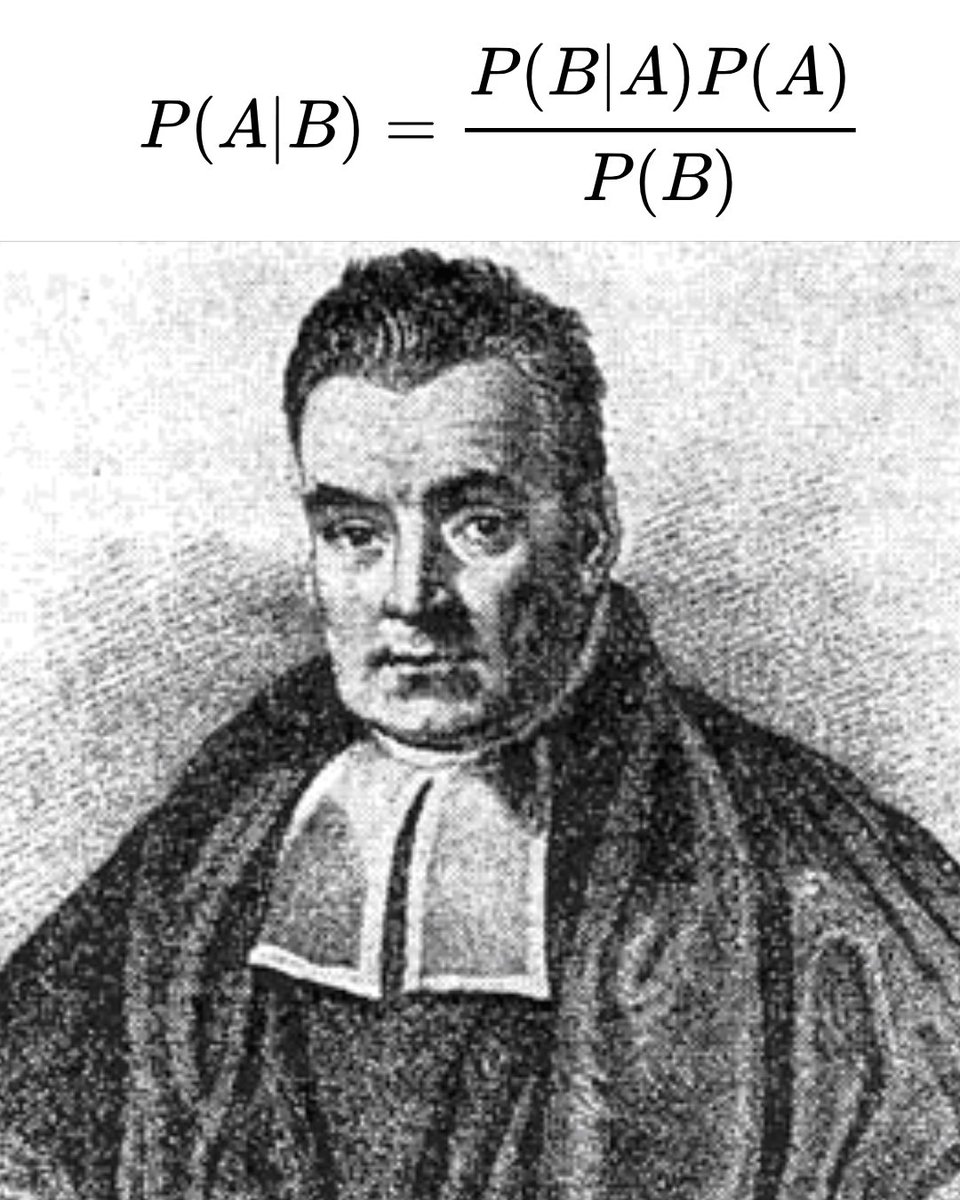
Bayes’ theorem is probably the single most important thing any rational person can learn.
So many of our debates and disagreements that we shout about are because we don’t understand Bayes’ theorem or how human rationality often works.
Bayes’ theorem is named after the 18th-century Thomas Bayes, and essentially it’s a formula that asks: when you are presented with all of the evidence for something, how much should you believe it?
Bayes’ theorem teaches us that our beliefs are not fixed; they are probabilities. Our beliefs change as we weigh new evidence against our assumptions, or our priors. In other words, we all carry certain ideas about how the world works, and new evidence can challenge them.
For example, somebody might believe that smoking is safe, that stress causes mouth ulcers, or that human activity is unrelated to climate change. These are their priors, their starting points. They can be formed by our culture, our biases, or even incomplete information.
Now imagine a new study comes along that challenges one of your priors. A single study might not carry enough weight to overturn your existing beliefs. But as studies accumulate, eventually the scales may tip. At some point, your prior will become less and less plausible.
Bayes’ theorem argues that being rational is not about black and white. It’s not even about true or false. It’s about what is most reasonable based on the best available evidence. But for this to work, we need to be presented with as much high-quality data as possible. Without evidence—without belief-forming data—we are left only with our priors and biases. And those aren’t all that rational.
How can businesses go beyond using AI for incremental efficiency gains to create transformative impact? I write from the World Economic Forum (WEF) in Davos, Switzerland, where I’ve been speaking with many CEOs about how to use AI for growth. A recurring theme is that running many experimental, bottom-up AI projects — letting a thousand flowers bloom — has failed to lead to significant payoffs. Instead, bigger gains require workflow redesign: taking a broader, perhaps top-down view of the multiple steps in a process and changing how they work together from end to end.
Consider a bank issuing loans. The workflow consists of several discrete stages:
Marketing -> Application -> Preliminary Approval -> Final Review -> Execution
Suppose each step used to be manual. Preliminary Approval used to require an hour-long human review, but a new agentic system can do this automatically in 10 minutes. Swapping human review for AI review — but keeping everything else the same — gives a minor efficiency gain but isn’t transformative.
Here’s what would be transformative: Instead of applicants waiting a week for a human to review their application, they can get a decision in 10 minutes. When that happens, the loan becomes a more compelling product, and that better customer experience allows lenders to attract more applications and ultimately issue more loans.
However, making this change requires taking a broader business or product perspective, not just a technology perspective. Further, it changes the workflow of loan processing. Switching to offering a “10-minute loan” product would require changing how it is marketed. Applications would need to be digitized and routed more efficiently, and final review and execution would need to be redesigned to handle a larger volume.
Even though AI is applied only to one step, Preliminary Approval, we end up implementing not just a point solution but a broader workflow redesign that transforms the product offering.
At AI Aspire (an advisory firm I co-lead), here’s what we see: Bottom-up innovation matters because the people closest to problems often see solutions first. But scaling such ideas to create transformative impact often requires seeing how AI can transform entire workflows end to end, not just individual steps, and this is where top-down strategic direction and innovation can help.
This year's WEF meeting, as in previous years, has been an energizing event. Among technologists, frequent topics of discussion include Agentic AI (when I coined this term, I was not expecting to see it plastered on billboards and buildings!), Sovereign AI (how nations can control their own access to AI), Talent (the challenging job market for recent graduates, and how to upskill nations), and data-center infrastructure (how to address bottlenecks in energy, talent, GPU chips, and memory). I will address some of these topics in future posts.
Against the backdrop of geopolitical uncertainty, I hope all of us in AI will keep building bridges that connect nations, sharing through open source, and building to benefit all nations and all people.
[Original text: https://t.co/Ck52mNGX4a ]
We’re launching full-length, on demand practice exams for standardized tests in @GeminiApp, starting with the SAT, available now at no cost.
Practice SATs are grounded in rigorously vetted content in partnership with @ThePrincetonRev, and Gemini will provide immediate feedback highlighting where you excelled and where you might need to study more.
To try it out, tell Gemini, “I want to take a practice SAT test.”
When I created Claude Code as a side project back in September 2024, I had no idea it would grow to be what it is today. It is humbling to see how Claude Code has become a core dev tool for so many engineers, how enthusiastic the community is, and how people are using it for all sorts of things from coding, to devops, to research, to non-technical use cases. This technology is alien and magical, and it makes it so much easier for people to build and create. Increasingly, code is no longer the bottleneck.
A year ago, Claude struggled to generate bash commands without escaping issues. It worked for seconds or minutes at a time. We saw early signs that it may become broadly useful for coding one day.
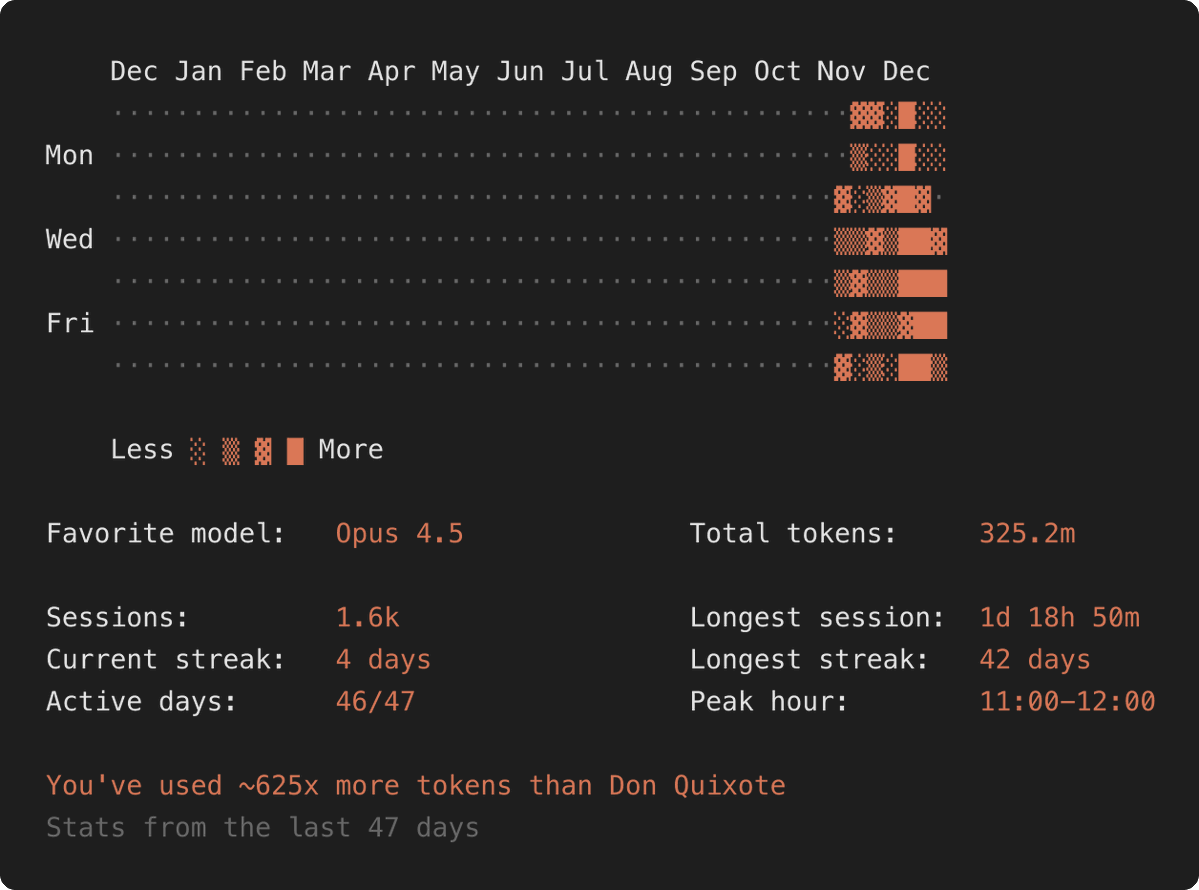
Fast forward to today. In the last thirty days, I landed 259 PRs -- 497 commits, 40k lines added, 38k lines removed. Every single line was written by Claude Code + Opus 4.5. Claude consistently runs for minutes, hours, and days at a time (using Stop hooks). Software engineering is changing, and we are entering a new period in coding history. And we're still just getting started..
You went 🍌🍌 for Nano Banana. Now, meet Nano Banana Pro.
It’s SOTA for image generation + editing with more advanced world knowledge, text rendering, precision + controls. Built on Gemini 3, it’s really good at complex infographics - much like how engineers see the world:)
"Every time I go to Bangalore, I come back twice as energised. I meet people who speak fluent German and have never been to Germany. We will go to where that kind of talent is," says Mercedes-Benz CEO
This reminds me how Anthropic was the first to introduce:
Projects
Canvas
Computer Use
Coding CLI
MCP
and now Skills.
We can say many things about Anthropic, but we cannot say that they don't actively innovate and share regarding LLM usage and ergonomics.
Leave Europe, Indians need one trip to Sri Lanka to realise how Indian Politicians have been scamming them since independence
This is Colombo, Sri Lanka
Here is my raw prompt for lovable.
Help me ways to improve this prompt.
"I am creating an App called "Predictify" a Health Management App with 2000, 4000, 6000, 8000, 1000 walking challenges (a leaderboard for this) and "Skip Breakfast", "12-12 Fasting", 16-8 Fasting, 24 Hours Water Fasting, 36 Hours Water Fasting (another leaderboard for this) and dieberic management (recording Hb1ac level), Recording Fasting Glucose level, Postprandial Glucose Level, and another special section as Supplements Intake (Vitamin D3, Magnesium Glicinate, Creatine, Omega 3, Vitamin K2, Zink) . A overall health score and should be displayed in the top of the application and the score is calculated how well the user manages each section. Participating and logging each section every day improves the health score. This application should have a login screen where the user logs in with their WhatsApp number with country code and a 4 digit password / confirm password (confirm password appears only first time) and the second screen is terms and conditions agreeing screen (with a terms and conditions generated for health based apps) and a private policy and the third screen is profile building with Name, X id (it should be linked with their X profile), email, Age, any chronic health conditions and medicines intake and finally shows the app. The user logs each section on their own and every section have separate leaderboard and a overall leaderboard for people logging their details in all sections. The application should have a really good footer with copyright information and social profiles and terms and conditions and private policy. Nice layout for desktop and mobile views . Nice animations using three js. Supabase tables for each area of the application and it's stored with table name's start with predictify_ in the database so it's unique. Build the application thinking that you are really a senior developer"