@LASportsOrthoMD Just had high grade partial tear Sunday. I'm on the fence at to whether to have surgery to repair or not. I enjoy pretty intense calisthenics, rope climbing, etc. so I'm concerned if I don't have surgery I may just be delaying the inevitable.
@DrJackKruse That's the newer systems we're putting on pools now. Has a copper, zinc and silver bar system. Way less maintenance than even a salt system on a pool.
Today, on my final day as Director of National Intelligence, I’m releasing never-before-seen communications and documents exposing how Dr. Fauci provided millions in US taxpayer dollars to fund dangerous gain-of-function research at the Wuhan lab, worked with politicized elements within the Intelligence Community to suppress the truth about his actions and hide the virus’ lab-leak origins, and lied to Congress while under oath in 2024. It’s time you know the truth.
https://t.co/3YJSstB7d4
This is what honest people do when they get into positions of power in the government, but 99.9% are just addicted to the position. Think of all the people who have been lying to you, and those who are covering up for them.
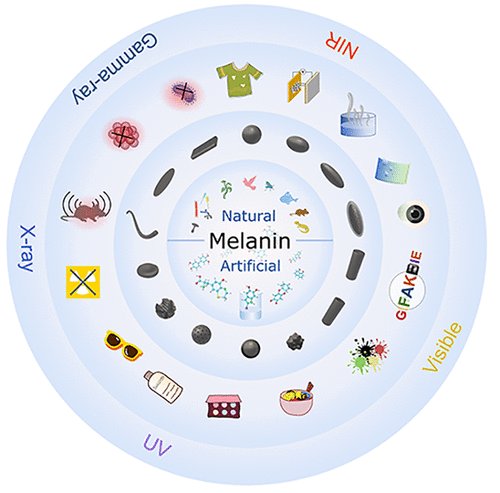
Melanin is the missing link explaining how humans interact with the energy around them.
It uses light to generate an electric field within the body.
Sunlight, grounding, organic food and healthy relationships strengthen this field.
Blue light, non-native EMFs weaken it.
Your banana from Ecuador has more deuterium than an apple grown in Hungary.
This isn't a small difference.
It's built into the biology of where the plant grows.
Gábor Somlyai, molecular biologist & cancer researcher:
"In the equatorial area, rain deuterium concentration is 155 ppm. As we go toward the poles, surface water deuterium decreases."
Tropical fruits grow in high-deuterium water.
They carry that load into your cells.
But it goes deeper than geography.
Plants fix carbon dioxide through different pathways — C3, C4, and CAM.
C3 plants (wheat, spinach) deplete deuterium more. Lower load.
C4 plants (corn, sugar cane) sit closer to 150 ppm. Higher load.
CAM plants — like pineapple — can actually concentrate deuterium above ambient levels.
So pineapple isn't just tropical.
It's actively accumulating deuterium through its own metabolism.
Human populations evolved eating the food grown in their region — drinking the water of their latitude.
That food matched their biology.
Today someone in Norway eats bananas from Ecuador, oranges from Spain, pineapple from Costa Rica.
Every one of those choices shifts the average deuterium burden upward.
Eat local. Eat seasonal. Match food to the geography your biology evolved in.
Not complicated in principle.
Just largely ignored.