Dedicated to upholding objectivity in my critical thinking, free from personal biases, opinions, or emotions. The outcome must never excuse the methods used.
Illegal immigration and its impact on congressional seats . . . @ICEgov
Illegal immigration impacts the U.S. Census by including all residents, regardless of legal status, in the population count used to apportion seats in the House of Representatives. Since House seats are distributed based on each state’s total population, states with high numbers of illegal immigrants, like California or Texas, often gain additional seats due to their inflated population counts. For example, estimates suggest illegal immigrants accounted for roughly 2-4 seats in California alone in recent censuses. Conversely, states with low immigration, such as Ohio or Michigan, lose representation because their relative population growth is slower. This redistribution shifts political power toward states with significant illegal immigrant populations, effectively diluting the representation of citizens in low-immigration states.
This dynamic creates a perverse incentive for some states to tolerate or even encourage illegal immigration, as it boosts their congressional influence and Electoral College votes. The inclusion of non-citizens in apportionment calculations means that states with sanctuary policies can gain seats at the expense of others, even though illegal immigrants cannot vote. This undermines the principle of equal representation for American citizens, as votes in low-immigration states carry less weight compared to those in high-immigration states, skewing the democratic process.
When a state gains a seat in the U.S. House of Representatives, it comes from another state that loses a seat, as the total number of House seats is fixed at 435.
Are you starting to see the issue with illegal immigration?ice
A million seconds ago was October 11th
A billion seconds ago was 1993
A trillion seconds ago was 30,000 B.C.
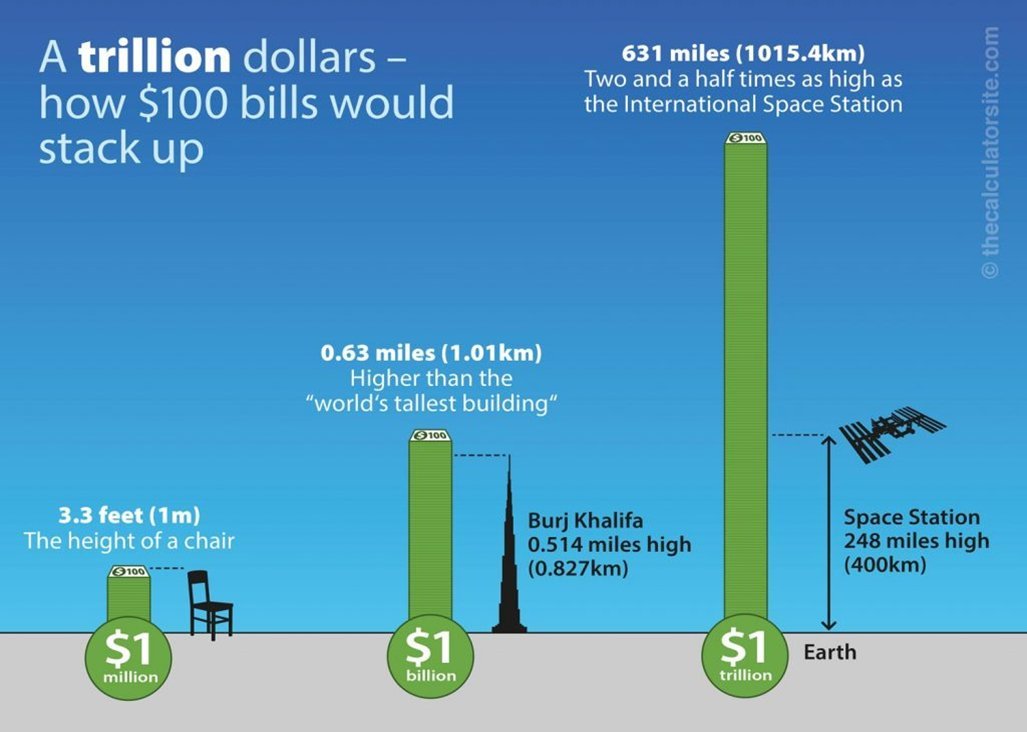
The US national debt is now rising by $1 Trillion every ~180 days.
If you believe free speech is for you but not your political opponents, you're illiberal.
If no contrary evidence could change your beliefs, you're a fundamentalist.
If you believe the state should punish those with contrary views, you're a totalitarian.
If you believe political opponents should be punished with violence or death, you're a terrorist.