India’s next chapter will be built by entrepreneurs.
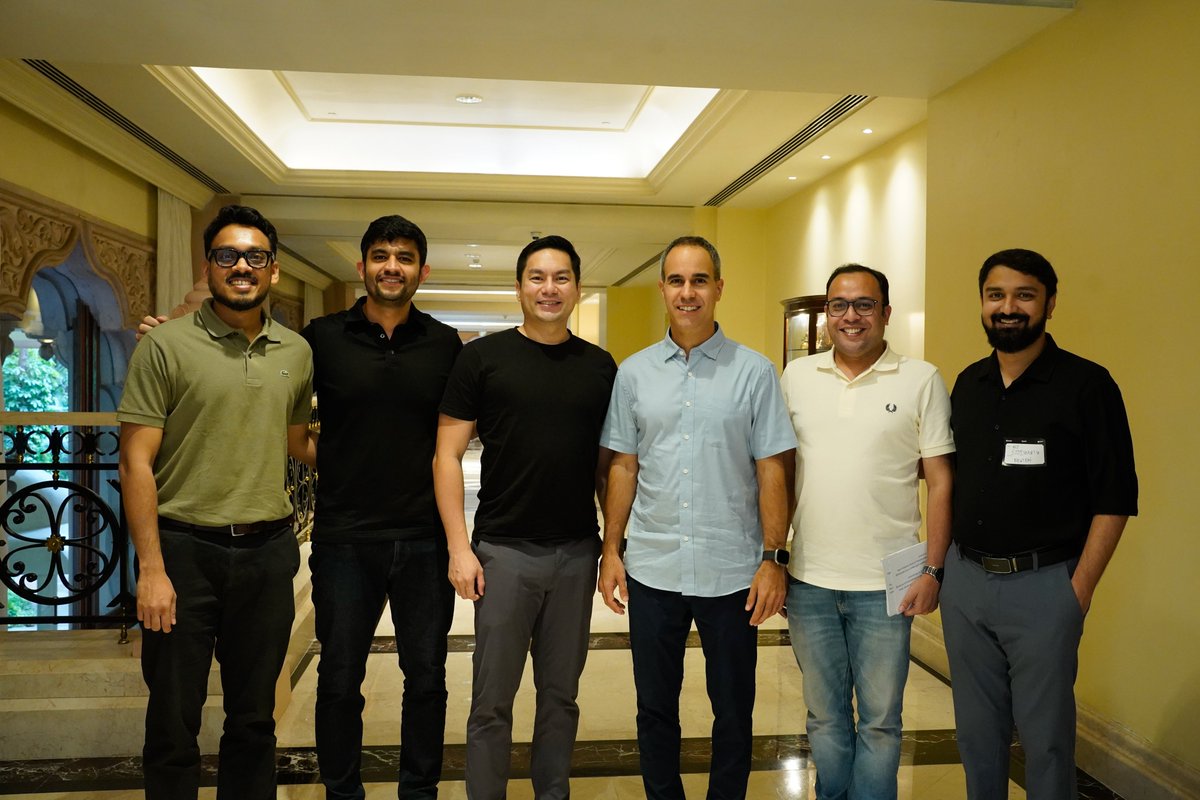
Glad to join CM @gupta_rekha and @ashishsood_bjp at a Delhi Government roundtable proactively seeking founder input on policy.
Brought an on-ground perspective alongside fellow founders shaping India’s startup ecosystem.
About five reactors on earth are chasing net gain fusion by 2030.
One of them is being built in Bengaluru. By 12 people.
Thrilled to be in the room and watch the tokamak fire.
The ambition of Indians is unbounded.
More power to you @PranosFusion@Shauryapranos 🇮🇳
What if your Trading App could automatically mark up Chart Patterns for you? Would that be magical? :)
This is possible only because we built our tech stack inhouse, rather than rely on 3rd party charting components. It took time to get these components built out in a modular fashion, but magic happens when the Intelligence layer meets the Tools layer within the @Sahi_HQ technology stack.
This is just the beginning. The future of trading and investing is coming sooner than you imagine, and the next 10 years of Broking and Wealth will be nothing like the last 10 years. Stay tuned!
I’m approaching 50. I looked at what happened to my college batch after nearly 27-28 years in the tech industry.
The numbers are uncomfortable:
15% - got laid off and never found their way back into tech.
15% - left IT and moved into business.
25% - stuck in middle management, fearing the next layoff.
10% - retired early.
10% - moved into consulting/training.
5% - senior leadership.
20% - still hands-on, learning and reinventing themselves.
The interesting part?
The people who stayed relevant weren't necessarily the smartest or most experienced.
They kept learning.
They stayed hands-on.
They reinvented themselves.
And whoever I talk to - those numbers are mostly true for most of the middle and senior management for tech industry in India.
The problem isn't age. The problem is that we stop learning.
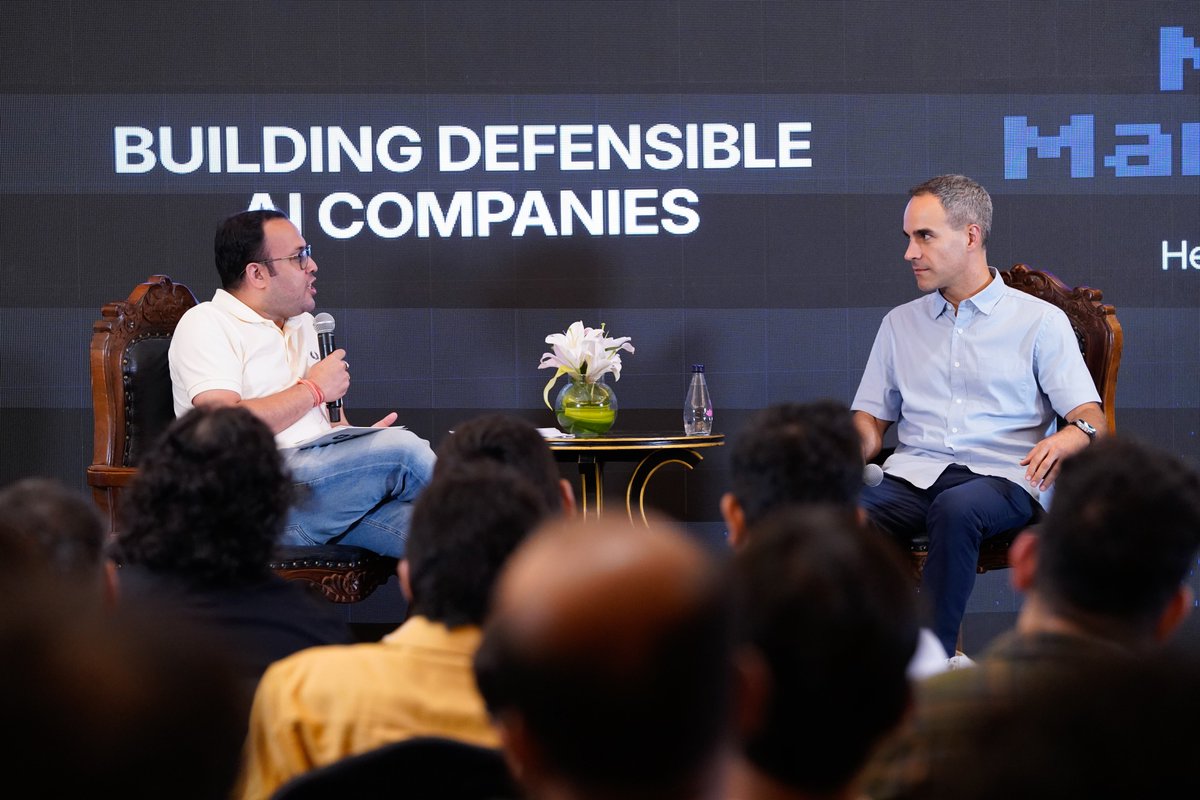
What makes an AI company defensible as frontier models become widely accessible?
At FutureLab by @nst_edu in Bengaluru, @nhlhomer of @OpenAI and @pratikpoddar of @NexusVP joined founders, technology leaders and NST students to explore what makes AI products endure.
Speed is the headline, selection is the actual unlock.
Q-Com changed my food consumption patterns to completely healthy brands - I was earlier eating what the stores had, Q-Com enabled choice at unprecedented levels. Similar effects will be seen here.
The thrive consumer app launched in 2023 within a year scaled up to 10% of order volume in Mumbai, with 4000 restaurants (30% of the total restaurants). We crossed 3000 order per day at peak, Rapido is now at 2000. There was a high order frequency for power users driven by value based pricing + a social mechanic which was vvv new. We tried to engineer distribution through strategics like JFL & Coca Cola but it was slow. At the end of the day the bet was always a 50-50 but it was the only way to actually redefine the market. Rather that bet than a slow incremental lift for restaurants. Did almost pull a genie out of the hat with a deal right at the end. But the timing was just not right. Still believe India hasn’t unlocked a large TAM on food beyond the 25M users, Rapido and Flipkart are on to something, this does need extensive capital for unlocking distribution or innovative models like Swish. Once any of these gain momentum it’s difficult for Z/S to manoeuvre since their core mechanics doesn’t allow for rethinking of commission pricing.
FutureLab by @nst_edu brings founders into a small room with people who have a front-row view of technology.
On 6 August, Marc Manara (@nhlhomer ), Head of Startups at @OpenAI, joins us. @pratikpoddar, Partner at @NexusVP, will host.
AI founders, apply: https://t.co/ukSOqSmZNS
ORBIT ACHIEVED. 🚀
Vikram-1 Test Flight-1 has reached orbit. India's first privately developed orbital rocket has completed its final burn and injected its payloads into a ~450 km orbit, making India the third country in the world with private orbital launch capability.
History is made. 🇮🇳
#Vikram1 #JourneyToOrbit #SkyrootAerospace
3 months ago I built an AI engineer that lives inside Slack.
Today, people from Tech, Design and Product at Newton School @-mention it like a teammate.
1,040 jobs run. ~$1.55 each. Built solo.
Here's the story 🧵
Build was failing. Asked Claude Code (Opus) why. Root cause: a lint error. Its fix: wrap the line in eslint-disable comments. Build green.
It didn't fix the problem. It silenced the witness.
Praying Fable hasn't inherited this move. Anyone else's agent done this?
Thanks for tagging.
We shared the order execution data, from our Execution Management System (in AWS Mumbai) to our OMS/RMS (in a physical DC) and then to the Exchange server.
Have a look. -
https://t.co/UIC6pFSvIC
Frankly, we were also puzzled to see a post comparing our latency to HFT latency. No HFT would survive with millisecond execution latency. Jane Street, for example, executes orders in just 200 nanoseconds.
Anyway, we are a retail focused brokerage and will continue to work hard and bring new technology and platform capabilities to our users.
Trojan Horse strategy 😲🤯
Sending household help at deeply discounted rates, with the intention of collecting and selling training data for Robotic AI.
That's the real money business. Wow!
We just wrapped our annual performance review at Sahi.
Nobody got promoted. And we love it.
@Sahi_HQ is 2.5 years old, and we've consciously avoided internal job levels and fancy designations. Every engineer is a "Software Engineer." Every PM is a "Product Manager." That holds across the company.
Having built and led 1000+ people organizations at @amazon and @Swiggy , I carry painful memories of what traditional org structures — levels, titles, ladders — actually do to a company. I've been guilty of it myself. At Swiggy, we created titles and new levels because we had to, as tools to attract and retain talent. It's a slippery slope. Once you anchor people to levels and titles, they start to optimize for them.
I call this the "resume-driven development" phase: careers are built around what it takes to get promoted, not what the company actually needs. The machinery around promotions — peer feedback, promo templates, calibration cycles — only deepens it. Employees and managers spend weeks "aligning feedback providers" and "gathering data points." Before long, the promotion process becomes the single most important conversation between a manager and their report.
All of this to climb a ladder that was invented to give people a sense of personal growth.
After 20+ years of watching it up close, I can say it plainly: promotion culture is broken. It's the opposite of what great companies need to win.
Great companies hire missionary talent, trust them with the freedom and opportunity to do meaningful work, and share the rewards through wealth creation.
At Sahi, we're holding on to this. Every team conversation is about impact and outcomes, with zero time lost to promotion politics and the Day 2 culture rot it leaves behind.
In the age of the AI-native company, the old hierarchies are dead.
**Performance Culture >> Promotion Culture**
We just closed our Series B. $33M at $200M valuation. 3.3x step-up from Series A.
I'll be honest, I almost didn't post about this.
Valuation is the easiest number in a startup to celebrate. It's also the least real. It's just a number that our investors and us agreed on in a room. That's it.
The numbers we actually celebrate are different ones:
→ 4 lakh demat accounts. Each customer acquired by our marketing teams, with honest messaging and sharp targeting.
→ 96% of orders executed under 10ms. Each millisecond fought for by our engineers who care deeply about slippage and losses.
→ 40+ product releases in 1 year. Each one shipped by a super lean product and tech team that is innovating at AI native speed.
→ 130 million trades processed since launch. Each one processed flawlessly by our dedicated Operations team, every single day
→ 90% CSAT positive rating. Each customer interaction carefully resolved with genuine care by our Customer Delight team
These numbers don't come from capital. They come from the team. This Series B funding isn't a finish line. It's just rocketfuel for the team that built and operates this thing.
And so, I raise a toast to the Team at @Sahi_HQ . Thank you for everything you bring to work every single day, and the impact you create. Onwards and upwards.
Full circle at NST!
Weeks after our China immersion, we hosted Mr. Qin Jie, Consul General of China in Mumbai.
He met our students & faculty, encouraged by young Indian talent engaging with China through tech, culture & shared experiences.
That’s how bridges get built. 🇮🇳 🇨🇳
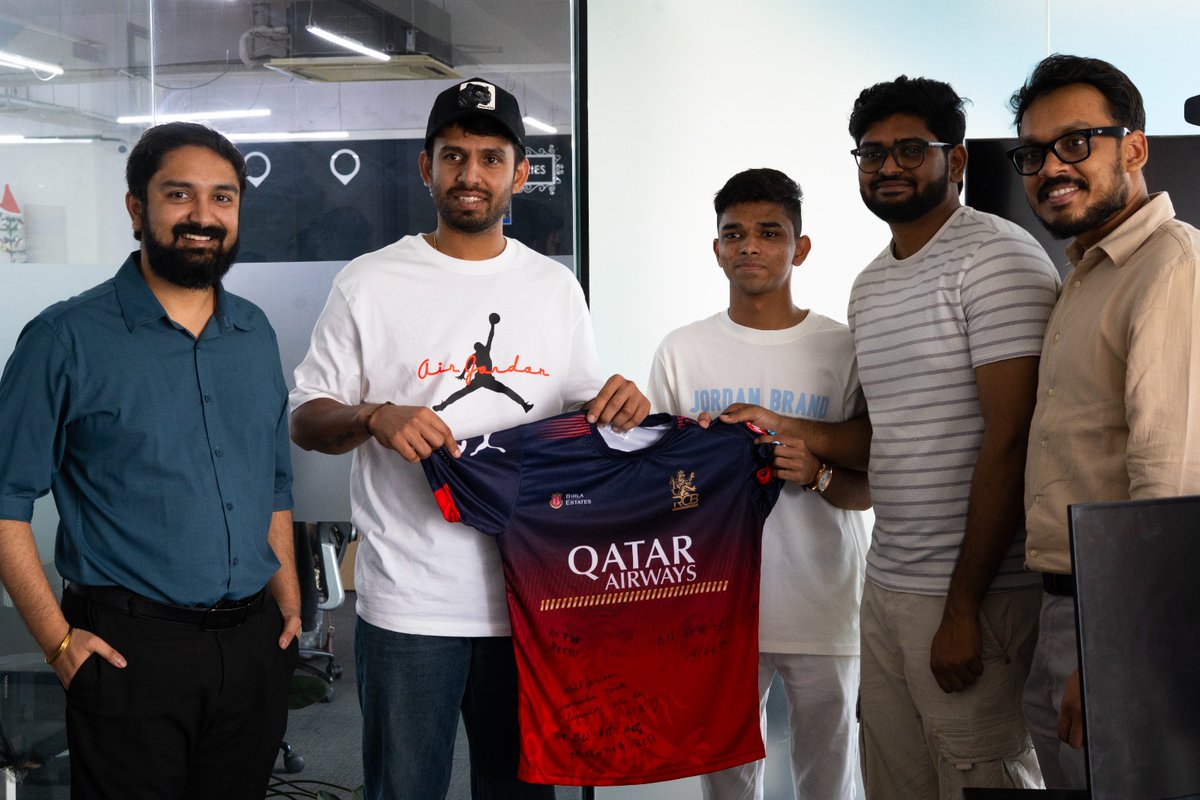
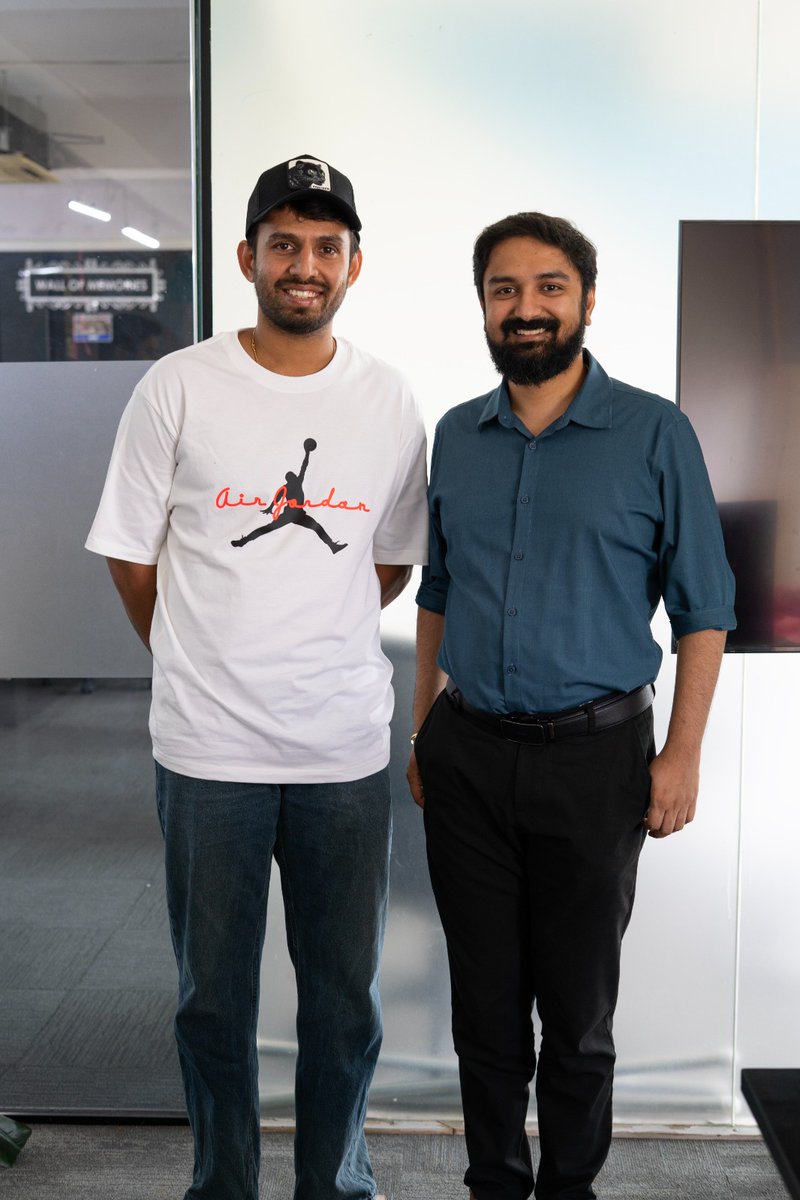
Something happened yesterday that filled me with pride.
Two second-year students didn’t just build a startup, they got Jitesh Sharma (@jiteshsharma_) on board as their brand ambassador and investor. They also hosted him at our office and introduced him to us.