.@SecRubio: "The president made the very wise decision—we knew that there was going to be an Israeli action, we knew that that would precipitate an attack against American forces, and we knew that if we didn’t preemptively go after them before they launched those attacks, we would suffer higher casualties."
⚡️🇸🇦BREAKING: Iran did not strike Aramco.
Saudi Arabia’s Defense Ministry Spokesperson Turki Al-Maliki tells Al Arabiya that falling debris from the intercepted drones caused a “limited fire” at the Aramco Ras Tanura refinery.
US-Israeli airstrikes on Iran hit areas around Gandhi Hospital in Tehran, forcing medical staff to evacuate patients, including newborns.
Witnesses and Iranian media said the hospital sustained damage as explosions struck the surrounding area, while rescue teams rushed to transfer vulnerable patients to safer locations.
A recap of the day 2 of #Iran vs US/Israel war:
🔹Israel announced it had opened an aerial corridor toward Tehran roughly 24 hours into operations. This marks a shift from initial decapitation strikes to sustained air operations, enabling repeated targeting across Iran rather than limited raids.
🔹Targeting patterns evolved noticeably. Israeli strikes increasingly focused on IRGC bases, Basij infrastructure, and police facilities, suggesting an effort to weaken the regime’s coercive and internal security capacity rather than solely eliminate senior leadership.
🔹Benjamin Netanyahu simultaneously called on Iranians to take to the streets. The emerging strategy appears dual-track: degrade repression capabilities while encouraging internal unrest once enforcement capacity erodes.
🔹Iranian analysts close to the security establishment interpret the campaign as phased; beginning with leadership decapitation and transitioning toward systemic destabilization, potentially including activation of internal or peripheral armed networks.
🔹This perception may explain why Iran has not rushed to appoint a new Supreme Leader. Announcing a successor during active conflict could create an immediate targeting vulnerability and further destabilize the system.
🔹Iranian leadership messaging on state television emphasized unity among members of the leadership council, indicating an effort to project institutional continuity and prevent perceptions of fragmentation.
🔹Foreign Minister Abbas Araghchi framed the war as one Iran intends to end on its own terms, highlighting the country’s decentralized defense structure and signaling confidence in its ability to sustain prolonged conflict.
🔹The conflict increasingly resembles a war of wills. Iran appears focused on imposing costs – particularly human costs – on U.S. forces, while Washington signals readiness to absorb casualties to achieve strategic objectives.
🔹Donald Trump stated operations would continue as long as necessary, acknowledging additional American losses were likely. The messaging suggests an effort to challenge Tehran’s assumption that U.S. political tolerance for casualties remains limited.
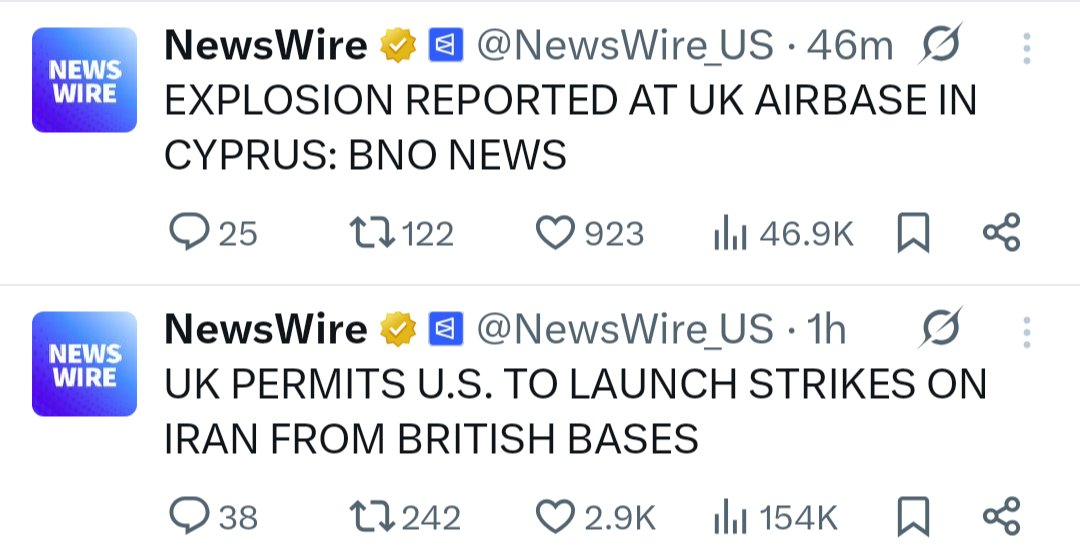
🔹Britain moved closer to operational involvement while avoiding direct combat participation. London approved expanded U.S. base access and endorsed targeting Iranian missile capabilities at their source.
🔹Britain is also reportedly seeking to draw on Ukrainian battlefield experience against Iranian drones to help Gulf partners strengthen air defenses, reflecting the growing transfer of lessons from the Ukraine war into the Middle East.
🔹The European Union also announced reinforcement of naval deployments across the Red Sea, Indian Ocean, and Persian Gulf, signaling widening Western logistical and defensive engagement.
🔹Geographically, the war expanded significantly. Iranian missiles were reportedly fired toward Cyprus, while a suspected drone incident targeted a British base, indicating pressure against Western logistical hubs.
🔹Maritime escalation accelerated. Oil tankers and port infrastructure near Oman were reportedly targeted, extending the conflict into critical energy and shipping routes near the Strait of Hormuz.
🔹These actions raise global economic stakes but also risk retaliation against Iran’s own energy infrastructure, potentially opening a new escalation phase.
🔹Regional polarization deepened as the UAE closed its embassy in Tehran and evacuated diplomatic staff, signaling rising tensions between Iran and Arab states.
🔹Late reports of rocket launches from Lebanon toward Haifa suggest possible Hezbollah involvement, which, if confirmed, would mark the opening of an additional front.
🔹Also, Iran-aligned Iraqi “resistance” groups have begun activating another pressure front, increasing attacks and threats against U.S. positions in Iraq. This signals Tehran’s shift toward multi-theater cost imposition, aiming to stretch American forces regionally.
🔹Russia and China have not intervened directly, but neither appear to be restraining Iran despite risks to Gulf stability, suggesting tentative acceptance of Tehran’s framing of the conflict as existential.
🔹Reports of attacks on Iranian border guard positions in western regions point to a possible effort to weaken border control and create opportunities for armed groups operating along Iran’s periphery.
🔹Overall, the emerging model relies on sustained airpower, internal pressure, and regional escalation (on the Iranian side) to shape outcomes indirectly.
🔹By the end of Day 2, the conflict is no longer confined to Iran-Israel confrontation. Maritime routes, Gulf security, Western bases, and potential proxy fronts are increasingly part of the battlefield.
🔹The central question now is whether this widening escalation remains controlled or whether expanding geographic and political fronts transform the war into a prolonged regional conflict.