🧐 Qui est Luqman dans le Coran ?
Le Coran mentionne un personnage assez mystérieux appelé Luqman. Les commentateurs musulmans se sont divisés sur son identité.
On a dit qu'il était un esclave éthiopien, un juge d'Israël, un prophète arabe, le neveu du prophète Job, etc.
Bref, comme souvent, on tombe face à un mur de contradictions.
Mais la recherche historique a enfin levé le voile sur un mystère millénaire !
Dans cette vidéo, Ferghane Azihari montre que le Luqman du Coran est un amalgame de plusieurs figures de l'Antiquité : Alcméon de Crotone, mais aussi Ahiqar, un personnage semi-légendaire d'origine mésopotamienne.
The clan of Jacob-el lived in Mount Seir in the 13th century BCE, they could have heard about YHWH, the god who comes from Seir from their Kenite-Midianite neighbours. They could have been the mediators who brought the name and cult of YHWH from Seir-Edom to early Israel.
Source: Jacob-el in the land of Esau and the Roots of Biblical Religion, Prof Israel Knohl
"Geç Antik Çağ'da Hicaz bölgesinde Süryanice yazılmış çeşitli Apokrif İncillerin ve Süryanice İncil'e (Peşitta) ait parçaların bulunması muhtemel görülüyor."
1/2
The black stone of the Arabic Kaaba+the stone of the Hebrew temple represent the rock Saturn swallowed in the place of his infant son post-Uranus skyfather Zeus. This rock was said to have turned into the navel of the world- exactly like the Semitic bethels/black stones
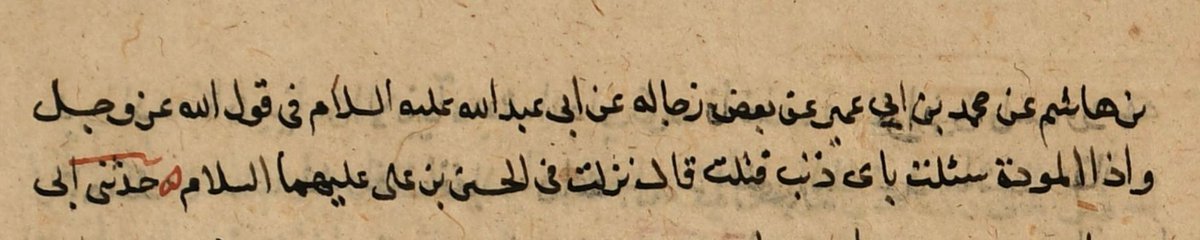
Hey Doc, I wanted to ask your thoughts on this reading of Surah 81:8, where "الموؤدة" is replaced with "المودة".?
It's plastered all of the Shia corpus, and it is a slightly more difficult reading than the normative one.
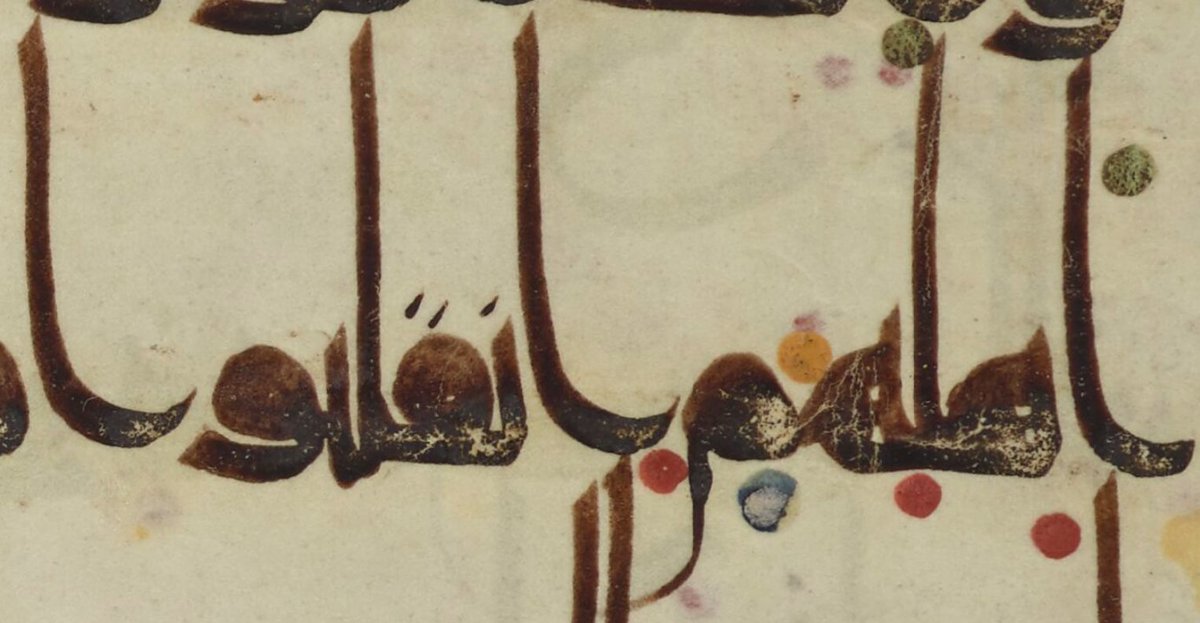
So there is something slightly weird about the report of Ibn Ḏakwān in the Ǧāmiʿ al-Bayān... al-Dānī tells us that al-Taġlibī reports both Q51:60 yawmihumu llaḏī and Q83:31 ʾahlihumu nqalabū without vowel harmony for Ibn Ḏakwān... but where is he getting that info from?
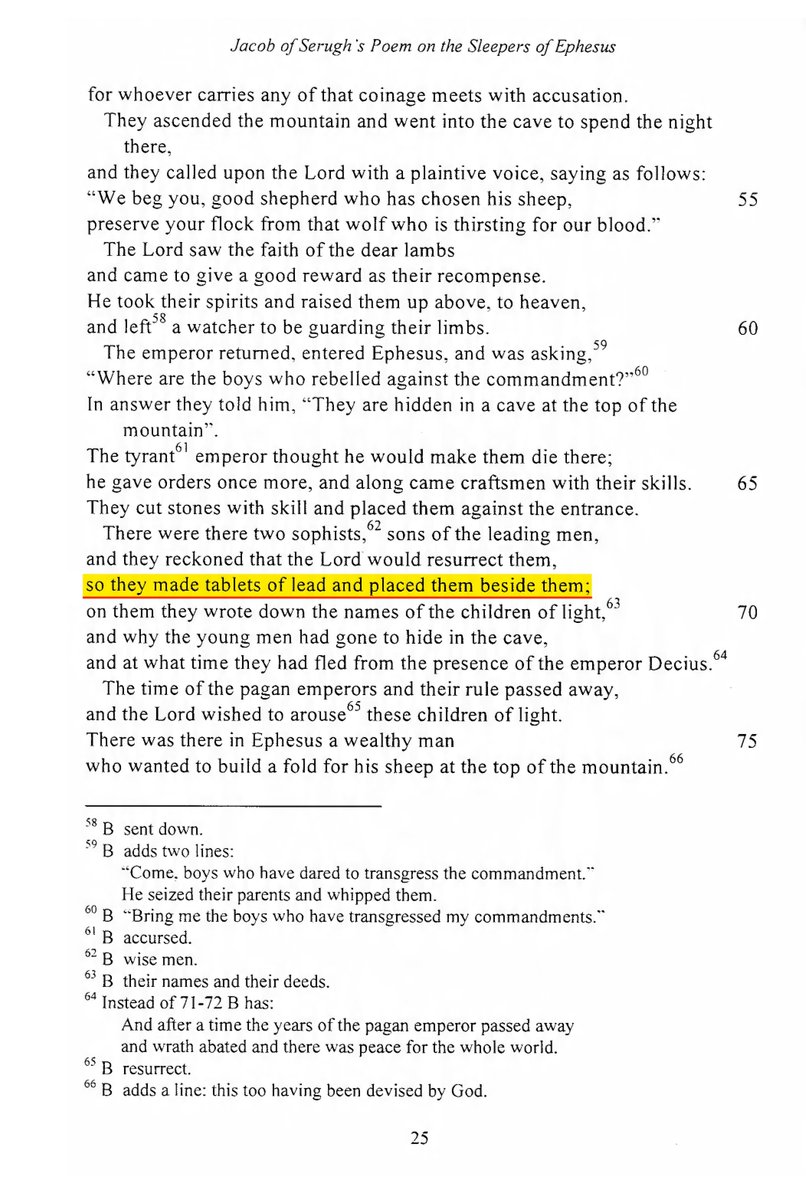
Ashâbe'l Kehfi ve'r Rakîm..
|| Kehf Suresi 9. Ayet
Said b. Cübeyr şöyle dedi:
"er-Rakîm" Ashâb-ı Kehf'in mağaranın kapısına koydukları bir levhadır.
"Rab'bin onları yeniden dirilteceğini düşündüler. Bu yüzden kurşundan levhalar yapıp onları yanlarına koydular."
|| Suruçlu Yakup
The closest known parallel to the enigmatic Qurʾānic expression Allāh al-ṣamad in Q 112:2 does not appear to be a clearly identifiable biblical formulation. Rather, it may be found in the 9th c. BCE Kilamuwa Stela, which preserves 'Bʿl Ṣmd'.
الأصول البيئية للشرف، الشرف بتعبير بسيط يعني السمعة،والسمعة تعني حالتك ونظرة الآخرين لك،والاكتراث برأي الآخرين عنك وسلوكهم وانتشاره بشكل جماعي يسمى ثقافات الشرف. لا شك فيه أن ثقافات الشرف قديمة جدا،أغلب الدراسات تشير إلى ظهوره مع حياة الرعي. في حياة الرعي، مثل رعي الأبقار والغنم،
و أيضا يوجد إعجاز علمي في الشعر العربي القديم، ومثله كما يقول أبو نواس "داوني بالتي كانت هي الداء"، الاعجاز هنا أنه سبق علماء النفس إلى فكرة أن المنع يزيد الرغبة، وسبق الطب الحديث بقرون إلى فكرة استخراج الدواء من
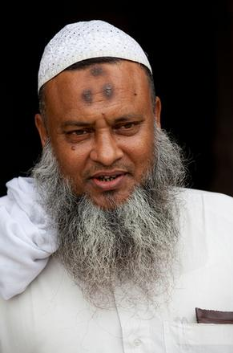
La trace de la prosternation chez les musulmans
Vous avez sûrement déjà remarqué que certains musulmans ont une trace (parfois plusieurs) au niveau du front.
Cette tâche est appelée zabîba (« raisin ») à cause de son aspect.
Elle apparait chez certaines personnes à cause de la friction répétée de la peau contre le sol ou le tapis de prière.
Il s'agit d'une affection totalement bénigne : une hyperpigmentation de la peau (et non d'un champignon comme je l'ai déjà lu par ici).
Mais l'intéressant n'est pas là. ⬇️
FIXING AN ISNAD🧵
A major challenge to historical analysis of hadiths is that isnads (chains of transmission) often come down to us corrupted due to copying or transmission errors. This corruption makes it hard to reconstruct the history of their transmission [1/x]
What happens when the written records of a Quranic reading tradition conflicts with the oral? What wins out?
The answer here is not always straightforward, and similar circumstances can lead to opposite outcomes. Let us have a look at two cases from al-Dānī's Ǧāmiʿ al-Bayān
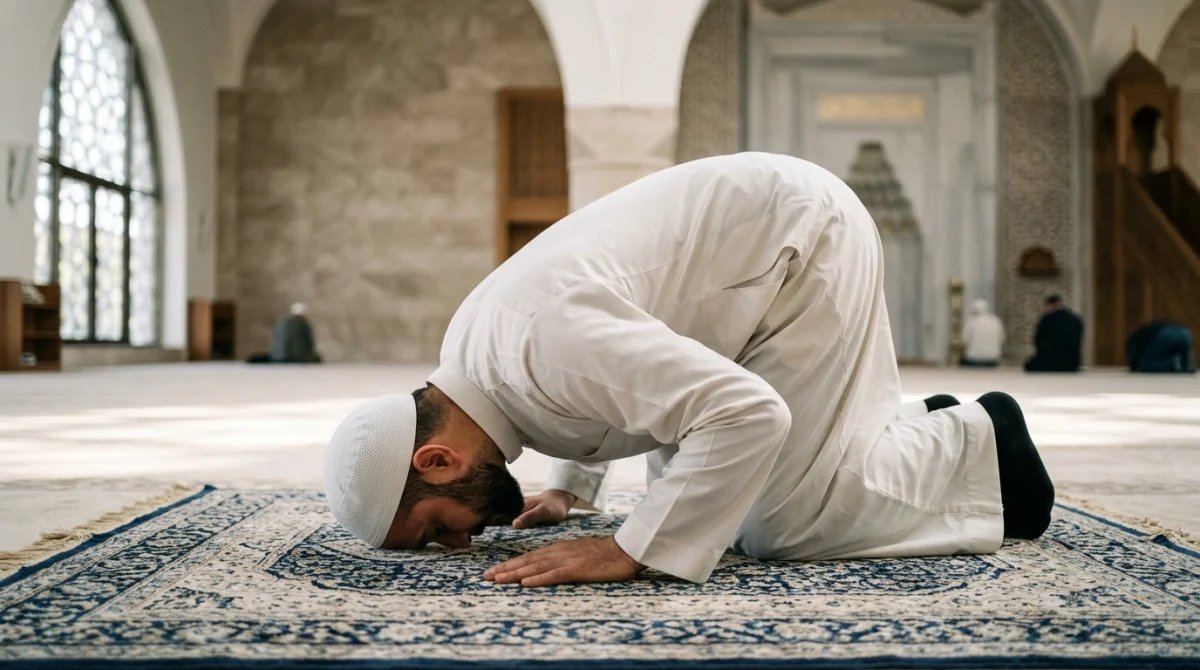
#Thread 🧶 : les origines des gestes de la prière musulmane
Dans l'islam, la prière est codifiée par des gestes et des postures comme la prosternation.
Petit thread où l'on retrace l'origine et la signification de ces gestuelles. ⬇️
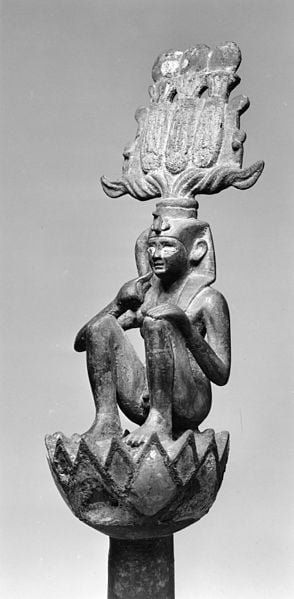
Could YHWH have been seen as a supreme solar deity by His earliest followers?
In his book “The Solar Nature of YHWH” scholar Daniel Sarlo challenges the long held view that YHWH is a minor storm god who rose to prominence later. YHWH was seen as the judge of the divine council and the one to protect those who had been downtrodden, the poor, the orphan and the widow. According to Daniel Sarlo’s theory these were traits typical of the ancient Near Eastern solar deity. His theory does not contradict with the belief that YHWH is the Creator and supreme god as that is how the solar deity was seen in the Ancient Near East.
Early Yahwistic poetry such as Deuteronomy 33 supports his theory as it describes YHWH as rising from the mountain:
Deuteronomy 33:2 And he said, YHWH came from Sinai, and rose up from Seir to them; he shone forth from Mount Paran..
Sources: The solar nature of YHWH, Daniel Sarlo
A fire kindles in my nostrils, it will burn to the lowest Sheol, Ancient Near Eastern Cosmology and YHWH as the sun in the Hebrew Bible, Daniel Sarlo
📚 Remarques sur l'inimitabilité du Coran
Pour beaucoup de musulmans, le Coran est un livre inimitable. Ce serait une preuve, sinon la preuve, de la véracité de l'islam.
Dans son "Philosophy of Religion", Samuel Lebens a bien résumé le syllogisme (implicite) :
1. Le Coran est inimitable.
2. Si le Coran est inimitable, alors l'islam est vrai.
3. Comme le Cora est inimitable, l'islam est vrai.
Mais ce syllogisme cache de nombreux écueils.
Le plus évident réside dans la proposition 1, selon laquelle le Coran est inimitable.
On a déjà vu que inimitabilité du Coran était un dogme apparu tardivement (les historiens le date du 9e/10e siècles).
De plus, il n'existe aucun moyen permettant de tester l'inimitabilité (supposée) du Coran, notamment à cause d'un manque de critères objectifs qui permettraient de départager l'original et son "imitation".
Autrement dit, on a affaire à une proposition infalsifiable qui ne relève pas du champs de l'analyse scientifique ou historique (ce qui n'empêche pas, évidemment, d'étudier l'histoire du dogme).
J'irai même encore plus loin : le dogme de l'inimitabilité relève, dans un certain sens, de la pensée magique et du discours performatif. C'est l'affirmation du dogme qui donne son effet à l'inimitabilité du Coran.
Le Coran est inimitable, donc il est inimitable.
Déjà au 19e siècle, l’orientaliste anglais Edward Henry Palmer notait que les musulmans « ont admis d’emblée qu’il [le Coran] est inégalable, et ils en ont fait le modèle stylistique par excellence ; toute divergence à son égard ne peut donc être perçue que comme une imperfection ».
Bref, pile je gagne, face tu perds !
On a vu également que le dogme ne faisait pas l'unanimité parmi les théologiens musulmans, et qu'il a même été contesté par certains courants "hétérodoxes", mais même par un tenant de l'orthodoxie sunnite comme Ibn Hazm.
Dans ce qui suit, j'ajouterai quelques remarques complémentaires. ⬇️
‘There is no document of civilization which is not at the same time a document of barbarism.’
– Walter Benjamin
There have been literally thousands of books written about the horrors and barbarities of the African slave trade as well as the subsequent treatment of slaves in North America. This is as it should be. But we often forget that slavery has always been with us since ‘civilisation’ arose. One only needs to remember that the people who would become the Jews were enslaved in Egypt before Moses led them to the ‘promised land’, where they could then slaughter and enslave others. Slavery has very little to do with colour and all to do with power, war and economics. There is hardly a society anywhere in the world which has not had slaves and many where de facto and sometimes even de jure slavery still exists. Here I want just to touch briefly on the ‘white slavery’ practiced by the Moslems of North Africa for over a thousand years. It’s a subject that was made all the more poignant for me when I discovered that my own 8th great grandfather, a Lancastrian mariner called Thomas Rimmer, was captured in the late seventeenth century by the Barbary corsairs and spent sixteen and a half years as a slave in North Africa.
The Vikings weren’t only rapists and pillagers; they weren’t in fact any more brutal than others at the time. The Vikings were also great long-distance traders. One of the principal things they traded was slaves. They took slaves from England, from France and from everywhere they could and then they brought them to the numerous slave markets long established in Europe, there generally to be on-sold to the Moslems who, starting in the seventh century, had conquered much of the Middle East and North Africa from the Romans. Like the Romans themselves the Moslems were dependent on slave labour. It didn’t matter to them the race or colour of their slaves. All that mattered was that they were the victorious people and the slaves, in whatever way, had been subjugated or captured. In England in the eleventh century the brutal Norman invaders had found active ‘white’ Anglo-Saxon slave markets still in existence, particularly in Bristol. The ultimate buyers were usually the Moslems in North Africa. Most of these unfortunate white slaves were, like slaves of all colours and at all times, rarely ever to return home, and had to suffer unbearable cruelty in their often short lives.
Over the coming centuries the white slave trade continued, but as various European countries managed to repress this trade, and as the various states in North Africa became more powerful at sea, the emphasis switched to the Moslems snatching white slaves from European ships in the Mediterranean and by making raids along the coasts of Europe. These slave raiders are known to history as the pirates or corsairs of the Barbary Coast. The historical consciousness of countries such as Spain and Italy have been seared with the memory of the Barbary corsairs and the countless thousands of their compatriots grabbed from their ships and homes to serve as slaves in Moslem galleys and palaces.
📷 : Inspecting New Arrivals (also known as Choosing the Favourite) by Italian Orientalist painter Giulio Rosati (1858-1917) .The scene depicts a interior with nude women being examined in a setting intended to represent an Ottoman harem.
#archaeohistories
Habakkuk 3:3 God comes from Teman, and the Holy One from Mount Paran. Selah. His glory covered the heavens, and the earth was full of his praise.
4 And his brightness is like the light; rays flash from his hand, and there is his power hidden.
5 Before him goes pestilence (Resheph), and burning coals (Deber) go forth at his feet.
Verse 5 Resheph and Deber may refer to two subordinate deities. These deities may also be mentioned in Psalm 78 referring to the plagues of Egypt:
Psalm 78:48 He gave over their cattle also to the hail (Barad), and their flocks to hot thunderbolts (Reshaphim).
Source: The solar nature of YHWH, Daniel Sarlo
The female name of Eve/Hawah comes from the same root as the male name of YHWH;
while the male name of Adam comes from the same root as the goddess Adamu.
This makes sense as "Adam/Edom" means "soil"+the Earth has always been female.
Adam+HaWaH>Adamu+yHWH
=male+female>female-male








![hadithworks's tweet photo. FIXING AN ISNAD🧵
A major challenge to historical analysis of hadiths is that isnads (chains of transmission) often come down to us corrupted due to copying or transmission errors. This corruption makes it hard to reconstruct the history of their transmission [1/x] https://t.co/EYcuh8I8Lo](https://pbs.twimg.com/media/HN-9Ho-XQAA0GdU.jpg)

![OrpheeDuNeoulf's tweet photo. 📚 Remarques sur l'inimitabilité du Coran
Pour beaucoup de musulmans, le Coran est un livre inimitable. Ce serait une preuve, sinon la preuve, de la véracité de l'islam.
Dans son "Philosophy of Religion", Samuel Lebens a bien résumé le syllogisme (implicite) :
1. Le Coran est inimitable.
2. Si le Coran est inimitable, alors l'islam est vrai.
3. Comme le Cora est inimitable, l'islam est vrai.
Mais ce syllogisme cache de nombreux écueils.
Le plus évident réside dans la proposition 1, selon laquelle le Coran est inimitable.
On a déjà vu que inimitabilité du Coran était un dogme apparu tardivement (les historiens le date du 9e/10e siècles).
De plus, il n'existe aucun moyen permettant de tester l'inimitabilité (supposée) du Coran, notamment à cause d'un manque de critères objectifs qui permettraient de départager l'original et son "imitation".
Autrement dit, on a affaire à une proposition infalsifiable qui ne relève pas du champs de l'analyse scientifique ou historique (ce qui n'empêche pas, évidemment, d'étudier l'histoire du dogme).
J'irai même encore plus loin : le dogme de l'inimitabilité relève, dans un certain sens, de la pensée magique et du discours performatif. C'est l'affirmation du dogme qui donne son effet à l'inimitabilité du Coran.
Le Coran est inimitable, donc il est inimitable.
Déjà au 19e siècle, l’orientaliste anglais Edward Henry Palmer notait que les musulmans « ont admis d’emblée qu’il [le Coran] est inégalable, et ils en ont fait le modèle stylistique par excellence ; toute divergence à son égard ne peut donc être perçue que comme une imperfection ».
Bref, pile je gagne, face tu perds !
On a vu également que le dogme ne faisait pas l'unanimité parmi les théologiens musulmans, et qu'il a même été contesté par certains courants "hétérodoxes", mais même par un tenant de l'orthodoxie sunnite comme Ibn Hazm.
Dans ce qui suit, j'ajouterai quelques remarques complémentaires. ⬇️](https://pbs.twimg.com/media/HNru94rWAAAakef.png)


