This is the problem in India, people leave their animals freely.
Buffaloes arrived at Platform No. 1 of the world-class railway station Rani Kamalapati built in Bhopal to travel.
RPF are not supposed to keep track Buffaloes, but boundary security by Rly department should be made
We talk about ease of doing business in India and compare it with China, there’s one big difference I’ve noticed:
In India, no one wants to feel accountable.
Let me share my experience with one of India’s biggest shipping companies, Delhivery.
I’m a co-founder of an electrolyte brand. We sent two packages worth almost ₹1lakh to Ladakh for the Ladakh Marathon because we wanted to sell them at the event.
They failed to deliver them and shipped them back to us.
For the next 40–45 days, there was no update on where the packages were. We kept following up, but nobody gave us a clear answer.
After 45 days, they told us the packages were lost and simply closed the case.
We were shocked by the lack of accountability. No explanation, no apology, no guilt. Just, “It’s lost.”
And when we asked why, how it happened, or what the next step was, nobody had an answer. Delhivery team doesn’t answer calls. We tried reaching out to different people, and most of them either said, “It’s not my department,” or cut the call.
Our team got stuck in an endless loop.
Shipping aggregator says to contact the shipper.
Shipper says to contact someone else.
Delhivery team doesn’t answer.
And the biggest loser is the entrepreneur who is willing to do business.
I’ve dealt with Chinese suppliers and logistics companies before, and the difference in accountability and service is very noticeable.
They are desperate to do business with you. They take ownership, respond quickly, and try to solve the problem.
That’s what ease of doing business should feel like, not this, definitely!
Chandannagar, West Bengal:
Some Overzealous Bhakts of PM Modi, blocked a road and painted a Rangoli to honour Modi’s 25 years as CM/PM.
This is how the Public reacted. The days of idolising Modi are over. Enjoy the video.
Imagine if the US suddenly banned Google services in India.
You couldn’t use:
• Google Maps
• Google Play Store
• Google Pay
• Gmail
• Google Search
• Google Drive
• YouTube
• Google Photos
Now imagine losing access to the technology and services you depend on every day.
But in China US apps are banned
One reason China can operate without relying heavily on Google or US tech due to massive investment in R&D and its development of domestic technology platforms.
The lesson: build your own technology instead of depending on others.
Hv a question. Please post with facts. Can #billion plus populations be managed through #democracy . While it is very good to espouse #democracy I like it personally , it definitely works in places where populations are much smaller, I do not see it working in my country, #India.
This man is a hero.
Captain Smit Machchhar, the Indian captain of flydubai Flight 1073, fought back after being stabbed in the cockpit.
Despite being severely injured, he managed to unlock the cockpit door - allowing Israeli passengers and the Emirati crew to intervene and save all the passengers.
Together, their extraordinary courage saved 174 lives.
Indian. Israeli. Emirati.
Different nationalities. One extraordinary act of courage. 🇮🇳🇮🇱🇦🇪
We wish Captain Machchhar a full and speedy recovery.
Cashless health insurance is legally sanctioned house arrest.
The doctor officially discharges you at 9 AM. You are fully recovered, your bags are packed and your family is ready to take you home.
Then the hospital administration steps in: "Sir, the insurance TPA approval is pending. Please remain seated in your room until we receive the final payment."
You then spend the next 8 to 12 hours held hostage in a ₹15,000-a-day hospital room.
You are no longer a patient but you are collateral. The hospital doesn't trust the insurance company to actually pay, the insurer is deliberately stalling to find a typo in your medical history to reject the claim and you are stuck in the middle of a corporate standoff.
We live in a country where UPI settles transactions in 300 milliseconds and automated trading algorithms move crores in a microsecond.
The system is designed to exhaust you. They want you so frustrated and desperate to go home that the next time you get sick, you just pay the cash upfront and file for a reimbursement which they will conveniently reject 45 days later citing "insufficient documentation."
If my policy is active and the hospital is in-network, the final discharge should be an instant and automated API settlement. Man I paid insurance company for this service.
Until we force insurers to adopt automated clearing, stop calling it a cashless facility.
Call it what it actually is: an extortion racket with a waiting room.
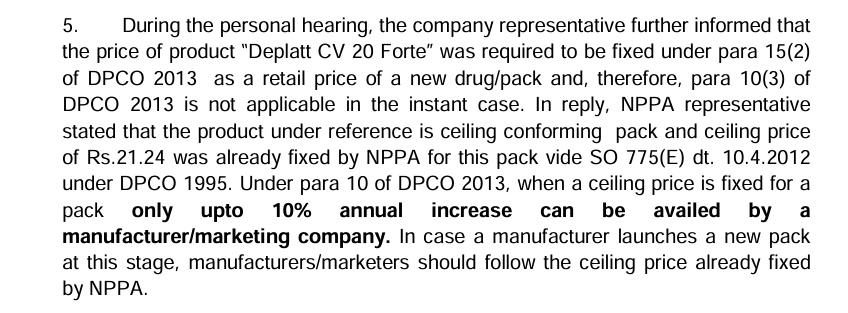
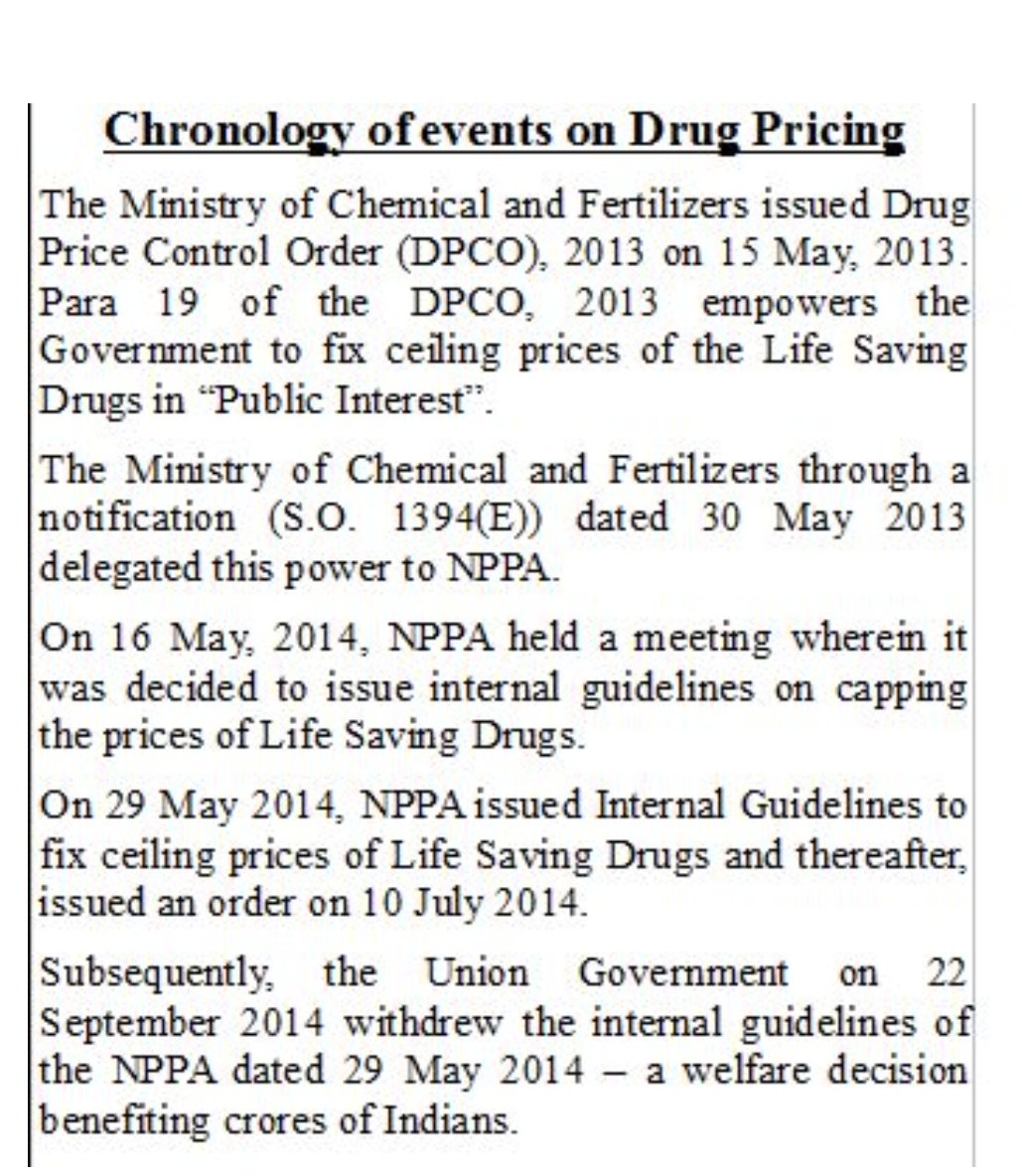
@RahulGandhi@ShashiTharoor@cpimspeak@snehamordani One of the very first things that Modi did after he came to power in 2014 was to give a free lane for pharmaceuticals to exploit vulnerable patients by removing the cap on Life Saving Drugs.
Rama Rajya?
Court: when patients are taking treatment under AYUSH scheme, this whole price has to be paid by the tax payers. Hospitals are buying medicines at these prices and then reimbursing from the government. It’s ultimately tax payer’s money. There is a clear cut case of fraud.
The most expensive part of a hospital bill may never touch the hospital at all.
A patient admitted for care has no way of knowing whether the price on a medical consumable reflects its actual cost or a markup fixed long before it ever reached the ward. That gap in information is, at its core, a public health issue.
A survey of hospital consumables in Maharashtra found an IV infusion set with a trade price of ₹11.05 carrying a printed MRP of ₹325 ; a markup of 2,841%. A syringe procured at ₹6.75 carried an MRP of ₹57.20. A catheter procured at ₹29.41 carried an MRP of ₹310.
These are not elective purchases. Patients cannot compare prices, seek alternatives, or question a number printed on a box while receiving care and the MRP itself is often fixed upstream by manufacturers and distributors, disconnected from the trade price by a wide, unexplained margin. The result is a system where the party bearing the cost has the least information to evaluate it.
The regulatory gap is structural: scheduled medicines are capped under the Drugs (Prices Control) Order, 2013. Most medical devices and consumables are not leaving both the pricing and the information around it almost entirely unmonitored.
A review of these findings and clear guidelines on the permissible gap between trade procurement price and declared MRP have been recommended to the Department of Pharmaceuticals and the NPPA ; a step toward closing not just a pricing gap, but the information gap patients are left to bear alone.
#PublicHealth #GoodGovernance #Leadership #TukaramMundhe
https://t.co/Ye9CVzr8qU
🚨 Tukaram Munde's FDA exposes daylight robbery in healthcare?🔥🔥
After restaurants,
Tukaram Munde goes after corruption at private hospitals,
Private hospitals are engaging in serious profiteering from medicines and consumable items:-
An IV set bought for ₹11.05 was billed to a patient at ₹325.
That’s a 2,841% markup.
And the Maharashtra FDA has found other shocking gaps too:
Catheter:₹29.41 → ₹310
IV set:₹11.05 → ₹325.
Under FDA chief Tukaram Mundhe,
Authorities are now examining these massive markups and possible measures to control them.
Patients often have no idea what hospitals actually paid for these consumables.
They simply get the bill.
One of the biggest reasons why Healthcare inflation is at 14% is that hospitals are charging crazily,
Private hospitals have no right to loot patients this way. There should be strict action on hospitals, including cancellation of licenses for repeated defaulters.
Patients shouldn’t also have to pay thousands of percent markups on basic medical devices.
It just makes quality healthcare unaffordable for the middle class.
Transparency in hospital billing is long overdue