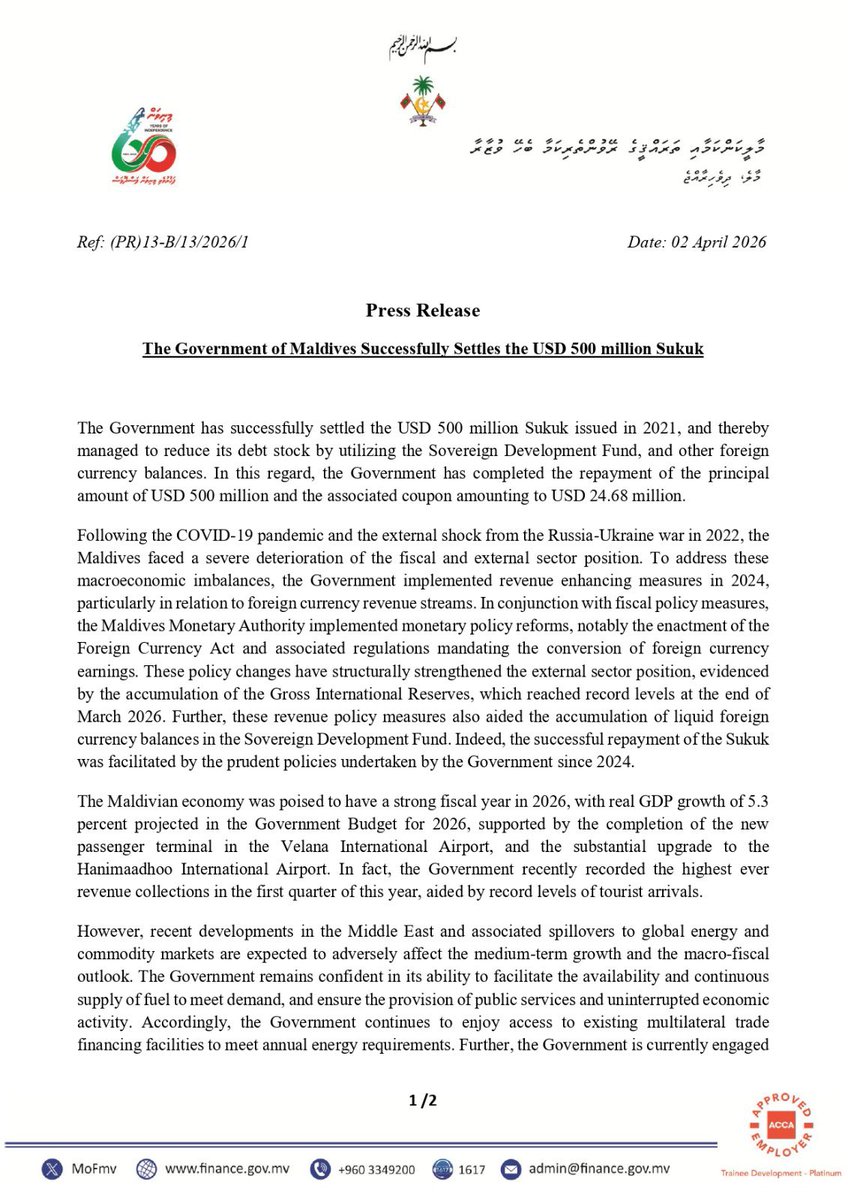
Mandating that resorts sell 40% of their USD earnings to the MMA is a policy that risks severe economic consequences. The majority of resorts carry substantial USD-denominated debt obligations, and most are foreign-owned investments financed largely through bank borrowing. Foreign investors were attracted to the Maldives precisely because it offers competitive returns. Undermining that incentive threatens both investor confidence and the long-term stability of the tourism sector.
Our political parties need to decide whether they stand for more regulation or more economic freedom. In government, they argue for regulation and higher taxes. In opposition, they suddenly discover entrepreneurship and free markets.
Spain’s victory in the biggest global sporting event ever hosted by the United States, amid today’s geopolitical climate, is about a bit more than football.
Hasta la victoria!
🇪🇸
#WorldCup2026
For those who are interested, welcome to the first chapter of the textbook on Maldivian Constitutional Law. This introductory chapter is designed to provide readers with a foundational understanding of the general principles that underpin the Constitution of the Maldives.
https://t.co/1o4qKzHCMn via @academia
Bombing a hospital or a school isn't a "miscalculation."
Killing a paramedic isn't "collateral damage."
Starving civilians isn't "negotiating tactic."
These are war crimes. Full stop.
Call it what it is.