The AWS CLI (v2.12.0+) can be used to create a tunnel to connect to RDS DBs now, but I created a tool that tries to make it more convenient.
1. Create EIC endpoint
2. Download tool
3. Run `rdsconn p`
4. Run `psql -h 127.0.0.1 ...`
https://t.co/kItMSmKvn1
@__steele@deleugyn@ben11kehoe@benbridts There also an option to use EIC endpoint and privat IP range instead of using instance ID: --instance-connect-endpoint-id, --private-ip-address.
@ben11kehoe@benbridts I've dug through the AWS CLI code and reimplemented it. This API *can* be used to connect to an RDS instance, I just queried my Aurora Postgres DB with it.
So that's one reason to like this over Session Manager (zero EC2 instances required)
@ben11kehoe@benbridts I've dug through the AWS CLI code and reimplemented it. This API *can* be used to connect to an RDS instance, I just queried my Aurora Postgres DB with it.
So that's one reason to like this over Session Manager (zero EC2 instances required)
#AWS#Config can finally exclude specific resource types from change tracking https://t.co/VRQ7QMZeSP. Unfortunately, no #CloudFormation support, meaning customers are left to configure exclusions manually for each account and default and opted-in region in their organization.
@mikejulian No counter arguments from me. In fact, been doing exactly this since 2020 - using public on-demand pricing from CUR to show usage to each team/project/environment and managing all discounts centrally. Only wish Cost Explorer had this option built-in. #awswishlist
I'm excited to announce the Amazon EventBridge Event Bus latency improvements are now live in all AWS Regions 🚀! We're observing p50 of 90ms and p90 of 140ms - an 80% improvement in latency. 🧵
https://t.co/f7lx1fks1O
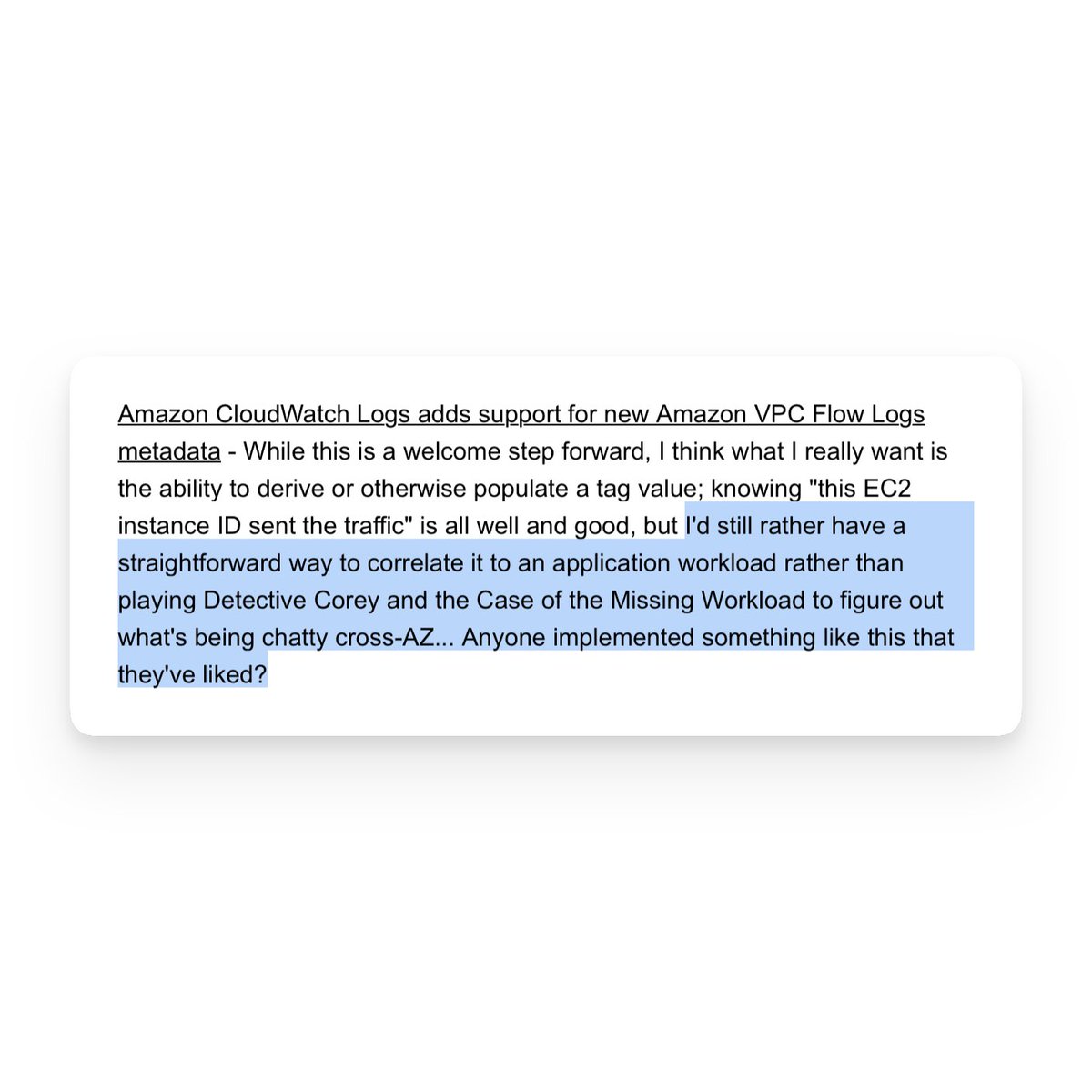
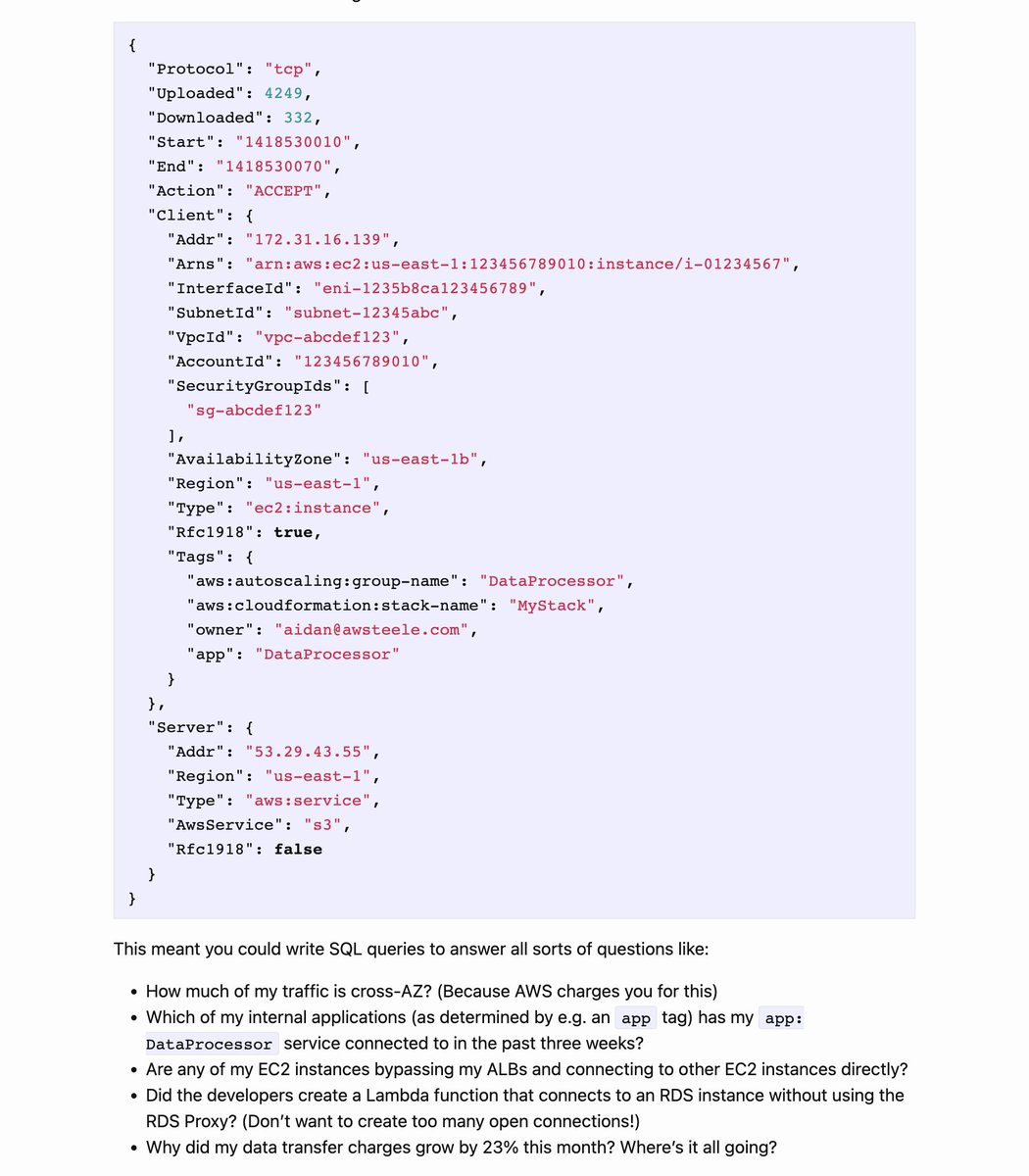
To answer @QuinnyPig's question: I implemented something like this, and I want to implement it again. IMO, enriched VPC flow logs are an untapped source of extremely valuable data. I just don't have access to realistic training data and need help. Blog:
https://t.co/yef7Lh6N8W
@ChrisShort Yeah. Instead of
automatically using default and backup payment methods, we have to configure autorenewal for each product. If you change CC, you have to remember to reconfigure. Very error prone.
@ChrisShort Similar thing nearly happened to me recently. Apparently namecheap has a weird, somewhat hidden setting for domain autorenewal, where you have to chose the card to be used per domain, instead of relying on default payment method on file. Not sure when they introduced this.
tl;dr you can now generate CloudWatch metrics via EMF simply by formatting the logs correctly - no need to screw around with request headers. This makes it much easier to use with ECS
If you use both inbound and outbound security group rules in AWS, you only have a certain amount of connections you can maintain until new connections are rejected. Previously a technicality only in the docs, there is now a user facing metric: https://t.co/HFPETiarsd