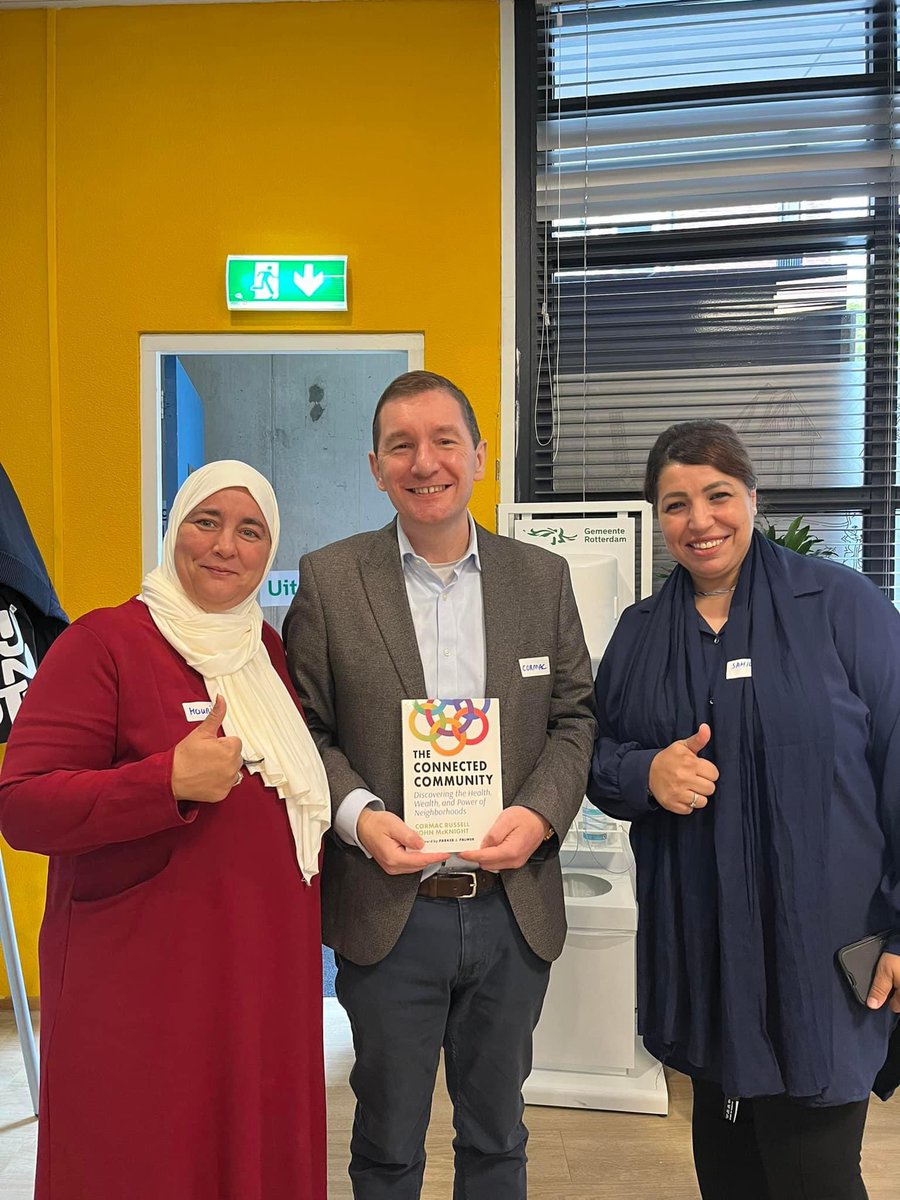
Health isn’t an individual medical issue; it's a social & political one. Hence, population health improves due to collective, not just individual agency, which, in turn, means health improvement requires community building, not signposting or linking of individuals to activities:
interest in coproduction seems to grow daily, but i'd be reassured if people were just doing more about straightforward PPI and user involvement to be honest.
The word 'trauma' has become over-used or under-valued. Trauma isn't just big, bad, scary stuff. Trauma isn't even in the event. Trauma is in the changes to our neurobiology, and that's why it's hard to recover from. Read more: https://t.co/dyvuYxFQLh
#trauma#TherapistsConnect
“Empowering communities” is a concept much talked about, but rarely actually achieved. @EastAyrshire Deputy Chief Executive @Vibrant_Socks has talked the talk & walked the walk. She joined @aglaird on the latest episode of the #RadicalReformers podcast 🎙️ https://t.co/pTcbMKjFZM
Power with rather than power over tips for leaders:
- Assume you are scarier than you are
- Question your small circle people whose opinions matter
- send speak up rather than shut up signals
Everyone should read this brilliant MeganReitz1 article! https://t.co/3GnI8OJBVD
My full-length essay for @aeonmag on the relational model, relational therapy & the challenge posed to the individualistic, Cartesian status quo in psychiatry & psychology.
Comments very welcome!
https://t.co/VA1mllnjPO
I wanted to share the slides for recent talk I gave during the 'Medicalisation of Distress' event👇
They contain my essential argument against the medical model of psychological & emotional distress.
Thoughts most welcome! 🧵
@BenAllenGP
This goes a long way towards developing a lot of what we talked about a while ago. Thinking locally there's much more behind the scenes power imbalances that require specific & careful attention & new solutions if we really do want to address our wicked challenges.
Fab 2 days of #ntsummit
Zombie ideas we need to slay:
1. Social insurance
2. Co-payments
3. Blame the public
4. Access is too easy
5. It’s all about the ageing population
6. Organisational integration
7. Patient leadership is too difficult
@nedwards_1@buckinghamh@felly500
Turning an organisation & system inside out to face the public, to be really accountable to citizens is really hard but it’s what’s needed. Despite having “lived experience panels” etc most services are designed to keep people out with public servants as gatekeepers who ration.
@BPDFFS@Shrink_at_Large Hamoaze House in Plymouth but there's also the incredible peer led @pfgdoncaster @RRowanOlive which is holistic & local & truly peer led. Have a look at their crisis service Safe Space.
@nuwandiss For so long there had been so much focus on disordered personalities when the lens really needs to attend to the disordered systems, teams + dare I say disordered lens from which staff view & work with inds. To be specific exclusion leads to abuse & harm that is often ignored 🤷🏽♀️
Sustained revolution is transformation. It’s repatterning ourselves on every plane that we render oppressive systems redundant because we operate in ways that cannot maintain them. We create and offer ourselves new choices & ways of being that reconfigure reality. paradigm shift