Was Founder & Chief Stud at @StudNet_HQ.
Engg dropout and was tweeting about my ongoing journey of Learning skills landing a job all while building my startup.
Some of you might remember that I dropped out in 2021 Dec from the 3rd yr of BTech. At that time I gave myself a Challenge to see if it's a right decision or not.
Now it's been 1year and 2 months so,
Here is a 🧵 about how it went.
Exactly after 1 year from today i.e. Dec 2022,
either I'll have min 2 lakh Rupees in my bank or I'll be regretting this decision.
Its 2lakh because that is the double of what I would have paid for that year's college fees.
🤖 The Ultimate Robotics Learning Roadmap
1. Mathematics for Robotics
Every advanced robotics problem eventually becomes a math problem.
Master:
• Linear Algebra
• Calculus
• Probability
• Optimization
• Differential Equations
Resources:
• 3Blue1Brown (Linear Algebra)
• MIT OpenCourseWare Mathematics
• Mathematics for Machine Learning
Without math, robotics becomes copy-paste engineering.
---
2. Programming Foundations
Robots are software systems attached to hardware.
Languages to learn:
• Python
• C++
• Rust (optional)
• CUDA (advanced)
Resources:
• CS50
• MIT Introduction to Computer Science
• Modern C++
Most robotics frameworks are heavily C++ based.
---
3. Classical Robotics
Before AI robots, learn traditional robotics.
Topics:
• Forward Kinematics
• Inverse Kinematics
• Jacobians
• Trajectory Planning
• Robot Dynamics
Resources:
• Modern Robotics by Kevin Lynch
• Robotics: Modelling, Planning and Control
• Stanford Robotics Lectures
This is the foundation of industrial robotics.
---
4. Robot Operating System (ROS2)
ROS is the Linux of robotics.
Learn:
• Nodes
• Topics
• Services
• Actions
• TF Trees
• Navigation Stack
Resources:
• ROS2 Documentation
• ROS2 Tutorials
• Navigation2
Almost every modern robotics company uses ROS.
---
5. Computer Vision for Robotics
Robots need perception.
Topics:
• Object Detection
• Segmentation
• Tracking
• Pose Estimation
• Depth Estimation
Resources:
• OpenCV
• YOLO
• Computer Vision by Adrian Rosebrock
• CVPR Tutorials
Eyes are often more important than arms.
---
6. SLAM & Localization
A robot must know where it is.
Learn:
• EKF
• Particle Filters
• Graph SLAM
• Visual SLAM
• LiDAR SLAM
Resources:
• Probabilistic Robotics
• SLAM Course by Cyrill Stachniss
This is one of the most important robotics subjects.
---
7. Control Systems
AI gets attention.
Control theory keeps robots stable.
Topics:
• PID Control
• State Space Models
• MPC
• Kalman Filters
• LQR
Resources:
• Control Bootcamp
• Feedback Systems
• Underactuated Robotics
Most robots fail because of control problems, not AI problems.
---
8. Reinforcement Learning for Robotics
Now add intelligence.
Learn:
• PPO
• SAC
• TD3
• Offline RL
• World Models
Resources:
• Spinning Up
• Deep RL Course
• Isaac Lab
RL is becoming increasingly important for autonomous systems.
---
9. Simulation Platforms
Never train robots only in the real world.
Use:
• Gazebo
• Isaac Sim
• MuJoCo
• PyBullet
• Webots
Simulation
↓
Training
↓
Validation
↓
Deployment
This saves enormous amounts of time and money.
---
10. Advanced Robotics Research
The frontier includes:
• Humanoid Robotics
• Multi-Agent Systems
• Vision-Language-Action Models
• Autonomous Navigation
• Embodied AI
Resources:
• OpenAI Papers
• DeepMind Robotics
• NVIDIA Robotics
• CMU Robotics Institute
• Stanford AI Lab
---
🚀 Learning Path
Math
↓
Programming
↓
Classical Robotics
↓
ROS2
↓
Computer Vision
↓
SLAM
↓
Control Systems
↓
Reinforcement Learning
↓
Simulation
↓
Embodied AI
Most people think robotics is about building robots.
In reality, robotics is about building systems that can perceive, reason, plan, and act in the physical world.
That's why it remains one of the most challenging and exciting fields in engineering.
The University of Michigan put their entire robotics degree on GitHub.
Not one course. The whole curriculum.
ROB 101 — Computational Linear Algebra for Robotics
ROB 311 — How to Build Robots and Make Them Move
ROB 501 — Mathematics for Robotics
ROB 530 — Mobile Robotics
Every lecture video on YouTube. Every textbook on GitHub. Every problem set, every exam, every line of code.
Professor Jessy Grizzle said it best when they launched it:
"Linear algebra has become the language of computer vision, machine learning, robotics, and autonomy."
So instead of making students wait four semesters of calculus before touching a robot... they built a curriculum that starts with the math that actually matters, applied to real robotics problems from day one.
This is what open education looks like when a top-10 engineering school decides to mean it.
Free. GitHub. YouTube.
📌 [https://t.co/3STu1hzAz2]
Follow for more robotics resources!
——
Weekly robotics and AI insights.
Subscribe free: https://t.co/9Nm01QUcw3
Study calculus.
not because exams exist.
because reality moves.
• derivatives → how things change
• integrals → how change accumulates
• limits → what happens at the edge
• gradients → where systems want to go
• differential equations → how nature evolves
motion, heat, fluids, control, optimization, robotics, ML.
all of it speaks calculus.
without it, you see outputs.
with it, you see dynamics.
Train your own LLM from scratch!
A step-by-step repo that walks you through building and training a transformer model from scratch using PyTorch. From downloading training data all the way to generating text.
The architecture is built from the ground up following the original "Attention is All You Need" paper. MLP, single head attention, multi-head attention, transformer blocks, and the full transformer model - all coded and explained with detailed diagrams at each step.
Training data comes from The Pile - a diverse 825GB open-source dataset covering books, articles, code, websites, and more. The repo includes scripts to download it, preprocess and tokenize it using tiktoken, store it in HDF5 format, and feed it into training batches.
You can train a 13M parameter model on a single Colab T4 GPU. At 13M parameters the model starts generating proper grammar and coherent short sentences. For billion-parameter training you need at least an A100 or RTX 4090. The repo includes a full GPU compatibility table so you know exactly what's possible on your hardware.
Includes a complete SFT and RLHF guide as a separate notebook for taking your trained model further.
Key capabilities:
• End-to-end pipeline: data download → preprocessing → training → text generation
• Full transformer implementation from scratch with PyTorch
• Trains models from 13M to 2B+ parameters on a single GPU
• Training data from The Pile (825GB, 22 diverse datasets)
• Tokenization via tiktoken (r50k_base)
• SFT and RLHF guide included
100% open source.
I've shared the link in the replies!
MIT JUST LEAKED THE EXACT DOCUMENT WALL STREET QUANT FIRMS USE TO HIRE PEOPLE.
It is called the MIT Quant Bible.
And it covers everything the $500,000 a year quants actually know that you do not.
Here is what is inside:
Probability fundamentals. Conditional probability, Bayes theorem, expected value, variance, joint distributions. The mathematical foundation every trading decision at Jane Street and Citadel is built on.
Stats fundamentals. The Law of Large Numbers. Central Limit Theorem. Confidence intervals. The tools quants use to know when a signal is real and when it is noise.
Quant research and data science. Least squares, regressions, dimensionality reduction. Real case studies from Two Sigma, QuantCo, and CitiBikes.
Quant trading and market making. What market making actually is and how the theory translates into real trading decisions.
And then the part that makes this document worth more than most finance degrees.
A question bank with real interview questions from Jane Street, Virtu Financial, Optiver, Akuna Capital, Citadel, Hudson River Trading, Two Sigma, Five Rings, and SIG.
Not prep questions.
The actual questions these firms ask.
With answers.
The firms charging $50,000 a year for access to this type of preparation are not going to be happy this exists.
Bookmark this before it disappears.
Follow
@cyrilXBT
for every elite resource that gives you access to what the top 1% actually know
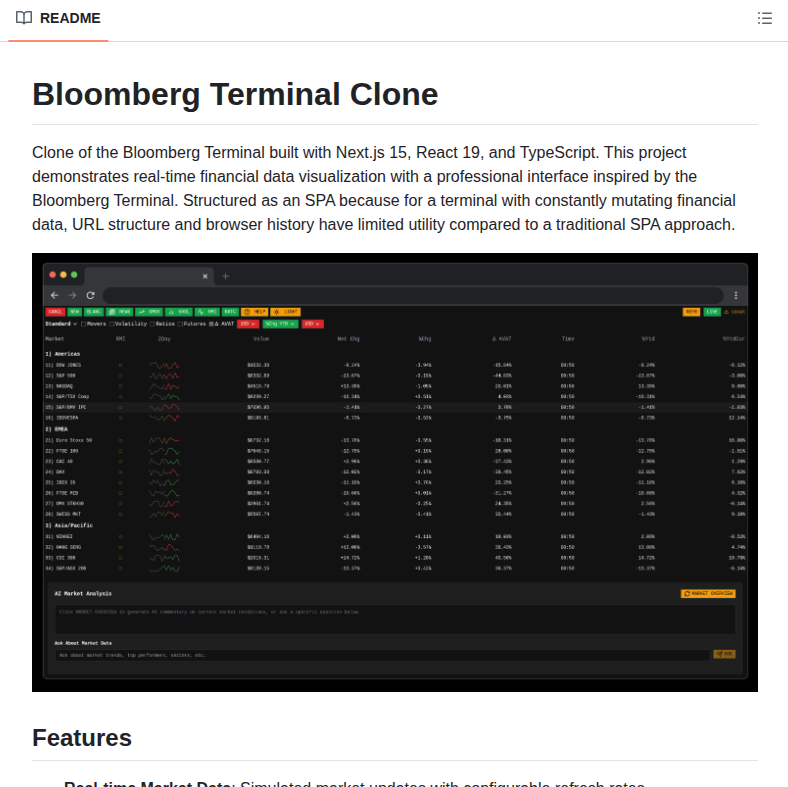
🚨 BREAKING: Google Gemini can now analyze any stock like a Wall Street analyst (for free).
Here are 14 insane Gemini prompts that replace $4,000/month Bloomberg terminals:
(Save this 🔖 you’ll need it later)
Stop learning LLMs from disconnected tutorials.
LLM from Scratch is a hands-on PyTorch curriculum for builders who want to understand how LLMs are trained, modernized, and aligned.
It helps you move from concepts to implementation by organizing the path from transformer basics to tiny-model training, scaling, fine-tuning, reward modeling, and RLHF.
Key features:
• End-to-end curriculum – follows pretraining → finetuning → alignment from foundations through RLHF
• Transformer from first principles – covers positional embeddings, self-attention, attention heads, MLPs, residuals, LayerNorm, and full blocks
• Tiny LLM training loop – includes tokenization, batching, cross-entropy, sampling, validation loss, and a no-Trainer training loop
• Modern architecture upgrades – walks through RMSNorm, RoPE, SwiGLU, KV cache, sliding-window attention, and streaming cache ideas
• Alignment path included – covers SFT, reward modeling, PPO-style RLHF, and GRPO with concrete training-loop notes
It’s open-source (GPL-3.0 license).
Link in the reply 👇
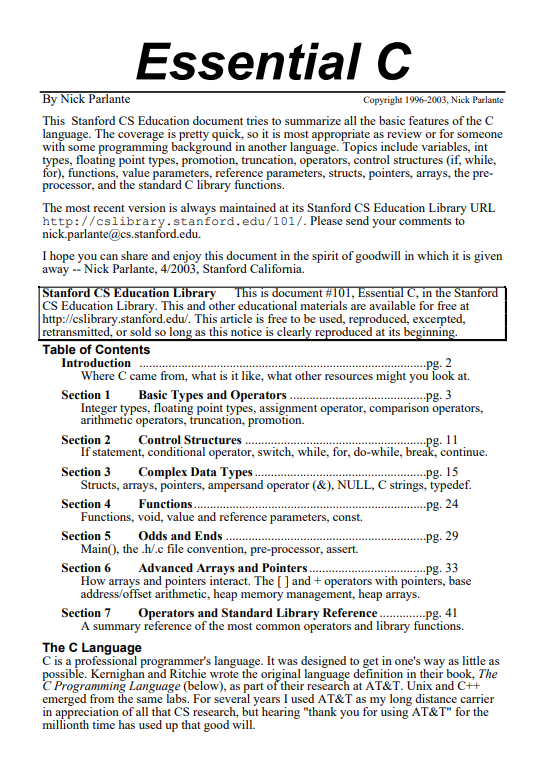
a Stanford professor named Nick Parlante spent years writing short focused documents on C and put them all free online
Essential C is ~ 45 pages covering all the common features and techniques for the C language
he wrote at the bottom: "I hope you can share and enjoy this document in the spirit of goodwill in which it is given away"
that was in 2003 and it has been free ever since
An ex-Citadel quant explained the exact blueprint for making $750,000 a year
Not theory. Not motivation. A concrete path: what to study in school, what to study in university, what projects to build, how to prepare for interviews, how to behave in your first year
He went through the entire path himself and ended up a quant at Citadel
🚨 Anthropic just showed a 27-minute workshop on how to actually do prompts for Claude.
Taught by the people who built it.
Free. No registration. No paywall.
I've seen $300 courses that don't cover what they teach in the first 8 minutes.
Watch it and bookmark it now.
🚨 GIVEAWAY: NotebookLM has a hidden study system that makes learning 2x faster.
I tested it for 30 days on PDFs, courses & research papers.
My retention went from 40% → 85%.
So I made a FREE guide:
• Deep-learning prompts
• Research-to-notes systems
Type “ SEND ” Follow
most people learn computing from the software side.
variables
loops
functions
APIs
but underneath all of it is hardware.
gates
flip-flops
clocks
registers
state machines
parallel logic
learning fpgas by justin rajewski
is a beginner path into digital design using mojo and lucid HDL.
the key shift:
• you are not writing instructions for a processor.
• you are describing hardware itself.
• software runs step by step.
• fpga logic runs in parallel.
that changes how you think:
• time matters
• clock cycles matter
• signal timing matters
• state transitions matter
learning fpgas teaches you how computers are built below the abstraction layer.
not as code.
as circuits that think in logic.
Affiliate link: https://t.co/CtVfnpoHNr
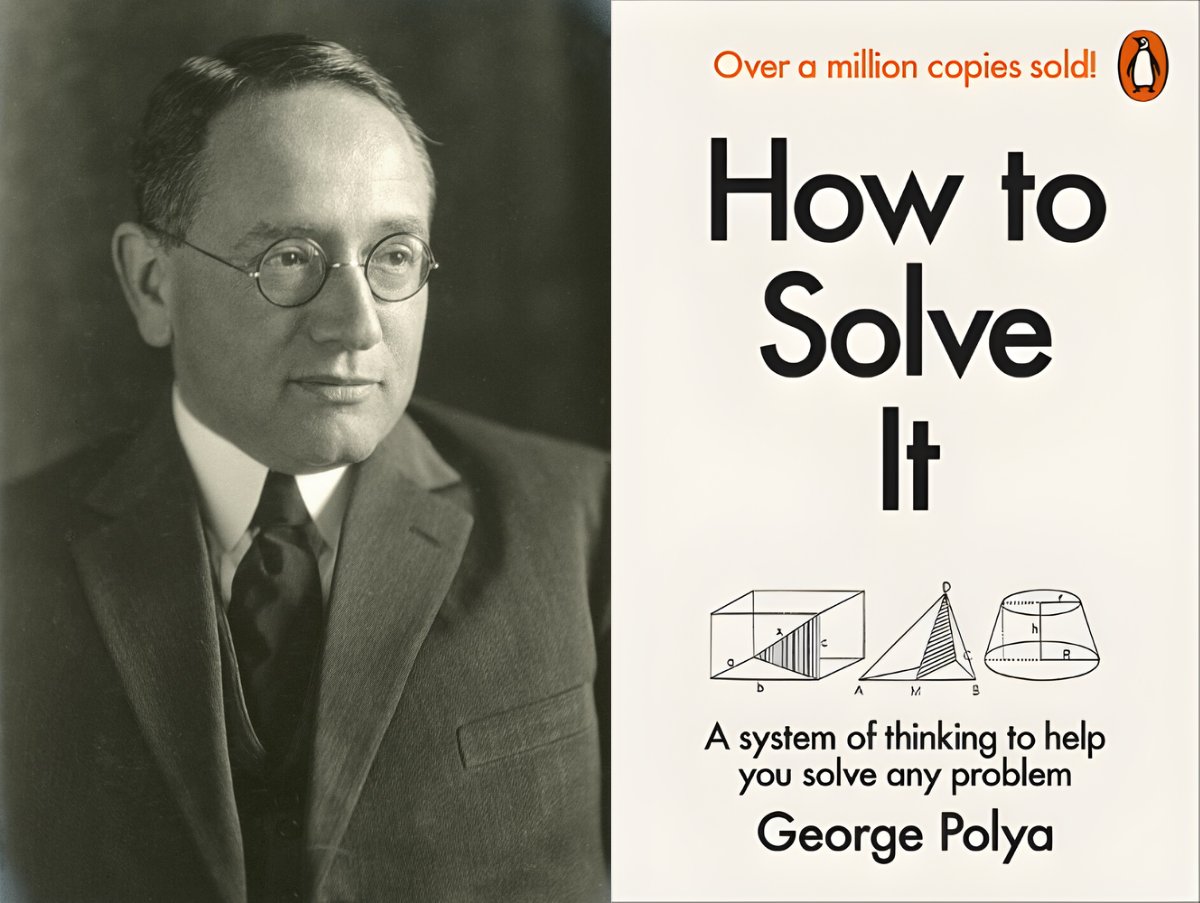
A Stanford mathematician spent 40 years watching brilliant students fail at hard problems.
Not because they were stupid.
Because nobody taught them what to do before they started solving.
His name is George Pólya.
His 1945 book has sold over a million copies and never gone out of print.
Marvin Minsky, the man who built the first neural network machine at MIT, said publicly that everyone should read it.
Most people have never heard of it.
The failure Pólya watched repeat itself for four decades was always the same.
A problem appears. The student feels anxiety. They immediately start calculating.
Not because calculating was the right move. Because it felt better than sitting with not knowing.
The calculation was almost always wrong.
Not from lack of skill. From lack of understanding what was actually being asked.
He called it the most neglected step in all of problem solving.
Step one is to understand the problem. Not skim it. Not assume you've seen something similar. Actually understand it.
His filter was one question: can you restate the problem in your own words without looking at it?
If you can't, you haven't understood it. You've only read it.
Most people skip this and spend hours stuck on a problem they never actually understood.
Step two is to make a plan. Not execute. Plan.
The pattern Pólya saw in every successful problem solver was the same. When something feels impossible, find a simpler version and solve that first.
Not because the simpler version is the goal. Because it gives you a method you can carry back.
He phrased it once with precision: if you cannot solve the proposed problem, try to solve a related one.
That question alone is worth more than most problem-solving courses ever taught.
Step three is to execute. Everyone thinks this is the whole game.
It is the third of four steps. Pólya spent the least time on it because it is the most obvious. Once you understand and have a plan, execution is mostly patience.
Step four is the one almost nobody does.
Look back.
Not to check the arithmetic. To ask: can I verify this with a different method? Can I use this method somewhere else? What would I do differently?
This is where the real learning lives.
Every expert Pólya studied had this habit. Every struggling student skipped from the answer to the next question, carrying nothing forward, starting from zero every single time.
His deepest insight was not a technique. It was a diagnosis.
Intelligent people feel bad at problem solving because they confuse reading a problem with understanding it. They confuse starting to work with having a method. They confuse getting an answer with having learned anything.
These are not the same things.
The students who get genuinely good at hard problems are not the ones who practice more.
They are the ones who slow down at the two moments every instinct tells them to rush.
The beginning and the end.
The problem was almost never as hard as it looked.
They just hadn't understood it yet.
A guy in Karachi rebuilt GPT-4 in one Jupyter notebook.
OpenAI spent over $100 million to train the real one. He put the entire recipe on GitHub for free.
His README still says "I am looking for a PhD position in AI."
It's called Train LLM From Scratch. A working guide that walks you through building your own 2-billion-parameter language model on a single GPU.
OpenAI vs this repo:
- Training cost: $100M+ → Single A100 or RTX 4090 (you can rent for $1/hr)
- Code access: Closed → Open, MIT license
- Data: Secret → The Pile (open dataset, 825GB)
- Walkthrough: None → Every line of code explained, top to bottom
- Output quality: GPT-4 → A small model that writes broken English (but it's yours)
The whole thing fits in one notebook. No paid course. No paywall. No "Pro" tier.
What you actually learn:
→ How a transformer works, end to end
→ How to download and tokenize the Pile dataset
→ How to build multi-head attention from scratch in PyTorch
→ How to train on a single GPU without running out of memory
→ How to generate text from your trained model
→ How to scale from 13 million parameters to 2 billion
774 stars. 135 forks. MIT license. The full theory paper-to-code in one place.
One honest note: this is a learning repo, not a production model. Your output will be small and rough. But you will understand exactly how GPT-4 works after reading it.
Fareed Khan built this from Karachi, Pakistan. He has 1,780 GitHub followers. He's still looking for a PhD position. The recipe to billion-dollar AI is sitting on his profile, free.
This is what open AI was supposed to mean.
(Link in the comments)
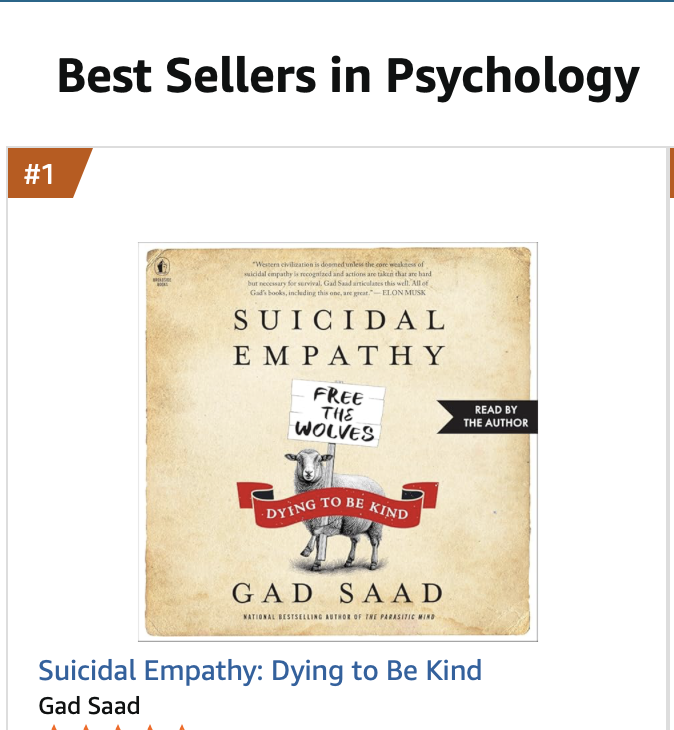
It's been #1 across all books, #1 in Politics, #1 in Psychology, #1 in Western History, etc. It's only day #6 of its release! Let's inoculate the West against Civilizational Seppuku!
every engineered thing is a hypothesis.
a bridge says:
this geometry can carry this load.
an aircraft says:
this structure can survive this stress.
a circuit says:
this design can behave under real conditions.
To engineer is human by Henry petroski is about the brutal teacher behind all good design:
failure.
failure exposes what theory missed.
• bad assumptions
• weak materials
• hidden fatigue
• poor margins
• unexpected loads
• human error
engineering improves because reality keeps correcting it.
the best engineers do not worship elegant designs.
they study broken ones.


![IlirAliu_'s tweet photo. The University of Michigan put their entire robotics degree on GitHub.
Not one course. The whole curriculum.
ROB 101 — Computational Linear Algebra for Robotics
ROB 311 — How to Build Robots and Make Them Move
ROB 501 — Mathematics for Robotics
ROB 530 — Mobile Robotics
Every lecture video on YouTube. Every textbook on GitHub. Every problem set, every exam, every line of code.
Professor Jessy Grizzle said it best when they launched it:
"Linear algebra has become the language of computer vision, machine learning, robotics, and autonomy."
So instead of making students wait four semesters of calculus before touching a robot... they built a curriculum that starts with the math that actually matters, applied to real robotics problems from day one.
This is what open education looks like when a top-10 engineering school decides to mean it.
Free. GitHub. YouTube.
📌 [https://t.co/3STu1hzAz2]
Follow for more robotics resources!
——
Weekly robotics and AI insights.
Subscribe free: https://t.co/9Nm01QUcw3](https://pbs.twimg.com/media/HKywBztXIAAKMZV.jpg)






![ahuja_priyank's tweet photo. Stop paying for books you'll read once.
Best Sites to Read or Download Free Books
[MANDATORY BOOKMARK] https://t.co/ZOQHT2bT8F](https://pbs.twimg.com/media/HINWJEYawAA2vno.jpg)