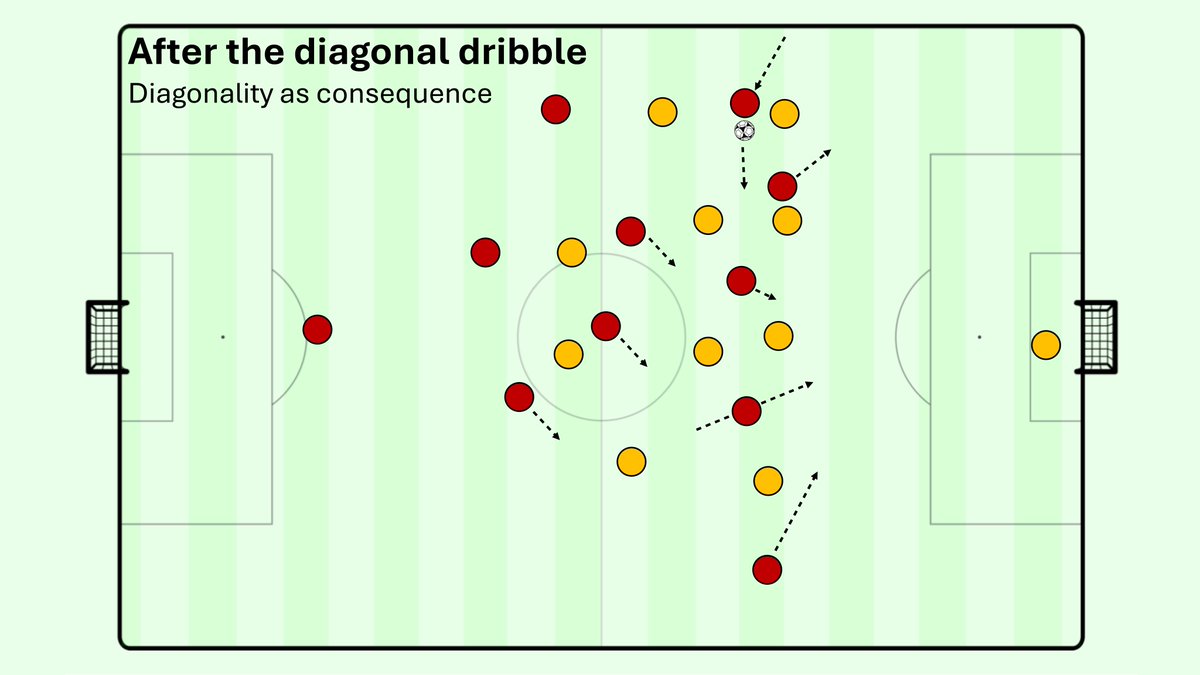
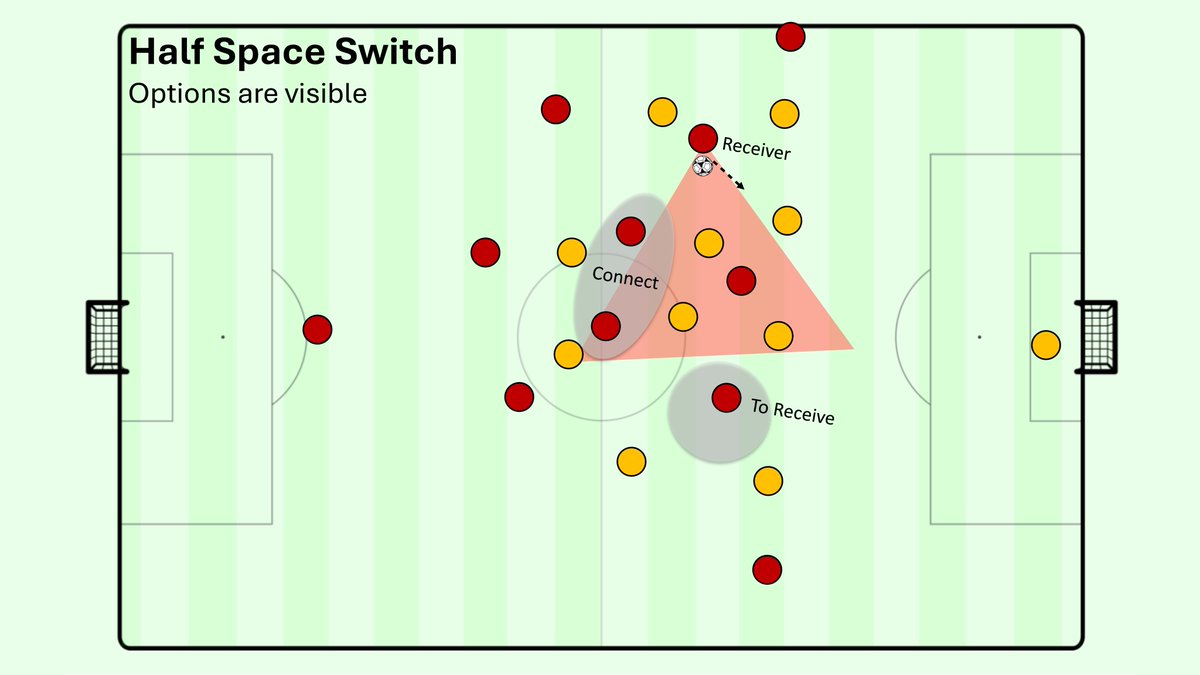
The Fools of Spielverlagerung proudly present: An Article about an angle. Diagonality is here.
Diagonality remains the most influential concept in our internal ecosystem & this collaborative deep-dive gives it finally its deserving in-depth treatment https://t.co/kqvBbtcreY
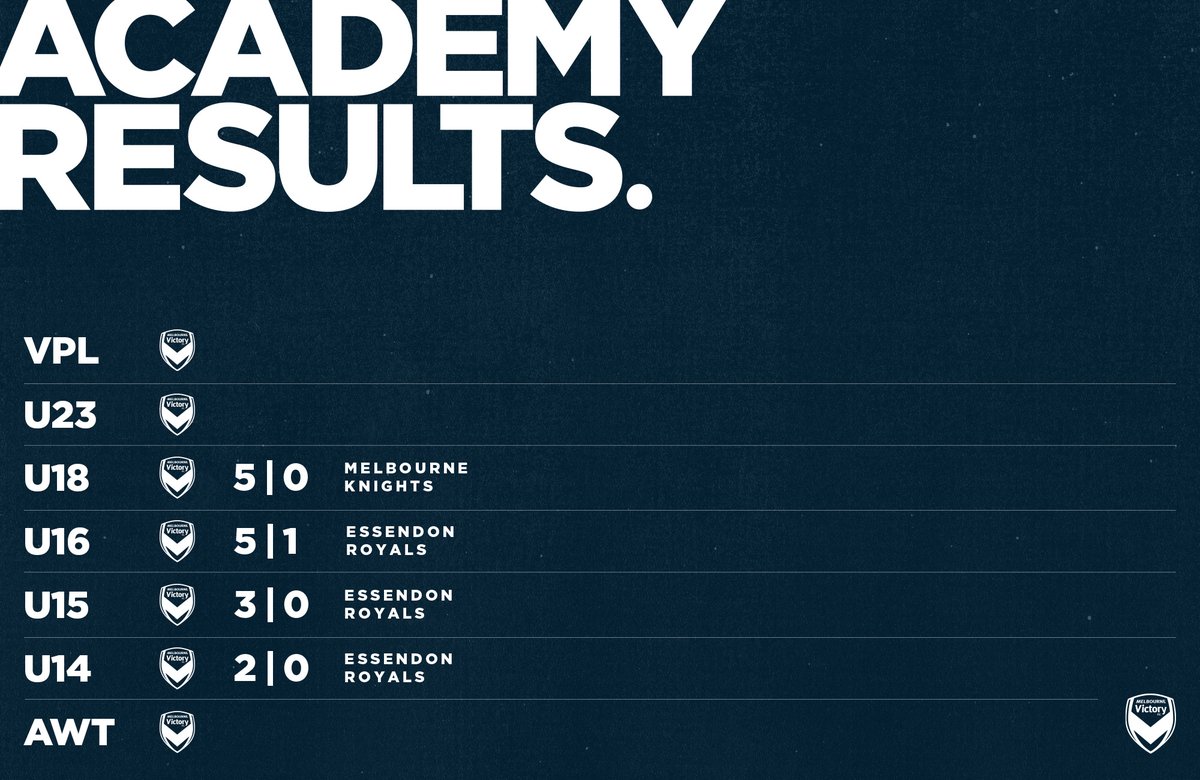
What a weekend from our Junior Academy 🤩
Our U18s, U16s and U14s all secured their respective JBNPL1 Championships, while the U15s remain in a strong position to follow with two matches remaining 👏
A massive congratulations to all involved 💙
Andrea Pirlo sprained his right knee, played a few games using primarily his weaker left foot and still looked better than 99% of playmakers out there.
Coaches like Jose Mourinho, Jürgen Klopp, and Diego Simeone are great leaders.
Players say they would “die” for them on the field.
But how do great leaders do it?
How do they get players to give everything for them?
Here are my top 8 leadership principles: ⬇️
🔵First of all, how do I defnine Leadership?
Leadership is leading people to a goal.
Leadership is influencing people to do something.
Leadership is helping the players to improve to achieve their goals.
🔵Principles of Leadership
1️⃣ Have a clear vision.
Leadership means to lead people somewhere.
So you have to know where you want to take them.
Without a goal, there is nothing to strive for.
The vision should be something that inspires people.
To achieve something, your players must endure the pain of setbacks and hard work.
There are always difficulties on the way to the goal.
And the struggle has to be worth it.
But if your expectations as a coach are higher than what the players want, conflicts will arise.
So, choose your mission wisely.
Communicate the common goal over and over to your team. This is what we are working for. This is why we put up with failure and pain.
The mission can be anything. A title. Health. Fun.
But it has to unite a group of unique people.
Everyone has his own interests and goals.
The vision or mission is what units your group.
Example:
Jose Mourinho's mission with Real Madrid was to break Barcelona's years of dominance.
He typically creates a common mission through "us against the rest of the world".
The player must understand WHY they do something.
And this WHY must be inspiring and powerful.
“To inspire starts with the clarity of ‘why.’” (Simon Sinek)
2️⃣ “It’s the people.”
Bill Campell, who influenced entrepreneurs like Steve Jobs or Jeff Bezos, wrote about how to build something successful:
"People are the foundation of any company's success. The primary job of each manager is to help people be more effective in their job and to grow and develop. We have great people who want to do well, are capable of doing great things, and come to work fired up to do them. Great people flourish in an environment that liberates and amplifies that energy. Managers create this environment through support, respect, and trust."
His Motto:
It's the people.
People are the foundation for success.
Jose Mourinho agrees:
"I had a university professor who always told me: "A coach who knows only football knows nothing about football.'"
"Football players aren't just football players. These are men who play football, and that's one of the big lessons I learned from the beginning. Another lesson I learned from my experience as a coach is that you have to deal with human beings. In sport, there is a human side above all; and, of course, in business and other areas of social life. I think that's the most important thing that defines leadership."
"You have to know the players, know them well. They are all different, and all need a different way of communicating, a different way of receiving feedback, of motivating themselves."
Source: Forbes, 2022
3️⃣ Think from the players’ perspective.
If I want something from another person,
I must put myself in their shoes.
What do the players want?
Instead of talking about what I want:
"What does the player want?”
“How can I use his intention to do what I want him to do?”
a) Find out what they want.
b) How can I use that to get them to do what I want them to do?
4️⃣ Role Models are more important than criticism
Pep Lijnders, assistant coach of Jürgen Klopp, talked about it in his book 'Intensity':
“Talents need models, not criticism.”
He continues:
“I gave Thiago a compliment in front of everyone about how he focuses in the warm-up. ‘That’s the mentality and that’s what makes the difference between a talent and a professional.’ I did it jus to set the tone for everyone this week.
During training I used Sadio as a the example of someone who wants to steal the ball from the centre-halves making the last step after he stole the ball from Joel’s blind-side. […] Sadio grew, of course. Mission accomplished. A compliment is so powerful, not only for the receiver but also to make clear to all the others what’s good and what’s not.”
You can criticize everyone who is not doing what you want, or you can pick the one who is doing what you want and praise him.
Now, he is the role model and direction for everyone else. Praise for someone is an implied critique of everyone else.
Be honest with yourself: Do you really like criticism? Most people don't. Instead of criticism, praise the behavior you want to see.
Another effective method is asking questions and guiding the player's thinking process. They come up with a solution on their own, but you lead them there.
“Criticism is futile because it puts a person on the defensive and usually makes them strive to justify themselves. Criticism is dangerous, because it wounds a person's precious pride, hurts their sense of importance, and arouses resentment.” (Dale Carnegie)
5️⃣ Insist on the Highest Standards
Whatever you expect of yourself becomes the standard for everyone. The effort you put in becomes the norm.
If you're okay with bad positioning, with a sloppy first touch, your players won't do it differently. If you don't insist on executing your principles, the players won't do them.
Insist on excellence. Allow only 100%.
100% Intensity in every Action.
100% Focus.
100% your Game Model.
Raise the bar and keep it high. This is only possible if you challenge your game model, training, and coaching. Keep improving. You have to put in the effort first, then you can expect it from the players. To communicate your expectations clearly to the players, you need to know exactly what you want. And clear communication comes from clear thinking.
“Leaders have relentlessly high standards— many people may think these standards are unreasonably high. Leaders are continually raising the bar and drive their teams to deliver high quality products, services and processes. Leaders ensure that defects do not get sent down the line and that problems are fixed so they stay fixed.”
(Amazon Leadership Principle)
6️⃣ Build trust.
“To be a good manager, the most important thing is that people must follow you. And to follow you, they must believe in you.” (Jose Mourinho)
If you want people to follow you, they have to trust you.
How do you build trust?
Say what you do, and do what you say.
It is about consistency.
Give promises. Keep promises.
Don’t give promises you can’t keep.
If you say one thing and act differently, you lose them.
7️⃣ Ownership.
Accept 100% responsibility for what happens.
Don't blame others.
Not your players. Not the referee. Not the opponent.
You are responsible for everything as a coach.
As long as you blame others, you give them the power over what happens.
But if you accept the responsibility, you can focus on what you can control: Your actions. Improve your Coaching. Improve what you say. Improve how you say something. Improve your Game Model.
Jürgen Klopp said:
"I want to be very clear about what I'm giving the guys as an instruction, as a help. If I see they don't do it, I always think first: 'Then my message wasn't clear enough,' and not: 'They're too stupid to understand me.'"
"If you want them to follow you, you have to be responsible for the consequences."
Important: Just because you take ownership, never expect respect from others. Some people will always blame you. No matter what you do. But that's okay. You can't control it, so ignore it. Focus on what you can control. Some people will honor that, and some people won't. You can't change it.
8️⃣ Make them feel important.
If the players feel important, they will be way more motivated. Therefore, they must feel they can contribute to the team's success.
"The deepest principle in human nature is the craving to be appreciated." (William James)
▪️Recognize their effort. Be specific. Not just "well done". Be clear about what exactly you appreciate.
▪️Show them that you care about them by asking questions about their life. Remember small details.
▪️Say their names." A person's name is to that person, the sweetest, most important sound in any language." (Dale Carnegie)
▪️Talk a lot one-on-one. That shows the player is important to you.
For example, Kieran Trippier talks about what Diego Simeone did for the players who didn't play. He puts all his effort and passion into what other coaches might consider a chore.
"The most important thing for me was the way he [Diego Simeone] approached the training for the lads that weren't playing after games. He was incredible. And that's why he has so much respect of everybody. The way he keeps everybody happy."
⚫ Summary
1️⃣ Have a clear vision.
2️⃣ “It’s the people.”
3️⃣ Think from the players’ perspective.
4️⃣ Role Models are more important than criticism.
5️⃣ Insist on the Highest Standards.
6️⃣ Build trust.
7️⃣ Ownership.
8️⃣ Make them feel important.
You can read this and other articles here:
https://t.co/E6cXjuxRnT
Football Victoria has completed a clean sweep of the 2023 National Youth Championships Boys’ Tournament winning both the Under 15 and 16 Age Groups at Valentine Sports Park, Glenwood.
Congratulations to all involved 👏
Day 5 wrap: https://t.co/u5cTq5RAjN
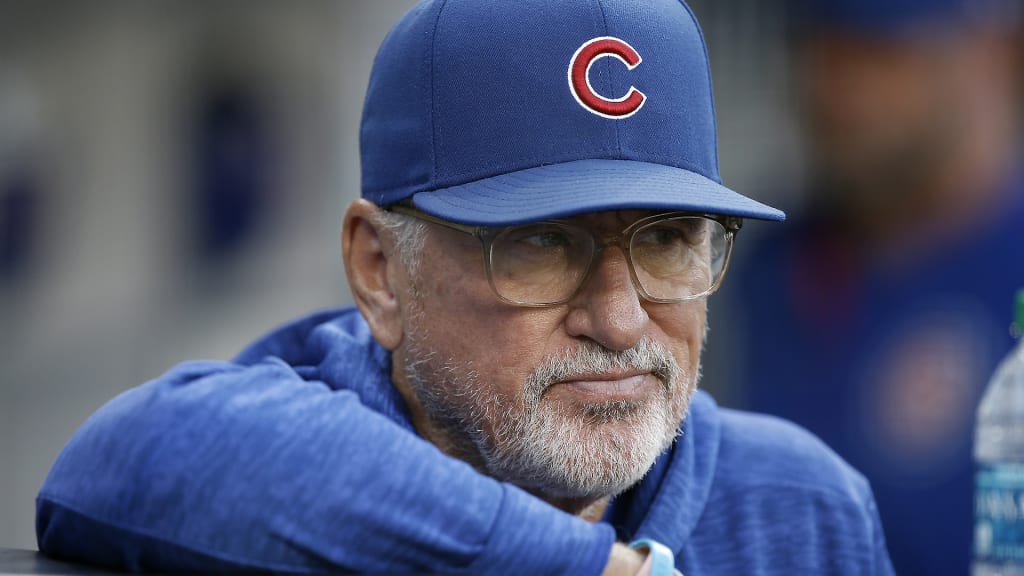
Joe Maddon is widely considered one of the best baseball managers of this era.
In 2016, he guided the Chicago Cubs to their first World Series title in over a century.
How did Maddon establish an elite culture?
With 13 core principles — and they're relevant to our own teams:
Michael Beale talks about the importance of different experiences along his coaching journey from grassroots to elite level that has impacted on him as a Coach Today #SundayShare#coaching#grassrootsfootball
“We don't rise to the level of our expectations, we fall to the level of our training.”-Archilochus
The quality of your results is directly related to the quality of your process.
Practice is where you prepare, so in a game you can perform.
"There are 2 reasons why somebody doesn't do something:
They don't know how to do it. It's our job to teach you how to do that.
Once you know how to do it, & you don't do it, you just don't feel like it."
Your 'have to' must be stronger than your 'want to' to be successful.
1970 to 1988 is often referred to as Disney's "Dark Age."
During the "Dark Age," Disney's animated films were mostly critical and commercial failures.
Then, in the late 1980s, a story consultant named Chris Vogler wrote a 7-page memo that helped spur "The Disney Renaissance."
In 1978, Chris Vogler was a film student at USC. For one of his classes, Vogler was reading "The Hero With A Thousand Faces" by the mythologist Joseph Campbell.
That year, the first Star Wars movie was released. Vogler saw it in the theaters, and he was almost certain Star Wars was putting Campell’s ideas to work.
Vogler distilled Campbell’s complex ideas into a term paper that identified how George Lucas was using mythic elements throughout Star Wars.
A few years later, Vogler was hired as a story consultant at Disney where "memos were a big part of the corporate identity...following the example of [CEO, Jeffrey] Katzenberg, an absolute master [of "the memo art form"].
So Vogler adapted that term paper into a 7-page memo, in which he outlined “the twelve stages of the hero’s journey.”
The hero's journey, Vogler summarizes, goes like this:
The hero is introduced in his ORDINARY WORLD where...
The hero receives the CALL TO ADVENTURE.
The hero, reluctant at first, REFUSES THE CALL.
The hero MEETS A MENTOR and is encouraged to CROSS THE THRESHOLD where...
The hero encounters TESTS, ALLIES, and ENEMIES.
The hero reaches the INNERMOST CAVE where he endures the SUPREME ORDEAL.
The hero SEIZES THE SWORD or the treasure and...
The hero starts to take THE ROAD BACK. Along the way...
The hero is RESURRECTED and transformed by their experience, and then...
The hero RETURNS to his ordinary world with a TREASURE, BOON or ELIXIR to benefit their world.
Vogler's memo was read by CEO Jeffrey Katzenberg.
Katzenberg made it required reading for everyone in the company, and then, he sent Vogler to work with the Animation team working on "King of the Jungle"—what would become "The Lion King."
On a corkboard, the team pinned the storyboard for "The Lion King," "with the twelve stages of the Hero's Journey clearly marked as signposts."
Using this 12-step program as a roadmap, "The Lion King" was released in 1994 and became the most successful animated film ever, and for a while, the most profitable film in history.
Takeaway 1:
The comedian Hasan Minhaj likes to say that his job is to distill coffee into espresso:
"My job is to distill coffee into espresso...to take complicated things and make it simple so people can walk away after twenty minutes with a clear take and perspective.”
Vogler wasn't the first to come across Joseph Campbell's complex ideas. He was the first to distill them into a practical guide for storytellers.
Takeaway 2:
Vogler was right. George Lucas did indeed read Joseph Campbell before bending the story of Luke Skywalker to follow the twelve steps of the hero’s journey.
In fact, Lucas calls Campbell his Yoda. Not just him. Not just Star Wars. Toy Story, Finding Nemo, Aladdin, Harry Potter, Mulan, Moana,...
Once you know the 12 steps, you see the hero with a thousand faces everywhere.
---
“There are only two or three human stories, and they go on repeating themselves as fiercely as if they had never happened before.” — Willa Cather
















![bpoppenheimer's tweet photo. 1970 to 1988 is often referred to as Disney's "Dark Age."
During the "Dark Age," Disney's animated films were mostly critical and commercial failures.
Then, in the late 1980s, a story consultant named Chris Vogler wrote a 7-page memo that helped spur "The Disney Renaissance."
In 1978, Chris Vogler was a film student at USC. For one of his classes, Vogler was reading "The Hero With A Thousand Faces" by the mythologist Joseph Campbell.
That year, the first Star Wars movie was released. Vogler saw it in the theaters, and he was almost certain Star Wars was putting Campell’s ideas to work.
Vogler distilled Campbell’s complex ideas into a term paper that identified how George Lucas was using mythic elements throughout Star Wars.
A few years later, Vogler was hired as a story consultant at Disney where "memos were a big part of the corporate identity...following the example of [CEO, Jeffrey] Katzenberg, an absolute master [of "the memo art form"].
So Vogler adapted that term paper into a 7-page memo, in which he outlined “the twelve stages of the hero’s journey.”
The hero's journey, Vogler summarizes, goes like this:
The hero is introduced in his ORDINARY WORLD where...
The hero receives the CALL TO ADVENTURE.
The hero, reluctant at first, REFUSES THE CALL.
The hero MEETS A MENTOR and is encouraged to CROSS THE THRESHOLD where...
The hero encounters TESTS, ALLIES, and ENEMIES.
The hero reaches the INNERMOST CAVE where he endures the SUPREME ORDEAL.
The hero SEIZES THE SWORD or the treasure and...
The hero starts to take THE ROAD BACK. Along the way...
The hero is RESURRECTED and transformed by their experience, and then...
The hero RETURNS to his ordinary world with a TREASURE, BOON or ELIXIR to benefit their world.
Vogler's memo was read by CEO Jeffrey Katzenberg.
Katzenberg made it required reading for everyone in the company, and then, he sent Vogler to work with the Animation team working on "King of the Jungle"—what would become "The Lion King."
On a corkboard, the team pinned the storyboard for "The Lion King," "with the twelve stages of the Hero's Journey clearly marked as signposts."
Using this 12-step program as a roadmap, "The Lion King" was released in 1994 and became the most successful animated film ever, and for a while, the most profitable film in history.
Takeaway 1:
The comedian Hasan Minhaj likes to say that his job is to distill coffee into espresso:
"My job is to distill coffee into espresso...to take complicated things and make it simple so people can walk away after twenty minutes with a clear take and perspective.”
Vogler wasn't the first to come across Joseph Campbell's complex ideas. He was the first to distill them into a practical guide for storytellers.
Takeaway 2:
Vogler was right. George Lucas did indeed read Joseph Campbell before bending the story of Luke Skywalker to follow the twelve steps of the hero’s journey.
In fact, Lucas calls Campbell his Yoda. Not just him. Not just Star Wars. Toy Story, Finding Nemo, Aladdin, Harry Potter, Mulan, Moana,...
Once you know the 12 steps, you see the hero with a thousand faces everywhere.
---
“There are only two or three human stories, and they go on repeating themselves as fiercely as if they had never happened before.” — Willa Cather](https://pbs.twimg.com/media/FtJLxrtXgAAp455.jpg)
![brfootball's tweet photo. Lionel Messi has scored 62 free kicks in his career. That’s right, SIXTY-TWO.
Here’s ALL of them ✨ [THREAD] https://t.co/l9h3SvYBSR](https://pbs.twimg.com/media/Fr_daoPXwAIfVxR.jpg)


