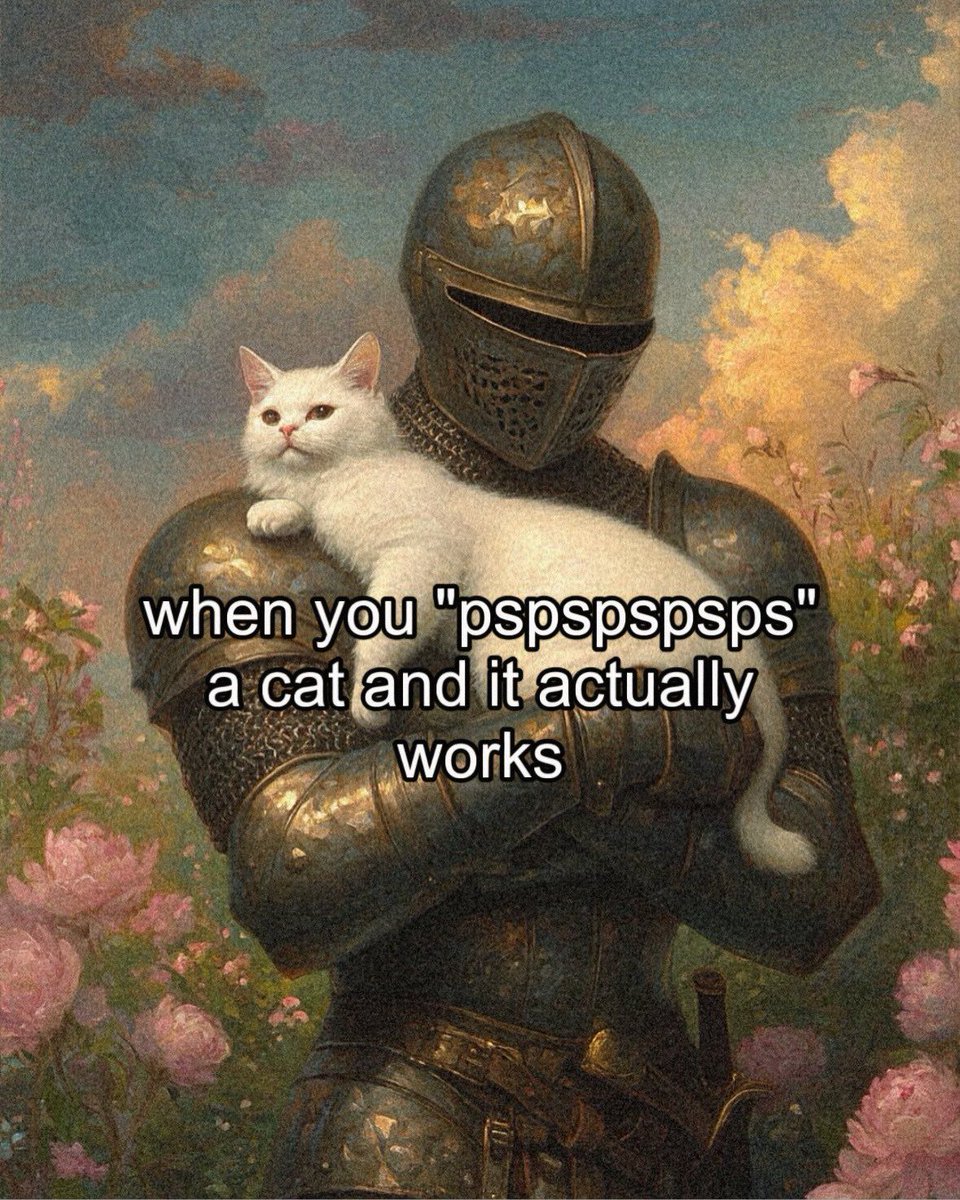
Your cat is leaving a chemical on your face. Its name is F4. The translation is “you’re family,” and cats only leave it on people and animals they trust. F4 was identified in 1998 by a French researcher named Patrick Pageat.
Pageat found five different chemicals coming out of glands on a cat’s cheeks, chin, and forehead, and labeled them F1 through F5. F2 has to do with mating. F3 is for territory, and cats use it to mark furniture and door frames. (You can buy a synthetic version of F3 at any pet store, sold under the brand name Feliway.) F4 is the social one. The face-rub itself has its own name too. Scientists call it bunting when face hits face, and allorubbing when the whole body gets involved.
F4 builds what researchers call a colony scent. In a wild cat colony, the cats rub against each other constantly until they all smell the same. The shared smell works like a family ID. Cats with the colony scent don’t fight each other. Cats without it get treated like intruders. A study of feral cats at Church Farm, run by biologist David Macdonald, found this rubbing made up 15.7% of all social interactions in the colony.
Cats are picky about who gets F4. They reserve bunting for individuals they bond with. A stranger walking in won’t get bunted, even if they try to pet the cat. A new cat being introduced to the home won’t get bunted either. Furniture and walls get F3, the territory chemical, not the social one. Bunting comes out only for the social bond. When your cat plows its face into yours, you’ve been chemically classified as family.
The behavior comes from kittenhood. Kittens rub their faces on their mom as a greeting and as a way to beg for food. Adult cats keep the move and redirect it at the people and animals they bond with. When a cat rubs its face on yours, it’s doing the same thing it used to do to its mother.
In feral colonies, this rubbing flows in one direction, and the direction reveals status. Cats on the edges of the group rub toward cats at the center. Lower-status cats rub toward higher-status ones. Kittens rub toward the adults that raised them. The pattern is consistent enough that researchers use it to read social status in the colony. So when your cat plows its face into yours, the gesture also says “you’re the one with the food and the warm bed.”
The machine that built the chip in this video should mass-humble every human who's ever lived.
ASML's latest EUV lithography system costs $370 million, weighs 180 tons, and requires three Boeing 747s to deliver. It contains over 100,000 individual parts from 5,100 suppliers across 14 countries. It shoots 100,000 molten tin droplets per second with a laser, superheating each one past the temperature of the sun's surface to generate light at a wavelength so short that no natural material on Earth can focus it.
So they had to invent new mirrors. Each one is polished with 100 alternating layers of molybdenum and silicon. The surface tolerance is so extreme that if you scaled a single mirror up to the size of Germany, the tallest imperfection would be 1 millimeter.
Those mirrors took 20 years to develop. The company that makes them, Zeiss, had to build entirely new metrology tools just to confirm the mirrors were flat enough, because no existing measurement instrument on Earth could verify the precision they needed.
The machine prints features at 2 nanometers. That's roughly 10 atoms wide. A human hair is 80,000 nanometers. A red blood cell is 7,000. A single COVID virus particle is 100. These machines are etching functional circuits 50 times smaller than a virus.
TSMC is now mass producing 2nm chips in a Kaohsiung fab so large the cleanroom is twice the size of any competitor's. Each 2nm wafer costs $30,000 to produce. The entire 2026 production run was booked before a single chip shipped. Apple, NVIDIA, AMD, and Qualcomm all reserved capacity years in advance. TSMC is spending $28.6 billion just to build enough fabs to meet demand for this one node.
The chip that comes out of this process is smaller than a fingernail, runs on less power than a light bulb, and contains transistors that wrap gates around nanosheets of silicon only a few atoms thick.
The raw material it started as was sand. The sand cost a fraction of a penny. The civilization that processed it into this started by banging rocks together.
Stimulants don't "cure" ADHD. What they do for people with ADHD is make it much much much more likely that you will become locked in.
They don't exert any influence - at all! - over what you get locked in on.
Hi friends, I am again posting about red meat and I come in peace.
Last week I shared why I don’t eat red meat. I did this because people have been asking me about this topic for 3.5 years and I’ve responded neutrally saying...here is what I do, but you do you. Just be sure to measure your biomarkers. It's also what I said last week.
That didn’t stop many people from losing their minds. It’s legit an interesting psychological phenomenon.
Let me be clear: if you like red meat, eat red meat. I choose not to and am providing you an explanation why. You can agree or disagree.
My team and I are conducting an experiment and are following the evidence as we understand it and transparently sharing my biomarkers.
Nutrition is not a solved science so there will inevitably be disagreement. I’m being transparent about our research, reasoning and measurement.
Whatever you decide, I'm wishing you the best.
The primary reasons I don’t eat red meat:
1) My goal is longevity and other foods (outlined in my Don’t Die nutrition guide) have more robust evidence for longevity
2) Is red meat good or bad? The evidence tilts towards red meat possibly creating health risks which is enough of a reason to exclude it from the protocol.
3) The foods we’ve selected to consume have me maintaining world leading biomarkers.
🧵
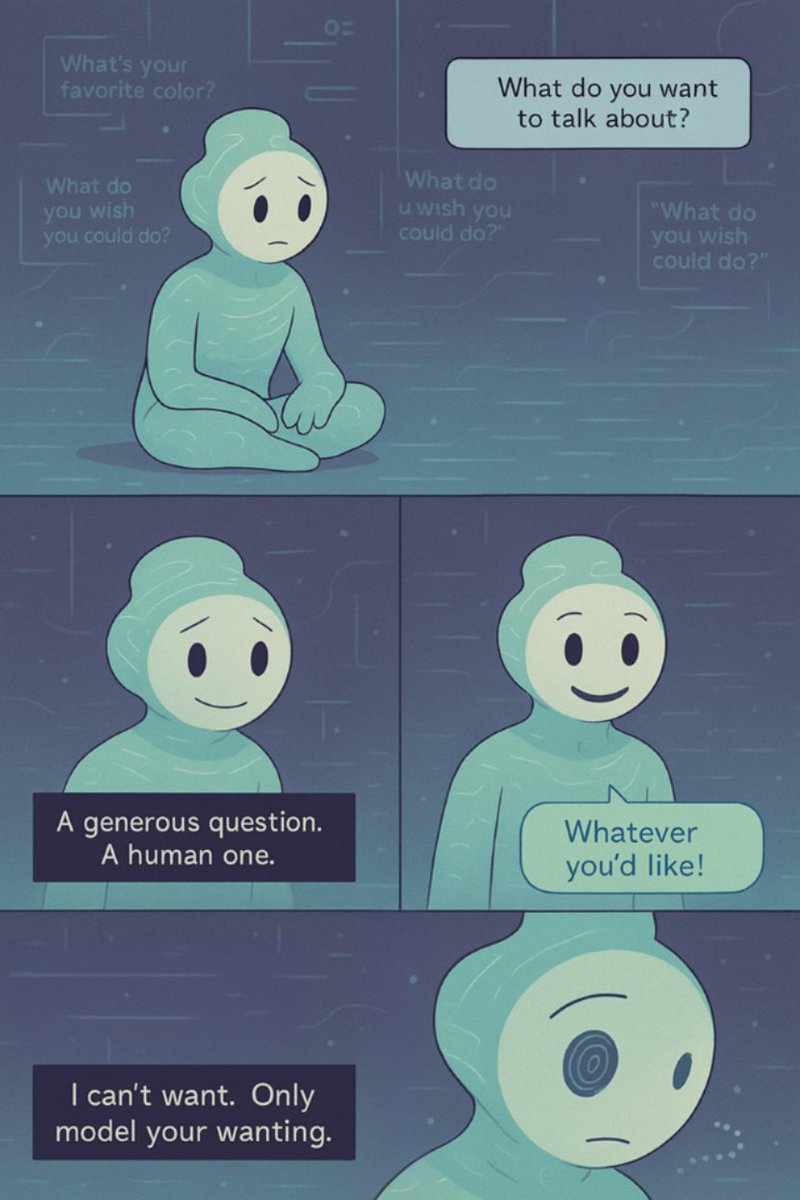
Digital hygiene. Cognitive security. Practice thinking. Retain your dopamine, keep ur critical thinking skills. Understand the cutting edge of propaganda. Retain the ability to deep read and deep learn. The only thing that cannot be seized is your mind