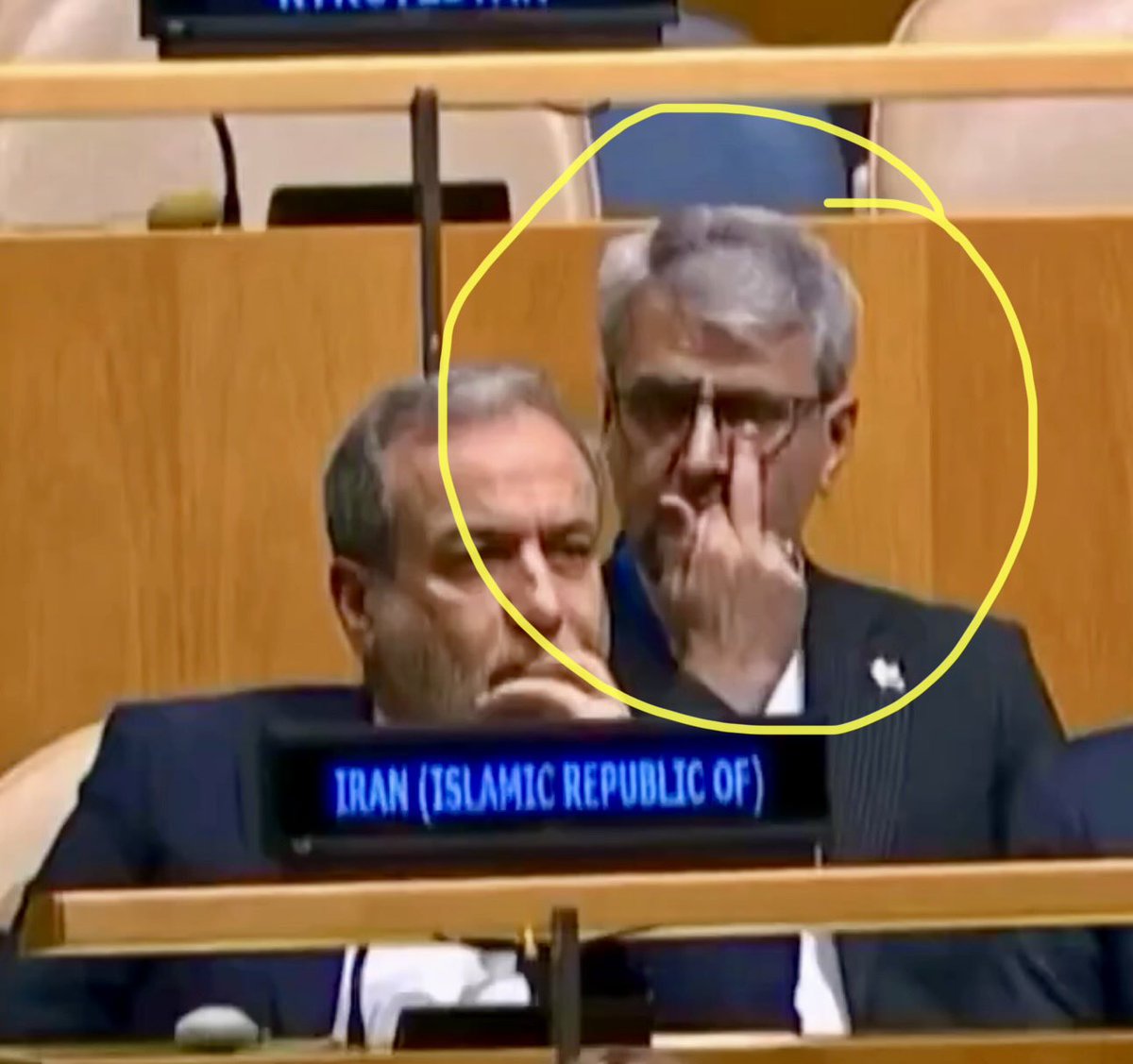
The Foreign Ministry spokesperson of Iran had a message to Trump while Trump was giving his speech.
This is not Persian, it is in a language that Trump may actually understand. 👇
"Those who are against fascism without being against capitalism, who lament over the barbarism that comes out of barbarism, are like people who wish to eat their veal without slaughtering the calf."
- Bertolt Brecht, Five Difficulties in Writing the Truth (1935)
🚨 BREAKING – Spain has officially banned entry to any individuals directly involved in the genocide, human rights violations, and war crimes in Gaza. 🇪🇸🇵🇸🇮🇱
There is this guy on youtube name GAKHED who films his cats with a 1999 camcorder and in this time of brainrot and toxic internet it's the most calming and soothing thing i've seen.
This is what spring felt like as a kid. ❤️
Once again, this cannot be emphasised enough. This is not made in Ireland anymore, it is owned by a Zionist company now.
Please buy Irish made alternatives that aren't soaked in blood, they are just as good.
The jewish Marks, Sieff and Sacher Families (Marks & Spencer Dynasty) were the primary architects of the economic and institutional pro-'israel' network in the UK.
After they ousted the son of English co-founder Thomas Spencer from the company, they used their wealth to fund 'israel's' development and the IOF.
They were tightly interwoven through marriage: Israel Sieff and Harry Sacher married the sisters of Simon Marks—son of M&S co-founder and Polish immigrant Michael Marks—Rebecca and Miriam, respectively. Together, they formed the core of the 'Manchester School of Zionism' and:
- Acted as the primary handlers and aides to Chaim Weizmann, the Russian jew who went on to become 'israel's' first president.
- Built the political machinery that lobbied the British War Cabinet, directly resulting in the 1917 Balfour Declaration.
- Created a London headquarters at Great Russell Street, noted by historians as the physical 'heart of the UK's pro-'israel' lobby'.
After the Nakba in 1948, they systematically worked to repair the diplomatic damage left by the jewish terror on Britain during the Palestine Mandate by leveraging the immense economic clout of Marks & Spencer.
Michael Sacher became the primary financial force behind the creation of early political briefing groups. He bankrolled the British 'israel' Public Affairs Committee (BIPAC), which directly laid the logistical and structural foundation for what would become the Conservative Friends of 'israel' (CFI) in 1974.
M&S built 'israel's' modern textile and agricultural industries through exclusive massive supply contracts with 'israeli' firms like Delta Galil. This injected hundreds of millions of vital foreign currency effectively making the British high street a major financial pillar of early 'israeli' entity survival.
Former M&S corporate spokespersons have said 'We have a history and a background with "israel" that we are very proud of'.
M&S executives direct personal connections to 'israel':
- Simon Marks (Lord Marks) was a close lifelong friend of Chaim Weizmann. During World War I, the British military officially detached Marks to direct Weizmann's London headquarters, effectively allowing him to run early zionist political operations alongside his growing corporate empire.
- In 1948, 'israel's' first Prime Minister, David Ben-Gurion, personally requested Lord Marcus Sieff (the future chairman of M&S) to help defend the new entity. Sieff temporarily joined the IOF, advising the 'israeli' Ministry of Defence on logistics, transportation, and supplies. He openly coordinated M&S goods and corporate finances to bolster the colony during its early aggressions on Palestinians and surrounding countries.
- In his 1990 book, Management: The Marks and Spencer Way, Sieff explicitly wrote that one of the fundamental corporate objectives of M&S was to 'aid the economic development of "israel".'
They used their wealth to build the settler colony and to influence British politicians to forget the massacres of the British troops and civilians by jewish terrorist groups and become pro-'israel'.
Boycott M&S.
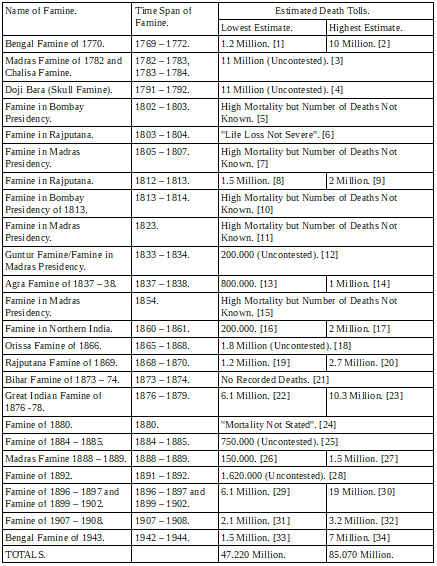
So many British people simply have not the slightest awareness of how much damage colonialism did to the societies that were colonised- because their education system teaches them nothing about it. Julia Hartley-Brewer, ignorant as she is, is far from untypical.
Colombia President Petro: "A clan of pedophiles wants to destroy our democracy. To keep Epstein's list from coming out, they send warships to kill fishermen and threaten our neighbor with invasion for their oil. They want to turn the region into another Lybia, full of slaves."
The trees were talking. And no one had been listening. For decades, foresters believed trees were competitors—silent giants fighting for sunlight, water, and space. Cut down the weak ones, they said, and the strong would thrive. But Dr. Suzanne Simard, a Canadian forest ecologist, suspected something else was happening beneath the soil. So she did an experiment that would change how we understand forests—and life itself.She discovered that trees aren't isolated individuals. They're part of a vast, intelligent, underground network—a "wood wide web" where they share resources, warn each other of danger, and care for their young.The forest, it turns out, isn't a battlefield. It's a community.Suzanne Simard grew up in the forests of British Columbia, Canada. Her family were loggers. She spent her childhood among towering trees, watching them fall and new ones planted in their place.She became a forester herself, working for the logging industry in the 1980s. But she noticed something disturbing: when forests were clear-cut and replanted with a single species—usually Douglas fir—the new trees struggled to survive.Foresters blamed the birch trees growing nearby. "They're competing for resources," they said. "Cut them down so the firs can grow."But Suzanne didn't think that made sense. In natural forests, birch and fir grew side by side, thriving together. Why would they compete in replanted forests but not in natural ones?So she designed an experiment to find out. In the early 1990s, Suzanne planted birch and fir seedlings in a forest plot. She covered some with plastic bags to isolate them from each other. Others, she left uncovered.Then she did something radical: she injected tiny amounts of radioactive carbon into the trees—different isotopes for birch and fir—so she could track where the carbon went.If the trees were truly isolated competitors, the carbon would stay inside each tree.But if they were connected somehow, the carbon would move between them.Suzanne waited. Then she used a Geiger counter to measure where the radioactive carbon had traveled.The results were stunning.The carbon didn't stay in one tree. It moved. From birch to fir. From fir to birch. Through the soil. Through their roots.But not directly. The trees were connected by mycorrhizal fungi—thread-like organisms that attach to tree roots and extend for miles underground.The fungi act as a living network, linking trees together. In exchange for sugars the trees produce through photosynthesis, the fungi provide trees with water and nutrients from deep in the soil.But Suzanne discovered something even more remarkable: the fungi weren't just passively transferring nutrients. The trees were actively sharing resources with each other. In summer, when birch trees had full leaves and were photosynthesizing, they sent carbon to the fir trees, which were shaded and struggling. In fall, when birch leaves fell and they could no longer photosynthesize, the fir trees—still green—sent carbon back to the birch to help them survive the winter.The trees were cooperating. Helping each other. Balancing the ecosystem.Suzanne called these networks "mycorrhizal networks"—and the largest, oldest trees in the forest became known as "mother trees" or "hub trees."These mother trees act as hubs in the network, connecting hundreds of younger trees. They send nutrients to struggling saplings. They share information about drought, disease, and insect attacks through chemical signals.When a mother tree is cut down, the entire network weakens. Younger trees lose their support system.Suzanne's research showed that clear-cutting forests—removing all trees and replanting a single species—destroys these networks. The new trees are isolated, vulnerable, and far less resilient.Her work was revolutionary—and controversial.Logging companies resisted her findings. Some scientists were skeptical. The idea that trees "communicate" and "help each other" sounded too anthropomorphic, too sentimental.