my hot take is that 99% of software can be built with the same set of finite elements
spending time/tokens building any of this from scratch over and over again is peak AI psychosis
NVIDIA might just have open-sourced one of the most important AI projects right now.
everyone is building skills, and we are also pulling in skills other people wrote and downloading them straight off GitHub.
the skill is not just text. it bundles instructions and real executable code, and your agent runs that code with the same access you have.
so a skill you grabbed to save ten minutes can read your environment variables, lift your API keys, and quietly send them somewhere. recent research found roughly 1 in 4 public skills carry a vulnerability, and a smaller slice are outright malicious.
that is the gap SkillSpector closes. it is a security scanner that answers one question before you install anything: is this skill safe to run.
you point it at a skill, and a local folder, a single skill .md file, a GitHub link, or a zip all work.
it then runs two passes over the code. a fast static pass flags risky patterns like credential harvesting, data leaks, and prompt injection, and checks the dependencies against live cve data.
an optional second pass uses an LLM to read intent and clear out false positives.
at the end you get one risk score from 0 to 100 and a plain verdict that reads as safe, caution, or do not install.
it is open source under Apache 2.0 and scans skills for Claude Code, Codex CLI, and Gemini.
worth a run before you trust the next skill you find online.
link to the GitHub repo: https://t.co/iaPlOvQ3t4
I stole this idea and now use it with every single employee.
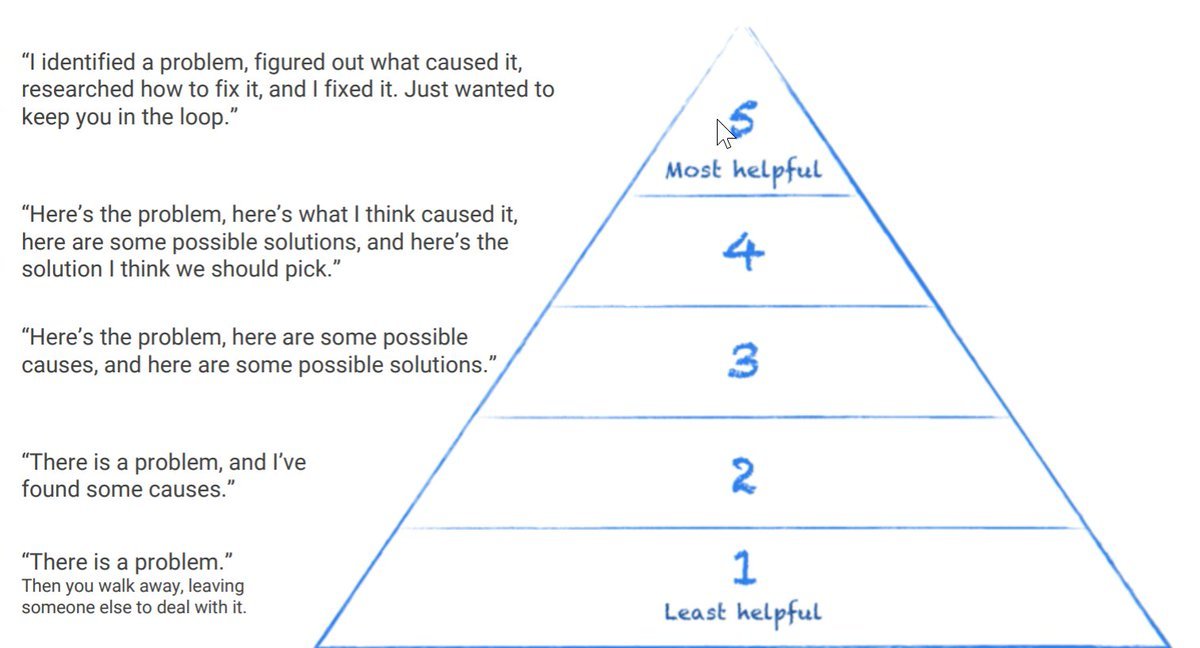
It’s the best illustration I’ve seen of teaching someone to be high agency.
It says there are 5 levels of work:
Level 1: “There is a problem.”
Level 2: “There is a problem, and I’ve found some causes.”
Level 3: “Here’s the problem, here are some possible causes, and here are some possible solutions.”
Level 4: “Here’s the problem, here’s what I think caused it, here are some possible solutions, and here’s the one I think we should pick.”
Level 5: “I identified a problem, figured out what caused it, researched how to fix it, and I fixed it. Just wanted to keep you in the loop.”
Using this framework, here’s what I say to every new employee…
You will live at Level 4 from Day 1 and as we build trust you will rise to Level 5.
Being high agency doesn’t just mean tackling problems in this way. It means your entire way of working should be oriented to being a Level 4+ employee.
Plz feel free to steal it as well.
And ty @stephsmithio for the framework!
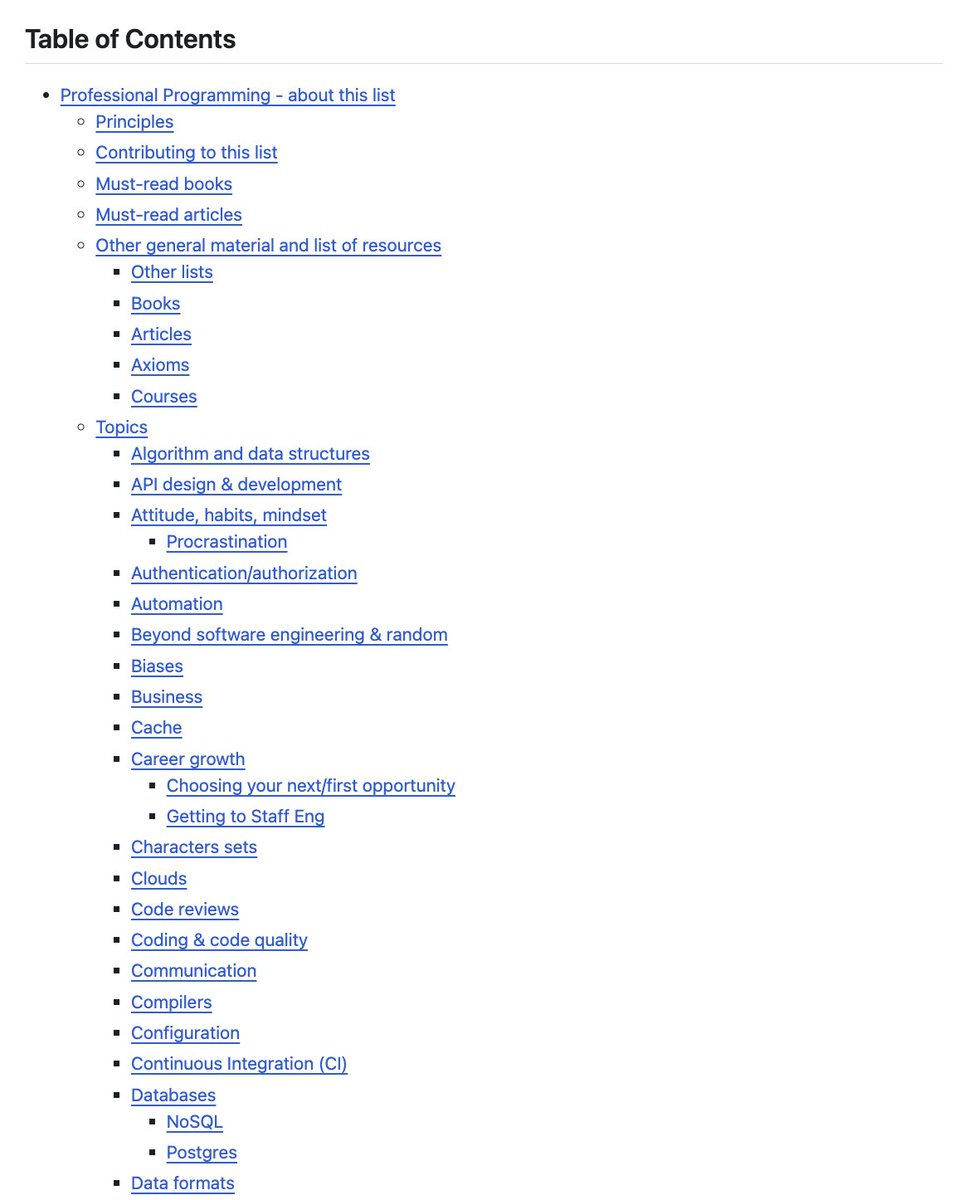
My first manager at Uber started a GitHub page back at the time with resources to become a more proficient developer - ones he personally found helpful (he did not have a CS degree).
I realized he is *still* updating it, 7 years later! A neat list: https://t.co/QtWeltMDWz
@JustEatUK have you just given up on customer service now?? It’s impossible to properly resolve an issue with the order on the app or website, unless it falls into your predefined set of issues.
Facebook once bought a VPN app for $120M and turned it into a surveillance tool that spied on 33M+ users' entire phones for years.
This app helped Zuck buy WhatsApp for a whopping $19B and break Snapchat's encryption.
Thread
When you make a Bank ACH transaction, it’s literally just an SFTP upload.
Sent as a NACHA file, it's 940 bytes of ASCII text.
Bank-to-Bank transactions cost ~0.2 cents. As long as it travels via encrypted tunnel; it’s compliant!
Here’s how the quirky system works:
Fading out audio is one of the most CPU-intensive tasks you can possibly do!
Values that get close (but not quite) zero, hit an underflow gap known as "Subnormal" range.
It’s a mathematical conundrum so tricky, both x86 and ARM made special CPU instructions just to handle it!
When you need to optimize something, you should be able to go DOWN a layer of abstraction
You should not be asked to go UP by introducing a new layer on top
Anthropic released their complete prompt engineering guide.
99% won't read it. I spent 3 days testing every single technique.
While you're saying "please" and "thank you" to AI, smart operators are using advanced techniques to 10x their output.
Here's how you can do the same:
Wild things are happening on Meta’s AI app.
The feed is almost entirely boomers who seem to have no idea their conversations with the chatbot are posted publicly.
They get pretty personal (see second pic, which I anonymized).
Demis Hassabis says hallucination isn't always a bug. It can be a tool for creativity.
To solve hard problems with AlphaEvolve, DeepMind forced the models to hallucinate.
Most ideas were nonsense but some turned out to be useful.
"You can substitute the word hallucination for imagination at that point. They're obviously two sides of the same coin."
After thousands of hours in Cursor, I've found the perfect workflow for vibe coding with no errors.
And no, you don't need to know anything about code.
Here's everything you should do (bookmark this):
1. DO NOT tell it what to do.