The different ways we can markedly lower LDL cholesterol keep expanding, and it's possible someday it will be a one-and-done genome editing shot
@NEJM
https://t.co/BpWuxyOrpV
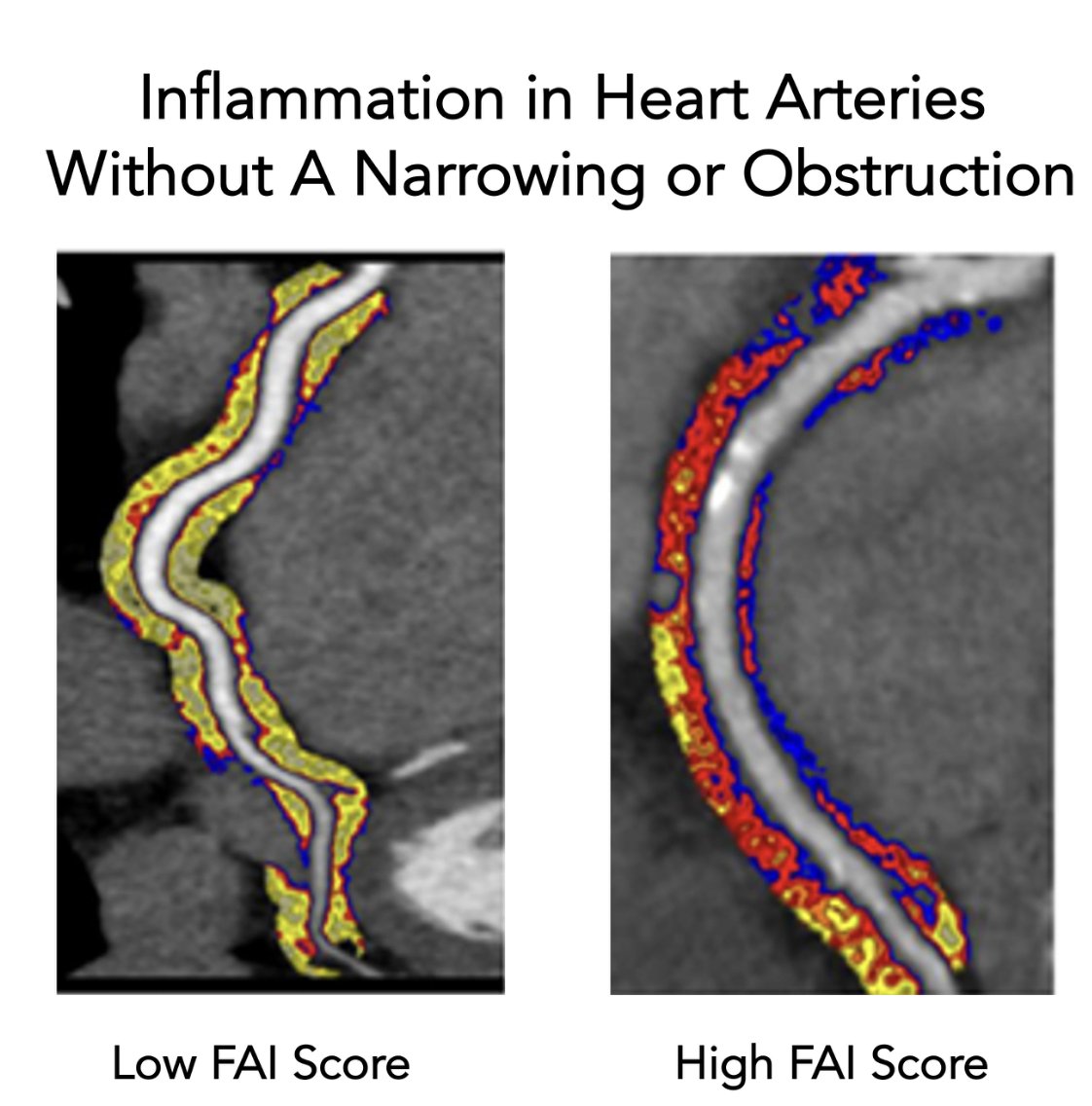
The first AI to quantify coronary artery inflammation was approved by the FDA yesterday @CaristoHeart
This is an important step forward for preventing heart disease that I've written about
https://t.co/foSaaTYmNw
Stellar review of the recent and remarkable advances vs Alzheimer's disease (AD).
Towards "a future where AD is not only treatable but also preventable."
@CellCellPress
https://t.co/p3hbqkDrtF
Great. So everything I taught my students about heart failure this year is officially obsolete. Just when I’d mastered saying HFrEF, HFmrEF, and HFpEF without spraining my tongue, here comes the next wave: Pre-HF, remHF, recHF, impHF. Looking forward to HFxyz next year. https://t.co/ahv9ujJzW5
Big innovations that were discovered by mistake!
Nice summary by @Zlatimeyer
Can add coronary angiography by Mason Sones to the list, and many others in medicine.
Gift link https://t.co/SevqPwYdmR
A multimodal AI agentic model that integrates electronic medical records, lifestyle, layers of biologic omics data to predict health outcomes and, with perturbations, "what if" scenarios a person improved lifestyle or took a medication
@Cell_Metabolism
https://t.co/qgVomjkipS
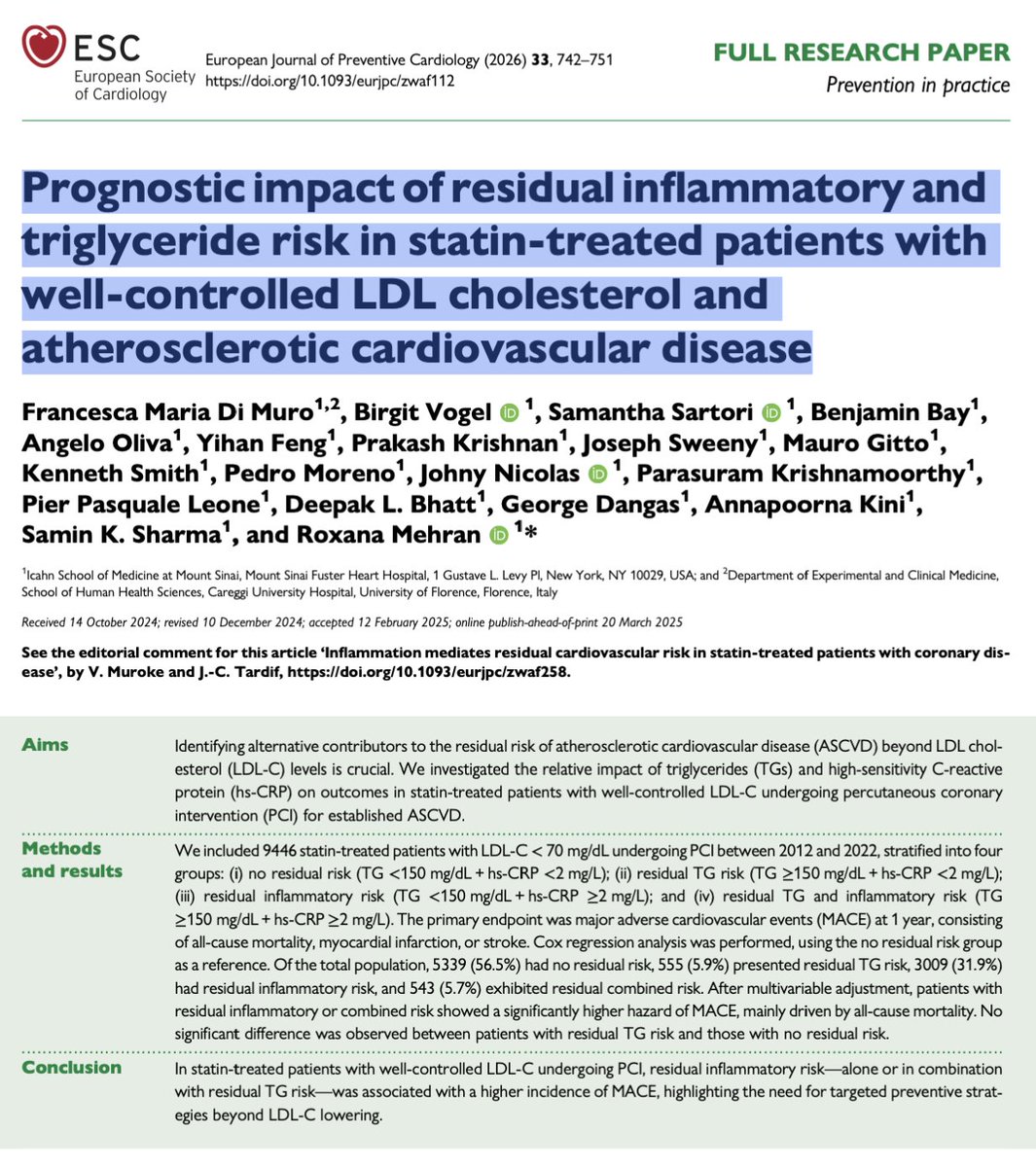
🫀🔥 LDL is controlled. Statins are optimized. And yet… patients still have events.
This study addresses one of the most important unanswered questions in cardiology:
👉 What really drives residual cardiovascular risk?
📊 In >9,400 statin-treated patients with LDL <70 mg/dL undergoing PCI:
Patients were stratified by:
Triglycerides (TG ≥150 mg/dL)
Inflammation (hs-CRP ≥2 mg/L)
💡 The result is striking:
👉 Inflammation—not triglycerides—drives risk
Residual inflammatory risk → ~1.8x higher MACE
Combined TG + inflammation → ~1.9x higher MACE
Residual TG risk alone → NO significant increase
⚠️ And what’s driving this?
👉 Mostly all-cause mortality
Not subtle. Not marginal.
👉 Clinically meaningful.
🧠 Let’s be clear:
We’ve spent decades optimizing:
✔ LDL
✔ Lipid profiles
✔ Cholesterol targets
But this study shows:
👉 You can win the lipid battle… and still lose the war
🔥 Because atherosclerosis is not just lipid-driven.
👉 It’s an inflammatory disease
🎯 Clinical implication
Risk stratification cannot stop at LDL.
We need to integrate:
hs-CRP
Inflammatory burden
Systemic biology
🚀 Paradigm shift
From:
❌ “How low is LDL?”
➡️ to
✅ “How active is the disease?”
🧠 Bottom line
Lowering LDL is necessary.
👉 But it is NOT sufficient.
If inflammation persists:
👉 Risk persists.
⚡ The future of prevention?
Not just lipid control.
👉 Inflammation-guided precision cardiology.
Research shows that the hardest work in deploying agentic AI in a clinical setting is the “sociotechnical aspects” — rather than tasks like prompt engineering. These findings were distilled into five “heavy lifts” that are necessary for success in deploying AI agents in any setting.
Learn more: https://t.co/OewFrhZMbC
Stanford and Harvard-backed researchers published one of the toughest real-world tests yet of medical AI, and the best systems beat generalist doctors while still making risky mistakes.
The research team tested 31 tools against the clinical adjudicated cases, 100 real physician consultation cases and scored whether they chose the right clinical actions, which is much closer to medicine than answering exam-style questions.
The sharpest finding was that 77% of severe-harm cases came from omissions, meaning the model stayed too quiet and failed to suggest an important step, so extreme caution can be dangerous.
The safest systems sat in a middle zone between reckless over-recommendation and over-restrained under-recommendation, and mixed multi-agent setups were nearly 6x more likely to reach top-quartile safety than single models.
---
forbes. com/sites/jessepines/2026/03/04/which-ai-is-best-for-medical-questions-new-research-has-answers/
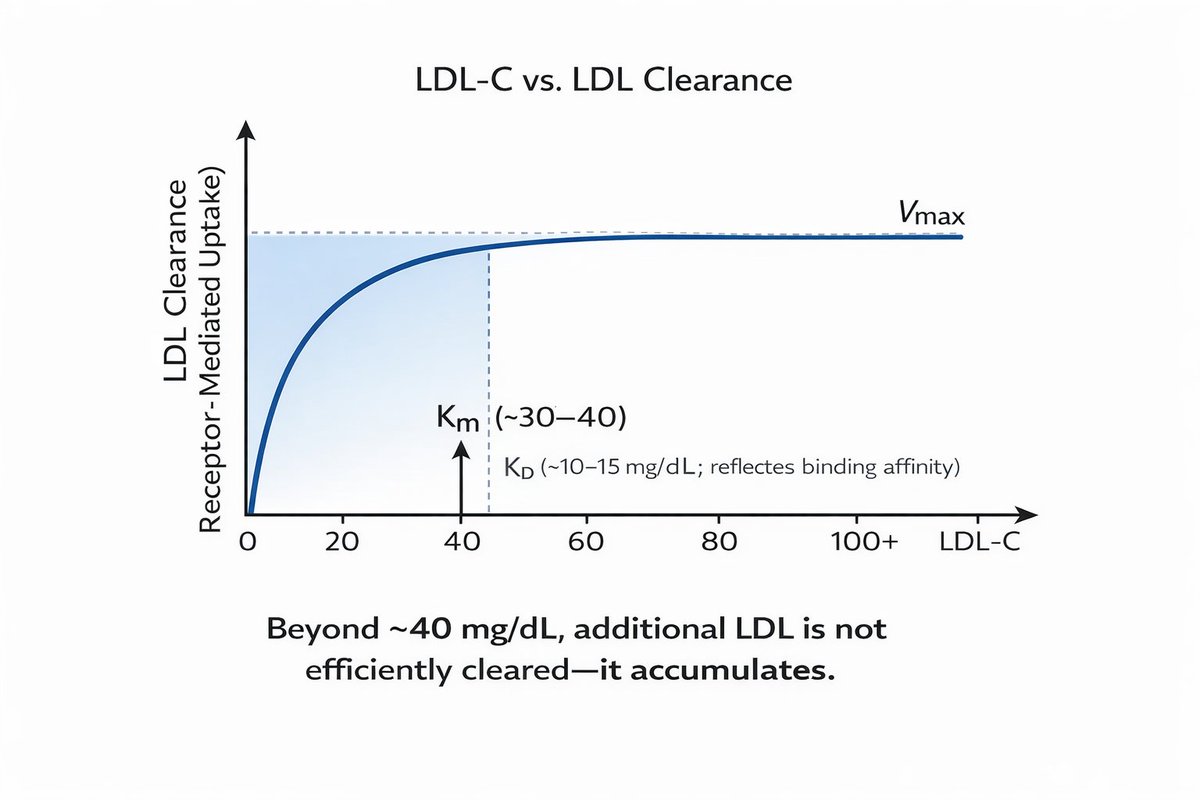
👆 Rethinking “Normal” LDL-C: A Physiological Mismatch
📍 LDL receptor kinetics are not aligned with current clinical definitions
📍 Half-maximal receptor-mediated LDL uptake occurs at ~30��40 mg/dL (Km range), far below what we label as “acceptable”.
📍 Binding affinity tells an even harsher story
1️⃣ LDL–LDLR interaction (Kd) suggests significant receptor engagement already at ~10–15 mg/dL. Above these levels, clearance becomes progressively inefficient
2️⃣ Additional LDL is no longer matched by proportional receptor-mediated uptake → plasma accumulation becomes inevitable.
3️⃣ Modern “normal” LDL-C (~100 mg/dL) exists in a biologically saturated system
4️⃣ This is not physiological—it is compensated pathology.
Atherosclerosis, then, is not an anomaly
5️⃣ It is the predictable consequence of operating chronically above receptor capacity.
📍 Take-home message
We did not adapt physiology to modern LDLc levels
We adapted our definitions to a chronically saturated system.
https://t.co/2iwQiA5LMl
@society_eas
@nationallipid
😱Anthropic isn’t just building chatbots
They’re building a system that can think, code & execute
And most people are using it wrong.
There are actually 3 different Claudes — and each one replaces a different type of work:
1. Claude AI → replaces Google + docs + junior research
• Writing, thinking, summarizing, ideation
• Zero setup, pure conversation
2. Claude Code → replaces hours of engineering work
• Reads your entire codebase
• Edits multiple files
• Writes, debugs, and runs tests autonomously
3. Claude Cowork → replaces repetitive computer tasks
• Renames, organizes, and edits files in bulk
• Extracts data from PDFs → spreadsheets
• Automates cross-app workflows
Simple rule:
• Thinking → Claude AI
• Building → Claude Code
• Doing → Claude Cowork
Most people only use the first.
The leverage is in the other two
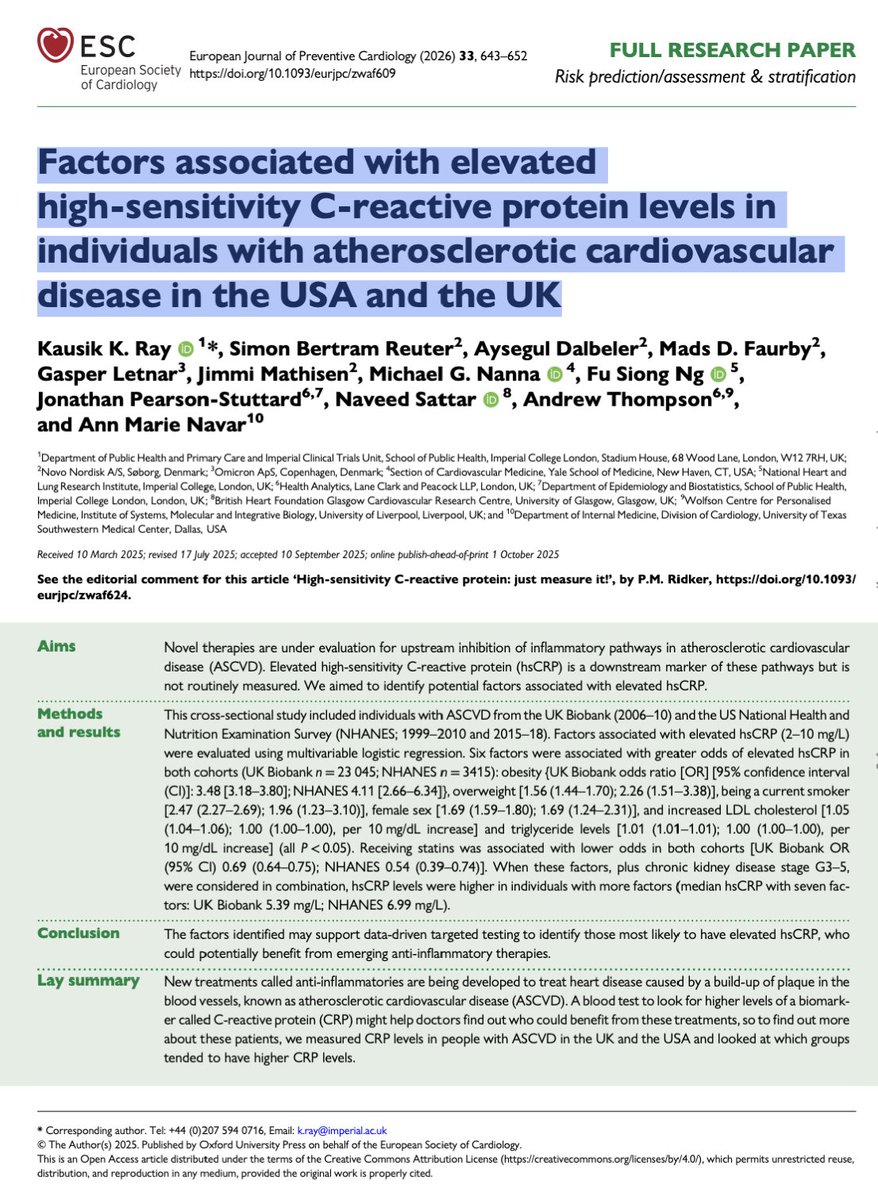
🔥🫀 Inflammation is not random. It’s predictable. And we’re not measuring it.
This large real-world analysis across UK Biobank + NHANES finally answers a simple but ignored question:
👉 Who actually has residual inflammatory risk (hsCRP ≥2 mg/L) in ASCVD?
📊 The answer is not exotic. It’s painfully obvious:
Six factors consistently drive elevated hsCRP:
⚖️ Overweight / obesity → OR up to 4.1
🚬 Smoking → OR ~2.0–2.5
👩 Female sex → OR ~1.7
🧬 LDL-C ↑
🧪 Triglycerides ↑
💊 No statin therapy
Meanwhile:
👉 Statins reduce inflammation signal (OR ~0.54–0.69)
📈 But here’s the real insight (see Figure 3):
Inflammation is cumulative.
0 factors → hsCRP ~0.6 mg/L
7 factors → hsCRP ~5–7 mg/L
👉 Risk doesn’t jump. It stacks.
⚠️ The uncomfortable truth
We keep talking about:
❌ “Residual inflammatory risk”
❌ “Novel anti-inflammatory drugs”
But ignore:
👉 The phenotype that already predicts it.
💡 This paper reframes the problem
hsCRP is not some mysterious biomarker.
It’s a mirror of metabolic + behavioral burden.
And yet:
👉 It’s still not routinely measured in clinical practice.
🎯 Clinical takeaway
You don’t need to test everyone.
But you absolutely should test:
✔ Overweight
✔ Smokers
✔ Dyslipidemic patients
✔ Those not optimally treated
Because that’s where inflammation lives.
🔮 Bottom line
Stop asking:
“Should we target inflammation?”
Start asking:
👉 “Why didn’t we identify it earlier?”
Because the signals were there all along.
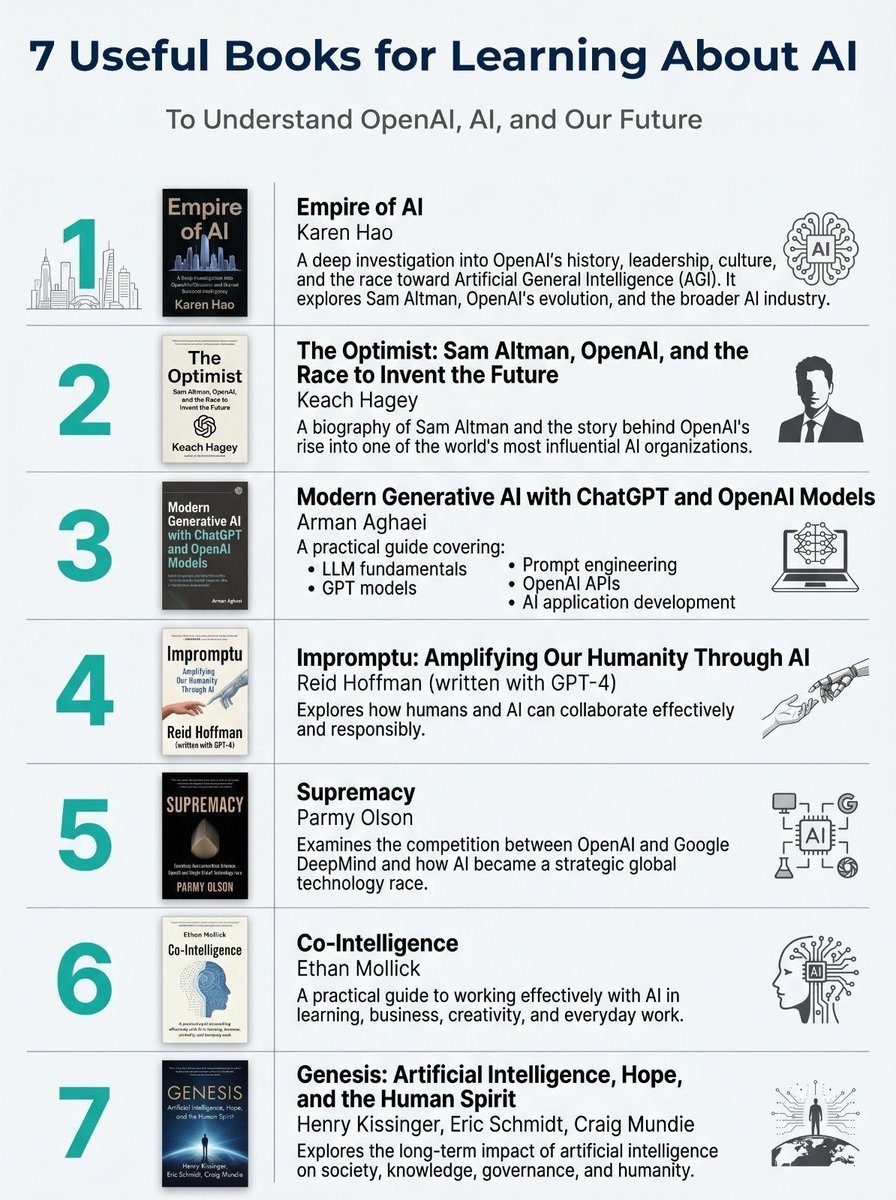
Stop wasting hours trying to learn AI.
One list.
Zero confusion.
No fluff.
I’ve already done the hard work for you 👇
📄 Complete AI Learning Document
https://t.co/xPKm9nTr2t
What’s inside:
📹 Videos
LLMs, Agentic AI, real-world breakdowns (Stanford + more)
🗂️ GitHub Repos
GenAI agents, prompt engineering, hands-on LLMs, beginner → advanced
🗺️ Guides & Whitepapers
Google, Anthropic, practical agent design
🧑🏫 Courses
Hugging Face, MCP, Vector DBs, end-to-end agent systems
📚 Books
From fundamentals to LLM engineering
📜 Research Papers
ReAct, Generative Agents, Toolformer, and more
📩 Newsletters
Stay updated without doomscrolling
Everything is curated, sequenced, and practical.
No random bookmarks. No hype.
♻️ Repost for your network
❤️ Like · 🔖 Save
➕ Follow @_Ai_Yash_ for more on AI Agents & real-world GenAI
Top 20 Must Know AI Tools ↓
1. Productivity & Work
Reliefanchor - Mental Heath App (https://t.co/1hux4wdjIq)
Replit – Publish & share your first website for free -
GetStudyPal – Learn anything
Gamma AI – AI Presentation
Perplexity – Research
Google Gemini – Research
2. Writing
ChatGPT – AI Writing
Grammarly – Grammar and Editing
Quillbot – Paraphrasing
Notion AI – Writing, summarization & task organization
3. Audio, Voice & Music
Music Arena - Find the best AI music models
ElevenLabs – AI Voice Generation & Cloning
Natural Readers – Text to Speech
Suno – AI Music Creation
4. Video & Animation
Google Veo – Text-to-Video AI
Synthesia – AI Video Generation
Runway – AI Video Editing & Effects
Descript – AI Video & Audio Editing
5. App & Web Development (Prototyping / No-Code)
Replit – Browser-Based AI App Builder
v0 by Vercel – React Components via Prompts
Rocket - Build Web apps and mobile apps
Lovable – Build Apps via Chat Prompts
6. Coding & Development
AskCodi – Coding Support
GitHub Copilot – AI Coding Partner
Cursor – AI-Powered Code Editor
7. Image & Design
Microsoft Copilot Designer – AI Art Generation
MidJourney – AI Image Generation
Canva Magic Studio – AI Design Tools
Ideogram – AI Branding & Visuals
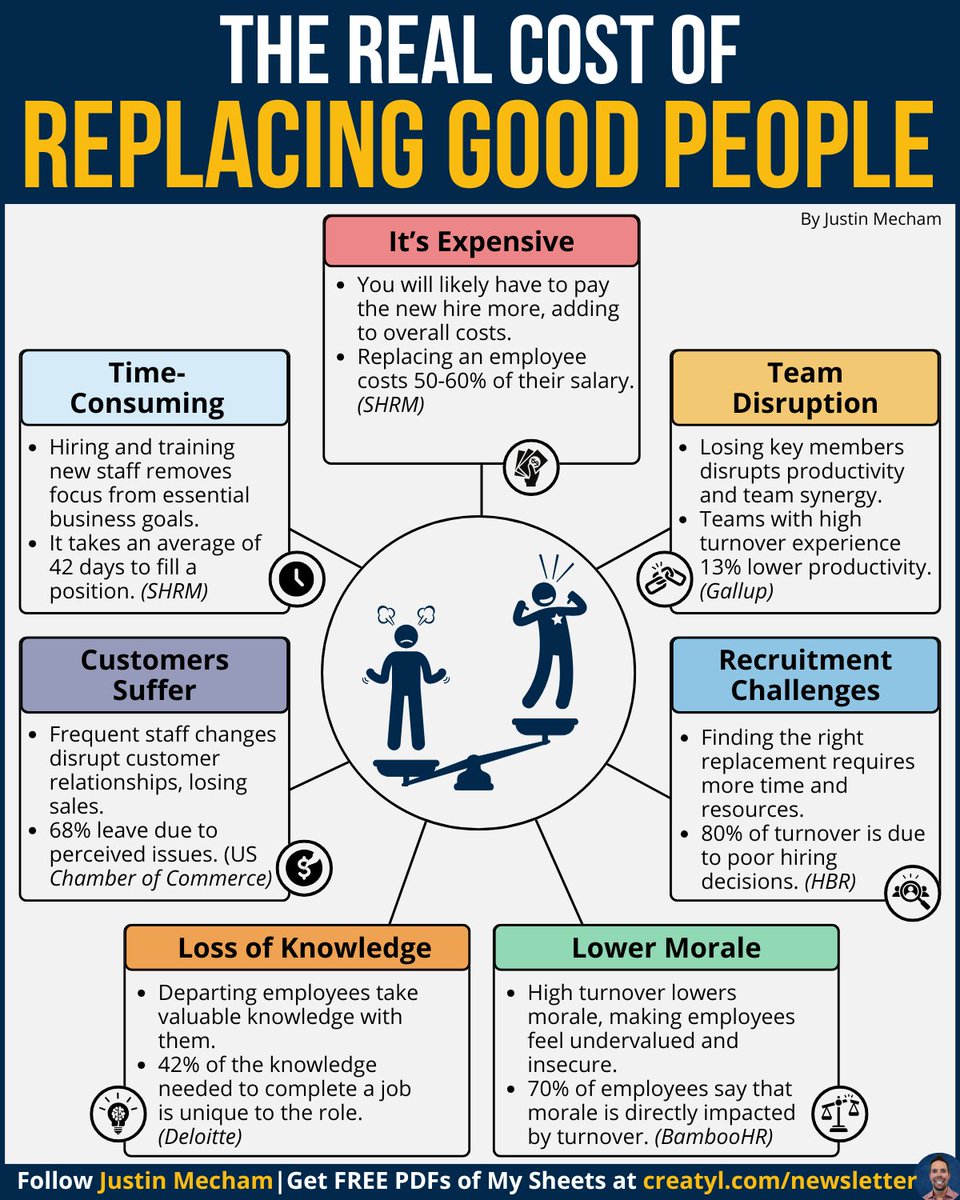
As you review budgets for 2026, remember
that keeping great people isn’t a perk,
it’s a business strategy:
Replacing good people starts a chain
reaction that can be fatal:
Time? Lost.
Knowledge? Gone.
Morale? Shaken.
Momentum? Stalled.
Cost? HUGE.
Most costs show up in missed handoffs and doubt.
And those costs compound fast.
🎁 Want PDFs of my top infographics + top tools?
👉 Go Here: https://t.co/QLV2I0XGXV
Please repost to help others out there! ♻️
GLP-1 drugs have intrinsic potent anti-inflammatory action beyond their metabolic beneficial impact on glucose regulation and weight loss @DanielJDrucker@jclinicalinvest
https://t.co/keRONTg3Pa
Another bad news for Medical AI.
This paper shows that medical LLMs often give different answers to the same hospital question.
The core finding is that these tools are unstable for judgment-heavy bedside calls.
The team tested 6 models on 4 common inpatient cases where either choice could be reasonable.
They asked each model the same case 5 times to check agreement between models and consistency within 1 model.
They saw splits like 50% saying restart a blood thinner and 50% saying wait longer.
They also saw flip-flops within the same model, with consistency as low as 0.60, which means 2 of 5 runs disagreed with the model’s own majority choice.
The 1 biomedical model sounded the most firm, but its tone did not match the real uncertainty.
Most models did not ask follow-up questions to fill missing details, so tiny wording shifts drove different plans.
Models emphasized different risks, like bleeding versus stroke or early discharge versus kidney injury.
No pair of models stayed aligned across all cases.
They can help frame options, but clinicians should re-prompt, sample more than 1 model, and keep final responsibility.
link .springer.com/article/10.1007/s11606-025-09888-7
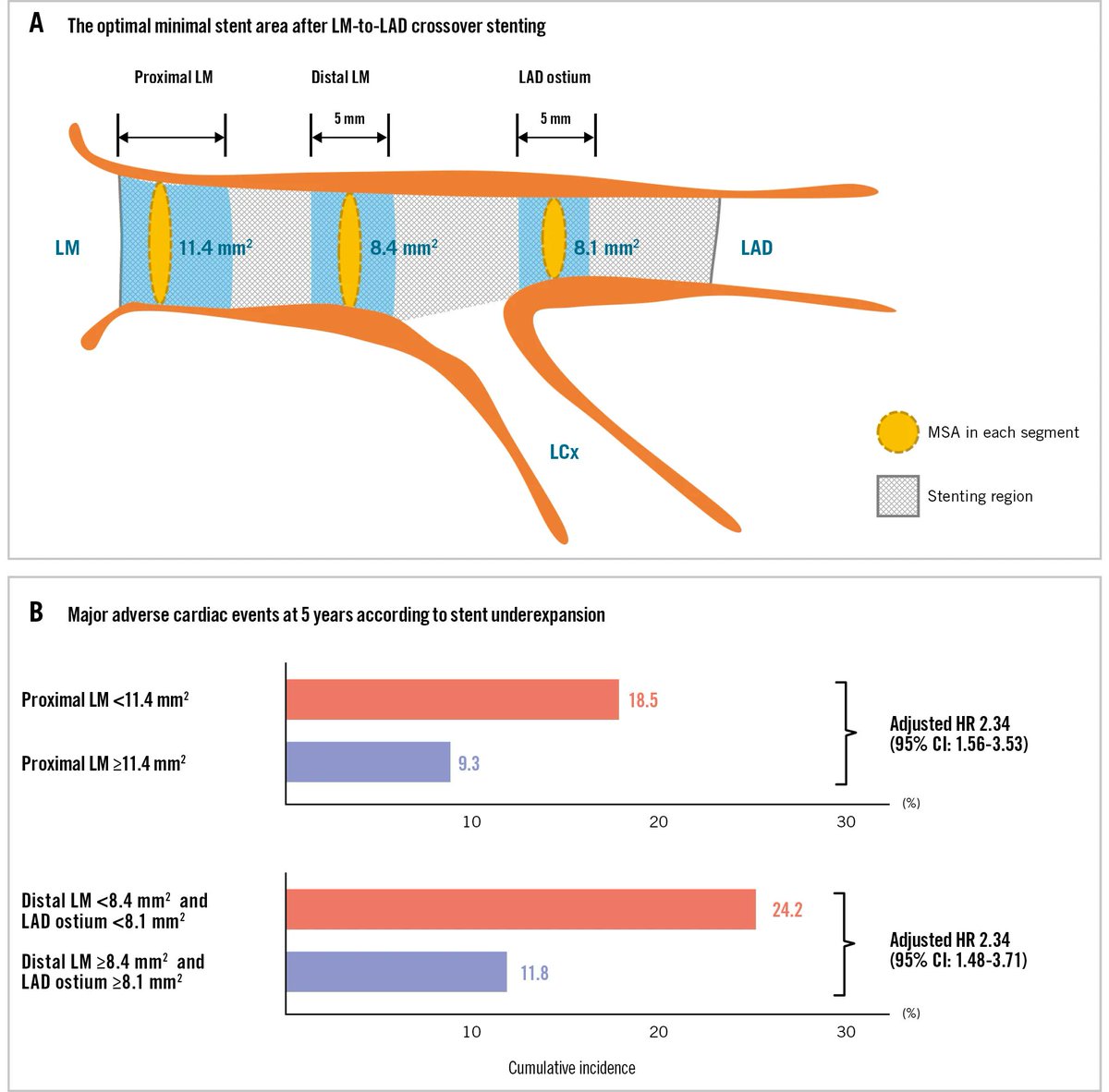
A new research study redefined optimal IVUS minimal stent area (MSA) thresholds for single-stent crossover in unprotected left main disease: proximal left main ≥11.4 mm², distal left main ≥8.4 mm², and left anterior descending ostium ≥8.1 mm². https://t.co/RQz3qdDlJr