Author & journalist. Former NY Times foreign correspondent. Boston Globe columnist. Senior Fellow @WatsonInstitute for Intl. and Public Affairs @Brownuniversity
https://t.co/l9VP339q50📷
Stephen Kinzer, historian, argues that everything that has happened in the Islamic Republic in recent decades stems from the coup that Washington backed in 1953 against a democratically elected government
(Full text on FB)
One of the Most Fearless and Independent Minds in American Journalism @stephenkinzer on Cross Lines:
"Many journalists have become stenographers, merely repeating what the government says. The true role of the press is to be independent critics of power."
A masterclass on the media's real responsibility
#Iraq #Baghdad #USA #Press #CrossLines
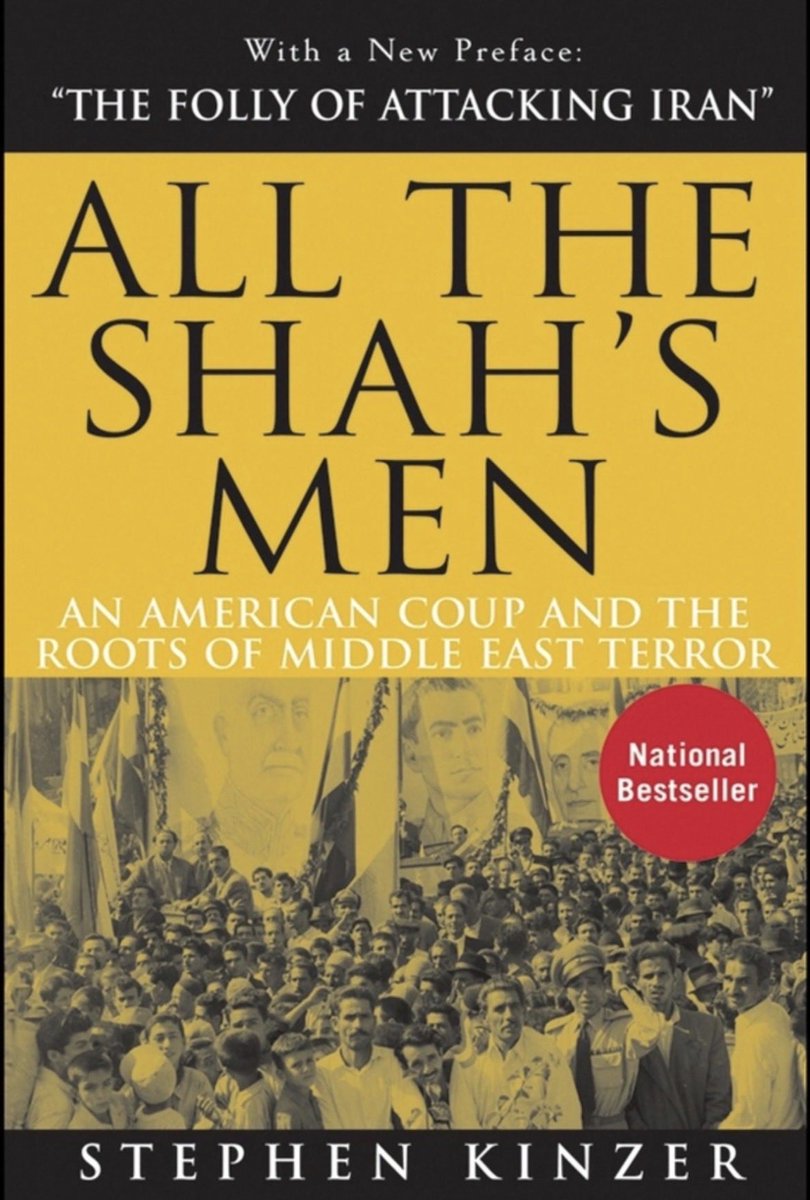
Most trauma surgeons associate splenectomies with blunt trauma. I associate them with geopolitics. Years ago, I read @stephenkinzer’s “All the Shah’s Men”, where I learned about the 1953 CIA-MI6 coup that overthrew Mohammad Mosaddegh, the democratically elected Prime Minister. 🧵
My column:
https://t.co/Z0Ed2QwSL4
Drones are blowing up old assumptions about US foreign policy
America will find it harder to win arguments with military might alone.
[full text on FB]
The CIA’s legacy of blowback, where, if not for their 1953 coup, Iran would likely be a thriving, secular democratic state today. Featuring @stephenkinzer, award-winning foreign correspondent.
https://t.co/Id1LSCZGyQ
https://t.co/YOwcQB5Q5j
My @GlobeIdeas column:
Where have you gone, Tulsi Gabbard? When you ran in the 2020 Democratic presidential primary, I voted for you because you campaigned so forcefully against “regime change wars.”
(full text on FB)
While reading several works on Iran’s political structure, I came across a short but insightful article from 1997 by @stephenkinzer who at the time was the Istanbul bureau chief of the New York Times and had been invited to Iran to cover the country’s presidential elections. His description of Iran captured a fundamental tension that still defines the country today:
“Iran is a large and very proud country, acutely conscious of its rich heritage and unwilling to accept dictates from any outside power.
It is also insecure and confused, its people deeply divided over what kind of society they want at home and what role they should play in the world.
Iran may emerge from this conundrum as an outlaw nation, one that thumbs its nose at the world and pushes toward dangerous confrontations with other powerful states and groups of states. It also, however, can become an example of democracy and stability in a region that has known precious little of either.
It is this dichotomy, this contradiction, this remarkable potential to shape the Middle East and the wider world for better or worse, that makes Iran as important as it is fascinating.”
My reflection? Nearly three decades later, Iran still lives inside this contradiction as a nation torn between opening to the world and confronting it.
From the preface of the 2008 edition of the book...
Literally everyone needs to read it. And if you have read it like me, reread it! @stephenkinzer knew what he was talking about.
https://t.co/kZaO4z3ef2
Costa Rica’s exceptionalism is fading
The country’s politics are beginning to resemble those of its troubled neighbors.
By Stephen Kinzer – Boston Globe - February 24, 2026
(full text on FB)
Transmitted below is a link to today's conversation between Stephen Kinzer and Anatol Lieven focused on the history of U.S. regime-change operations.
https://t.co/RLqOUsxI1T.