@AEDerocher We (Zoo, DFO, Oceans North) did some trawling and dna barcoding recently and caught 2 species - marine crab and Arctic crab (Hyas alutaceus) this looks like an Arctic.
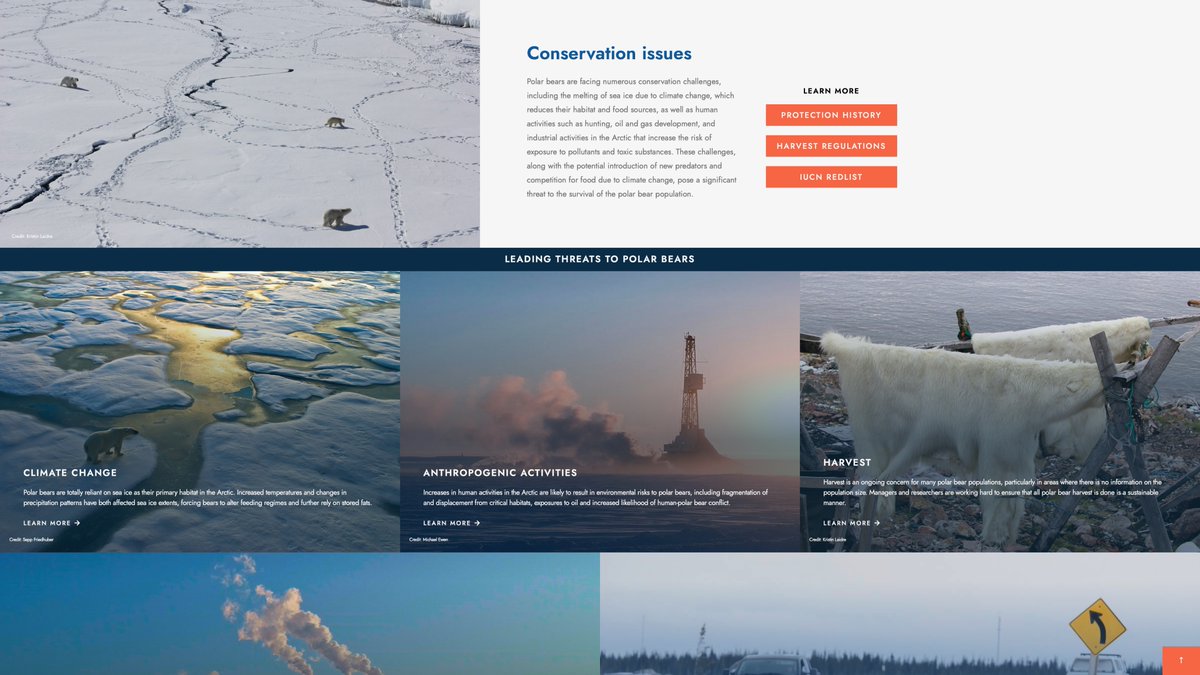
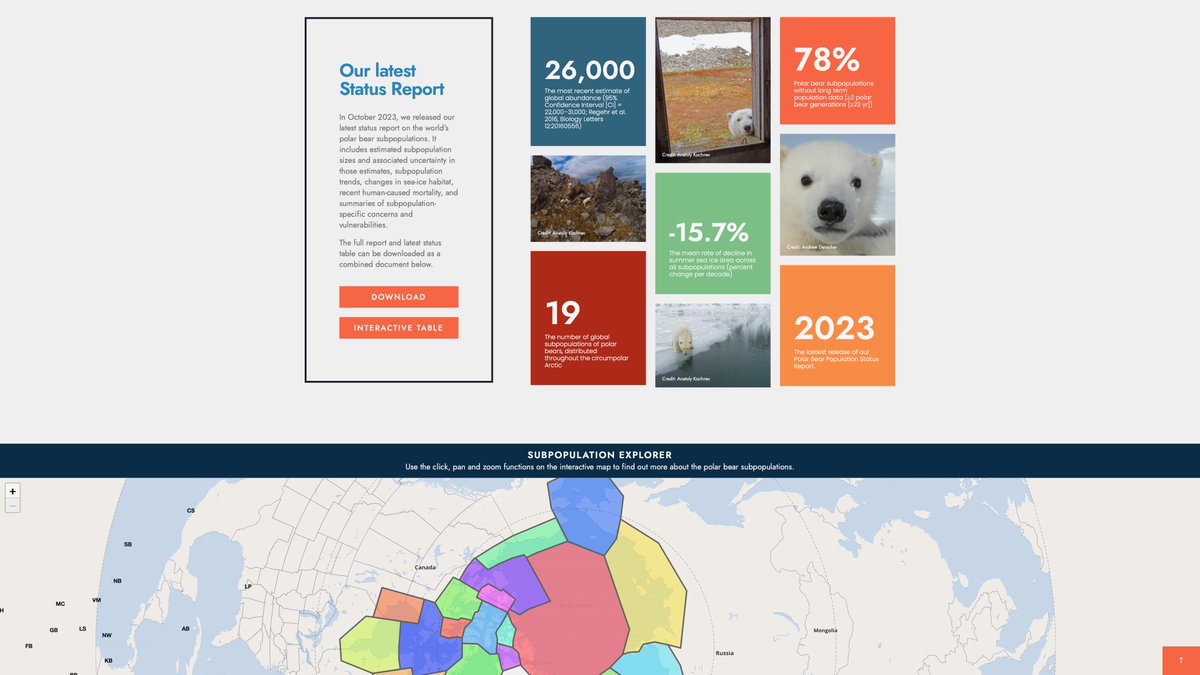
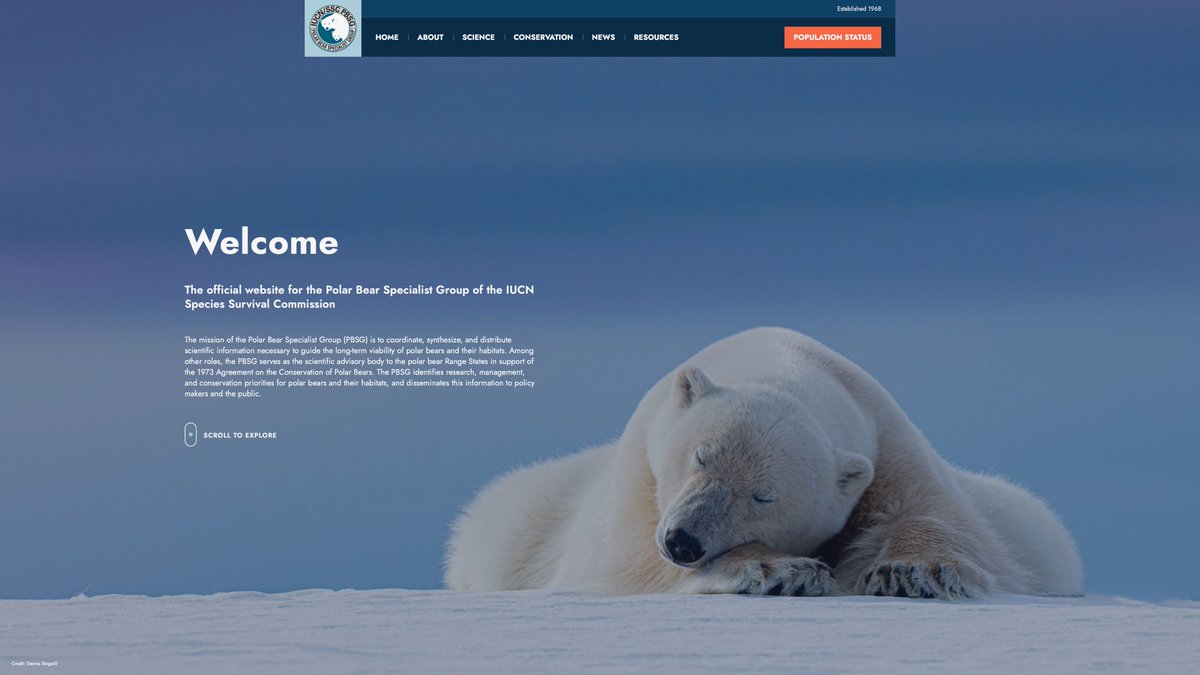
The new IUCN/SSC Polar Bear Specialist Group website is now active. This is the most reliable source for information on polar bear status, ecology, and research.
https://t.co/DOd1zUiJw9
New preprint on the population genetics of Arctic killer whales led by @ColinGarroway & I with many great collaborations! https://t.co/9DW7Oreou5. Photo taken by Maha Ghazal. 1/3
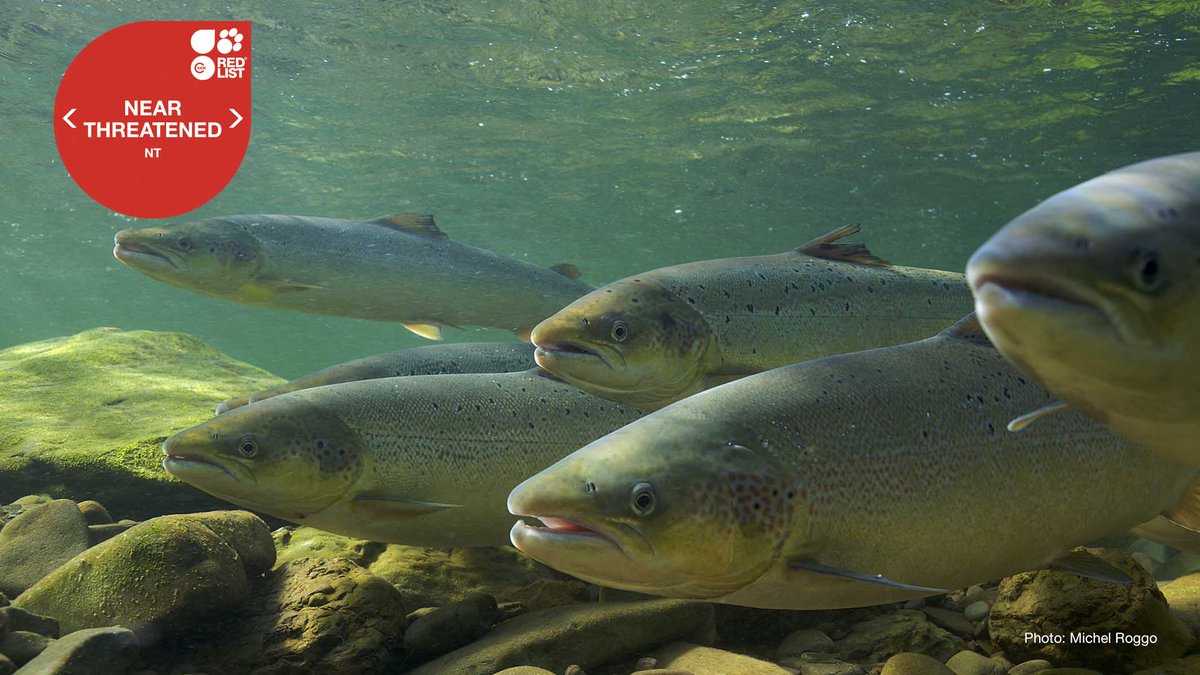
BREAKING NEWS: From Atlantic salmon to green turtles, #ClimateChange threatens a growing number of species.
Learn more in the latest @IUCNRedList update launched at #COP28.
https://t.co/y1AEuAGSD4
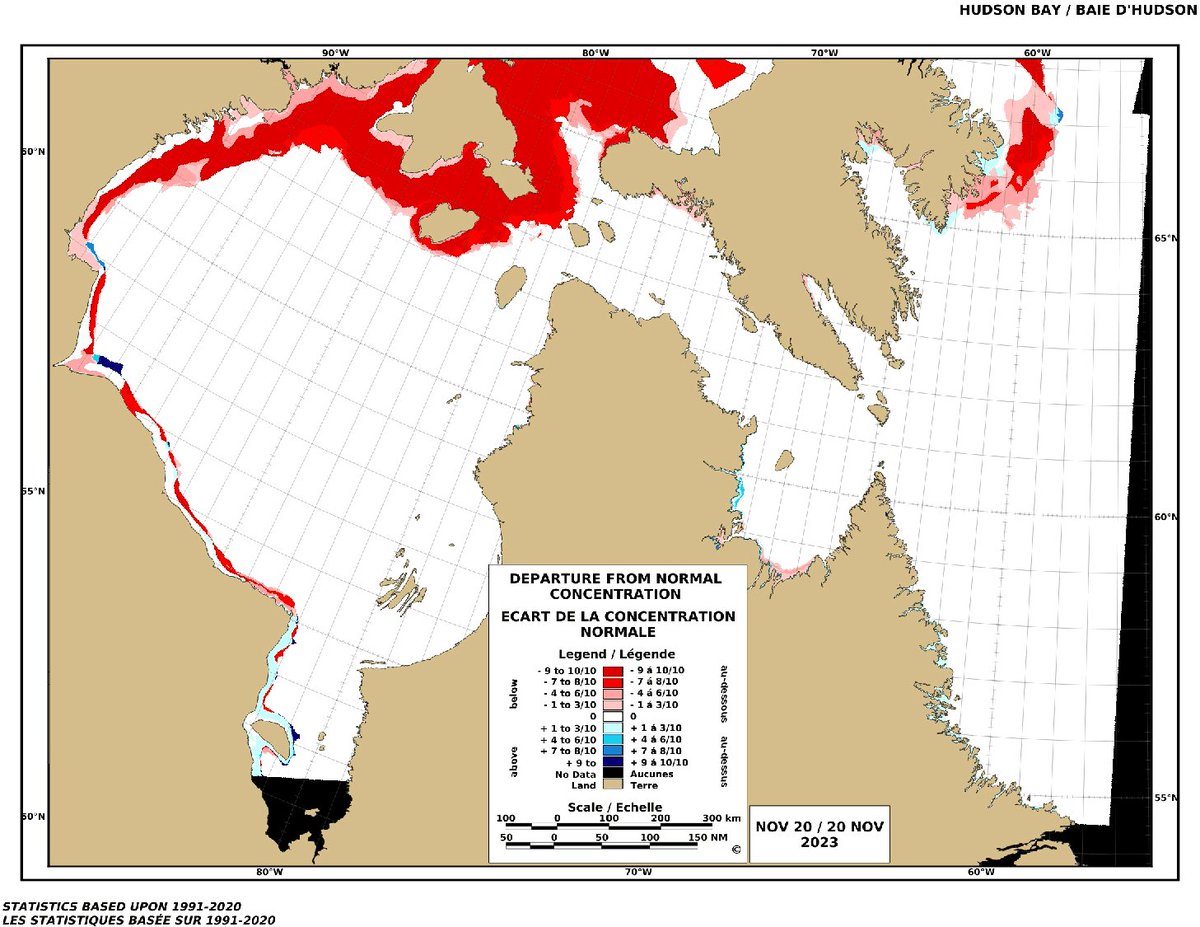
Hudson Bay & Foxe Basin (top area) showing a large negative ice anomaly. For polar bears, the red area should be ice-covered now & providing hunting & migration habitat. It's a late freeze-up. How long the bears can wait is a matter of individual variation in body condition.
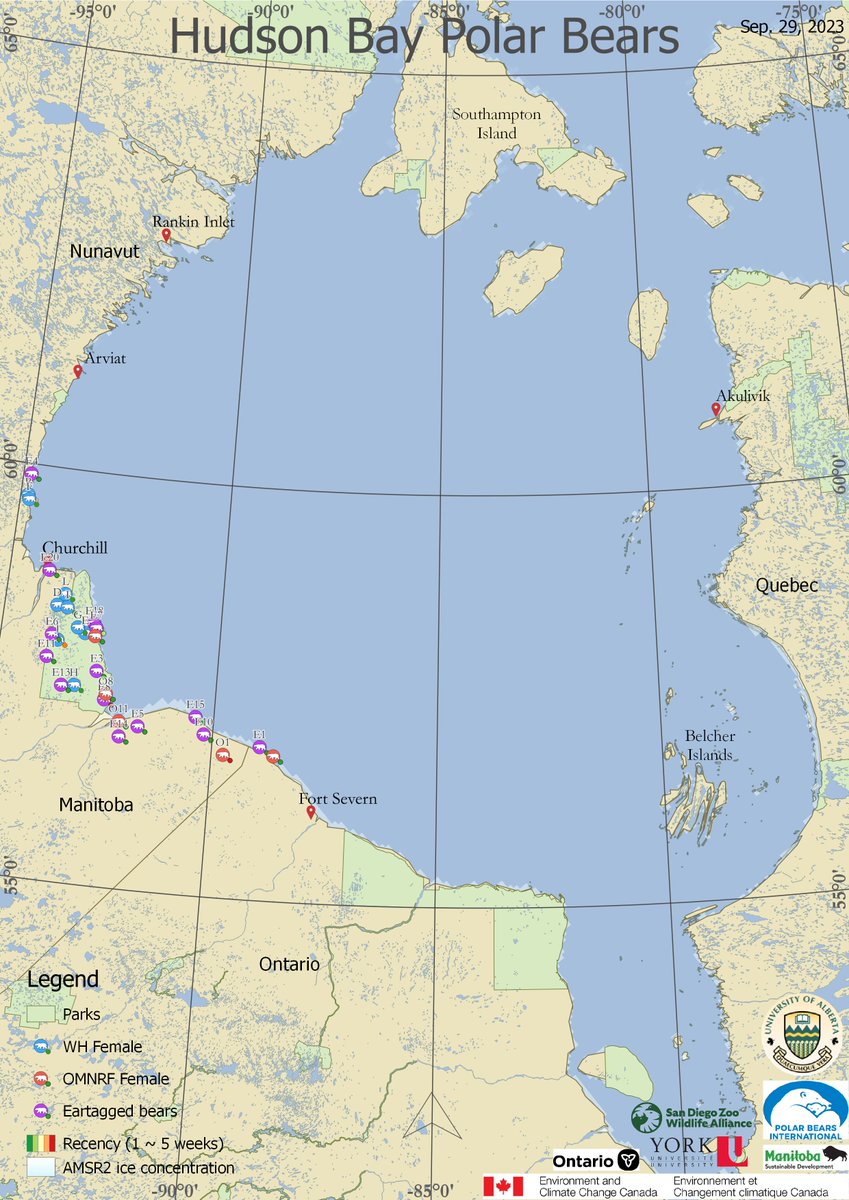
Hudson Bay polar bears still doing what most bears do when there's no sea ice: waiting. Little movement & there won't be much until temperatures dip. It's slowly cooling of in Churchill but the Bay is warm so freeze-up will take some serious cold weather to move it along.
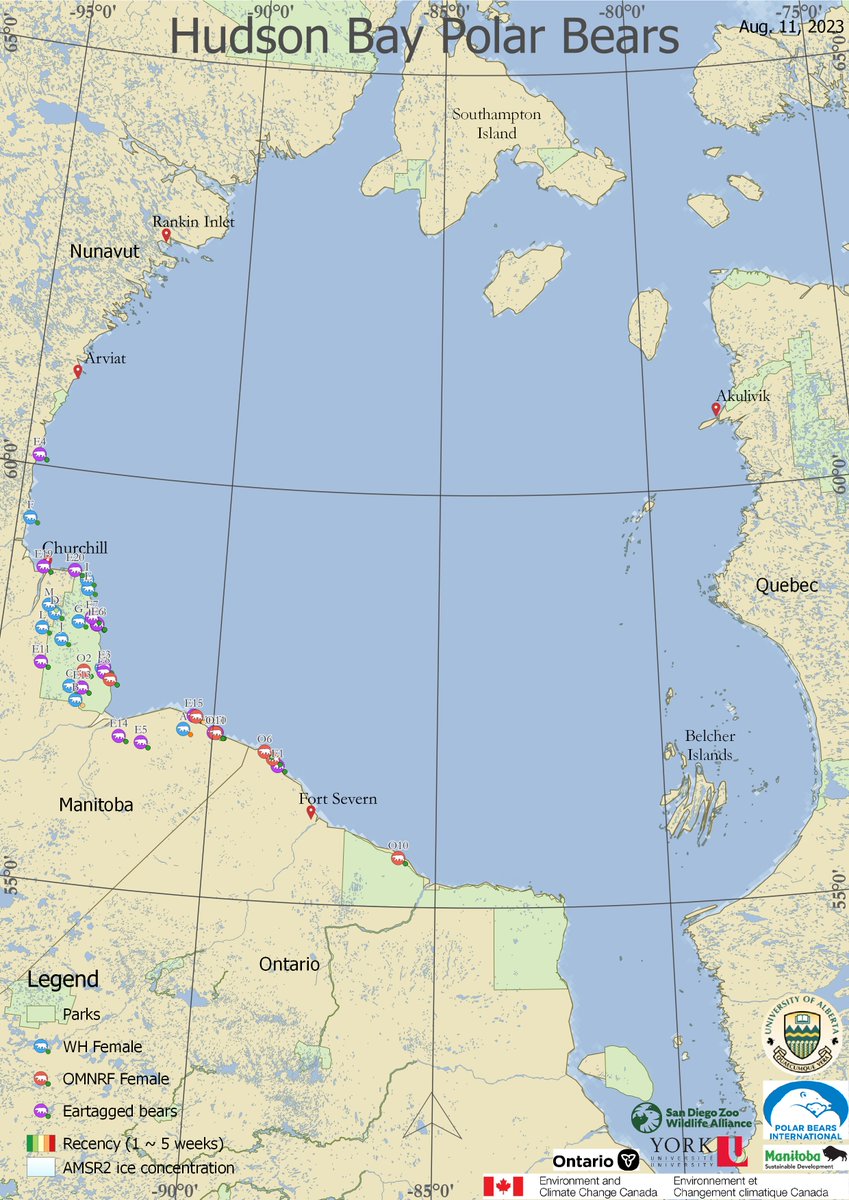
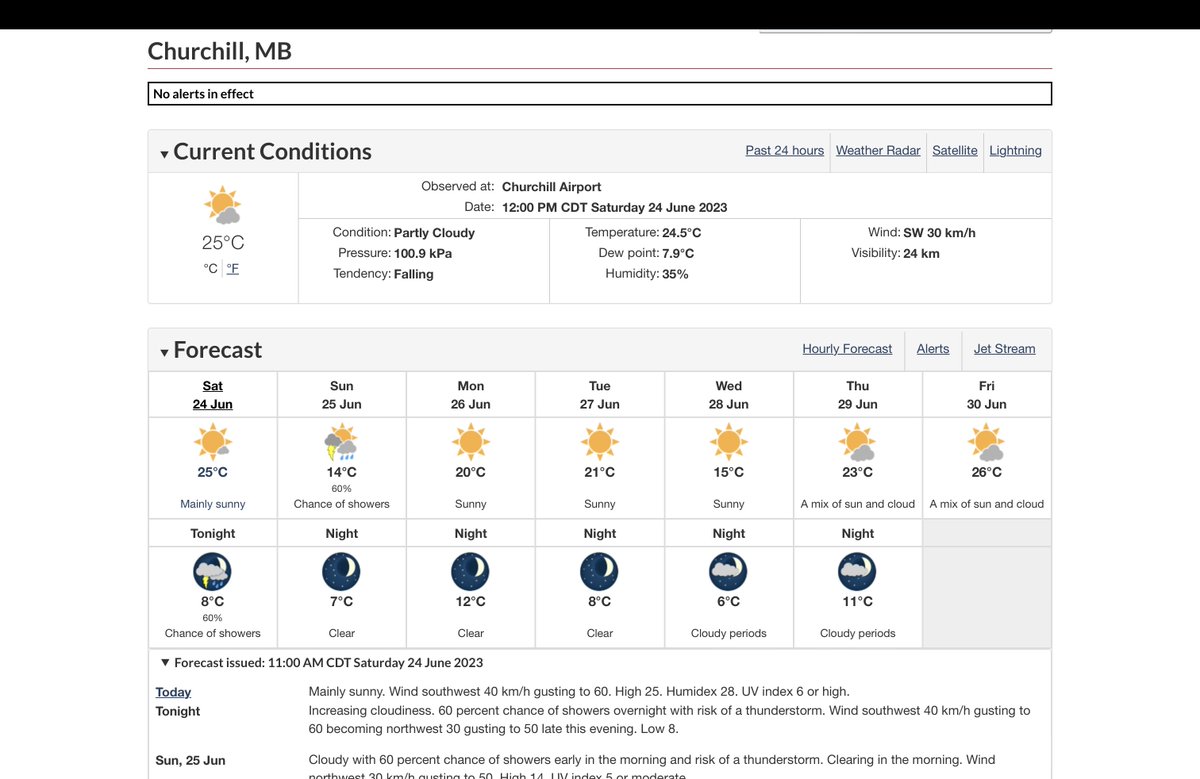
All the tracked polar bears are home. Temperature in Churchill today hit 26 C (80 F). Warm (average is 17 C / 63 F). Biting insects will be wicked given low wind. Bears will swim, sit by lakes to catch breeze, or dig to permafrost to avoid bugs. They're nasty on hot/calm days.
Dr. Craig George, 70, Utqiagvik, a respected scientist who’s work listening and watching people and animals in their natural environment touched lives across Alaska, has been missing since Wednesday when the raft he was on overturned. https://t.co/wMVzJz0nvt
Hudson Bay polar bears are hanging on to the last bits of ice. Bears can feed well into summer if they have ice & they'll keep putting on weight. No bear ever looked at its reflection in a melt pond and thought "I'm too fat". Survival of the fattest.
More Hudson Bay polar bears are ashore. Sea ice will melt quickly with warm weather. One bear way to the north: we'll see if she can make it home. Little ice left but bears will stay on it as long as they can & benefit by doing so as they can feed late into summer if there's ice.
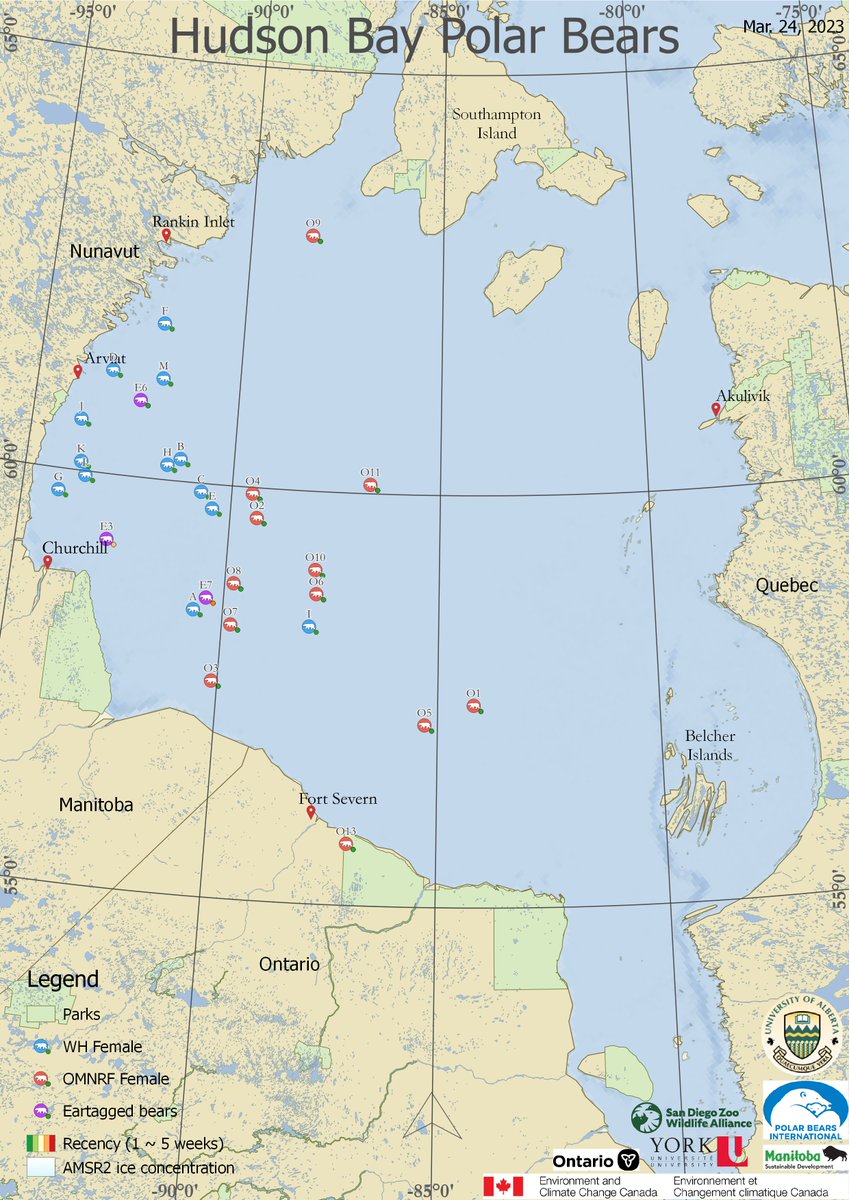
All polar bears (but one) tracked by satellite are on the sea ice now so this year's cubs should be with their mothers refuelling for the summer ice-free period. A lot of movement to the NW since last week. These shifts usually occur as the bears hunt into or cross-wind.
New polar bear paper. Uses a biomarker to assess estrus & reproduction. Contributions from zoos on polar bears has spiked in recent years & provide new insights / methods.
https://t.co/3Ub0vZfPCg