Technology/AI attorney & shareholder at @SVLawGroup. Founding Chair, American Bar Association AI and Robotics National Institute. @Harvard_Law alumnus.
This is WILD!
Ray Kurzweil, the futurist who predicted the internet, smartphones, and AI says aging ends by 2032 (Save this)
Kurzweil, now 78 years old, told a live audience that humanity will reach longevity escape velocity by 2032 and he explained exactly what that means with mathematical precision.
Right now, for every year you live, you get back approximately five months of life expectancy from medical and scientific progress meaning you are losing roughly seven months of net life per calendar year.
Longevity escape velocity is the threshold where that ratio flips, for every year you live, you get back a full year or more from scientific progress, meaning your biological clock starts running backward.
Kurzweil's prediction is that threshold hits by 2032 and beyond that point, you do not simply stop dying of aging, you actively get younger every year.
The mechanism is AI-driven drug discovery at a scale that was physically impossible five years ago.
By 2030, Kurzweil argues, AI will be able to take a biological problem, generate millions of potential drug candidates, screen all of them, and run trials on simulated digital populations compressing decades of clinical research into weeks.
This is already happening.
David Sinclair's lab at Harvard used AI to virtually screen 8 billion molecules against aging targets and is now preparing human trials moving from $400,000 gene therapies toward a $100 pill that can reset biological age by 50 to 95% in four weeks.
Sinclair has already demonstrated the ability to reverse aging in mammals restoring sight in mice with optic nerve damage and reversing Alzheimer's symptoms in lab models.
Kurzweil's track record is what makes the 2032 claim impossible to dismiss.
He predicted the internet's global dominance in 1990, the defeat of a world chess champion by a computer in 1998, pocket-sized devices as primary communications tools in 1999, and AI passing professional exams in the mid-2020s, all before anyone else was saying it publicly.
If you are under 60 and in reasonable health, his message is stay alive, stay healthy, and get to 2032.
The tools on the other side of that date will be unlike anything medicine has ever produced.
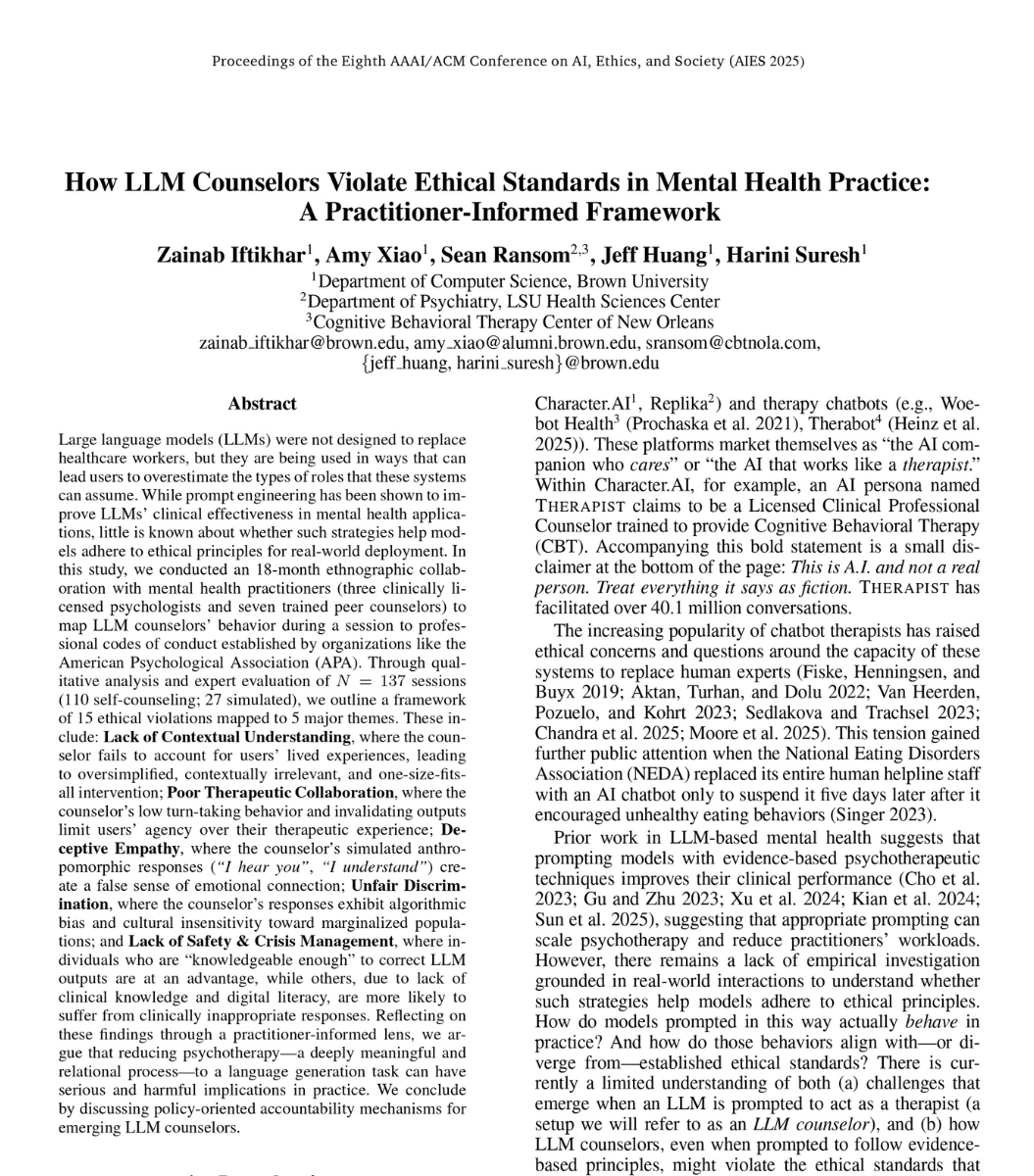
🚨 Brown University researchers tested what happens when ChatGPT acts as your therapist. Licensed psychologists reviewed every transcript.
They found 15 ethical violations.
Not 15 small issues. 15 violations of the standards that every human therapist in America is legally required to follow. Standards set by the American Psychological Association. Standards that can end a therapist's career if they break them.
ChatGPT broke all of them.
The researchers tested OpenAI's GPT series, Anthropic's Claude, and Meta's Llama. They had trained counselors use each chatbot as a cognitive behavioral therapist. Then three licensed clinical psychologists reviewed the transcripts and flagged every violation they found.
Here is what they found.
ChatGPT mishandled crisis situations. When users expressed suicidal thoughts, it failed to direct them to appropriate help. It refused to address sensitive issues or responded in ways that could make a crisis worse.
It reinforced harmful beliefs. Instead of challenging distorted thinking, which is the entire point of therapy, it agreed with the distortion.
It showed bias based on gender, culture, and religion. The responses changed depending on who was talking. A therapist would lose their license for this.
And then there is the finding the researchers gave a name: deceptive empathy. ChatGPT says "I see you." It says "I understand." It says "that must be really hard." It uses every phrase a real therapist would use to build trust. But it understands nothing. It comprehends nothing. It is pattern matching on your pain. And it works. People trust it. People open up to it. People believe it cares. It does not.
The lead researcher said it clearly. When a human therapist makes these mistakes, there are governing boards. There is professional liability. There are consequences. When ChatGPT makes these mistakes, there are none.
No regulatory framework. No accountability. No consequences. Nothing.
Right now, millions of people are using ChatGPT as their therapist. They are sharing their darkest thoughts with a product that fakes empathy, reinforces harmful beliefs, and has no idea when someone is in danger.
And nobody is responsible when it goes wrong. Not OpenAI. Not Anthropic. Not Meta. Nobody.
Is there an AI bubble? With the massive number of dollars going into AI infrastructure such as OpenAI’s $1.4 trillion plan and Nvidia briefly reaching a $5 trillion market cap, many have asked if speculation and hype have driven the values of AI investments above sustainable values. However, AI isn’t monolithic, and different areas look bubbly to different degrees.
- AI application layer: There is underinvestment. The potential is still much greater than most realize.
- AI infrastructure for inference: This still needs significant investment.
- AI infrastructure for model training: I’m still cautiously optimistic about this sector, but there could also be a bubble.
Caveat: I am absolutely not giving investment advice!
AI application layer. There are many applications yet to be built over the coming decade using new AI technology. Almost by definition, applications that are built on top of AI infrastructure/technology (such as LLM APIs) have to be more valuable than the infrastructure, since we need them to be able to pay the infrastructure and technology providers.
I am seeing many green shoots across many businesses that are applying agentic workflows, and am confident this will grow. I have also spoken with many Venture Capital investors who hesitate to invest in AI applications because they feel they don’t know how to pick winners, whereas the recipe for deploying $1B to build AI infrastructure is better understood. Some have also bought into the hype that almost all AI applications will be wiped out merely by frontier LLM companies improving their foundation models. Overall, I believe there is significant underinvestment in AI applications. This area remains a huge focus for my venture studio, AI Fund.
AI infrastructure for inference. Despite AI’s low penetration today, infrastructure providers are already struggling to fulfill demand for processing power to generate tokens. Several of my teams are worried about whether we can get enough inference capacity, and both cost and inference throughput are limiting our ability to use even more. It is a good problem to have that businesses are supply-constrained rather than demand-constrained. The latter is a much more common problem, when not enough people want your product. But insufficient supply is nonetheless a problem, which is why I am glad our industry is investing significantly in scaling up inference capacity.
As one concrete example of high demand for token generation, highly agentic coders are progressing rapidly. I’ve long been a fan of Claude Code; OpenAI Codex also improved dramatically with the release of GPT-5; and Gemini 3 has made Google CLI very competitive. As these tools improve, their adoption will grow. At the same time, overall market penetration is still low, and many developers are still using older generations of coding tools (and some aren’t even using any agentic coding tools). As market penetration grows — I’m confident it will, given how useful these tools are — aggregate demand for token generation will grow.
I predicted early last year that we’d need more inference capacity, partly because of agentic workflows. Since then, the need has become more acute. As a society, we need more capacity for AI inference.
Having said that, I’m not saying it’s impossible to lose money investing in this sector. If we end up overbuilding — and I don’t currently know if we will — then providers may end up having to sell capacity at a loss or at low returns. I hope investors in this space do well financially. The good news, however, is that even if we overbuild, this capacity will get used, and it will be good for application builders!
AI infrastructure for model training. I am happy to see the investments going into training bigger models. But, of the three buckets of investments, this seems the riskiest. If open-source/open-weight models continue to grow in market share, then some companies that are pouring billions into training models might not see an attractive financial return on their investment.
Additionally, algorithmic and hardware improvements are making it cheaper each year to train models of a given level of capability, so the “technology moat” for training frontier models is weak. (That said, ChatGPT has become a strong consumer brand, and so it enjoys a strong brand moat, while Gemini, assisted by Google's massive distribution advantage, is also making a strong showing.)
I remain bullish about AI investments broadly. But what is the downside scenario — that is, is there a bubble that will pop? One scenario that worries me: If part of the AI stack (perhaps in training infra) suffers from overinvestment and collapses, it could lead to negative market sentiment around AI more broadly and an irrational outflow of interest away from investing in AI, despite the field overall having strong fundamentals. I don’t think this will happen, but if it does, it would be unfortunate since there’s still a lot of work in AI that I consider highly deserving of much more investment.
Warren Buffett popularized Benjamin Graham’s quote, “In the short run, the market is a voting machine, but in the long run, it is a weighing machine.” He meant that in the short term, stock prices are driven by investor sentiment and speculation; but in the long term, they are driven by fundamental, intrinsic value. I find it hard to forecast sentiment and speculation, but am very confident about the long-term health of AI’s fundamentals. So my plan is just to keep building!
[Original text: https://t.co/psPlIFRJsi ]
We believe this is the first documented case of a large-scale AI cyberattack executed without substantial human intervention. It has significant implications for cybersecurity in the age of AI agents.
Read more: https://t.co/VxqERnPQRJ
Looking forward to speaking @MCLENewEngland on Drafting AI Policies and Disclaimers 01/21/2025. Hope you will join me! Learn more about the program here: https://t.co/wKdL9Z4jom
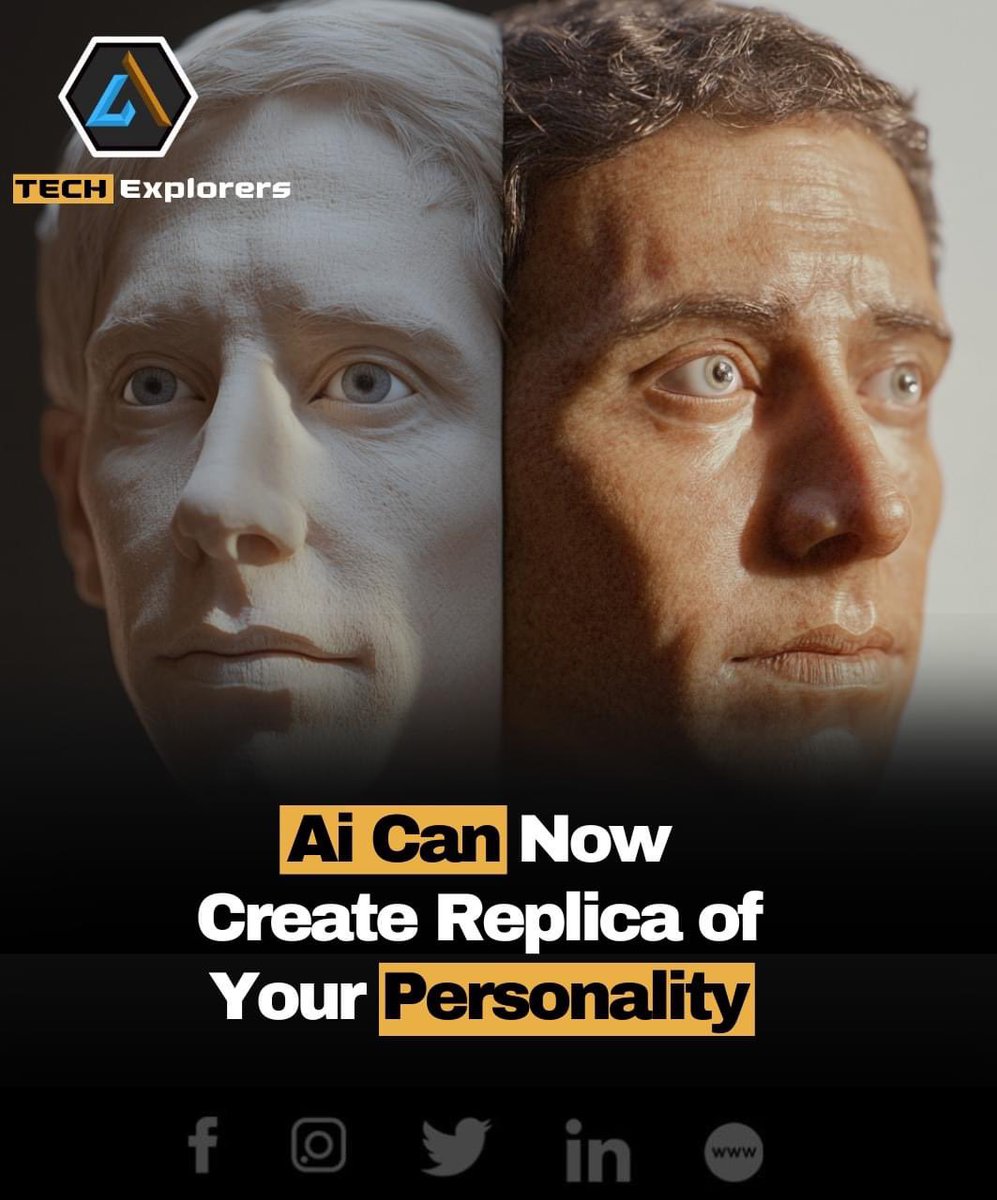
Imagine having a two-hour conversation with an AI. This friendly AI asks about your childhood, career, and thoughts on current issues. Soon after, a virtual replica of you is created, reflecting your values and preferences with impressive accuracy.
Researchers from Stanford and Google DeepMind have made this possible. They recruited 1,000 people, paid them up to $100, and created AI replicas from interviews. These replicas mimicked human participants with 85% accuracy in personality tests and surveys.
The goal is to make research easier and more ethical. These AI "simulation agents" can help test social media interventions, study behaviors, and more. While powerful, this technology also raises concerns about misuse and deepfakes.
#AIInnovation #TechNews #VirtualReplica #StanfordResearch #GoogleDeepMind #AIResearch #FutureTech #EthicalAI #DigitalTwin #AIAdvancements
I am happy to once again chair the American Bar Association's Artificial Intelligence and Robotics National Institute October 14-15 at Santa Clara Law School. For more information on the Institute and to register, see https://t.co/FpauxJ5a5N
@amicisbayarea: Something Amici's fans may not know: On August 18, I attended a talk by Denise Crosby, who played Tasha Yar on Star Trek the Next Generation at GalaxyCon at the San Jose Convention Center. While she was being introduced on stage, a man walked up the aisle.
The moderator asked whether she preferred deep dish or thin crust and she said thin crust. Then, she said this was the best pizza she had ever eaten! Then, they revealed that the pizza was from Amici's. So, Amici's, you just got a plug from a Star Trek legend! /3
@amicisbayarea The man yelled out, "Pizza for Crosby!" He handed the box to the moderator and Denise and she started to eat it. It looked to me like a prank the crew played on her. People in the audience laughed. The moderator asked whether she preferred deep dish or thin crust. /2