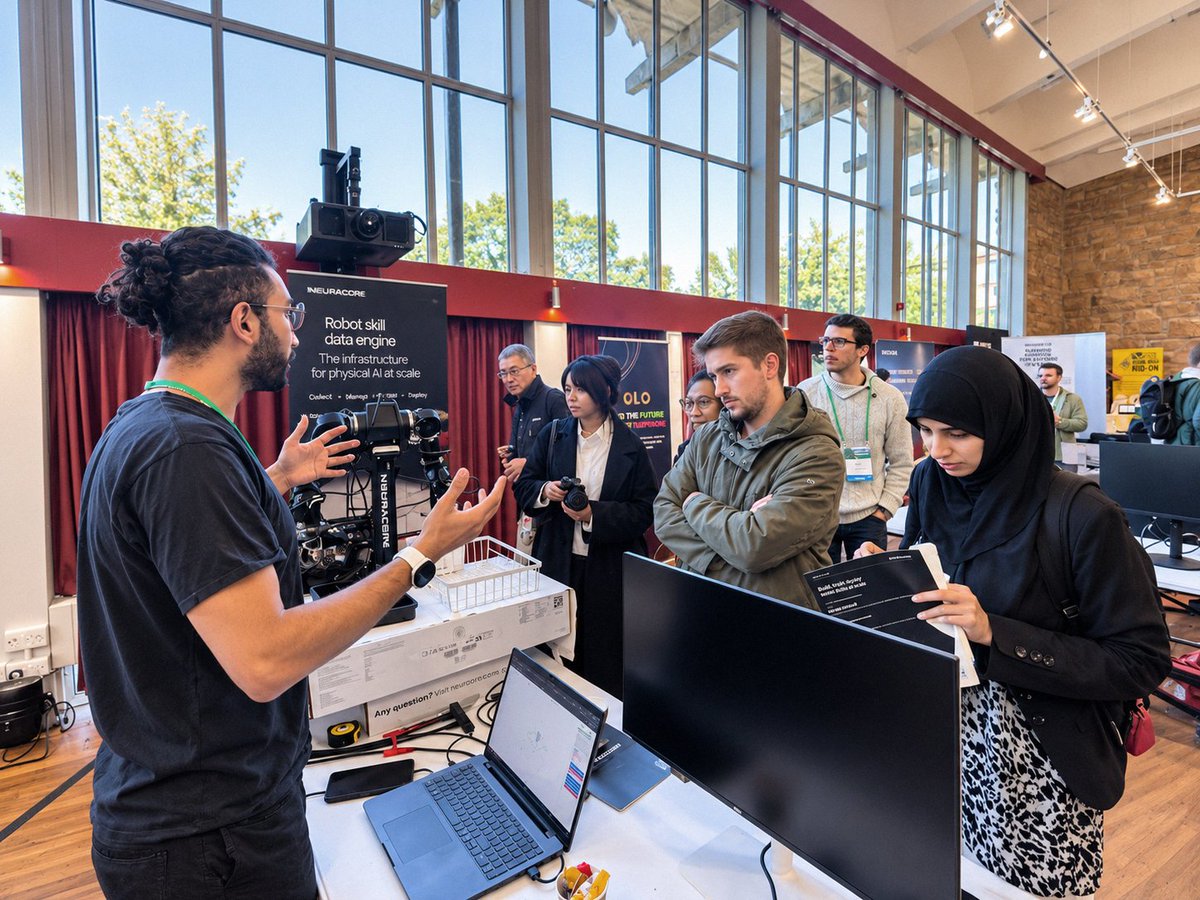
𝗔𝗳𝘁𝗲𝗿 𝟭𝟬+ 𝘆𝗲𝗮𝗿𝘀 𝗶𝗻 𝗿𝗼𝗯𝗼𝘁 𝗹𝗲𝗮𝗿𝗻𝗶𝗻𝗴, from my PhD at Imperial to Berkeley to building the Dyson Robot Learning Lab, one frustration kept hitting me:
𝗪𝗵𝘆 𝗱𝗼 𝗜 𝗵𝗮𝘃𝗲 𝘁𝗼 𝗿𝗲𝗯𝘂𝗶𝗹𝗱 𝘁𝗵𝗲 𝘀𝗮𝗺𝗲 𝗶𝗻𝗳𝗿𝗮𝘀𝘁𝗿𝘂𝗰𝘁𝘂𝗿𝗲 𝗼𝘃𝗲𝗿 𝗮𝗻𝗱 𝗼𝘃𝗲𝗿 𝗮𝗴𝗮𝗶𝗻?
𝗧𝗵𝗲 𝗽𝗮𝘁𝘁𝗲𝗿𝗻 𝗜 𝗸𝗲𝗽𝘁 𝘀𝗲𝗲𝗶𝗻𝗴:
• New robotics team starts
• Spends 6 months building data collection pipeline
• Spends another 3 months debugging synchronization issues
• Finally starts collecting task-specific data
• Realizes their infrastructure choices limit their flexibility
• Starts over
𝗧𝗵𝗶𝘀 𝗶𝘀 𝘁𝗵𝗲 𝘄𝗵𝗼𝗹𝗲 𝗽𝗼𝗶𝗻𝘁 𝗼𝗳 𝗿𝗼𝗯𝗼𝘁 𝗹𝗲𝗮𝗿𝗻𝗶𝗻𝗴: Robot learning is fundamentally data-driven. Whether you're picking strawberries or assembling electronics, the core infrastructure needs are identical. That's actually why I was so interested in pursuing data-driven robotics over a decade ago.
𝗬𝗼𝘂 𝗮𝗹𝘄𝗮𝘆𝘀 𝗻𝗲𝗲𝗱:
• Multi-sensor data synchronization across different frequencies
• Flexible storage that works with future algorithms
• Visualization tools to understand your data
• The ability to experiment with different temporal resolutions
• Robust logging that captures everything you might need later
The trend towards AI in robotics is growing, with robots needing to process and analyze large amounts of sensor data to manage variability and unpredictability in real environments.
𝗕𝘂𝘁 𝗲𝘃𝗲𝗿𝘆 𝘁𝗲𝗮𝗺 𝗯𝘂𝗶𝗹𝗱𝘀 𝘁𝗵𝗶𝘀 𝗳𝗿𝗼𝗺 𝘀𝗰𝗿𝗮𝘁𝗰𝗵. Imagine if every web developer had to build their own database, web server, and deployment pipeline before writing their first line of application code.
𝗧𝗵𝗶𝘀 𝗶𝘀 𝘄𝗵𝘆 𝗜 𝗳𝗼𝘂𝗻𝗱𝗲𝗱 𝗡𝗲𝘂𝗿𝗮𝗰𝗼𝗿𝗲.
Instead of every robotics team spending months on infrastructure, we provide the common tools that let you go from "I have a robot" to "I'm shipping intelligent robot behaviors" in days, not months.
𝗧𝗵𝗲 𝗿𝗲𝗮𝗹 𝗶𝗻𝗻𝗼𝘃𝗮𝘁𝗶𝗼𝗻 𝗶𝗻 𝗿𝗼𝗯𝗼𝘁𝗶𝗰𝘀 𝘄𝗼𝗻'𝘁 𝗰𝗼𝗺𝗲 𝗳𝗿𝗼𝗺 𝗲𝘃𝗲𝗿𝘆𝗼𝗻𝗲 𝗿𝗲𝗯𝘂𝗶𝗹𝗱𝗶𝗻𝗴 𝘁𝗵𝗲 𝘀𝗮𝗺𝗲 𝗽𝗹𝘂𝗺𝗯𝗶𝗻𝗴. 𝗜𝘁'𝗹𝗹 𝗰𝗼𝗺𝗲 𝗳𝗿𝗼𝗺 𝘁𝗲𝗮𝗺𝘀 𝘄𝗵𝗼 𝗰𝗮𝗻 𝗳𝗼𝗰𝘂𝘀 𝗲𝗻𝘁𝗶𝗿𝗲𝗹𝘆 𝗼𝗻 𝘄𝗵𝗮𝘁 𝗺𝗮𝗸𝗲𝘀 𝘁𝗵𝗲𝗶𝗿 𝗮𝗽𝗽𝗹𝗶𝗰𝗮𝘁𝗶𝗼𝗻 𝘂𝗻𝗶𝗾𝘂𝗲.
Robot learning shouldn't be bottlenecked by infrastructure. It should be bottlenecked by creativity.
What's the longest you've spent building infrastructure before getting to the actual robotics problem you wanted to solve?
A popular VLA training recipe blocks the action expert from updating the VLM underneath it. A new paper asks whether that should be the default.
Asher Hancock, Marco Pavone and the team at @nvidia, Princeton University and Stanford University varied two things independently: whether the VLM also predicts discrete action tokens, and whether the expert’s gradients flow back into it.
With action tokens on, blocking the gradients costs little in open-loop driving. With them off, letting the gradients through cuts trajectory error by about 25%.
Closed loop is where it gets interesting. Trained together from the start, letting the gradients through lifted driving route progress from 0.600 to 0.703, even with action tokens on. In manipulation, a π0.5 re-implementation went from 10.3% to 32.9% task progress without FAST, and from 19.5% to 30.7% with it. MolmoAct2 moved the same direction, though the gain with FAST was small (22.0% to 24.3%).
One training run per condition, and all the closed-loop results are in simulation. I’d read it as a good reason to question insulation as the default, not proof it’s wrong.
Paper: https://t.co/qkgo5WIJ5x
Project page: https://t.co/UYkUuWA1Rt
Wrist cameras give robots great close-ups, but they’re stuck to the hand. FoveaVLA asks whether the policy can just choose where to look instead.
@bingao_chen, Karen Liu, Guy Tevet and the team at @Stanford and @Princeton built it on π0.5. With every action chunk, the model also predicts the box it will need to see next and crops it from the full-resolution external image. Squashing a 1280x720 frame to 224x224 blurs the gripper and the object, and the crop gives that detail back.
One external camera plus depth, no wrist camera: 34 of 48 real-world trials (70.8%), against 25 of 48 (52.1%) for wrist-equipped π0.5. Retrain π0.5 on the external view alone and it falls to 6.3%.
It’s a small eval, 12 trials per suite, so I’d like to see more. The ablation is the part that convinces me, though. Crop alone gets 20.8%, depth alone 6.3%, both together 70.8%.
Code and models are open and can be found below:
Paper: https://t.co/13OLvR6ALz
Project page: https://t.co/mj5YUM6Mqx
The @Neuracore_AI team will be running live demos at @ABBRobotics upcoming event on the 2nd of December.
Come and join us and see what’s ready to deploy on the robots you already run.
Will you be at @ABBRobotics PoWa of Collaboration event in Milton Keynes on 2 December?
The Neuracore team will be there. Come and say hello.
We’ll be talking about how teams go from collecting demonstrations on the cobots they already run to deploying trained skills. Neuracore is the robot skill creation engine that makes in-house physical AI possible. Collect, visualise, train and deploy, on ABB, FANUC, Universal Robots and more.
Want dedicated time with us on the day? Get in touch and we’ll find a slot at the event: https://t.co/aLADWVXSfA
Event details and registration: https://t.co/SaCkrjIpNs
Good data starts with good visibility.
Trace Viewer makes it easier to understand what's happening during data collection, spot issues early and know exactly what you're feeding into training.
Another step towards making robot learning workflows more reliable.
New in Neuracore: Trace Viewer shows every time you log data and highlights issues in your data collection pipeline. Review your raw data before synchronisation, giving you full visibility into what's being collected and allowing you to catch problems early. Know exactly what's going into training, so you can get the most out of every dataset.
𝗘𝘃𝗲𝗿𝘆 𝗳𝗲𝘄 𝗺𝗼𝗻𝘁𝗵𝘀 𝘀𝗼𝗺𝗲𝗼𝗻𝗲 𝗽𝗼𝘀𝘁𝘀 𝘁𝗵𝗮𝘁 𝗨𝗞 𝗿𝗼𝗯𝗼𝘁𝗶𝗰𝘀 𝘁𝗮𝗹𝗲𝗻𝘁 𝗶𝘀 𝗹𝗲𝗮𝘃𝗶𝗻𝗴 𝗳𝗼𝗿 𝘁𝗵𝗲 𝗩𝗮𝗹𝗹𝗲𝘆.
I did my postdoc at Berkeley and came back to London. Turns out I’m not the only one.
The @Neuracore_AI team just spent three days at ROSCon UK in Edinburgh, and I think it’s time to retire that post.
The question we heard most at our stand wasn’t about the product. It was some version of “can I come and work with you?”
Robot learning engineers, PhD students finishing up, people already shipping robots for other companies.
The talent is here. And people want to build here.
Three things the brain drain story gets wrong:
1. 𝗧𝗵𝗲 𝗱𝗶𝗿𝗲𝗰𝘁𝗶𝗼𝗻 𝗼𝗳 𝘁𝗿𝗮𝘃𝗲𝗹 𝗶𝘀 𝗰𝗵𝗮𝗻𝗴𝗶𝗻𝗴. More tech workers are now moving from the US to Europe than the other way, and the UK is one of the biggest gainers. The room in Edinburgh reflected it: 240 people, 42 companies, 21 universities, half industry, half academia.
2. 𝗧𝗵𝗲 𝗺𝗼𝗻𝗲𝘆 𝗶𝘀 𝘀𝘁𝗮𝗿𝘁𝗶𝗻𝗴 𝘁𝗼 𝗳𝗼𝗹𝗹𝗼𝘄. UK robotics companies raised $258m by August 2026, already exceeding the total raised across all of 2025. That’s a market worth paying attention to.
3. 𝗥𝗲𝘀𝗲𝗮𝗿𝗰𝗵 𝗶𝘀 𝘀𝘁𝗮𝗿𝘁𝗶𝗻𝗴 𝘁𝗼 𝗺𝗼𝘃𝗲 𝗰𝗹𝗼𝘀𝗲𝗿 𝘁𝗼 𝗿𝗲𝗮𝗹-𝘄𝗼𝗿𝗹𝗱 𝗱𝗲𝗽𝗹𝗼𝘆𝗺𝗲𝗻𝘁. Advanced Research + Invention Agency (ARIA)’s Robot Dexterity programme is backing 26 teams working across robotics hardware, manipulation and control. Its focus is increasingly on turning research breakthroughs into systems that work in the real world.
So the question isn’t whether the UK has the people. It’s whether we give them the tools to ship.
#ROSCon #RobotLearning #UKRobotics
OpenArm 1.0 cleans up a spill with Neuracore fully autonomous.
Neuracore streams camera feeds and joint states in real time, turning robot demonstrations into datasets used to train policies for autonomous execution.
See what you can do with Neuracore. Link in the comments.
#Robotics #RobotLearning #OpenArm #PhysicalAI
BiGym 2 is quickly becoming the benchmark for evaluating agentic approaches to robotics. Even the leader tops out at 65%, so there’s plenty of headroom. Learned policies (from scratch or VLAs) remain the more general solution, just at the cost of more demos.
What if you could test a robot policy without running it on the robot?
PhysCanvas is a world model that predicts what the robot sees and what the fingertips feel, together. Test tube into a rack, unscrewing a bottle cap, bagging blocks, turning a Rubik’s Cube face.
The number that stood out was adding task-state supervision takes the correlation between world model success and real-world success from 0.60 to 0.89.
They also ran RL inside the world model on flow matching and π0.5 policies. Real-world performance improved on average, though how much depends on the task.
Code and model are coming soon.
Paper: https://t.co/Sm5CBDkycF
Project page: https://t.co/oskAshnsjE
Any hardware. Any task. This is Neuracore.
Robot learning teams spend too much time rebuilding infrastructure and not enough time teaching robots new skills. We built one platform for the full pipeline, from data collection to deployment.
If your team is building robots that need to learn then get in touch to arrange a demo.
Any hardware. Any task. This is Neuracore.
Collect, curate, train, deploy. The full robot learning pipeline in one platform, from the first skill to the billionth.
Two big things here:
1) BiGym 2.0, a new whole-body humanoid benchmark. 2) The first thorough comparison of learned policies vs LLM-written robot policies.
I was surprised how far coding agents got from just 1 demo, where learned policies would be useless. But ultimately, learned policies (from scratch or VLAs) are the more general solution, handling a broader range of tasks, albeit with more demos.
Coding agents can now write a humanoid's controller from one demo. So are learned policies dead?
We built BiGym 2.0, a household loco-manipulation benchmark, to find out.
Short answer: not yet. GPT-6 Astra hits 65% with 1 demo, but π0.5 trained on 60 demos still leads at 75%, especially on precise object rearrangement. 🧵
Wrist cameras help robots a lot. Taking them off and letting the robot look at the right thing helps more.
EyeRobot 2.0, from Kush Hari, @justkerrding and the team at @UCBerkeley and Amazon FAR (advised by @Ken_Goldberg and @akanazawa), has no wrist cameras at all. One stereo head moves its gaze to whatever matters at each step. Sharp in the middle, blurry at the edges, like our own eyes.
Seven real tasks, including capping a marker, zipping a bag and pulling a pan out of a toaster oven. Same demonstrations and same policy architecture throughout, 25 trials per task.
Fixed stereo camera: 27%. Wrist cameras added: 52%. Active gaze: 67%.
When a grasped tool blocks the wrist cameras, that policy drops to roughly the level of the fixed camera. Gaze keeps working.
The gaze is trained with RL, with no gaze demonstrations.
Where it looks is where it reaches. When the gaze lands on the wrong object, the robot picks up the wrong object. That makes failures easy to read, and it suggests where to improve next.
Paper: https://t.co/wdzAgi72Ly
Source: https://t.co/SLdSclrHK0
#PhysicalAI #RobotLearning #VLA
Uni-VLaT adds touch to pre-trained VLA policies for humanoid loco-manipulation, and the Back-Tap Walking result is the one that actually got my attention. Tap the robot's back, it walks. Stop tapping, it stops. Zero visual signal involved, that's the whole task. 0% success without touch, 85% with it, which isn't really a "touch helps" result, it's a "this task doesn't exist without touch" result.
The rest of the numbers are more the usual incremental story, 68% to 75% average across five tasks from adding a prediction objective on top of raw tactile input, which is a real gain but not a dramatic one on its own.
Also generalizes across GR00T and π0.5, so at least it's not a party trick tied to one backbone.
Paper: https://t.co/blffUN3eWA
Source: https://t.co/DLqpVwD5yB
Credit: @Tsinghua_Uni, @Beihang1952, @HKUniversity, @CUC1954_
Some robot tasks are basically impossible for a human to teleoperate cleanly. Not hard, impossible. Carrying a plate across a table with two independently controlled arms, for instance. Zero percent success rate, no matter the operator.
GLIDE takes an interesting approach to this. An LLM reads the task, predicts where a human will fail, and writes a filter that sits between commands and robot to prevent it. Watches the data, catches what's still failing, rewrites itself.
Same task, 0 to 70 percent. Two others go from 10 and 0 up to 90 and 90.
Keep the guardrail running at deployment and a policy that barely worked alone jumps from 0 to 60-70 percent too.
A good reminder that a lot of "the robot can't learn this" is actually "no human could demonstrate this in the first place."
Source: https://t.co/RwnzE2EYVe
Most robots need hundreds of demonstrations to learn a task, then need hundreds more the moment anything about that task changes. This one needed one, and then just kept adapting.
The system is VLBiMan++, out of @ShenzhenUni and @DexForceAI. Show it a single human demo of pouring water, and it breaks the task down into reusable pieces, then uses vision-language grounding to figure out how those pieces need to shift when the situation changes. No retraining, no extra demonstrations, no fine-tuning.
The range of what "changes" means here is the part worth watching. It's not just moving a cup to a new spot on the table. The same one-shot prior carries across pouring, reorienting and unscrewing a cap, spoon and funnel tool use, zipping a pen bag shut, coiling a loose cable, folding a towel. Rigid objects, articulated ones, deformable ones, all handled by the same underlying approach, each needing its own way of tracking what "the object" even means as it changes shape.
Then there's the embodiment jump. Skills learned on one dual-arm platform transfer directly to a completely different humanoid-style dual-arm robot, plugging in a pen, handing off an object, pouring, unscrewing, all without a single new demonstration on the new body. And to check it isn't just lucky on the first try, they ran the same task, uprighting a bottle knocked onto its side, twenty times in a row on the new platform and it held up.
Every added axis here (new tasks, new objects, new scenes, new robots) is a dimension where most systems need fresh data. This one just needs to reason more carefully about what actually changed.
Video: https://t.co/Y7rnSzYgVF
Paper: https://t.co/lUtY4D4SMH
Rhoda AI checked whether scaling web video pretraining actually helps real robots, using a real customer task. Unpacking 10kg boxes of bearings and sorting the packaging.
Turns out yes. Bigger models do better, more pretraining compute does better, and the compute gap is widest when you don't have many robot demos.
Refreshing to see a company display this amount of rigour. Rare these days.
At Rhoda, we care deeply about the science of pre-training for robotics.
In one of the most rigorous studies of its kind, over thousands of trials and hundreds of hours of robot evaluations, we show how scaling web-video pre-training leads to better real-world robot performance.