Jess your doctor probably didn’t intend to do the damage they did any more than a doctor who botched a circumcision did. You can’t take a successful corcumcision and compare it to an unsuccessful labia reduction.
Nobody consents to medical accidents. Teenagers shouldn’t get cosmetic surgery. Women shouldn’t feel the need to pay people to cosmetically “fix” their bodies.
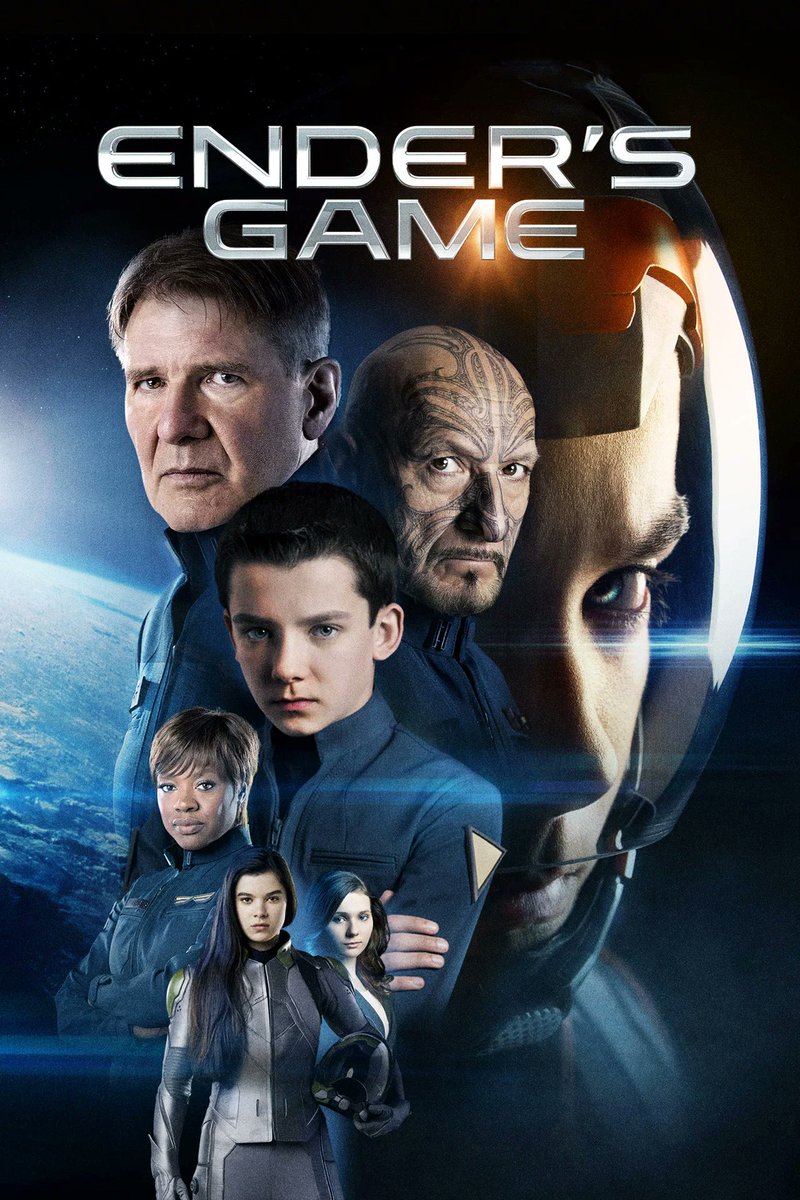
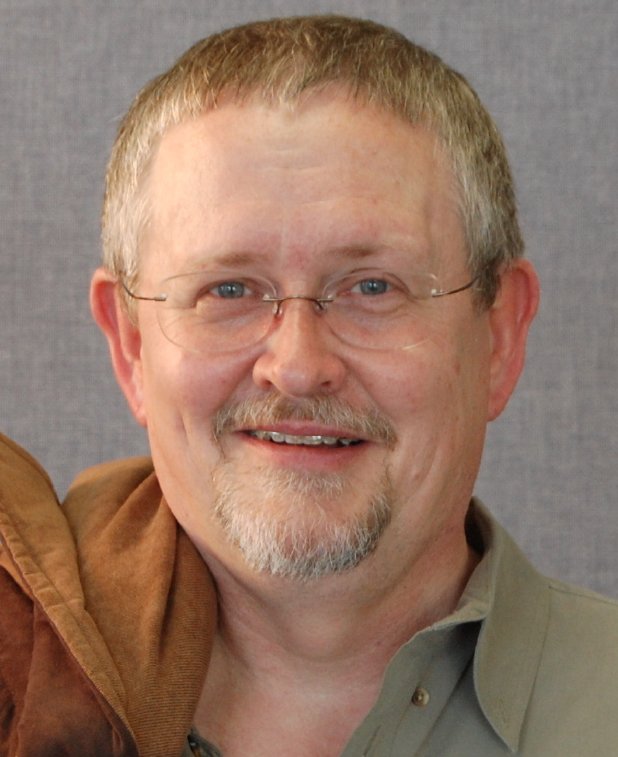
Ender's Game author Orson Scott Card on the problems with how religion is portrayed in current fantasy and science fiction:
"In our culture, intellectuals have become so uniformly a-religious or anti-religious that our fiction, with few exceptions, depicts religious people in only two ways: the followers are ignorant and stupid and easily fooled, and the leaders are exploitative and cynical, manipulating others' faith for their private benefit.
I know some people who fit those descriptions. But they are in a tiny minority. Most religious people I know are smart, well-educated, independent-minded, stubborn, honest, and generous -- at least as much so as the average intellectual, and usually more.
The hostility toward religion among American intellectuals arises, I think, from a clear awareness that it was against a publicly religious culture that their own culture rebelled. Now that rebellion is completely successful in terms of capturing control of all the public instruments of transmission of culture -- the universities, the media, and the literature and art -- but it has become such a shibboleth of intellectual life to snipe at religion that, like the aging "revolutionaries" of the old Soviet Union, they mindlessly continue to "rebel" in order to defend their tight grip on the establishment. Indeed, those intellectuals are the establishment. And what was once a daring and rebellious stance is now just another example of lockstep conformists mindlessly echoing ideas that they haven't examined.
That's when contemporary fiction mentions religion at all. Most of the time, in and out of speculative fiction, religion simply doesn't exist. Characters don't believe in God or even think about believing in God. Nobody talks about religion. Nobody belongs to any kind of church. Religion simply doesn't exist. ...
This is, I think, a serious lapse, a dishonesty in our contemporary literature. It is most seriously dishonest because in fact, even the supposedly a-religious intellectuals behave exactly as religious people always have. That is, the behavioral and cultural patterns that we have always associated with religions are indistinguishable, except by vocabulary, from the behavioral and cultural patterns of the a-religious intellectuals. They band together with fellow believers, feel sorry for or hostile toward unbelievers, immediately punish heretics -- intellectuals who, having once been accepted in the 'faith,' dare to question its premises -- anoint their priests and theologians (psychologists and therapists being their ministers, scientists and, more usually, science popularizers being their doctors of atheology), and insist on their absolute right to put forth their religious ideas with public funding and the authority of the state behind them, while doing their utmost to silence or marginalize the beliefs of others.
Most fiction has become, in short, an instrument of propaganda for the established religion of our time, which differs from other religions only in the particular content of the faith and the vocabulary used to describe it. Naturally, the true believers are sure that the real difference is that their beliefs are objectively true. But then, true believers have always believed that. This is not what distinguishes them from other established religions, but rather what makes them fundamentally identical to them.
The honest depicter of human life will include the religious aspect of that life. This is not to say that stories need to be about religion, any more than stories about our contemporary culture need to be about cars. But the cars need to be present, at least by implication, and if a character doesn't know how to drive, we'd need to know why."
Is this why Hollywood stopped adapting his books into films?
@DunbitchDungeon@caitlinkoi_@Wendigoon8 Wendigoofball with the pandering takes (he knows all of meatcanyon’s fanbase of mediocre artists follow him and expect him to fall in line if they want to keep forgiving him for being religious)
@caitlinkoi_@mootsheep Wendigoof take. It’s not that it democratizes art, it democratizes the skill to produce it. Someone’s vision and their skill with procreate are no longer codependent factors.
Every writing teacher who told you "be concise" accidentally murdered your best ideas.
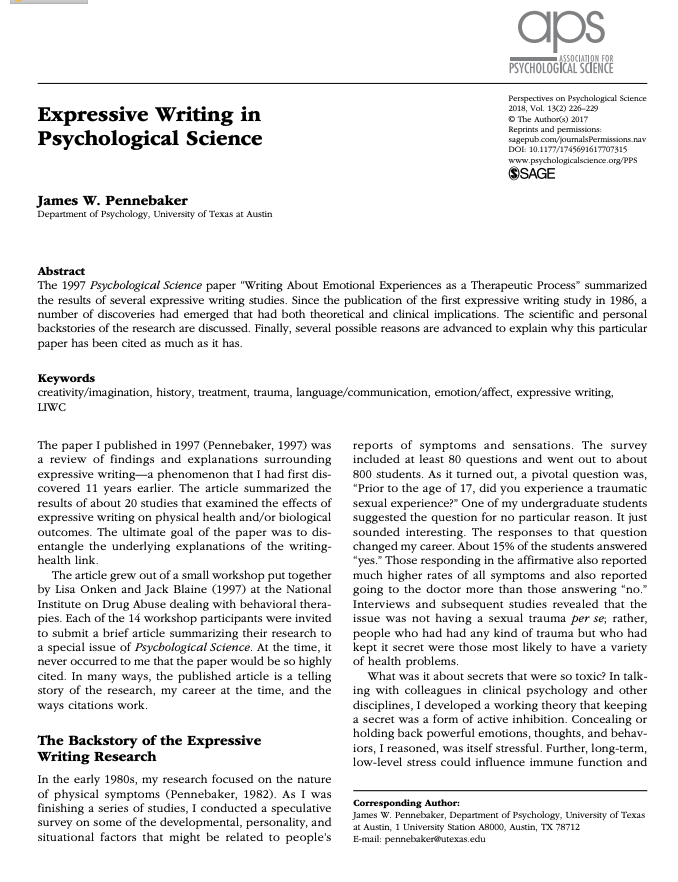
In 1987, psychologist James Pennebaker ran an experiment that broke every assumption about how human creativity works. He divided college students into two groups and gave them the same creative writing prompt. Group A had to write for 15 minutes without stopping, elaborating on every thought that surfaced. Group B had to write concise, polished responses in the same time frame.
The elaborate writers didn't just produce more ideas. They produced fundamentally different types of ideas. Brain scans showed their prefrontal cortex entered a state resembling REM sleep, where distant neural networks suddenly started talking to each other. The concise writers showed patterns identical to focused problem-solving mode, which actively suppresses creative connections.
Six months later, Pennebaker tested both groups again. The elaborate writers had continued generating novel solutions to unrelated problems at twice the rate of the concise group. The act of elaborative writing had permanently rewired their associative thinking patterns.
The advice sounds logical. Cut the fat. Trim the excess. Get to the point faster. What they missed is that ideation and communication are completely different cognitive processes, and optimizing for one destroys the other.
When you write elaborately, your brain enters what cognitive scientists call "divergent thinking mode." Each additional sentence forces your mind to find new angles, make unexpected connections, discover relationships between concepts that would never surface in a stripped-down version. The elaboration itself becomes the thinking tool.
Watch what happens when you try to explain a simple concept in 2000 words instead of 200. Your brain refuses to repeat itself. It starts mining deeper layers, pulling up examples you forgot you knew, connecting dots that seemed unrelated five minutes ago. The constraint of length becomes a creativity multiplier because your mind has to work harder to fill the space meaningfully.
Most people reverse this process. They think first, then write down the conclusions. They treat writing as a documentation tool for thoughts that already exist. This kills the discovery mechanism completely.
Real creative thinking happens during the writing, not before it. The elaborate sentences force your brain to search its entire knowledge network for supporting ideas, contradictory evidence, parallel examples, deeper implications. Every time you expand a thought, you're asking your neural pathways to surface material that stays buried when you think in headlines.
Professional researchers figured this out decades ago. They don't brainstorm in bullet points. They write massive exploratory documents where every paragraph spawns three new questions. They let themselves ramble across pages because they know the rambling is where breakthrough insights hide. The connections emerge in the elaboration, not despite it.
There's another layer most people miss. When you write elaborately about a topic, you're not just exploring what you already know about it. You're discovering what you didn't realize you knew about it. The act of expansion forces you to reach into adjacent knowledge areas, pull connections from unrelated experiences, surface insights that were sitting just below conscious awareness.
Pennebaker's follow-up studies revealed something even stranger. Students who wrote elaborately about completely unrelated topics showed improved creative problem-solving across all domains. The cognitive muscle of elaborative thinking transfers. Train it on one subject, and it enhances your ability to find novel solutions everywhere else.
Your brain was designed to think in stories, not summaries.
Feed it complexity and watch creativity multiply.
A Nobel Prize winner spent his entire career proving that your brain lies to you constantly, and the most unsettling part is that the smarter you are, the more convincing the lies become.
His name is Daniel Kahneman, and the research that earned him the Nobel Prize in Economics was not about markets or money.
It was about the two systems running inside every human mind at all times, and why one of them is almost always in charge when you think the other one is.
Here is what he found, and why it changes how you should think about every decision you make.
Kahneman called them System 1 and System 2.
System 1 is fast, automatic, emotional, and operates almost entirely outside your conscious awareness. It is the system that reads the mood in a room before you process a single word, that flinches before you hear the sound, that forms an impression of a stranger in milliseconds.
System 2 is slow, deliberate, effortful, and exhausting. It is the system you engage when you do long division or carefully weigh a major life decision. The critical insight is not that these two systems exist. It is that System 2 is lazy by design, and System 1 runs the show far more often than any of us want to believe.
The most dangerous finding in Kahneman's research is what he called the what-you-see-is-all-there-is problem. System 1 does not pause to ask what information might be missing. It builds the most coherent story it can from whatever data is currently available, then delivers that story to your conscious mind as a conclusion that feels like it was carefully reasoned.
You experience the output of an automatic process as if it were the result of deliberate thought. The confidence feels earned. It almost never is.
This is why cognitive biases are not character flaws. They are structural features of a brain optimized for speed. The availability heuristic makes you overestimate the probability of whatever comes to mind most easily, which is why people fear plane crashes more than car accidents and dramatic rare diseases more than the conditions that actually kill most people.
The anchoring effect makes your judgment of any number heavily influenced by whatever number you heard first, even if that number was completely arbitrary. The halo effect makes your overall impression of a person contaminate every individual judgment you make about them, so the same resume gets rated more competitively when attached to an attractive photo.
The part that Kahneman spent the most time on, and that most people resist the hardest, is what he called expert overconfidence. He studied stockbrokers, surgeons, military commanders, clinical psychologists, and financial analysts people at the absolute top of their fields with decades of experience and found systematic evidence that their confidence in their own judgments consistently exceeded the accuracy of those judgments.
Experience in a domain does not eliminate cognitive bias. In many cases it amplifies it, because experts build elaborate mental models that feel comprehensive but are often just more sophisticated versions of the same shortcuts everyone uses.
The most honest thing Kahneman ever said about his own research was that writing the book did not make him any less susceptible to the biases he spent fifty years documenting. He still felt the pull of every heuristic he described. The difference was not immunity.
The difference was recognition, and the discipline to slow down in moments when the fast answer felt suspiciously easy.
Knowing that your brain lies to you does not stop the lies. But it teaches you which moments deserve a second look before you trust the story you are already telling yourself.
A HARVARD psychologist says: “if you’ve achieved nothing by 25, you’ve avoided the most destructive illusion of youth”
> In 2021, a Harvard psychologist surprised a lecture hall with an unexpected statement:
“If you haven’t accomplished much by 25, you may have escaped one of youth’s biggest illusions.”
At first, the room laughed.
She wasn’t kidding.
> The illusion of early success.
In your early 20s, the brain seeks quick proof of worth ~status, attention, rapid achievements.
But psychologists warn that chasing recognition too soon can lock people into roles or paths they never consciously chose.
They decide too early… and spend years trying to undo it.
> The exploration phase.
Research on career development suggests that people who explore more before 30 often build stronger long-term directions.
Testing ideas.
Making mistakes in public.
Changing course.
At 25 it looks like confusion ….but by 35 it often turns into clarity.
People who feel “behind” in their mid-20s frequently gain something others miss:
Perspective.
Patience.
And a clearer sense of what truly matters to them.
That foundation often leads to better decisions later on.
At the end of the lecture, the psychologist left the students with one final thought:
“You’re not meant to have life fully figured out at 25.”
“You’re meant to discover who you’re not.”
@jess_ann_pin You know the questionnaire is probably the worst way to score yourself on a personality test right?
This isn’t a Jessica disagreeable problem this is a Jessica clueless problem. You got this 👍