🔥🔥IDSA AMR Guidance 2026🔥🔥
🔺Notable Updates from the 2024 IDSA AMR Guidance Document
IDSA 2026 Guidance on the Treatment of Antimicrobial-Resistant Gram-Negative Infections
🔺ESBL, AmpC Enterobacterales
🔺CRE
🔺DTR P. aeruginosa
🔺CRAB
🔺Stenotrophomonas maltophilia
Including updates in antimicrobial selection, dosing strategies, and management approaches.
🔺Meropenem dosing update: individualized dosing approach (1–2 g IV q8h) with higher doses considered in selected clinical scenarios.
Info inspired / credit to @RabeaAgeeli , #IDXposts
https://t.co/lfAjZU2zHQ
@cobbaltt There's a little funny Sanskrit there. Schwa deletion leads people who speak IA languages to read the English viksit (विकसित Skt. vikasita) as वीक्षित् (vīkṣit) too often
🔥Just published
The GAME CHANGER RCT
Among patients with a hospital-acquired or health-care-associated Gram-negative bloodstream infection, cefiderocol resulted in non-inferior but not superior 14-day mortality compared with standard of care #IDXposts https://t.co/jLWmphItGK
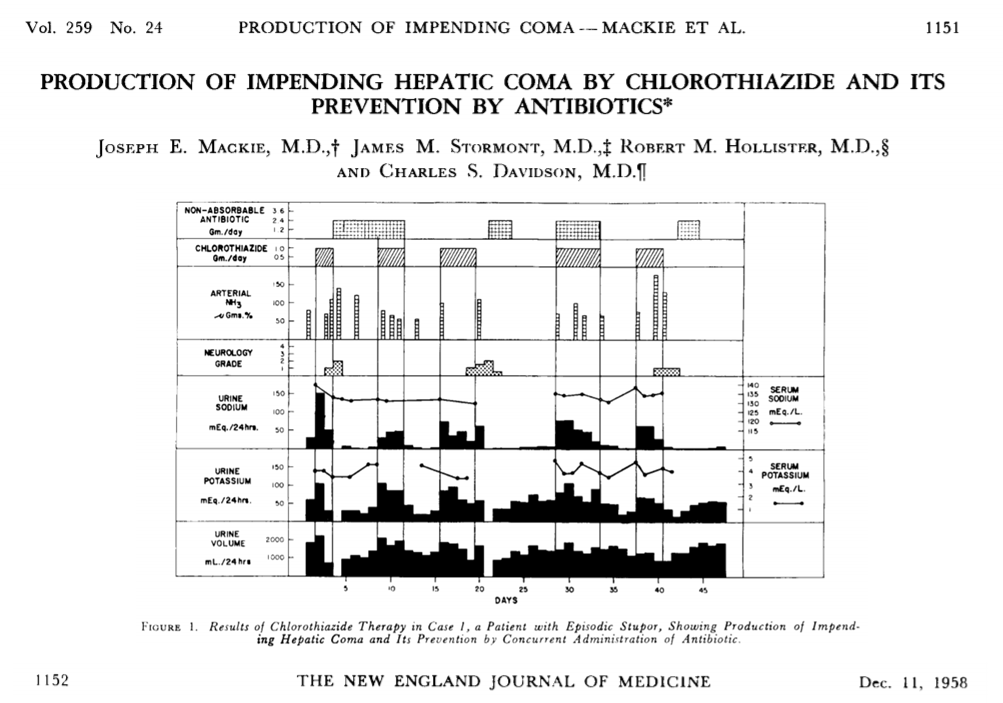
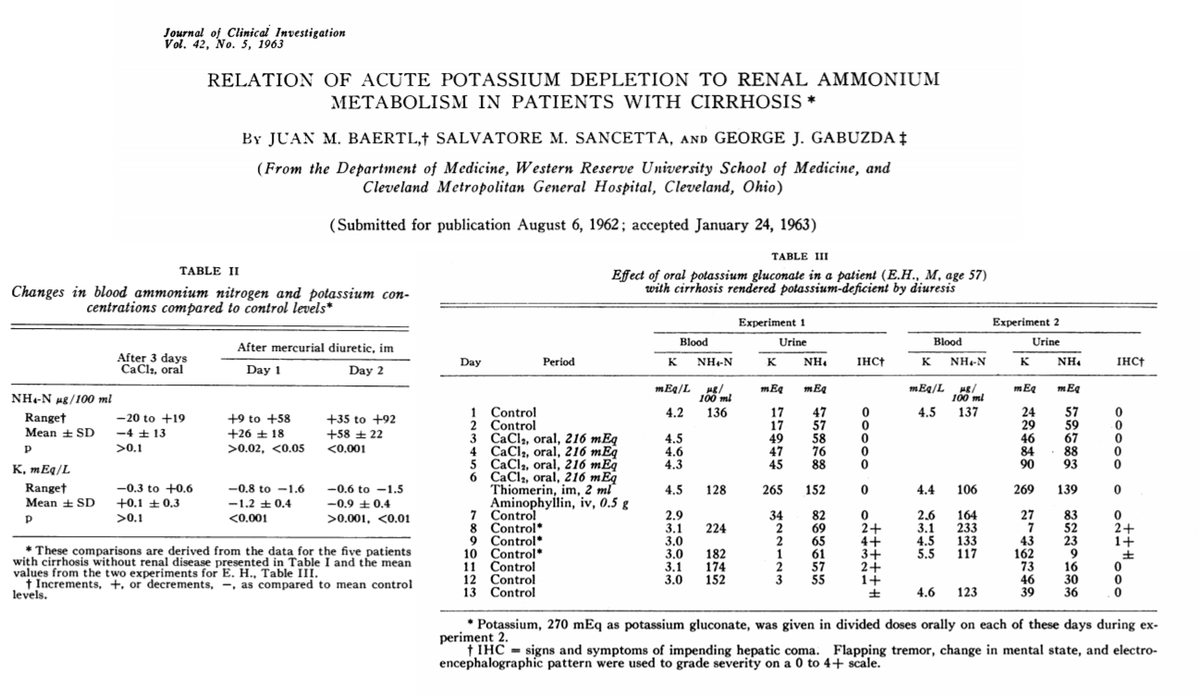
Potassium and hepatic encephalopathy
1⃣K-wasting diuretics can trigger HE
2⃣K-wasting diuretics can⬆️ammonia(Nh3)
3⃣K repletion can⬇️nh3
Why?
⭐️Renal recapture of K+ by H+/K+ exchange needs glutamine's Nh4+ which gives h+ AND nh3
So, if HE:
1⃣fluids
2⃣replete K
#livertwitter
THE EVOLUTIONARY BASIS OF THE COMMON FAINT
Syncope (or faint) is a very common presentation in medicine, especially neurology.
Syncope = transient loss of consciousness with loss of postural tone --> may lead to falls +/- convulsive jerks if the event is prolonged
The commonest cause of syncope in the world is reflex syncope ie RS (also known as vasovagal syncope or VVS)
[Vasovagal as we see later is only a part of reflex syncope]
RS starts in childhood to adolescence and dominates the early decades.
The American Heart Association estimates that nearly 35% of the American population experiences syncope at some point in their lives.
The mechanism reflex syncope involves
Trigger --> sudden inhibition of the medullary vasomotor and cardiostimulatory centers +/- stimulation of the cardioinhibitory centers --> transient loss of BP (vasodepressor) +/- heart rate (vasovagal) --> syncope
Triggers may be
1. External - sudden press on the carotid bulb/tight collars/stimulation of the pharynx or larynx
2. Internal - this may be emotional like stress or sight of blood or situational like micturitional
Reflex syncope is almost exclusively a human phenomenon even though the evolutionary mechanisms which are talked about below exist in all vertebrates.
These evolutionary theories of reflex syncope include
FIRST THEORY - The violent conflicts hypothesis - it states that RS during a violent conflict allows the human homologue of the alarm bradycardia.
What is alarm bradycardia?
Most animals under stress exhibit a 'fight or flight' response which we all know about.
But others exhibit the 'death feint' where they go into a state of tonic immobility with very low BP and HR.
Thus they 'play dead' till the predator leaves or it may allow some relief when escape is impossible.
Catatonia is a form of this 'tonic immobility' or 'death feint' as proposed by @AbhiLenka11 and others!
SECOND THEORY - Clot production hypothesis - RS allows the BP and HR to drop during hemorrhage.
Suppose you are bleeding out from a bad injury.
The low BP and HR reduces tissue perfusion and allows the coagulations system to arrest a bleed.
THIRD THEORY - Heart defense hypothesis - RS stops sympathetic excess from overwhelming the heart
Suppose you are facing intense emotional stress --> sympathetic surge --> huge rise in BP and HR --> massive stroke or heart attack --> RS acts as a safety valve for the autonomic nervous system --> saving your life
Why are humans so uniquely susceptible to reflex syncope?
1. Large brain of humans which requires nearly 20% of cardiac output
2. The recent bipedalism of humans with weaker leg muscles than other animals --> so there is significant pooling of blood in the legs in the erect posture --> basically the peripheral pump of soleus is much weaker compared to other animals
As you can see, reflex syncope is not a disease but an evolutionary conserved phenomenon.
It must have played some positive role in natural selection --> coupled with the unique and sensitive stresses that our erect posture places on us hus humans --> it persists as a common malady.
We cannot study medicine without a study of evolution.
#MedTwitter
#NeuroTwitter
#Syncope
#ReflexSyncope
#Dysautonomia
#MovementDisorders
@nntaleb@MatheusPetter2 Counterpoint: Lance Armstrong
Cyclists are not immune to anabolic steroid use
Would've been nice if article specifically mentioned whether steroid/EPO/other performance enhancing drug use was screened for
@MomsPostingLs Addicts deserve good things in their lives too. If she's been clean for 3.5 years straight (which requires MONUMENTAL self control) then I think she's shown that she's capable of caring for her kid. If they want to celebrate overcoming a quagmire of a hardship like that, let them
@EM_RESUS “Finish the whole course or risk resistance!” is one of modern medicine’s favorite zombies. But there’s no evidence behind it - and oftentimes shorter is actually better.
@umpiwarrior @thenerdnxetdoor They are not doctors in the same way that nurses are not doctors or paramedics are not doctors. Let us also uplift them, recognise that they do a lot of good work for horrendous compensation and do better by them without clubbing everyone together into one homogeneous group.