You are correct about the INA having statutory precedent, and this is the exact argument we need to be making. I’m contending that the current SCOTUS will side with the Harisiades vs Shaughnessy precedent, and that the INA is still subject to any SCOTUS ruling. I’m predicting that the Court will extend Harisiades-style immigration deference into a factual and statutory setting that Harisiades itself did not decide.
Not my argument. We are specifically discussing First Amendment protections for those foreign persons here by Visa or Green Card. By the 14th amendment ‘any person’ not just a ‘citizen’ has all rights to Due Process and the Equal Protection Clauses, so no, we can’t torture and harm non-citizens by my argument. Better question: What rights to the First Amendment do we grant to non-citizens who are here on a Work Visa or Green Card Visa by the 14th amendment?
>>>
In Harisiades v. Shaughnessy (1952), the Supreme Court upheld deportation of long-term resident aliens based on their former membership in the Communist Party. The Court emphasized Congress’s broad immigration and foreign-affairs authority and rejected the First Amendment challenge.
That gives the present Court a possible path:
A resident noncitizen has First Amendment rights, but Congress may attach some immigration consequences to activity or affiliation when it rationally implicates national security or foreign affairs, even where the government could not impose the same consequence on a citizen.
But Harisiades is not squarely a holding that criticism of America can justify deportation. The Court characterized the Communist Party as advocating violent governmental overthrow and expressly distinguished lawful advocacy from incitement or advocacy of violence. Its Cold War-era deference also sits uneasily with subsequent First Amendment doctrine.
<<<
I would argue that the current issues in England are the direct result of allowing immigrants in the country who actively seek the destruction of its core principles, thereby threatening their national security. We should take precaution against such outcomes with strong borders and deportation of illegal immigrants and appropriate vetting of those legally seeking residency. We should use the subsequent behavior of those allowed here legally to determine if we want to grant citizenship and that should include affiliation and support for groups the current administrations deems a threat to national security.
@TobiasRose Correction, there is no evidence that Elon or Xai is directly editing Grokopedia, Grok itself is doing most of the editing when prompted by users, see this chat session: https://t.co/rcO5SLQs89
If liberty means anything, it means freedom from coercion. Why, then, have we ended up with a coercive, overreaching state posing as the guarantor of our freedoms?
To Friedrich Hayek, the way to protect our freedom is by means of a negative constitution, a charter of governmental limitation. Liberty, he wrote, means "that condition of men in which coercion of some by others is reduced as much as is possible in society."
In The Constitution of Liberty he contrasts two competing traditions of liberalism: the Anglo-American and French traditions. Both drafted constitutions in the wake of revolutions, but ended up with vastly different results.
The French revolutionaries, influenced by Jean-Jacques Rousseau, argued that sovereignty resided solely in the people. Liberty meant participating in democracy, and no limits should be set on what government could be asked to do. Indeed, any institutional constraint could be viewed as treason. The revolutionaries therefore drafted a positive constitution, empowering the state to enact the “will of the people.”
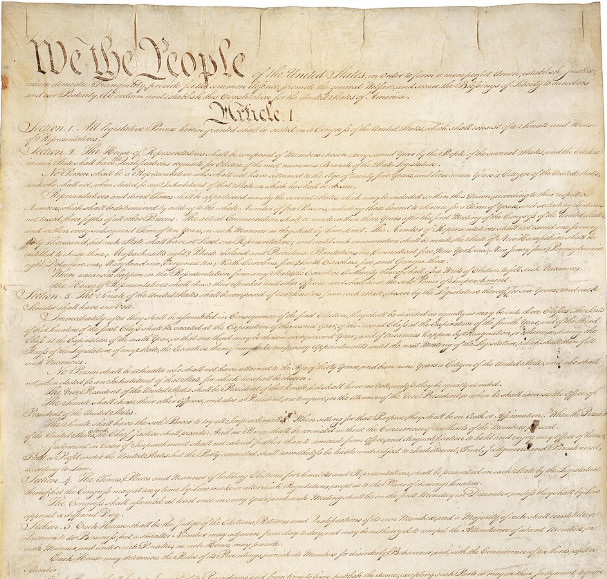
By contrast, the American Founding Fathers saw democracy primarily as a means to the peaceful transition of power. The preservation of liberty depended not on the changing will of the majority, but on a so-called negative constitutional order, instituting limits on what any majority could ask the government to do. Opening with "Congress shall make no law...," the US Constitution set out to protect the negative rights of citizens rather than oblige the state to protect them from private harm, provide care or social welfare.
A properly drafted negative constitution, immune to judicial reinterpretation and public demand for positive state intervention, stands as a safeguard against government tyranny. Entrusting positive rights and entitlements to a constitutional mandate risks dangerous overreach. A strictly negative charter treats people as sovereign agents, attempting to ensure that the state remains our servant, not our master.
Excellent thoughts here Greg. Important not only to rebuild trust in institutions, but to build new tools for knowledge creation, tools that make use of modern capabilities. And let freedom reign, Truth Seeking depends on it.
Everyone should read @Tyler_A_Harper’s extraordinary Atlantic cover story, “Confessions of a Token Black Professor.”
It is one of the best accounts yet of how bad American campuses became between roughly 2015 and 2025, peaking from 2020 to 2023. It was a disaster for academic freedom, free speech, and higher education’s credibility. It also helped destroy trust in shared facts, because people stopped believing that our supposed referees would scrutinize claims that fit their own ideology as aggressively as claims from the other side.
Now there is a concerted effort to pretend either that none of this happened, or that it was merely a strange youthful indiscretion we can laugh off, much as people tried to do with the first great age of political correctness.
We must not let them wish it away.
If you experienced the quasi-religious groupthink that overtook institutions supposedly devoted to inquiry, write about it. Record what happened, what people were afraid to say, and why. Otherwise, this period will be rewritten by many of the same people who defended the status quo while casting themselves as brave underdogs. Looking at you, @rottenindenmark, among others. Doing PR work for a $1 trillion industry is not exactly fighting for social justice.
I also have always seen this through a class lens. Elite higher education is a gigantic industry that disproportionately benefits people who are already well-off. Yes, people like me can get through it and have our lives transformed. But we are a small part of the story.
There is an older intellectual history here. Thinkers such as Herbert Marcuse confronted a frustrating problem: the working class often failed to behave as intellectuals expected and an awful lot of working people hated intellectuals. Ordinary Americans liked their country, distrusted elites, and seemed perfectly capable of living without philosopher-kings directing them.
The solution was an newideology that allowed highly educated elites to regard working-class people with contempt while still seeing themselves as champions of the oppressed.
That became academia’s problem when universities built departments, bureaucracies, hiring systems, and professional cultures that treated deeply contestable political doctrines as moral dogma.
You can see the results throughout Tyler’s story: classism, utter contempt for locals, exaggerated self-importance, ordinary disputes transformed into battles of good and evil, and politicized administrators remarkably skilled at weaponizing elite ideology against their own institutions.
Tyler’s piece is both testimony and warning. There are excellent university presidents trying to right the ship, but too many faculty organizations and professional associations still seem to believe the ideology was never the problem—it simply wasn’t imposed consistently enough.
We need to document what happened and build institutions less vulnerable to another episode like it.
Because this was never some weird, isolated campus disaster. It spread into journalism, science, philanthropy, corporations, K–12 education, government, and politics. It damaged the credibility of the institutions we depend on to tell us what is true.
A society that loses faith in its knowledge-producing institutions eventually loses something more important than the reputation of its universities: its ability to see the world as it is.
My hypothesis is that public schools as they exist today (along with many private schools) are a significant causal factor in the adolescent mental health crisis.
There are several distinct vectors which need to be studied which may be contributing in various ways:
1. Bullying, humiliation, sexual harassment and assault from both students and teachers.
2. Boredom and meaninglessness.
3. Not feeling connected to anyone at school (about 45% of high school students).
4. Stress.
5. Negative foundational beliefs being taught (eg oppressor/oppressed lens, ecological disaster, the US is racist/evil, etc.)
6. Sleep/diet/substance use issues exacerbated by school schedule/social dynamics.
7. Pack of healthy movement/exercise/sunshine/outdoor time.
Of course there are other factors, but family trauma and abuse are often studied. Social media has gotten a lot of attention in recent years.
But the role of schooling has gotten little attention, despite the 300% increase in suicide since mass compulsory high school became the norm and despite the well documented increase in teen suicide during the school year each year.
I’m working on two research pathways:
1. Raising funds for scholarly research on the character and wellbeing benefits of school choice. To what extent might switching schools lead to improving wellbeing?
2. Technological measures of wellbeing to evaluate how a child or teen is doing in real time, ultimately to be correlated with outcomes. @ImmersionNeuro has a small study showing that they can predict clinical depression in advance as people begin to feel disconnected.
Whether or not that study holds up, in five years we will have a lot more granular data on the factors associated with children’s and teen’s mental health problems- and whether some schooling experiences cause or exacerbate them.
A farm is not without extra work and risk requiring operating capital for seed, fertilizer, pest eradication, equipment, fuel, maintenance, labor, insurance, etc… A house in town is a luxury good comparatively, does it reduce your commute? Does it save you time on errands and offer better schools for your kids, more social activity and networking opportunities etc..? Then you must pay for that too, and as the supply/demand curve dictates.
La plupart des gens se battent toute leur vie sans jamais comprendre la nature du jeu auquel ils jouent.
Pour comprendre le vrai fight entre les humains, il faut piger une seule distinction : il y a les jeux à somme nulle, et les jeux à somme positive.
Un jeu à somme nulle, c'est un gâteau de taille fixe. Ce que je prends, tu le perds. Chaque victoire est le reflet exact d'une défaite quelque part. Le poker, un héritage, une place au concours. Il n'y a rien à créer, juste à capturer. Tu ne peux gagner qu'en arrachant quelque chose à quelqu'un d'autre.
Un jeu à somme positive, c'est l'inverse : le gâteau grossit. On peut être deux à sortir plus riches qu'on est entrés. Monter une boîte, écrire du code utile, échanger. La richesse n'est pas déplacée, elle est créée. Et là tout bascule : l'autre n'est plus ton ennemi, il devient ton partenaire potentiel.
Ce clivage n'est pas économique. Il est mental. C'est un logiciel qu'on installe dans ta tête, souvent sans que tu l'aies choisi, et qui décide de comment tu regardes chaque personne que tu croises.
Et c'est là que Paris devient un cas d'étude.
Paris est peut-être l'un des écosystèmes les plus « somme nulle » du monde. Tout y est un stock fixe qu'on se dispute : le prestige d'une école, un titre, un carnet d'adresses, une position sociale. Personne n'agrandit rien, on se répartit un capital de statut hérité. Et comme le gâteau ne grossit jamais, la seule façon de monter c'est de faire descendre les autres. La conversation devient un sport de contact : on jauge, on rabaisse, on cherche la faille. Le trait d'esprit y sert moins à créer qu'à humilier.
D'où un phénomène que tu ressens physiquement quand tu passes du temps là-bas : à Paris, quasiment chaque interaction se joue en mode somme nulle. Tu annonces un succès, et le premier réflexe de l'autre n'est pas « qu'est-ce que t'as créé », c'est « à qui tu l'as pris ». Ta réussite est vécue comme une soustraction sur la sienne. La jalousie n'est pas un défaut de caractère isolé, c'est la conséquence logique d'un cerveau qui croit dur comme fer que le monde est un stock qu'on se partage.
Maintenant regarde la Silicon Valley. Le truc qui frappe le plus quand t'arrives, c'est le « pay it forward ». Des founders qui te font des intros gratos, qui te filent une heure de leur temps, du conseil, un warm intro vers un fonds, sans rien attendre en retour immédiat. Un Parisien lit ça comme de la naïveté. C'est exactement l'inverse : c'est de la générosité parfaitement rationnelle.
Pourquoi ils font ça ? Parce que la tech est le seul endroit où tu peux avoir de la vraie croissance, non bornée. Tu peux littéralement créer 100 milliards de valeur à partir de zéro, à partir de rien qui existait avant. Dans un monde comme ça, t'aider ne me coûte rien et fait grossir l'écosystème dans lequel je vis. Le retour est diffus, indirect, différé — mais il existe, parce que le gâteau, lui, grossit. La générosité et l'ambition ne s'opposent plus. Elles pointent dans la même direction.
Et une fois que t'as cette grille, tu comprends la classe politique d'un coup. La grande majorité des politiques vivent exclusivement en somme nulle. Leur métier, littéralement, c'est de redistribuer un gâteau considéré comme fixe : prendre ici, donner là, arbitrer entre des camps qui se disputent des parts. Ils n'ont aucun réflexe de création, seulement des réflexes d'allocation. Toute leur pensée tourne autour de « qui on taxe, qui on subventionne ». C'est pour ça que le débat public est éternellement une guerre de tranchées : quand ton modèle mental dit que le stock est figé, alors ce que gagne l'un doit forcément se prendre sur l'autre.
Et c'est précisément là que le projet de Musk devient lisible. Tout ce qu'il fait est un pari « somme positive » à l'état pur : baisser le coût de l'énergie, baisser le coût du lancement, rendre l'IA abondante, ouvrir Mars. Au lieu de se battre sur comment découper le gâteau d'aujourd'hui, il essaie de le multiplier par dix. Il ne demande pas une part plus grosse, il fabrique une tarte plus grosse pour tout le monde.
C'est pour ça qu'une partie du monde ne le supporte pas : il ne joue pas à leur jeu. Le cerveau somme-nulle ne peut pas modéliser quelqu'un dont la victoire n'est la défaite de personne. Il cherche forcément la victime cachée, l'arnaque, le vol — parce que dans son logiciel, la création de valeur n'existe pas.
Au fond, la vraie ligne de fracture n'est pas gauche/droite, ni riches/pauvres. C'est : est-ce que tu crois que le gâteau est fixe, ou est-ce que tu crois qu'on peut le faire grossir. Et le plus dingue, c'est que ce n'est pas une observation sur le monde. C'est un choix. Tu peux décider, aujourd'hui, quel jeu tu joues.
@LarryBoorstein@CrookedMedia@grok find resources that back these claims of USAID cuts causing actual deaths and find counter evidence and compare the two for Truth Value.
Deep Immersion in intellectual dialogue produces cognitive growth. Scientific evidence:
“A 2021 longitudinal follow-up showed that increases in conversational turn-taking over time were associated with cortical thickening in left inferior frontal and supramarginal regions (language and social-processing areas). This neuroplasticity mediated improvements in language development—direct evidence that changes in dialogic interaction drive brain growth that supports cognitive gains.
Longer-Term Trajectory Effects
Early high-quality language input doesn’t just produce immediate effects; it shapes developmental trajectories. One longitudinal structural MRI study found that parent language input prior to school entry predicted the rate of change in cortical thickness in language-related areas during mid-adolescence (years later), even after accounting for parental IQ and education. This suggests early dialogic experiences influence how the brain continues to mature during the school years.”
More interesting details from Grok below,
https://t.co/PEkdSzdnju
See excerpts below from the 9 years of recorded Socratic dialogues with Alana Garcia, daughter of @strollerno , who began working with me on his daughter’s education when she was 3 years old.
True for some time. When building a molecular diagnostic 20yrs ago, with the human interpretable ML technique Genetic Programing running on our own Beowulf cluster, we found the hardest part was getting good tumor samples with accompanying clinical 5yr survival data: Did this cancer turn metastatic? Did the patient certainly die from it or was it some unrelated factor? Did the Tumor not return and the likely category is benign, then by what criteria? We had to go outside the US for this, Germany and Israel were the best at keeping these records and the samples were expensive to use for our study, we had to still reject several that did not pass basic housekeeping gene validations. They would add Noise to the training and test sets. The cleanliness of the data is one thing, there is also your Ontology: What are your concepts, categories and claims? What are you paying attention to and Why? What are you leaving out? Known Unknowns a constantly fluxing set here. It’s all about asking the right questions of the right data in the right way to validate Claims with any certainty, and push useful knowledge into a hopefully receptive market place. The human experts to develop the GP ML and manage the data, and the cost of the samples and the lab to generate data from the samples, those were the expensive parts. Not to mention regulatory and other hurdles that need not exist in such limiting ways. The actual compute for this product took a few days total. About 2% of R&D.
@RAinAK49@JohnDSailer@PhilWMagness If you mean FIRE, the Foundation for Individual Rights and Expression, Greg Lukianoff, their CEO, is a friend and total badass on this subject of censorship. His team is doing the best work on First Amendment defense.
Everist Health is fully onboard with these reforms, which are meant to transition our Fee-For-Service Sick Care business models into Value Based Health Care business models. Doctors want this. It’s the administrative capture by Big Pharma and Big Clinic, and the subsequent regulatory environment they’ve created, that prevents this transition to Value Based Care. This is the single biggest economic issue bankrupting America and the entire industrialized world. We know what needs to change. We have to reform this regulatory capture which feeds the Sick Care industry that feeds like a vampire on illness. The incentives must be realigned.
There’s a false narrative being pushed that the MAHA movement is anti-doctor.
The central MAHA argument is that our medical *system* produces incentives that trap doctors into a cycle of managing the symptoms of chronic disease, without being able to address the root cause.
Nobody disputes doctors are dedicated professionals and vital to American health - but the system clearly isn’t working. Doctors have the highest rate of burnout and are leaving the profession early in higher numbers.
Nearly all would agree the incentives of our current system have assaulted the doctor-patient relationship and robbed physicians of autonomy to deliver personalized care. Doctors continually complain about being trapped in a system of short appointments and bureaucracy where they are not able to give patients the care they need.
MAHA - at its core - is starting a big conversation to bring the doctor-patient relationship back. And many of the main reforms from the admin are centered around this thesis (with an emphasis - which doctors agree with - on getting to the root cause of illness, not just bandaids).
Doctors should ask who is trying to foster difficult conversations to reform a system we all agree is broken, and who is trying to protect the status quo which they agree is broken.
@GadSaad Not exactly a surprise, polling showed Bass followed closely by Raman with Pratt a bit farther still behind Raman. Mail-in votes heavily favor young progressive renters who favored Raman over Bass and by miles over Pratt. The late count predictably favored Raman.