Honest Cover Letter:
I’m interested in this job because it’s available. I feel I’m a match because I, too, am available.
You also list a “competitive salary,” which aligns with my passion for food and shelter.
I look forward to discussing this further with your AI screener.
While everyone chases the latest AI tools, here’s an underrated, high leverage, practical application of AI:
Give AI deep ongoing context on your product. Then actually use it during product discussions to keep you honest and call out your BS. AI is extremely good at this today.
Scoring an unjustified 67% on 🍅...
The Rocketeer (1991) is perfect.
Disney originally wanted Johnny Depp as Cliff Secord. After he passed, Billy Campbell (who looked just like the comic character) got the role and even cut his long hair and shaved for the screen test.
Every time I read this about meetings I think people have a very "I'm the boss" view of meetings. Meetings are so much less about decisions and so much more about reaching a shared understanding of why, what, how things happen. Meetings create context for work. Summaries and recordings don't do that.
My experience has been the worst meetings are the ones where "we must decide X" or "we have 27 follow up work items." Why?
Almost nothing can actually get decided in a meeting. There's always more. More options. More time. More to learn.
A meeting with many follow up literally slows down work. It presumes people were not already busy. People who leave a meeting with more to do are demoralized and less efficient. Meetings should not create homework.
A meeting is when people share what is going on and get aligned on what others adjacent are doing. Meetings are about the seams between teams working on the same goal. They aren't about the boss deciding or informing the boss. Or the boss assigning homework. Everyone already knows the work. What they don't know is if the seams are coming together or falling apart. That's what alignment is. That's what working at scale requires.
There are a million reasons why recordings and transcripts of meetings turn meetings into something they are not. They become the "Sent Mail" or worse. A way for people to dig through history to assign blame, shift accountability, or justify poor choices. They don't provide a useful tool to reach the harmony of collaboration. They take up time. They force a gamesmanship just like any other digital performance does as people seek to make (or avoid) the highlights reel. They drive attention away ("will watch later") and center the meeting on the boss (as Zoom does in general) and not peers.
There is a dream, especially amongst engineers, that meetings are unnecessary at best and that people "just know" what to do. The "lone" builder pursuing goodness. A Howard Roark. That only works if you're Gilfoyle at a 5 person effort. Working at scale is not a solo project and requires communication and alignment. Talking in person is the best way to do that in terms of overhead, efficiency, and effectiveness. Even with Zoom, Slack, Github, and more.
A post on "Reaching Peak Meeting Efficiency" https://t.co/DfshW5QRJ2
@ShamsCharania People acting like he’s giving the worst teams a 1% chance and giving the 8th seeds a 40% chance. It’s 5.4% for the 3 worst, 8.1% chance 4-10 worst, and then 2.7% for the play-in losers. That’s fair and will have the 3 worst teams trying to win games to get into that 4-10 range
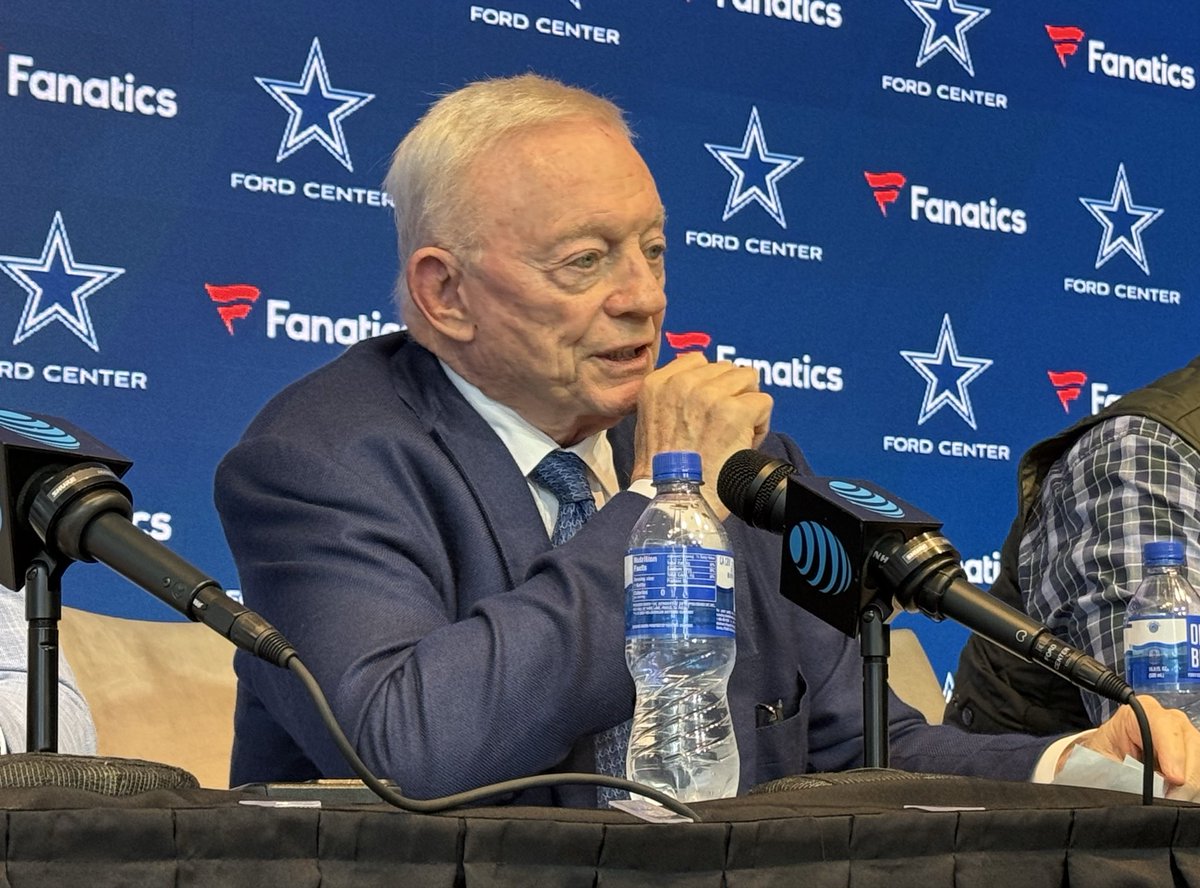
Cowboys owner Jerry Jones when asked about trading first-round picks with the Eagles: “If I eliminated (trading with) all the teams that I wanted to beat their ass, you wouldn’t have anybody left to trade with.”
hot take :) The biggest and most productive people in the AI era are the folks who are already good at their jobs. AI as a multiplier, not an equalizer/democratizer
"Young people are never going to know what it's like to wake up at 3 in the afternoon and be like, 'I left my credit card at the bar.'"
Momofuku founder @davidchang says people drinking less is "the real existential threat" to the restaurant industry.
"The biggest thing that happened in LA over the past 10 years in food was ride sharing," which allowed people to spend more on alcohol, he continued.
"Restaurants were a bubble...now, at least in LA, people are drinking much less."
From his appearance on the show in November.