Been a bit quiet around here recently. And for good reason!
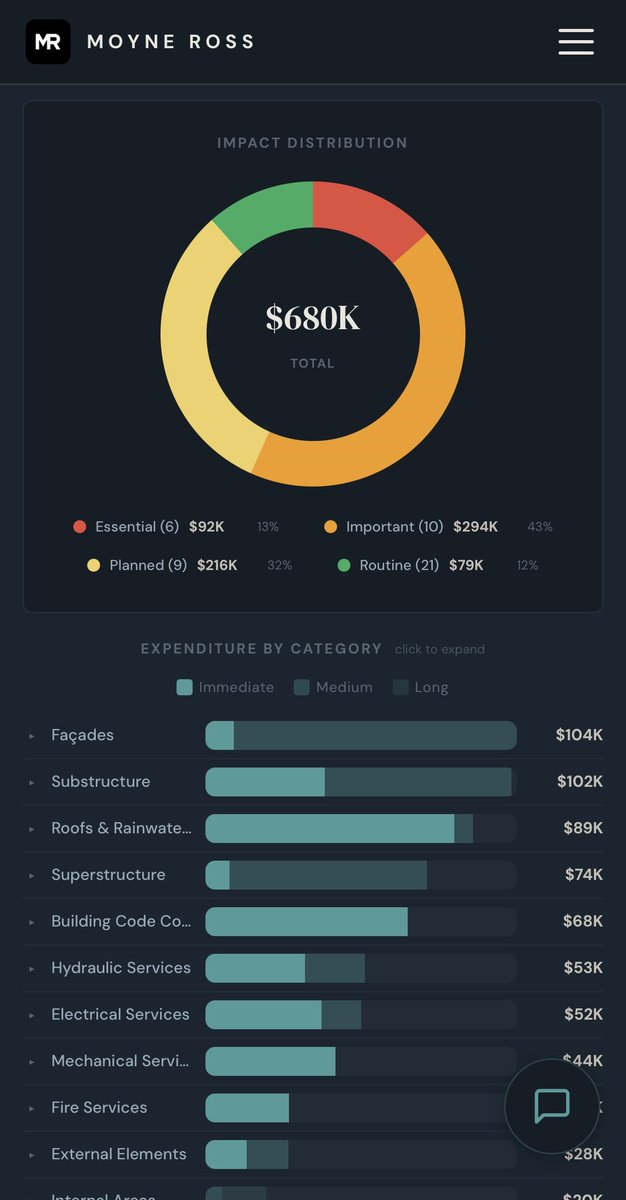
Today I’m introducing the https://t.co/mi8CoJ5Pza platform; our new home for building intelligence.
Stay tuned for more about what, how and why we do what we do….
@drgurner No worries Julie! There's alot to be said for sharing / contributing - still learning how best to do that here on x, but really appreciate the reply. Keep doing what you do!
If you had told me 6 months ago that I could build a fully functioning portal and database for re capital planning, I would have asked for whatever you were smoking….
The opportunities in this space are right here and right now.
Since the turn of the year capability has gone through the roof. I feel like Neo loading Kung Fu on an almost weekly basis!
Either the white collar headcount will shrink rapidly as we individually are 100x’d with AI, or the surface area for white-collar guidance / decision making will widen dramatically and we’ll be busier than ever.
Building intelligence. What are we talking about here?
Take this roof, obvious that it could do with some TLC, but what else are we observing here? And how does this become an action item in a strategy?
Let's explore!
@thinkingwest Well overdue its comeback. The perfect blend of curvature, rigidity and those satisfying little details that surface only after you are completely captured by its beauty.
I get so excited about what I’m building and feel like I’m tapping into a lifetime of opportunity, and yet I can also see an ever sharper sword hanging over folks who aren’t engaging with models beyond free tier-GPT or, god forbid, copilot.
It was the best of times, it was the worst of times etc etc
Rooftop HVAC units - how do we approach this?
We start with the broad context of the asset; age, type, location etc. That establishes the pattern matching that can state if systems are early, mid or end of life, together with the appropriate risk profile and budget allowances.
We can improve data confidence with further evidence; maintenance history, exact make and model etc etc. That way deep research can take place to generate richer advice.
Thereafter, should systems be repaired or replaced - then the strategy can be updated to reflect the profile of the new installations. We can maintain a living strategy that evolves as options are explored and decisions are executed.
So what's happening here?
Mechanised intelligence in action. I run my strategy engine, and the portal gets to work. In this case I'm using Sonnet 4.6, so not even a best in class model. And it'll think for 5-7 minutes and produce content that usually takes 5-7 days to generate manually, with only human hands and human minds.
So it ain't a report - it is a decision making surface for real estate. And context for further analysis.
A year ago it would take me days to prepare expenditure forecasts for assets. I’d visit site, spend a day inspecting, review all available documentation - then get back to my desk.
I’d spin up a spreadsheet template, find some similar examples of places I’ve previously looked at and employ the same language, twisting and playing with it to meet the needs of the engagement at hand.
This is all pattern matching. It is derived from deep experience and seeing what judgement is sound and importantly, what judgment has created gaps or overzealous reporting.
What’s wild is that with the right prompting, guidance and constraint - you can use an LLM as superpowered analyst. They’ll take a few listing photos and combine with wider context about location, age and use class to derive a very good register of ‘things to consider’.
Once you offer a consistent manner of presentation - and I believe tabulated information works for this purpose - you find yourself with a defensible strategy for a given asset. One with observations, actions, costs and the basis for estimation.
We don’t hide from uncertainly, either; we embrace it. It allows us to work with information gaps, and to highlight what may need further interrogation. We can assess with no inspection or full inspection. All that changes is the confidence in our data. And we are upfront about that too.
I’m very excited about this. I think all assets deserve a rich understanding, no matter where they are, how they are used, and the condition that they are in. And I think that building intelligence should not be the preserve for those with deep pockets.
By compressing analysis we also create more space for being human. I want to spend less time staring at screens and interact more with the owners, occupants and operators who are shaped every day by the space they use.
That’s why AI matters, in my view. And we should be embracing it wholeheartedly.
In 2018 I played around with machine learning, web scraping and AWS to build a cool tool that could confirm if an image showed asbestos, mould, invasive plants etc.
Was a hint of a future to come - a building CAPEX/computer niche that 2025 has now made possible!
@petergyang The sweet spot is the craft enriched by the machine. Getting to grips with AI has given me domain superpowers (and I am sure I'll just be scratching the surface!).
From this photo alone we can say a few things.
1) It's derelict cottage on a Northern English moor (that's pretty clear to be fair).
2) Roof: slates displaced, not broken. Substrate failure, not impact. Stone slate is a 200-year fabric. £36–60k to strip and recover with salvage.
3) Walls: lichen, not cracking. Done their job through two centuries of upland weather. £12–20k lime repointing.
4) Windows: paint failure, glazing intact. Heritage joinery is restoration, not replacement. £2–3.5k per opening.
The engine saw everything we can see. But It also applied 150 years of building pathology to what was visible, named the failure modes, priced the worst case, and budgeted the investigation that refines it.
In conclusion - AI is very, very, very good at scaling expert reading (when properly constrained and targeted at what matters).
And the full detail? That's set out in a rich structure manner that enables confident decision making.
Just reach out! Always happy to share.
Building intelligence. What are we talking about here?
Take this roof, obvious that it could do with some TLC, but what else are we observing here? And how does this become an action item in a strategy?
Let's explore!
Using our engine (reminder: my experience and judgement codified!), we can quickly generate a rich understanding beyond what our eyes may register.
The key concepts we employ here are context, extrapolation and interdependency. A mouthful, yes - but a sweet combo when AI does the cognitive heavy lifting.