A short story about deferring tech choices to thought leaders:
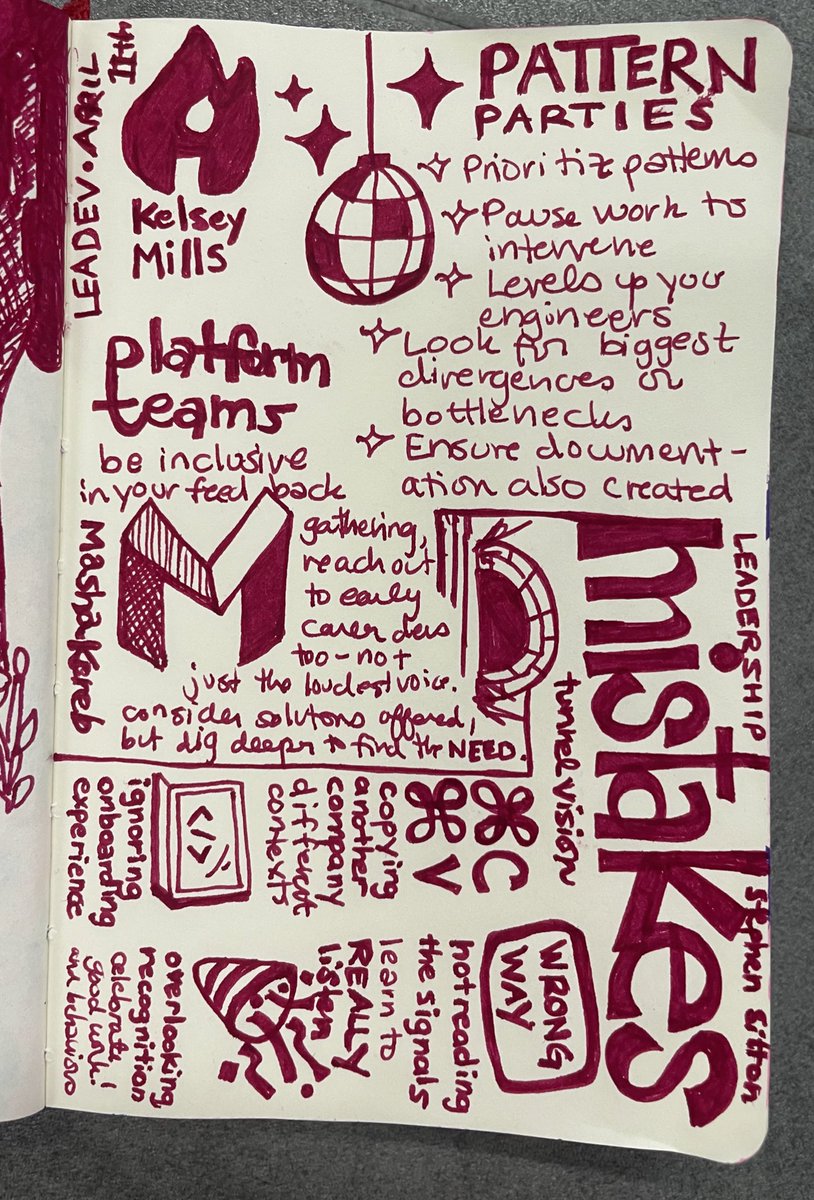
Early days at Disqus (~2010-2012), we made several frontend choices based largely on what thought leaders were promoting at the time.
One example: there was a big movement toward "micro-frameworks." Instead of larger, well-tested libraries like jQuery, you'd stitch together tiny interoperable micro libraries (Ender.js was one). Disqus was an embeddable JavaScript app, so file size mattered. It fit our use case, so we went with it.
Then it went live, and we were serving millions of users. The reality of those choices became clear. Micro libraries meant that instead of one good semi-bloated library, you ran 6-7 smaller, less-tested, crappier ones. We burned a ton of cycles fixing bugs and covering corner cases when we could've been shipping product.
We made a few choices like this.
At conferences, I'd track down those same thought leaders and ask for advice. "I'm hitting problem X, Y, Z. How did you solve this?"
That's when I learned my lesson: they rarely had answers, because they'd never reached our scale. Their energy went into promoting new stuff, not running it.
You should know this has never stopped. It's happening right now with AI. It'll happen again with whatever comes next.
Do your own homework. Test a lot. Don't just go with what somebody tells you.
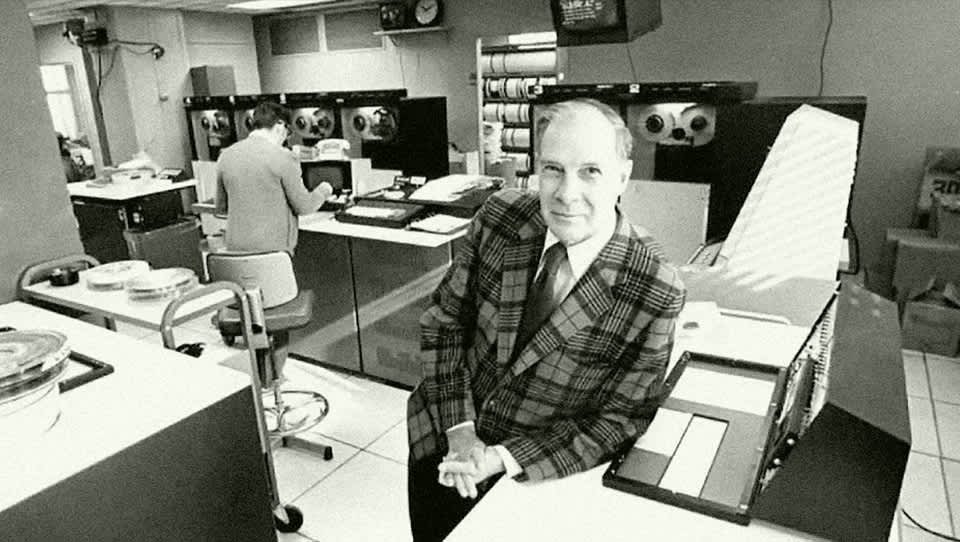
A mathematician who shared an office with Claude Shannon at Bell Labs gave one lecture in 1986 that explains why some people win Nobel Prizes and other equally smart people spend their whole lives doing forgettable work.
His name was Richard Hamming. He won the Turing Award. He invented error-correcting codes that made modern computing possible. And he spent 30 years at Bell Labs sitting in a cafeteria at lunch watching which scientists became legendary and which ones faded into nothing.
In March 1986, he walked into a Bellcore auditorium in front of 200 researchers and told them exactly what he had seen.
Here's the framework that has been quoted by every serious scientist for the last 40 years.
His opening line landed like a punch. He said most scientists he worked with at Bell Labs were just as smart as the Nobel Prize winners. Just as hardworking. Just as credentialed. And yet at the end of a 40-year career, one group had changed entire fields and the other group was forgotten by the time they retired.
He wanted to know what the difference actually was. And he said it wasn't luck. It wasn't IQ. It was a specific set of habits that almost nobody is willing to follow.
The first habit was the one that hurts the most to hear. He said most scientists deliberately avoid the most important problem in their field because the odds of failure are too high. They pick a safe adjacent problem, solve it cleanly, publish it, and move on. And because they never swing at the hard problem, they never hit it. He said if you do not work on an important problem, it is unlikely you will do important work. That is not a motivational line. That is a logical one.
The second habit was about doors. Literal doors. He noticed that the scientists at Bell Labs who kept their office doors closed got more done in the short term because they had no interruptions. But the scientists who kept their doors open got more done over a career. The open-door scientists were interrupted constantly. They also absorbed every new idea passing through the hallway. Ten years in, they were working on problems the closed-door scientists did not even know existed.
The third habit was inversion. When Bell Labs refused to give him the team of programmers he wanted, Hamming sat with the rejection for weeks. Then he flipped the question. Instead of asking for programmers to write the programs, he asked why machines could not write the programs themselves. That single inversion pushed him into the frontier of computer science. He said the pattern repeats everywhere. What looks like a defect, if you flip it correctly, becomes the exact thing that pushes you ahead of everyone else.
The fourth habit was the one that hit me the hardest. He said knowledge and productivity compound like interest. Someone who works 10 percent harder than you does not produce 10 percent more over a career. They produce twice as much. The gap doesn't add. It multiplies. And it compounds silently for years before anyone notices.
He finished the lecture with a line I have never been able to shake.
He said Pasteur's famous quote is right. Luck favors the prepared mind. But he meant it literally. You don't hope for luck. You engineer the conditions where luck can land on you. Open doors. Important problems. Inverted questions. Compounded hours. Those are not traits. Those are choices you make every single day.
The transcript has been sitting on the University of Virginia's computer science website for almost 30 years. The video is free on YouTube. Stripe Press reprinted the full lectures as a book in 2020 and Bret Victor wrote the foreword.
Hamming died in 1998. He gave his final lecture a few weeks before. He was 82.
The lecture that explains why some careers become legendary and others disappear is still free. Most people who could benefit from it will never open it.
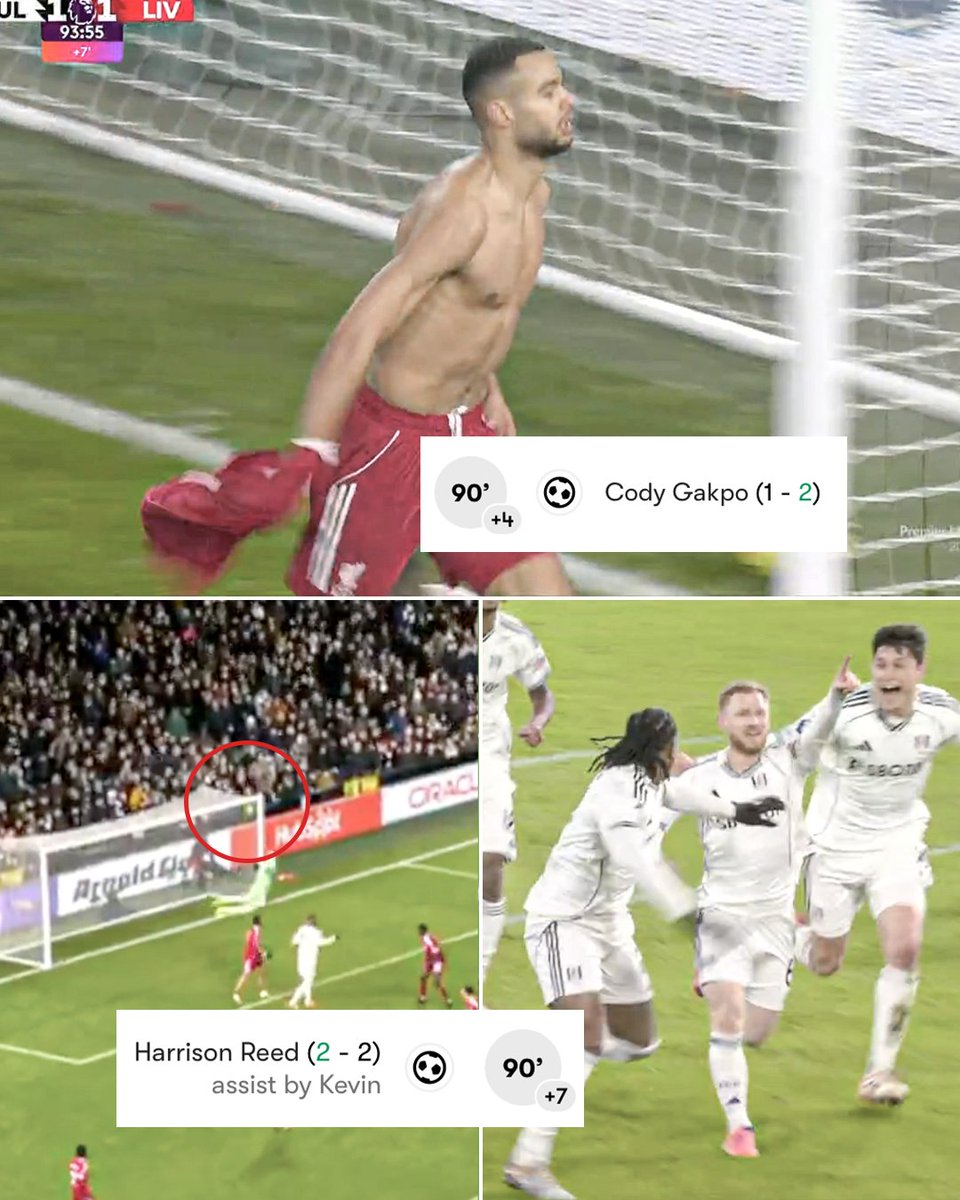
Liverpool thought they had stolen all three points away at Fulham when Cody Gakpo tapped it in.
Three minutes later, Harrison Reed experienced the moment of his career when he top binned it.
Goal of the year so far 😂
🥳 Today is the day!!! We can't wait to see you all later for the return of the #LondonMeetups! For all the details, click the link below 👇 https://t.co/gIRTxLN3Ss
Join us for the special relaunch of our London Meetups next week on 11 April 2024 and enjoy an evening of networking, lightning talks, and drinks and nibbles thanks to @incident.io and @monzo.
RSVP below to attend. We hope to see you there! 👋 https://t.co/UPCG67XTHL
'Being singled out for being different has a big psychological effect on our children'
Actor Sally Phillips spoke to #BBCBreakfast after her son Olly, who has Down's Syndrome, was prevented from entering a trampoline park without a letter from a GP
https://t.co/oZ7gFY0MPb
2 of 2: These covers cost a considerable amount of money and they have been there less than a week and already been destroyed. If anyone saw anything please can they let us know by emailing [email protected]
1 of 2: Hampton hill cricket club took delivery of some much needed covers last week for their square and yesterday, between 2-8pm someone has completely destroyed them by jumping all over them and smashing the frame work.