New publication on our blog where we discuss ideas on development.
We are talking about 'What must be done for the agreement between the #DRC and the #US on strategic minerals to become a true Marshall Plan for Eastern DRC ?
https://t.co/bSp1Oni6Vc
Former Chairman and CEO of PepsiCo Indra Nooyi has a message for Americans today: Continue our country's tradition of volunteerism, philanthropy, and commitment to improving civil society.
She joins @CondoleezzaRice to discuss her Only in America story: https://t.co/08RhIRSEfQ
From immigrating to the United States to leading one of the world's most iconic companies, Indra Nooyi's story is a testament to the opportunities America can offer. In conversation with @CondoleezzaRice, Nooyi reflects on leadership, innovation, gratitude, and the values that shaped her remarkable journey.
04:03 Indra Nooyi's leadership journey and advice for future leaders
06:13 The impact of mentors on Nooyi
07:55 How Nooyi decided to immigrate to the United States
10:45 Nooyi's early experiences in America
15:36 Why immigrants continue to choose America
19:19 Nooyi's business career and path to PepsiCo
23:23 Challenges running a global consumer business
27:48 The role of risk and fear in sustaining drive and motivation
32:03 Nooyi and Rice on the relationship between the United States and India
36:09 Nooyi and Rice on China, India, and the United States
41:17 Civil society and philanthropy in the United States
44:08 Indra Nooyi's Only in America story
Yesterday @SpaceX celebrated the historic IPO at Nasdaq. While my wonderful children, Elon, @kimbal and @ToscaMusk were having a wonderful time at Starbase, I was at @Nasdaq in New York City. Much happiness around the world. #SPCX
It’s always sunny in space 🚀😍
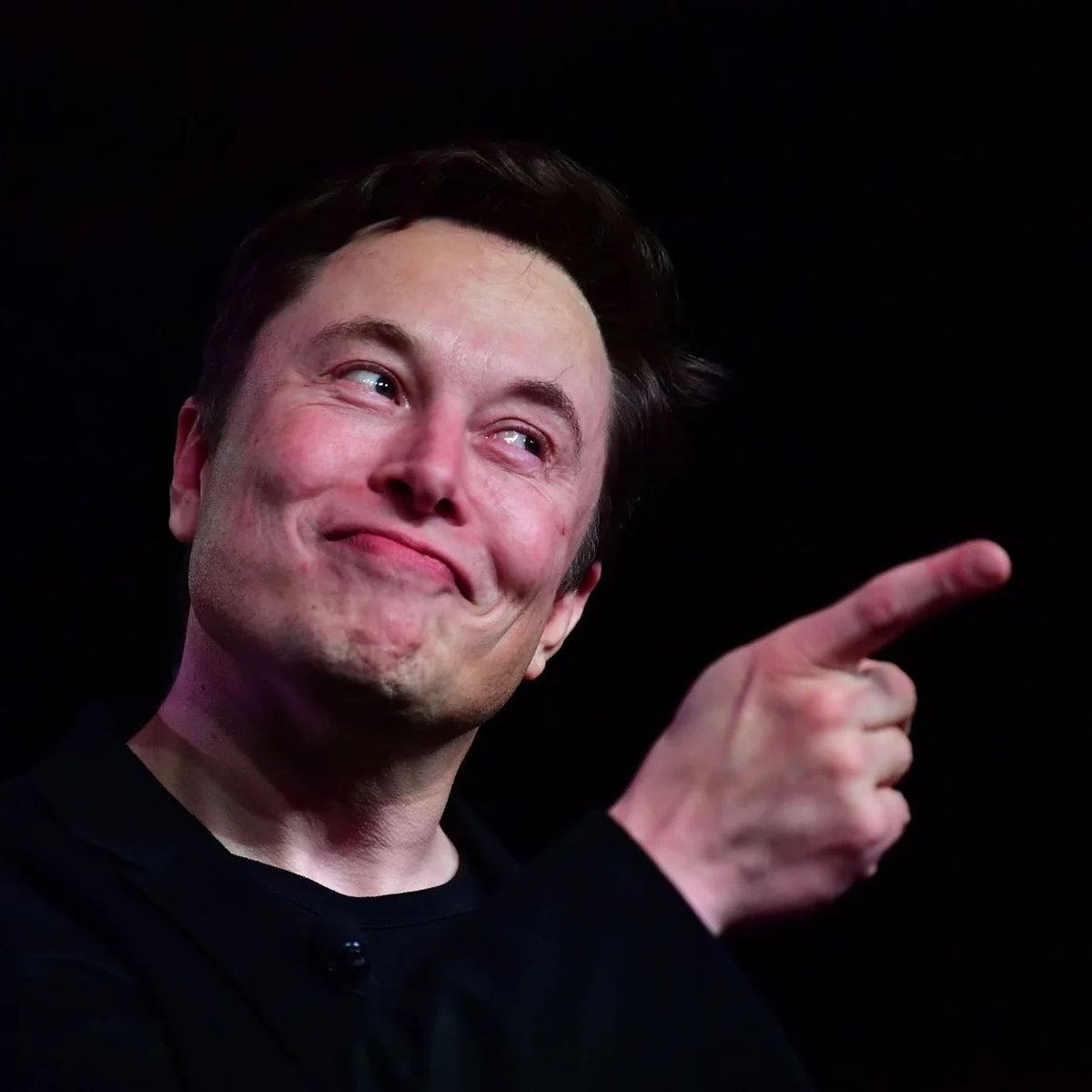
The first trillionaire in human history
- Elon Musk
- Born in South Africa
- Bullied relentlessly as a kid
- Immigrated to North America
- Arrived with a backpack and a dream
- Built Zip2 with his brother
- Sold it 4 years later for $300 million
- Co-founded PayPal with the profits
- Revolutionised digital payments
- Sold PayPal to eBay for $1.5 billion
- Bet everything on Tesla and SpaceX
- Got mocked for electric cars
- Got laughed at for reusable rockets
- Nearly went bankrupt in 2008
- Kept building anyway
- Turned Tesla into the world’s most valuable automaker
- Made EVs mainstream and transformed the automotive industry
- Made reusable rockets a reality
- Reduced the cost of reaching space by 95%
- Sparked the modern commercial space race
- Built Starlink and connected millions around the world to high-speed internet
- Turned SpaceX into the most valuable private company in history
- Bought Twitter for $44 billion
- The world said he overpaid
- He was called reckless, stupid & crazy
- Advertisers fled, media declared it dead
- Critics called it the worst acquisition in tech history
- Renamed it 𝕏
- Rebuilt the platform anyway
- Turned it into one of the most influential platforms on Earth
- Launched xAI and accelerated the global AI race
- Sent astronauts to space
- Is trying to get humans to mars
- Created millions of jobs
- Generated hundreds of billions in value
- Inspired an entire generation of builders
Before:
- Failed repeatedly
- Worked insane hours
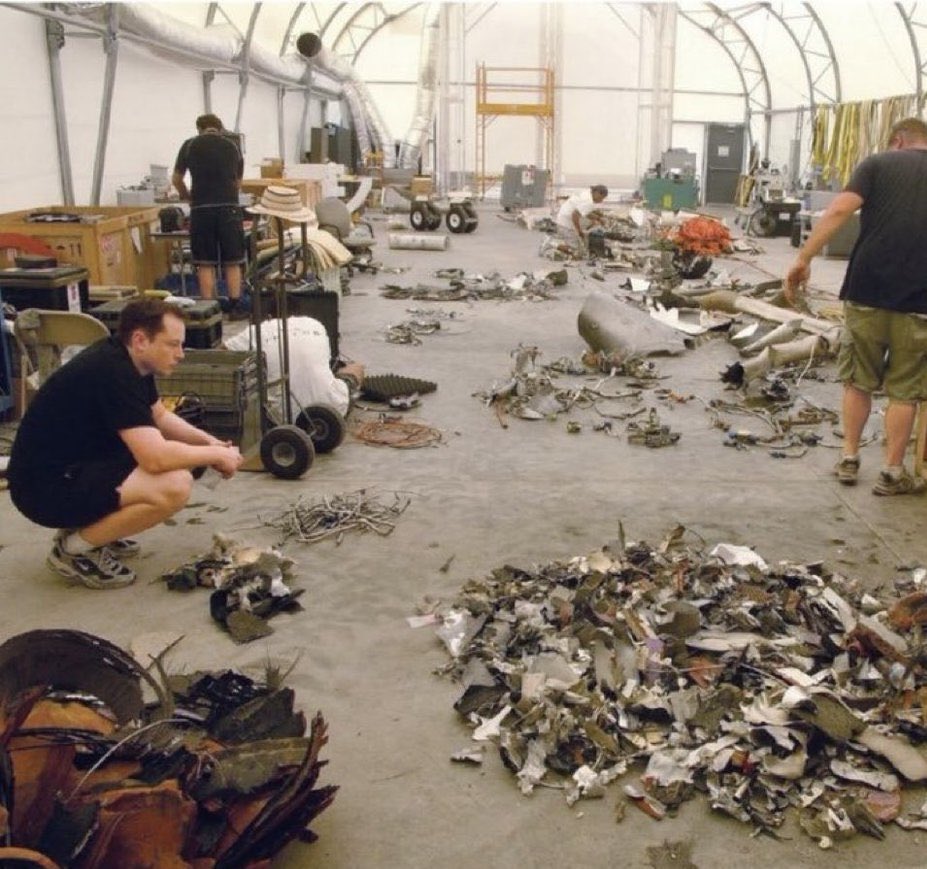
- Slept in factories and offices
- Got bullied, laughed at and mocked
- Constantly told “it’s impossible”
- Kept building anyway
- Made it possible
Today:
- Richest person on Earth
- First trillionaire in human history
- Largest IPO in history $1.77 trillion
Most people quit when the world laughs at them.
Elon Musk built the future instead.
Love him or hate him…
Nobody has changed more industries in a single lifetime.
Payments. Cars. Energy. Space. Social Media. Communications. AI.
History won’t remember the people who said it couldn’t be done.
It will remember the people who did it anyway.
Congratulations Elon.
The first trillionaire. 🚀
Happy @SpaceX IPO day. 🥰
It's the era of builders vs talkers.
Cheers to @elonmusk !
Cheers to all the brilliant minds behind the engeniring that makes up this company.
I had a wonderful time teaching university students at the Faculty of Economics of the @utlrdc in the DRC this week.
It was great to have my friend and colleague Mr. Ali Rizvi as a guest lecturer on data analysis.
I am happy that the knowledge and technical skills gained will serve to improve the quality of their contribution as economists, as well as policy making in the #DRC.
#Teaching #AfricanEconomists #DRC
Last weekend was graduation day at the #Chinese School where my son learns #Mandarin since he was 5 years old.
Thank you to my friend Haouran Yu for coming with us.
Grateful for the school year coming to an end. 🥰
I’m convinced discipline is just the highest form of self-respect. It’s choosing what you want most over what you want now. It’s keeping your word. It’s an act of service to your future self.
SpaceX filed for what could be the largest IPO in history, but ARK believes it is not the only one. Investors should also focus on what comes next.
We have been tracking this pipeline for years. The ARK Venture Fund holds positions in six companies with active IPO timelines. Each of these reached public market scale in private markets.
The median age of a US company at IPO has reached 12 years, up from 5 in 1999. The window where the most value is created is increasingly happening before a company lists.
ARK’s Global Head of Commercial Strategy Renato Leggi published a full guide on the potential IPO wave and how we are positioned. I would encourage anyone evaluating this opportunity to read it.
Years ago, I traveled from Takoradi to Accra and spent the night outside the Chinese Embassy just to be among the first in line for a visa application.
I remember the exhaustion, the uncertainty, and the hope that all the sacrifice would be worth it. At the time, I was just another person chasing an opportunity, standing in a queue before sunrise, believing that persistence could open doors.
Today, I received an email saying the new Chinese Ambassador wants to meet me.
My first reaction was simple: “Why me?”
Life has a remarkable way of bringing moments full circle. The same place where I once waited outside, wondering whether I would even be noticed, is now inviting me inside.
This moment is bigger than me. It’s a reminder that no sincere effort is ever wasted, no journey is too small, and no dream is insignificant. Sometimes the places where we struggle the most become the places where we later discover how far we’ve come.
To everyone working quietly toward their goals: keep going. The long nights, the sacrifices, and the waiting may one day become part of a story you never imagined telling.
Under the „Partenariat pour le Coton“ cotton to apparel partnership, @FIFAcom has ordered 80,000 T-shirts for the Football for Schools program. Following up on further implementation with @GelsonFernandes, FIFA Deputy Chief Member Associations and Director Africa, and Céline Zigaul, FIFA Senior IR and PA Manager. Many thanks for this boost to African manufacturing. More to come!
With H.E Dr Condoleezza Rice, former U.S. Secretary of State and former National Security Adviser, Director of the Hoover Institution, Stanford University. Engaging on the Institutions Commons Project - managing the transition to a new Global economic and political order. @CondoleezzaRice
With my sister and friend H.E Dilma Rousseff, former President of Brazil and President of the New Development Bank (BRICS Bank) in Shanghai, China. Discussing the role of Emerging Markets in the global economy in the context of a turbulent and uncertain world. Thank you my dear sister @dilmabr for the wonderful time together.
In Auschwitz, my mother taught me three rules.
Not stories. Not prayers. Rules. The kind that kept you alive.
Rule one: Never make eye contact with a guard.
Rule two: Never show that you are sick.
Rule three: Never, ever, lose your bowl.
I was five years old. I memorized them the way other children memorize nursery rhymes.
The bowl was a small tin thing. Dented. Scratched. It held whatever thin soup they gave us once a day. If you lost your bowl, you had no bowl. If you had no bowl, you had no ration. If you had no ration, you understand.
I guarded that bowl with everything I had. I slept with it. I held it against my chest during roll call. I knew where it was every second of every day.
Then one morning, I fell into the latrine.
There is no delicate way to say this. The latrines in Auschwitz were wooden boards with holes cut into them over a pit. The holes were large. I was very small. I was in a hurry. I slipped.
I went in up to my neck.
The smell. The cold. The rats. I do not need to describe it. Your mind already knows.
My mother tried to pull me out. She could not. I was slippery and she had no strength. None of us had strength. We had not eaten properly in months. She called out. Other women came. Together they pulled me free. Someone found a hose. They sprayed me down in the cold air while I stood there shaking.
I did not cry. Rule number one in Auschwitz was the same rule everywhere, do not attract attention.
But I got sick. Very sick. The kind of sick that comes from rats and filth and cold water and a body that has nothing left to fight with.
And I remembered Rule Two, never show that you are sick.
I hid it from everyone. From the guards. From the other children. Even from my mother, because I knew if she knew, she would do something. And doing something in Auschwitz got you killed.
But someone saw. I do not know who. I do not know why they helped me instead of reporting me. I never knew.
They took me to a room, a makeshift hospital. I lay in a bed, a real bed, not a wooden bunk, for the first time since we had arrived.
I do not remember much of what happened next. The fever blurred everything. Days passed like smoke.
When I came out, I still had my bowl.
I had held it even in the latrine. Even in the fever. Even in the dark when I did not know where I was or what day it was.
My mother looked at me when I came back. She looked at the bowl. She did not say anything. She just nodded, the way she nodded when something had gone the way it needed to go.
People ask me what survival looks like.
I tell them, sometimes it looks like a five year old girl climbing out of a latrine in a death camp, covered in filth, shaking with cold, still holding her tin bowl.
Because she knew that the bowl was the difference between eating and not eating. Between living and not.
Because her mother had told her. And she had listened.
I am Tova Friedman. I fell into a latrine in Auschwitz at five years old.
I came out still holding my bowl.
Tova.
#NeverForget #Survival #DaughterOfAuschwitz #ShesStillHere #TheirNamesLiveOn
Une chose qui m'a frappé en bossant des deux côtés de l'Atlantique.
En France, l'arrogance d'un entrepreneur est inversement proportionnelle à sa réussite réelle.
Le mec qui fait 20M d'ARR te parle comme s'il avait fondé Apple. Costume bien coupé, name-dropping de fonds, regard qui te jauge dès la poignée de main. Il maîtrise ses classes en-dessous comme un sport de combat.
Dans la Silicon Valley, c'est l'inverse exact.
Tu te retrouves à dîner avec un type qui a vendu sa boîte 1 milliard. Plus aucun problème d'argent jusqu'à la fin de ses jours. Et il te parle comme s'il débutait. Te demande ce que tu construis, prend des notes, te recommande trois personnes à appeler dans la semaine.
Les meilleurs profils tech là-bas fondateurs sortis à plusieurs centaines de millions, ingénieurs principaux qui ont façonné des produits utilisés par des milliards de gens gardent une simplicité qui désarme.
La différence n'est pas anecdotique. Elle est culturelle, et elle est structurante.
En France, le statut se défend. En Californie, le statut se prouve par le prochain projet.
Et à la fin, on s'étonne que les uns construisent des empires pendant que les autres optimisent leur table chez Caviar Kaspia.