Financial market insights and politics aficionado | trying to craft us a better future (all views are my own, 'likes' are not necessarily endorsements)
EU Capital Markets Union
Finance ministers of the six largest EU economies met in Berlin
Germany, France, Italy, Spain, the Netherlands, and Poland have agreed on a joint position to advance the EU’s Capital Markets Union.
This would mean:
Easier access to financing for European companies
Removing barriers to cross-border investment
Stronger EU-level supervision (ESMA)
These six countries represent ~70% of the EU population and the vast majority of its capital markets
This could unlock trillions in investment and reduce Europe’s heavy reliance on bank lending.
Ireland and Luxembourg are the only ones to oppose this.
The final decision will require qualified majority: 15 out of 27 EU countries + those countries represent at least 65% of EU population. E6 already covers ~70%, so passage is now very likely.
Feb 27 is the day before the war began.
The black line is the S&P 500; it is up 10+% since Feb 27.
The blue line is the S&P WITHOUT the AI stocks (see the description and repost). It is still DOWN 0.66%.
Maybe soaring gas prices are having an impact on the market after all?
Big picture remains - EU exports to US and China are falling off a cliff, while imports from China flood the EU. Unable to devalue the Euro, the EU will step up protection of its domestic market (source of demand & leverage wrt China). Securing Germany's support now key.
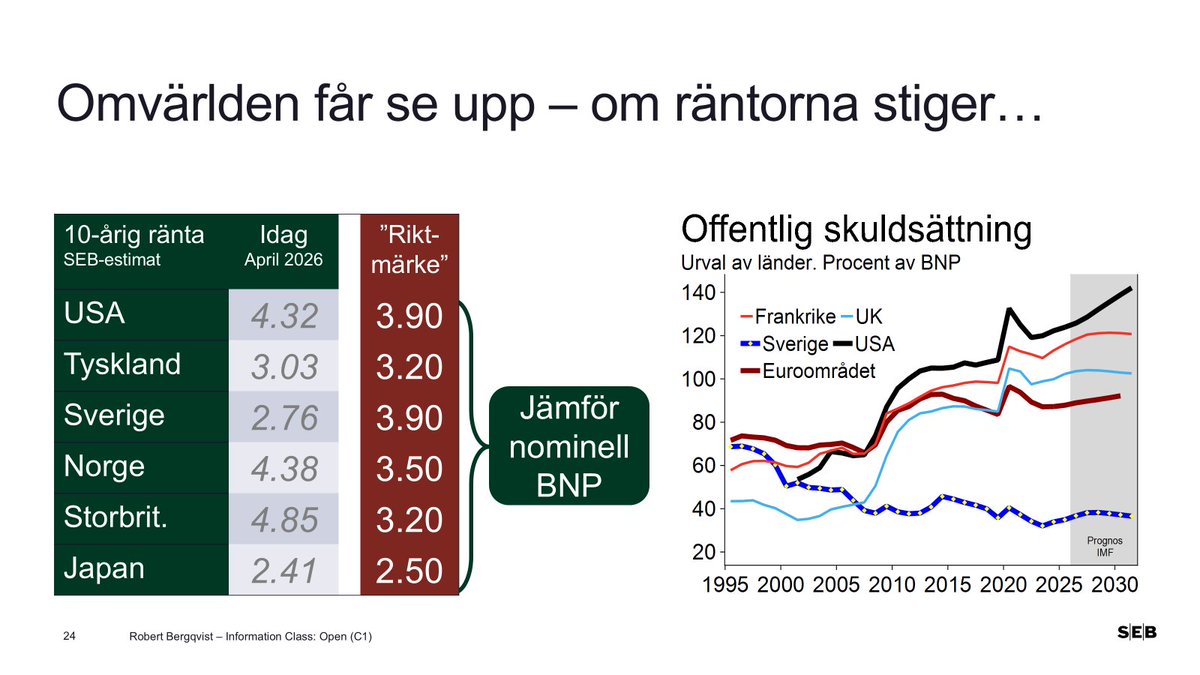
🇸🇪Sverige fortsätter imponera - statsfinansiellt! Vi lånar billigare än tyskarna; se graf. Kl 14 i dag när Thedéen tar beslut om räntan lägger Svantesson fram uppdaterad prognos. Samspel finans/räntepolitik har ovanligt hög prioritet när kompassnål pekar mot stagflationsrisker.😉
This is eye-opening. Spain and Italy have some of the lowest birth rates in Europe. At the same time, they have a staggering amount of unfunded pension obligations of about 500% of GDP.
Seriously, who is supposed to pay these pensions going forward?
1) You might have missed it but the EU just published the CMDI package – one of the most consequential pieces of bank regulation. It fixes something that has been really embarrassing about European banking regulation for more than a decade. And the impacts are huge.
Om någon - mot förmodan - missat IMF:s senaste uppdatering av offentliga skulder i världen (och för 🇸🇪Sverige - se Fiscal Monitor). Känns ovanligt bra att svenska skuldkurvan pekar nedåt när allt annat pekar uppåt. Kan vi dessutom lyfta produktiviteten kan vi bära än mer skuld.😉
The IRGC toll booth at the Strait of Hormuz does not accept dollars. It accepts Chinese yuan, settled through CIPS, China’s Cross-Border Interbank Payment System, or cryptocurrency. The toll is up to $2 million per voyage. The payment clears without touching SWIFT, without transiting a correspondent bank in New York, and without creating a record in the dollar clearing system that the United States built to monitor and weaponise global finance. The war that was launched to enforce the petrodollar is being fought across a chokepoint where the petrodollar has already been replaced.
CIPS processed over $130 billion per day in March 2026, a surge driven by Iran war flows. The system connects 1,600 participants across 180 countries. It still relies on SWIFT for approximately 80 percent of its messaging, which means it is not independent. But the 20 percent that bypasses SWIFT entirely is the 20 percent that matters, because that is the channel through which Iranian oil payments, Hormuz transit tolls, and ghost fleet settlements flow from Chinese refiners to IRGC-linked intermediaries without the United States seeing the transaction.
Alongside CIPS runs mBridge, the Bank for International Settlements’ multi-CBDC bridge platform. It operates on a custom distributed ledger, settles central bank digital currencies atomically in seconds, and has processed approximately $55 billion, 95 percent of it in digital yuan. The participants include the central banks of China, Hong Kong, Thailand, the UAE, and Saudi Arabia. The platform was designed for a post-dollar world. It is being tested in a world where the dollar is still dominant but the toll booth at the world’s most important chokepoint already operates in the currency the platform was built to clear.
The architecture is layered. CIPS handles traditional yuan bank transfers: refiner to intermediary to IRGC-linked account, cleared in Shanghai. mBridge handles the digital leg: central bank digital currency moves directly between sovereign nodes without correspondent banks, without SWIFT, without delay. Together they form a parallel payment system that does not need the dollar. It needs only participants, and the war provided them: China buys 80 to 90 percent of Iranian exports, settles in yuan, and clears through infrastructure the United States cannot freeze, cannot monitor in real time, and cannot sanction without sanctioning the BIS itself.
Deutsche Bank called the Iran war a “petroyuan catalyst.” Before the war, yuan oil was a pilot programme. The war turned it into operational necessity. When SWIFT is weaponised, you build around SWIFT. When the dollar is weaponised, you settle in yuan. When the strait is closed to dollar shipping, you open it to yuan shipping and charge a toll that funds the war the dollar was supposed to win.
The dollar still denominates 58 to 59 percent of global reserves. It still invoices 80 to 85 percent of commodity trade. By every aggregate measure, it dominates. But the aggregate misses the edge. The edge is the Strait of Hormuz, where $130 billion in daily CIPS volume meets $2 million yuan tolls meets ghost fleet AIS spoofing meets mBridge atomic settlement. The edge is where the replacement is being built, not in a policy paper but in a payment, one barrel at a time, one toll at a time, one dark tanker at a time, cleared through infrastructure the United States did not build and cannot shut down.
The architecture of bypass is operational. The war that was supposed to prevent it is funding it. And Power Plant Day is tonight.
https://t.co/dAOBBMsgDS
Jensen Huang just called out every CEO who’s been firing people “because of AI.”
Jim Cramer asked him why companies are laying people off if AI is supposed to make everyone MORE productive.
Jensen's answer:
"For companies with imagination, you will do more with more. For companies where the leadership is just out of ideas, they have nothing else to do. They have no reason to imagine greater than they are. When they have more capability, they don't do more."
Read that again.
The man who built the most important tech company on Earth just told you that if your CEO is using AI to cut headcount, it means one thing:
They have no imagination.
They have no vision for what comes next.
They got handed the most powerful tool in human history and their FIRST instinct was to fire people.
This is the CEO of NVIDIA. The company whose chips power every AI system on the planet.
If anyone on Earth has the right to say "AI replaces workers," it's Jensen Huang.
And he said the OPPOSITE.
He said every carpenter could become an architect. Every plumber could become an architect. AI elevates capability. It doesn't eliminate it.
But here's where it gets really interesting...
During the same interview, Jensen revealed something nobody's talking about:
He said AI startups like OpenAI and Anthropic are seeing their revenues increase by one to two billion dollars a WEEK. And he wishes these companies were public so the world could see what he sees.
One to two billion per week.
That's a $50 to $100 BILLION annualized run rate.
For companies that most people think are burning cash and making nothing.
The entire Wall Street narrative that "AI companies aren't profitable" might be completely wrong.
Jensen sees their numbers. He sees their compute orders. He sees their growth. And he's saying the revenue is real.
So if the money IS real, why are other companies firing people?
Because they're not building AI products. They're not creating new revenue streams. They're not using AI to expand into new markets.
They're using AI as an EXCUSE to cut costs because they ran out of ideas 3 years ago and need something to tell the board.
Jensen's company added $500 billion in new orders in 5 months. He expects $1 trillion in cumulative revenue through 2027 from just two product lines.
That number doesn't include the new chips, systems, or partnerships announced this week.
And he's not cutting people. He's hiring.
Because when you have imagination, more capability means MORE opportunity. Not less headcount.
Meanwhile Salesforce cut thousands. Meta cut thousands. Amazon cut thousands. All blaming "AI efficiency."
Jensen's response: You're out of imagination.
He also said something that stuck with me.
Cramer asked if he ever thought he'd build a $10 to $20 trillion company while waiting tables at Denny's.
His answer: "I was just trying to make it through the shift."
Biggest tip he ever got? Two, three dollars.
Now he's building tech that increased computing demand by one million times in two years.
He announced OpenClaw, which he says is as big as ChatGPT.
And he's got 21 months of new business that isn't even counted in the trillion dollar figure yet.
When asked how long he plans to keep working?
"I'm hoping to die on the job. And I'm not hoping to die anytime soon."
This is a man who believes every single thing he's building.
And his message to every CEO using AI to justify layoffs is simple...
You're not innovating. You're surrendering.
The technology wasn't built to shrink companies.
It was built to make them limitless.
If your leadership can't see that, the problem isn't AI.
It's THEM.
NVIDIA CEO Jensen Huang just said the quiet part out loud about what the education system will never admit.
For a century, we built humans to think like calculators.
The algorithm made that skillset obsolete overnight.
Huang: “The definition of smart is somebody who’s intelligent, solve problems, technical. But I find that that’s a commodity. And we’re about to prove that artificial intelligence is able to handle that part easiest.”
Software engineering was supposed to be the safe play.
Superintelligence cleared it first.
The SAT was supposed to measure intelligence. It was measuring the ability to follow instructions. Raw technical processing isn’t a competitive edge anymore. It’s the floor the machine stepped over before you woke up.
The question isn’t what you can calculate.
It’s what you can see before the data shows up.
Huang: “People who are able to see around corners are truly, truly smart. And their value is incredible. To be able to preempt problems before they show up, just because you feel the vibe.”
That vibe isn’t magic.
It’s the collision of first principles, human empathy, and lived experience no model can fake.
Huang: “That vibe came from a combination of data, analysis, first principle, life experience, wisdom, sensing other people.”
The operators who see around corners will command the AI.
The ones waiting for dashboards to update will be replaced by it.
Huang: “I think long term the definition of smart is someone who sits at that intersection of being technically astute, but human empathy and having the ability to infer the unspoken, around the corners, the unknowables.”
The unspoken variables are the new leverage.
The human psychology inside a market. The invisible friction in a negotiation. The instinct to build something nobody asked for yet.
You can’t spreadsheet your way there. You can’t prompt your way to that perception. It comes from decades of watching what doesn’t show up in the metrics.
Huang: “And that person might actually score horribly on the SAT.”
The future doesn’t belong to people who memorized answers.
It belongs to people who sense the questions before anyone thinks to ask.
The old system tested your ability to follow orders. The new one tests your ability to move through the unknown. And the machine can’t help you with that part.
That part is entirely on you.
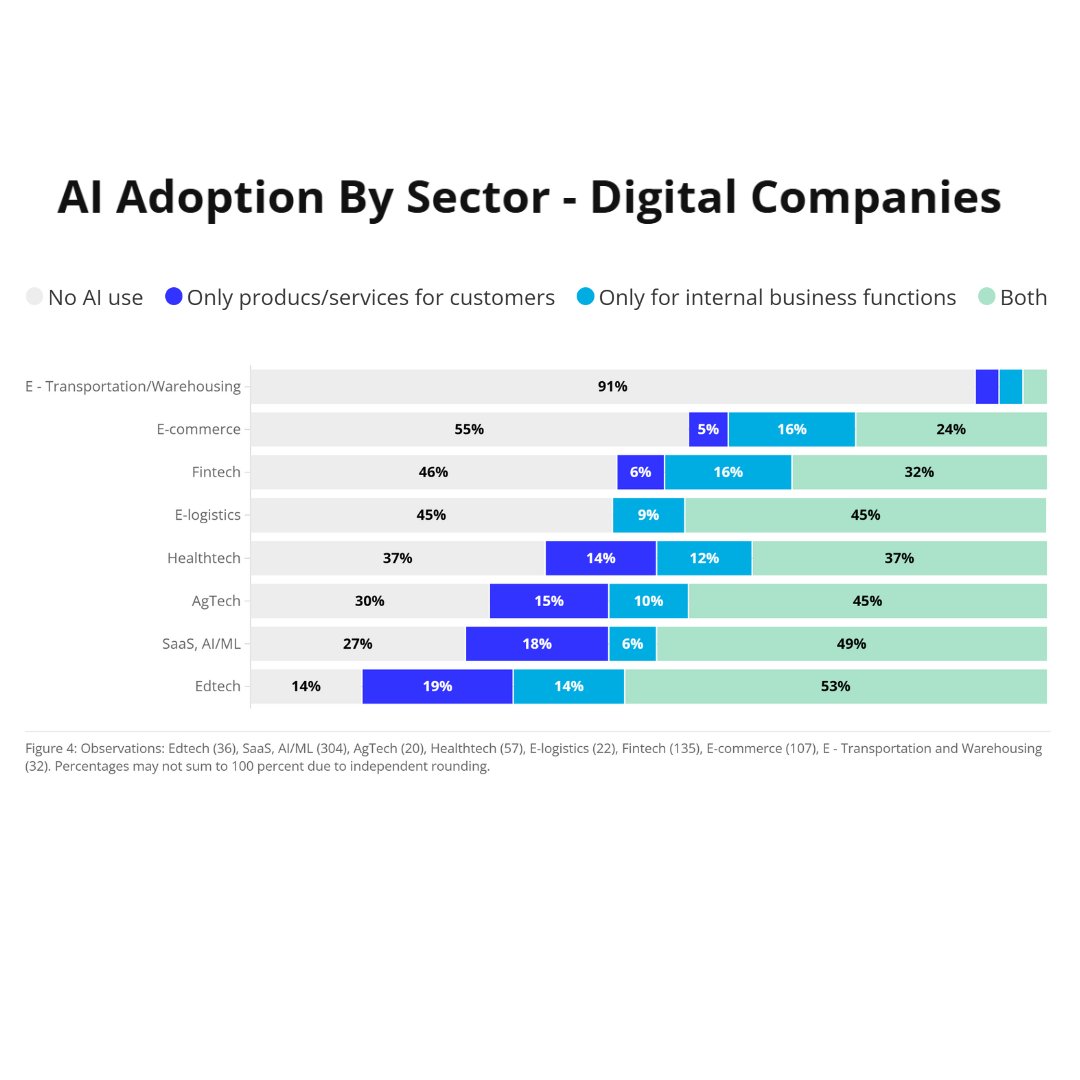
AI adoption has dominated boardrooms in advanced economies—but what about emerging markets?
New insights from a recent @IFC_org survey explore how firms are embedding artificial intelligence. https://t.co/YSheqwXhw5
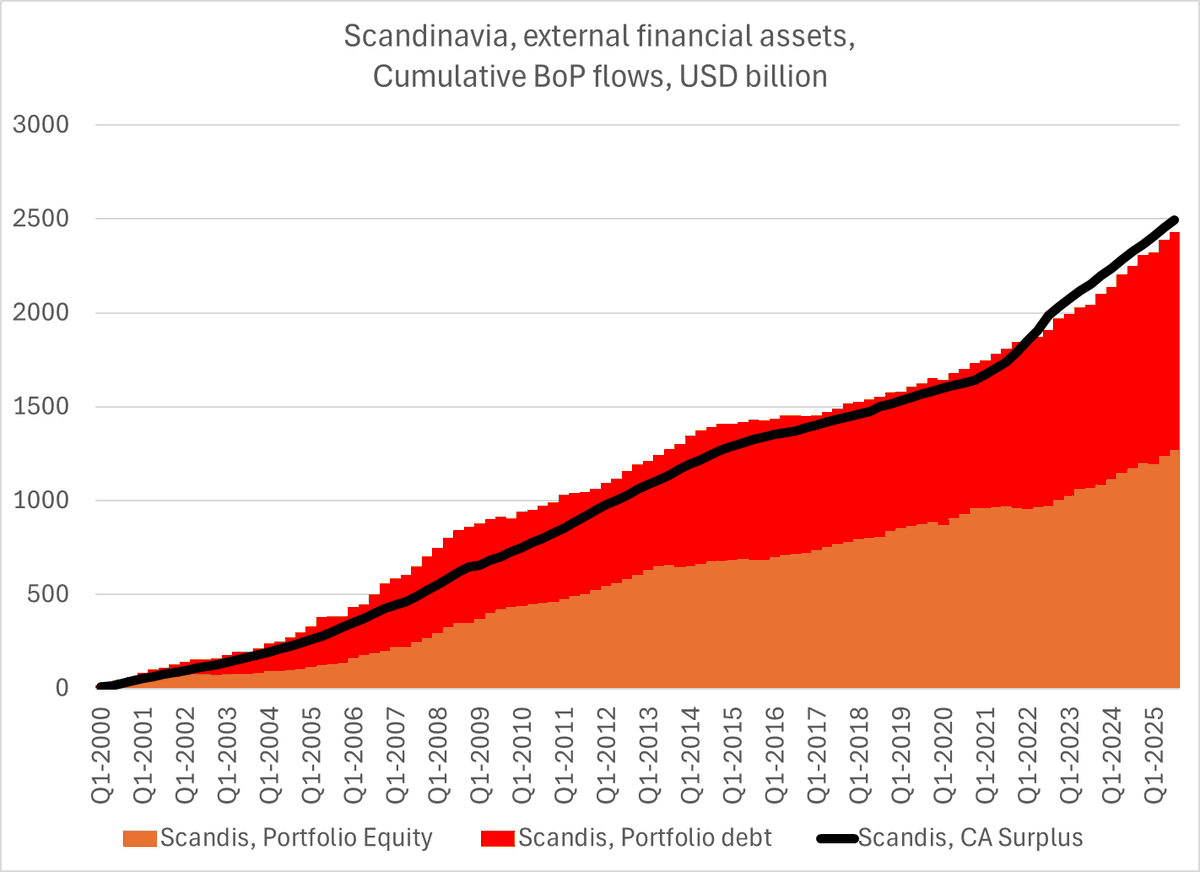
For some reason I decided to look at the external financial of investments of the main Scandinavian countries in a bit more depth --
Big surpluses, and tend to split the outflow equally between bonds and stocks
1/
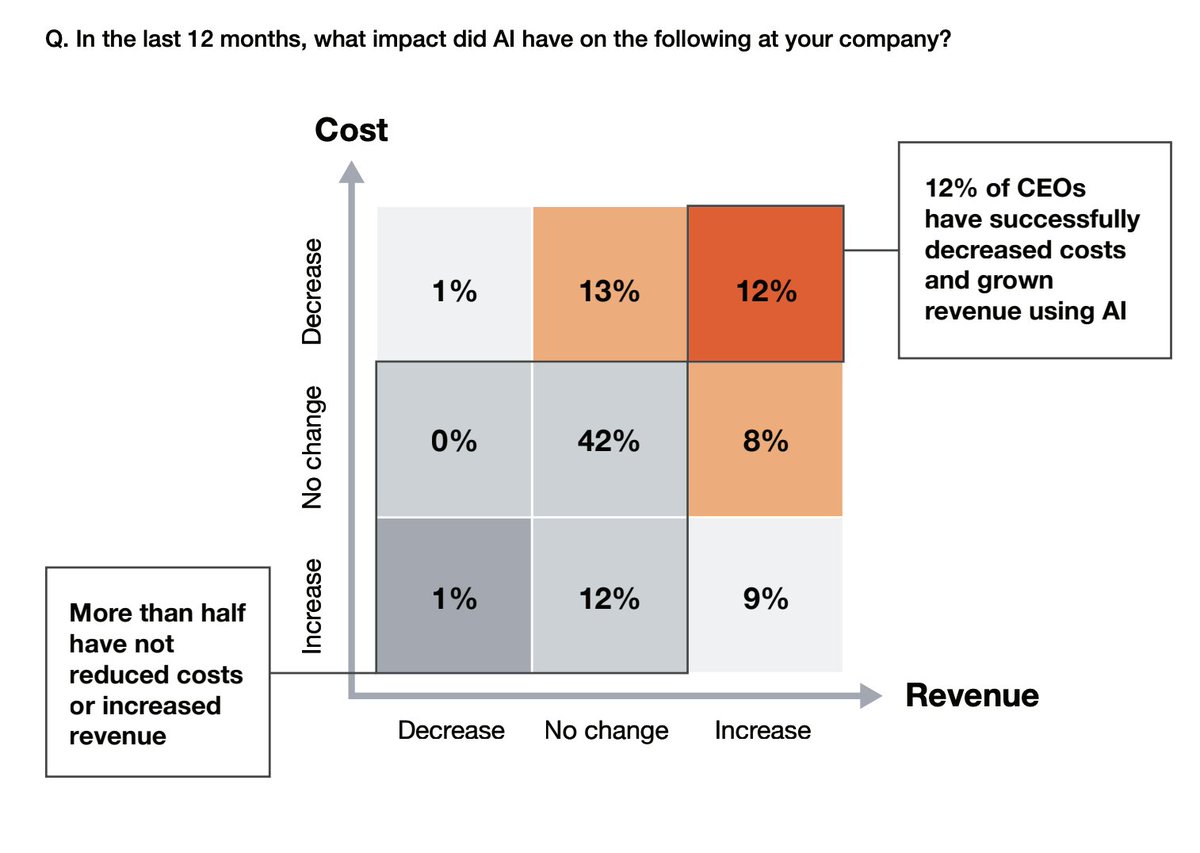
PWC's CEO survey is out and contains some interesting points. Top of mind is largely geopolitics (all following Davos now) but alongside this, the AI narrative seems to sputter. It's not just about the models, the chips, the energy, and the data, but also deployability.
The Scandinavian countries collectively hold ~ $2 trillion in US assets, with most in the hands of their public sectors. The Dutch another $600-700b ...
h/t @ExanteData
1/
Good practical advice from McK on implementing (agent) AI in orgs. Boards have important jobs in following up with this while encouraging learning and innovation.
Agentic AI is here, and it’s powerful.
But autonomy introduces new security and trust risks that leaders can’t ignore. This playbook shows how to deploy AI agents safely while scaling value. https://t.co/DLqcQ05bIc