@jrkelly Serious question, how do you envision temperature regulation of reagents in an autonomous set up (for full autonomy). Autonomous cars still fundamentally have one task, but fo experimentation appears there is larger infrastructure/logistical issue.
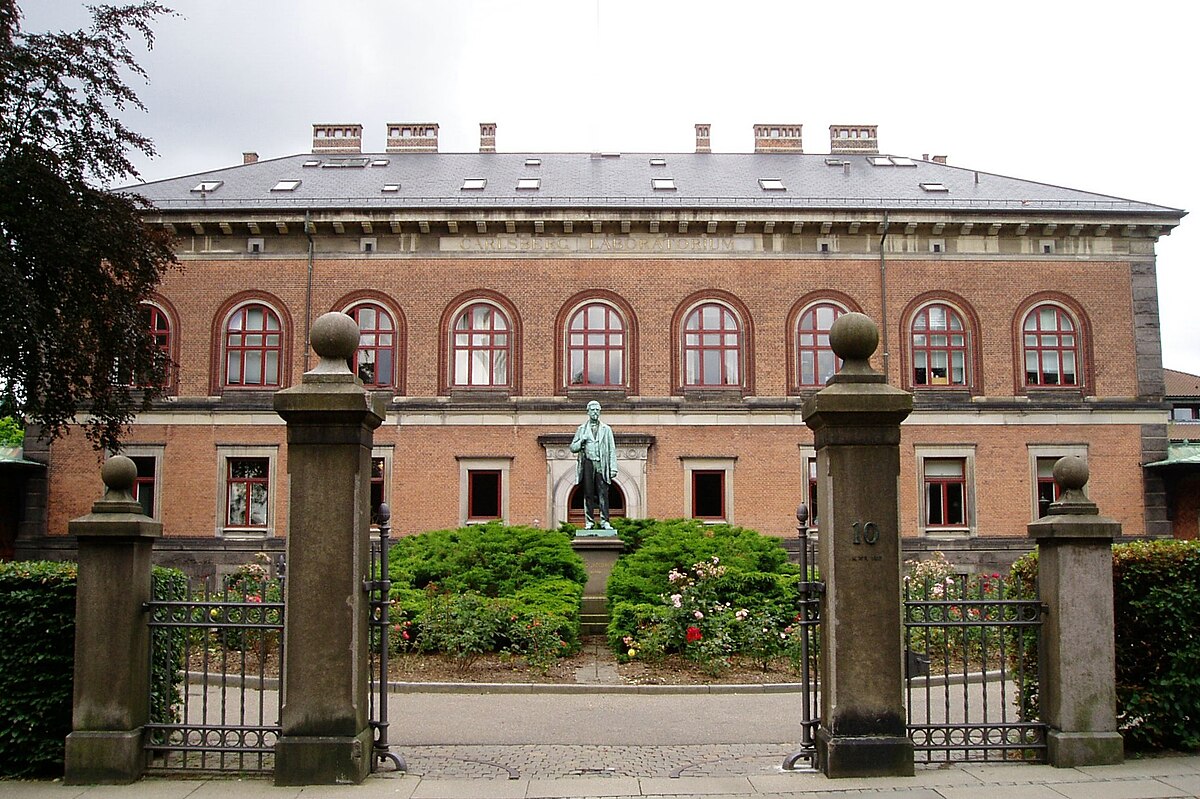
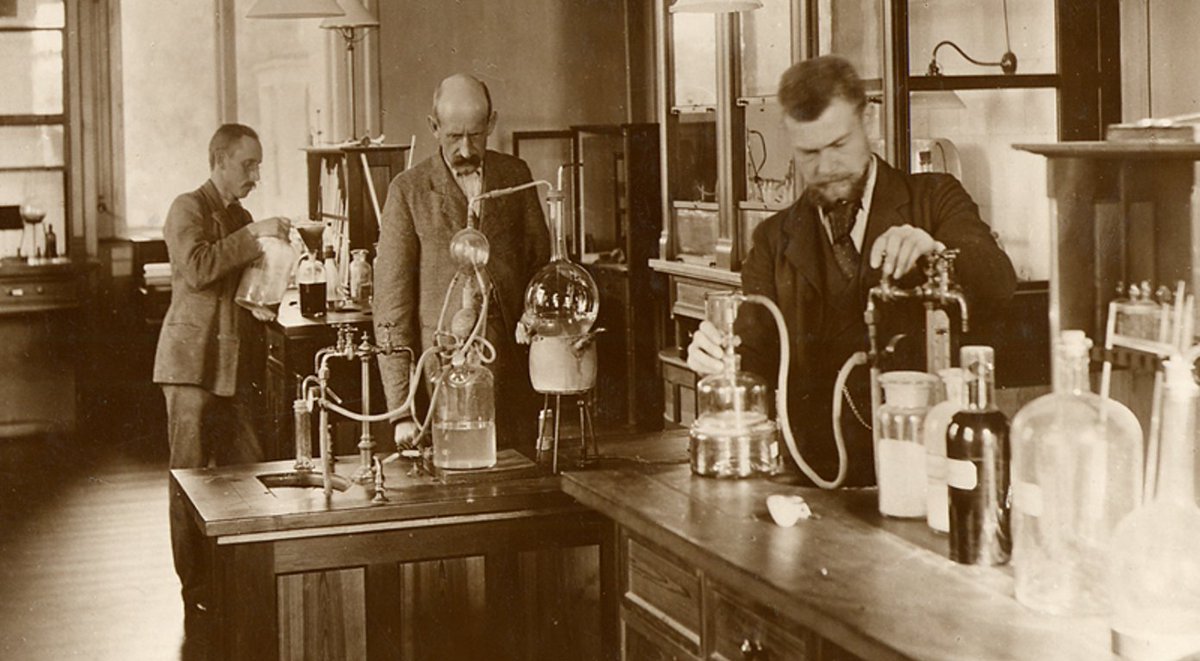
Carlsberg, the beer company, was founded in 1847. In 1875, they founded one of the first industrial research labs. Even today, the impact of this laboratory is highly underrated.
Some quick notes on discoveries made by Carlsberg:
1. For most of the 19th century, beer often made people sick because it contained a mixture of yeasts (and, often, bacteria). In 1883, Emil Chr. Hansen (at Carlsberg) isolated “a single cell of good yeast,” according to the Carlsberg website, which he then grew up as a pure culture. This strain of yeast, named Saccharomyces Carlsbergensis, was given away for free to other brewers, who used it to brew much purer beers that didn't make people sick. This yeast is the ancestor to many modern Lager yeasts.
2. In 1909, S.P.L. Sørensen invented the pH scale at the Carlsberg laboratory.
3. Christian Anfinsen, who kickstarted the protein-folding problem (I wrote about him a few days ago), spent a year or two at the Carlsberg Laboratory developing “new methods for analyzing the chemical structure of complex proteins,” according to his Wikipedia page. He went on to win a Nobel Prize in Chemistry in 1972.
4. In 1935, Øjvind Winge discovered that microorganisms — including yeast — can reproduce sexually. This was a big deal for developing genetic engineering tools, and it happened at Carlsberg.
5. Subtilisin, the same enzyme used in many detergents to wash clothes, was discovered at Carlsberg.
6. Morten Meldal invented Click Chemistry (for which he shared the 2022 Nobel Prize in Chemistry) while leading the Chemistry group at Carlsberg.
7. More recently, Carlsberg has been doing a lot of research into accelerating crop breeding to develop better barley and hops.
I'd be down to sponsor a long-form article about Carlsberg's research division, provided it includes in-person reporting (and, one imagines, beer tastings.) Please get in touch if you have reporting experience, live in Europe (ideally) and would be interested in doing this.
@zachweinberg Where will people derive purpose and community? I’m not sure this technofuture of leisure and consumption aligns well with the human condition.