🎶Turn and face the strange. Ch-ch-changes.🎶
Oliver Wendell Holmes Jr., The Path of The Law — “The rational study of law is still to a large extent the study of history. History must be a part of the study, because without it we cannot know the precise scope of rules which it is our business to know. It is a part of the rational study, because it is the first step toward an enlightened scepticism, that is, towards a deliberate reconsideration of the worth of those rules.”
My favorite @elonmusk quote that I often send friends:
Do not fear losing. “You will lose,” Musk says. “It will hurt the first fifty times. When you get used to losing, you will play each game with less emotion.” You will be more fearless, take more risks.
Negativity is boring. What’s needed is for more people to get excited about what could exist in the world, and then go and make it happen. There are still so many interesting problems to solve!
We just got robots banned from Southwest Airlines. You’re welcome 🫡
Yesterday we flew our humanoid robot Stewie from Las Vegas to Dallas on Southwest — something we (and others) have tried and failed multiple times because batteries are always the issue.
This time we cracked it. Custom lithium pack, spec’d just under the legal limit. Stewie boarded, buckled up, and flew like a completely normal passenger.
This morning a Southwest employee leaks us the internal training they just pushed to EVERY flight attendant companywide. Mandatory. Urgent. With a photo of Stewie on the plane as the example of what to look out for.
We didn’t break a single FAA rule. Not one.
They just weren’t ready for us.
Robophobic? Arguably.
The robots are traveling whether the airlines are ready or not. 🤖✈️
Prime industrial real estate right next to the beating heart of venture capital and new technology, not just for the US but the planet.
What stops it from being used?
On 8 out of 550 acres, 260 bird pairs mate once a year.
Policy is indistinguishable from industrial sabotage
"Attorneys should ask themselves whether the time and effort they will save by using generative AI to draft a legal document is worth the damage their career and professional reputation will suffer if they do not ensure the document’s accuracy."
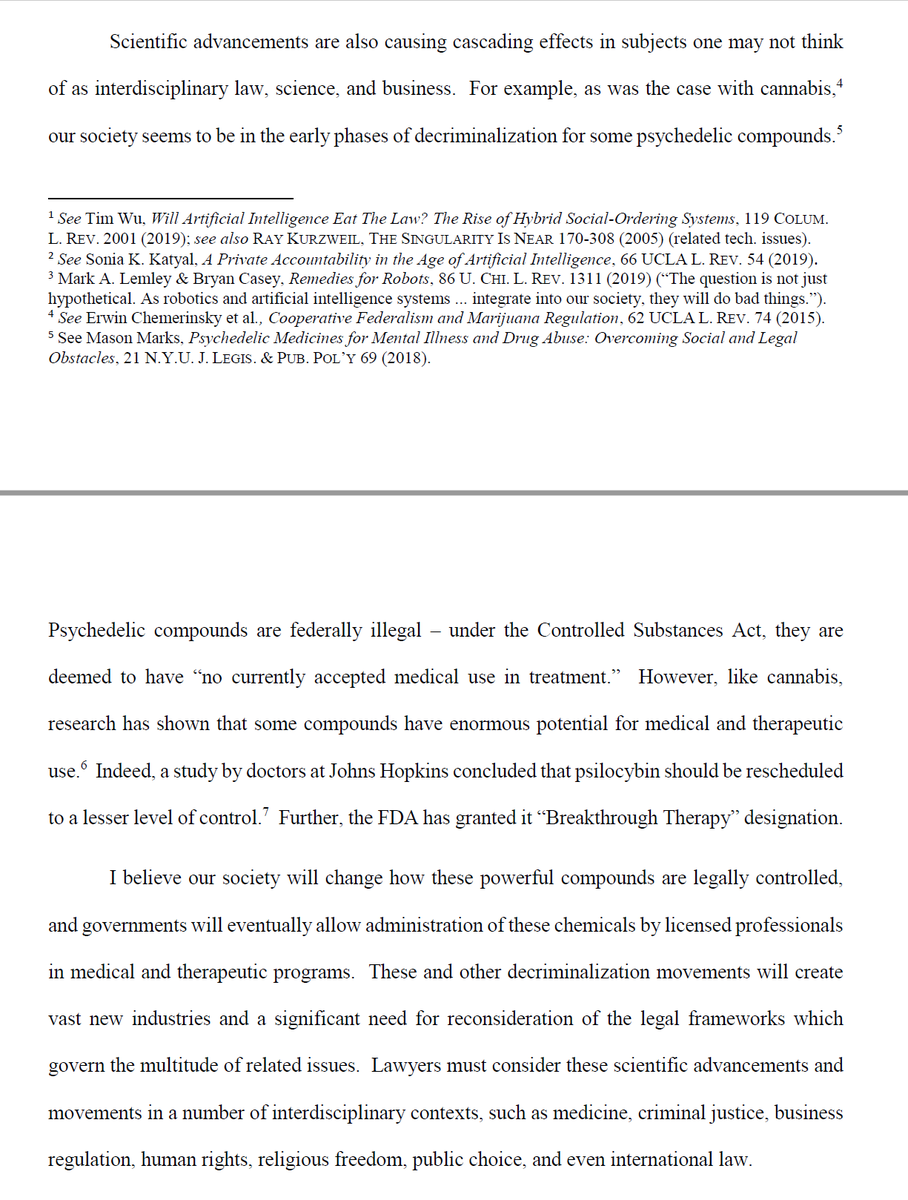
Following President Trump’s directive to accelerate medical treatments for serious mental illnesses, FDA announced major steps to support the development of serotonin-2A agonists & related products—a class of medications historically referred to as "psychedelic" drugs.
✅ National priority vouchers for psilocybin (for treatment-resistant depression and major depressive disorder)
✅ National priority voucher for methylone (for post-traumatic stress disorder)
✅ First-ever noribogaine study authorized for alcohol use disorder
✅ Advancing guidance for sponsors developing these products
Learn more: https://t.co/GZobFZ67Gh
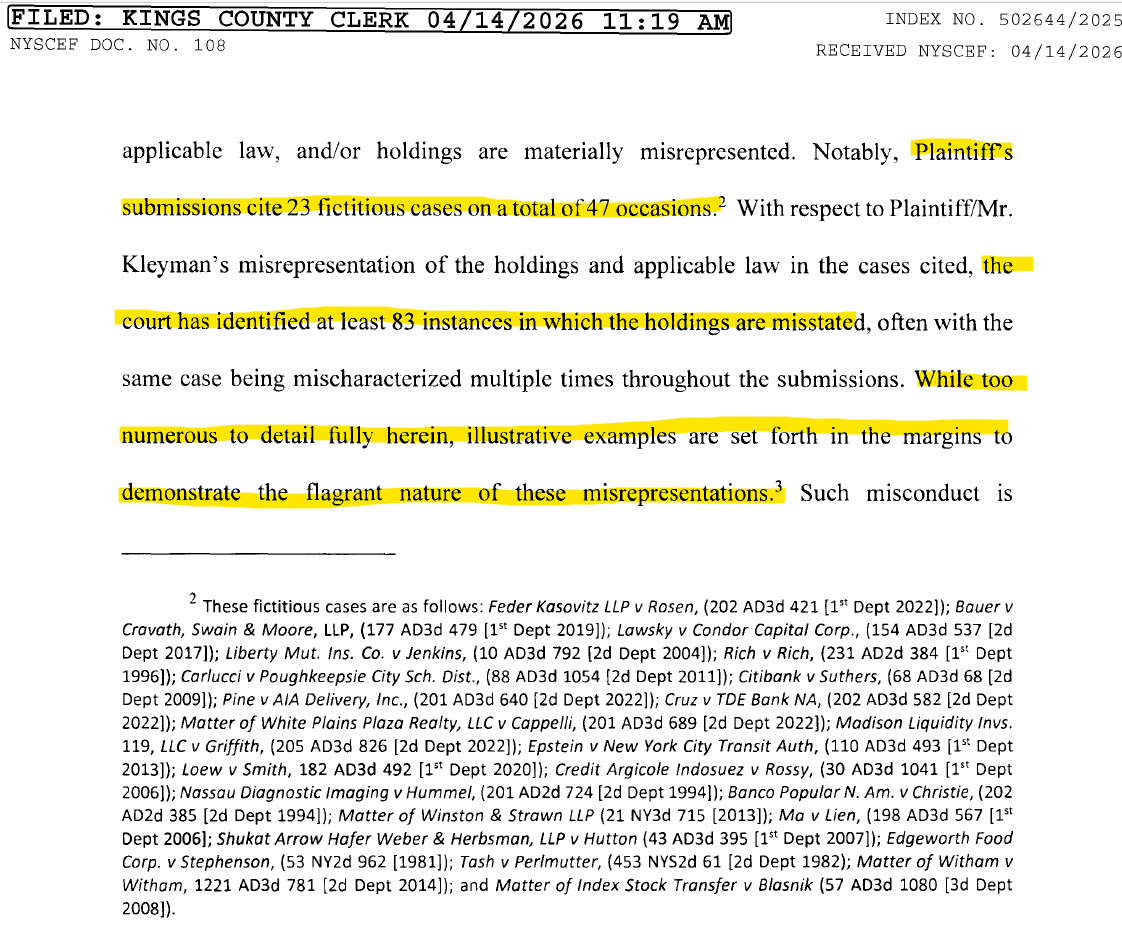
A law firm sues a client for $1.24M in unpaid legal fees.
But in that litigation, the lawyer cites 23 fake cases, on 47 occasions, across 19 filings, including in a motion for sanctions against the client (!).
The court also notes "at least 83 instances" where the lawyer misstated case holdings, with examples "too numerous to detail fully herein."
The client defendant who allegedly owed the money says he never even signed a retainer agreement, was never invoiced, and he filed an ethics complaint against the lawyer.
The court points out that the lawyer sought $50,000 in fees "for work product that appears to have been generated through the use of artificial intelligence, without adequate verification of the accuracy of the cited authorities."
The court grants the client's cross-motion for sanctions against the lawyer. Sanctions hearing and order to follow.
There is never a better time to be a lawyer than now! When I graduated from Harvard Law, my first job was to ensure that signature lines were the same length across document sets. I hated every second of my day.
Now I spend my days thinking through how to use AI most effectively to let more people get access to high quality lawyers and what the law should be re Ai to protect consumers.
I tell any law student that it’s the best time to be a lawyer! The boring soul sucking tasks are being automated away.
@Radle thanks, Erik—appreciate the support!
The Founding Fathers designed a government of limited powers that respected individual liberty and bodily autonomy. They never intended Washington or Austin to play nanny over what adults choose to put in their own bodies, especially when it's helping Texans heal.
This isn't about opening a free-for-all recreational market. It's smart, responsible reform!
Read the full bill: https://t.co/g7MzNd2dId
@Sam_Console@grok@Sam_Console this bill is a part of my platform for Texas Governor 2030. With strong voter turn-out, yes I will pass it along with my other bills.
https://t.co/7dPwHnpLMk
Very interesting progress. :)
It seems pretty clear to me that laws regarding psychedelics should be reformed, especially after the striking positive discoveries produced by medical research in this field over the past 10+ years.
And that will just be the start of new industries and issues.
New Policy Drop:
I just released the Texas Psilocybin Freedom and Veteran Mental Health Innovation Act.
This bill does five key things:
1. Decriminalizes responsible home cultivation of psilocybin mushrooms for adults 21+ (max 3 mono tubs, doubled to 6 for multi-adult households).
2. Creates a regulated medical therapeutic program where screened adults can purchase limited take-home amounts of tested psilocybin.
3. Builds on Texas’s $50 million ibogaine research to expand veteran-focused mental health innovation.
4. Prioritizes Texas veterans with licensing preferences and equitable access.
5. Generates new revenue through licensing fees and excise taxes — every dollar goes to the Freedom Fund to accelerate property tax relief (combined with the Cultivate Texas Act).
It’s responsible, veteran-first, and Texas-first: liberty with guardrails, no open recreational market, and real revenue to cut your property taxes.
Read the full bill here:
https://t.co/g7MzNd1FSF
This is part of my plan to Reclaim 1836 — practical solutions that protect sovereignty, help veterans, and deliver real tax relief.
What do you think? Let me know below.
Reclaim 1836.
Kenneth Hyde
Republican Candidate for Texas Governor 2030
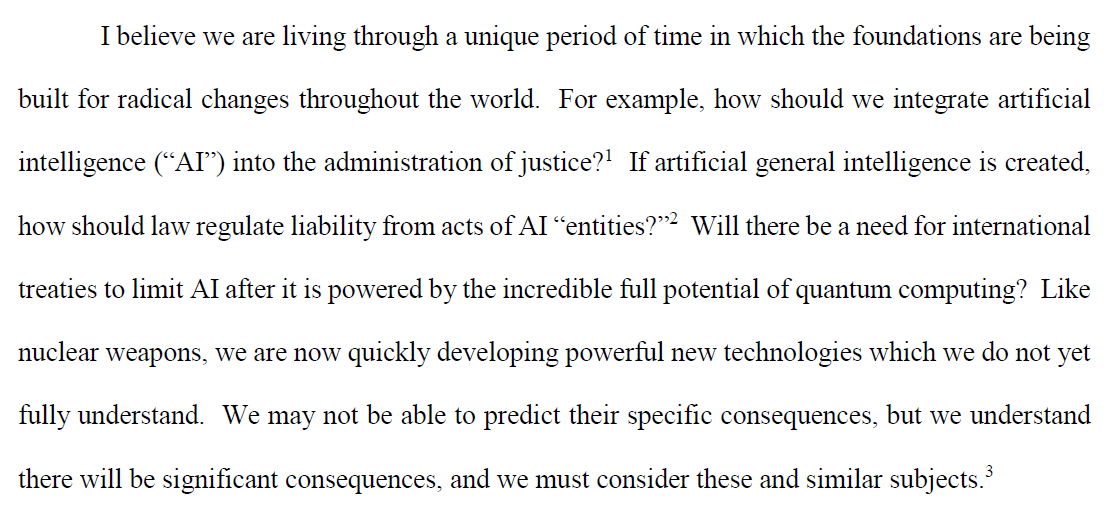
I wrote this at the end of 2019, just a few months before the pandemic lockdowns. The ~6 years of developments since then have been a wild ride. "I believe we are living through a unique period of time in which the foundations are being built for radical changes throughout the world. For example, how should we integrate artificial intelligence (“AI”) into the administration of justice? If artificial general intelligence is created, how should law regulate liability from acts of AI “entities?” Will there be a need for international treaties to limit AI after it is powered by the incredible full potential of quantum computing? Like nuclear weapons, we are now quickly developing powerful new technologies which we do not yet fully understand. We may not be able to predict their specific consequences, but we understand there will be significant consequences, and we must consider these and similar subjects."
The intro from my application essay to @BerkeleyLaw's Master of Laws (LLM) 2020 program to specialize in Law & Technology and Business Law. Science & Tech advance and create new conditions quickly -- legal systems must understand what's happening and what should be done about it.
We will likely have more lawyers in the future than today, because:
1) AI will cause so many more people to ask legal questions which will encourage them to need to verify or execute through an actual lawyer.
2) AI will cause an explosion of more and more exotic legal terms that lawyers will be spending even more time reviewing redlines or new cases around.
3) All the new areas of law that now are emerging around the use of AI itself in every single industry. AI introduces an explosion of IP, privacy, and regulatory compliance challenges across all verticals.
This has historical precedent as well. Between the creation of the PC and the internet (both technologies that made the legal profession far more efficient), the ABA pegs active attorneys having gone from roughly 400,000 in 1975 to roughly 1,375,000 in 2025.
When we make professions more efficient and automated, often demand for them goes up not down.
The annoying thing about being a decade early to things is that everyone thinks you're retarded when you first say them but by the time they actually happen they are so obvious that no one cares. This is why skin in the game (financial investment into your bets) is critical.
Low-agency people are embarrassed by exposure: being seen trying and failing, being seen as incompetent, being seen as different.
High-agency people are embarrassed by waste: wasting their potential, wasting opportunities, wasting time performing competence instead of building it.
“fake work” and “bullshit jobs” has been fantastically wrong and misleading for understanding the modern world. a much better understanding is of a global economy where minor skill differences and improvements lead to monumentally different outcomes, and the marginal hour of work has never been more measurable or useful
after the advent of even moderately effective talent allocation systems and the variability of reward based on effort and skill, people have engaged much harder in a red queen rat race across the world. this is why the Chinese ‘cram schools’ exist and why ‘yuppie striverism’ is a thing and why people trade off later family formation for working more so often. while overall work hours are slightly down, they are actually up for high earners (https://t.co/sAPxGdSpIv)
I see it in the marginal effect with my friends now after the advent of claude and codex: they are actually working harder now than they ever have before. this is due to a personal Jevon’s paradox where they see that the value of their time has increased dramatically, that they can get a lot more visible work done towards goals they care about than they used to
after requests from their customers the labs are doing things like inventing dispatch which lets you monitor work and manipulate your computer from your phone, on top of prior changes like having always on communications (slack). You hear about people launching codex jobs from their phone the moment they have an idea and reviewing them later
no clue how long this lasts but the most immediate impact of co-existing with the machine state is higher productivity and higher visibility which leads to more work hours
A 97-year-old woman with advanced Alzheimer's was given a microdose of LSD.
She had been diagnosed 11 years earlier.
By 97, she was in a near-vegetative state. Despair & hopelessness had set in, and she was basically unable to communicate.
Her caregiver, with the family's agreement, tried a microdose of LSD to see if it could bring her back.
According to her family and the Beckley Foundation, she regained full awareness. She could talk, read, and relate to people around her.
Her wit, personality, and sense of self all returned.
Her daughter later said the only wish was that they had started many years earlier.
That case is what led Amanda Feilding and the Beckley Foundation to launch the world's first controlled clinical trial of microdosed LSD for Alzheimer's, with the University of Basel.
And the science is starting to explain why it may have worked.
LSD at sub-intoxicating doses has been shown to increase Brain-Derived Neurotrophic Factor (BDNF), one of the most important proteins in the brain. BDNF drives neuroplasticity, supports neuronal survival and growth, and is central to learning and memory.
In Alzheimer's patients, BDNF levels are significantly depleted.
The Beckley/Maastricht research program found that microdoses of LSD (5, 10, and 20 micrograms) increased BDNF plasma levels in healthy volunteers in a dose-dependent manner. No altered state, just a measurable increase in one of the brain's most critical growth factors.
Animal research has shown that low-dose psychedelics promote neurogenesis and increase dendritic spine density in the hippocampus, the brain region most damaged by Alzheimer's.
A 2023 Nature Neuroscience paper found that psychedelics promote plasticity by directly binding to the BDNF receptor TrkB, a mechanism that may work independently of the psychedelic experience itself.
A randomized controlled trial out of New Zealand gave 80 healthy men 10 microgram doses of LSD every third day for six weeks and measured changes in neural plasticity via EEG. The results showed modulation of long-term potentiation, a key marker of the brain's ability to strengthen connections over time.
All of the above points in the same direction: LSD at low doses appears to support the biological infrastructure of a healthy, adaptive brain.
Call it what you want - neuroplasticity, neurotrophic signaling, synaptic growth - these are all processes that degrade with age and collapse in neurodegenerative disease.
Albert Hofmann microdosed LSD for decades. He was giving two-hour lectures at 100. He died at 102 with his mind intact. That's not proof on its own, but it's a data point that gets more interesting with every study that comes out.
What if the most demonized compound of the 20th century turns out to be one of the best tools we have for keeping the aging brain alive?
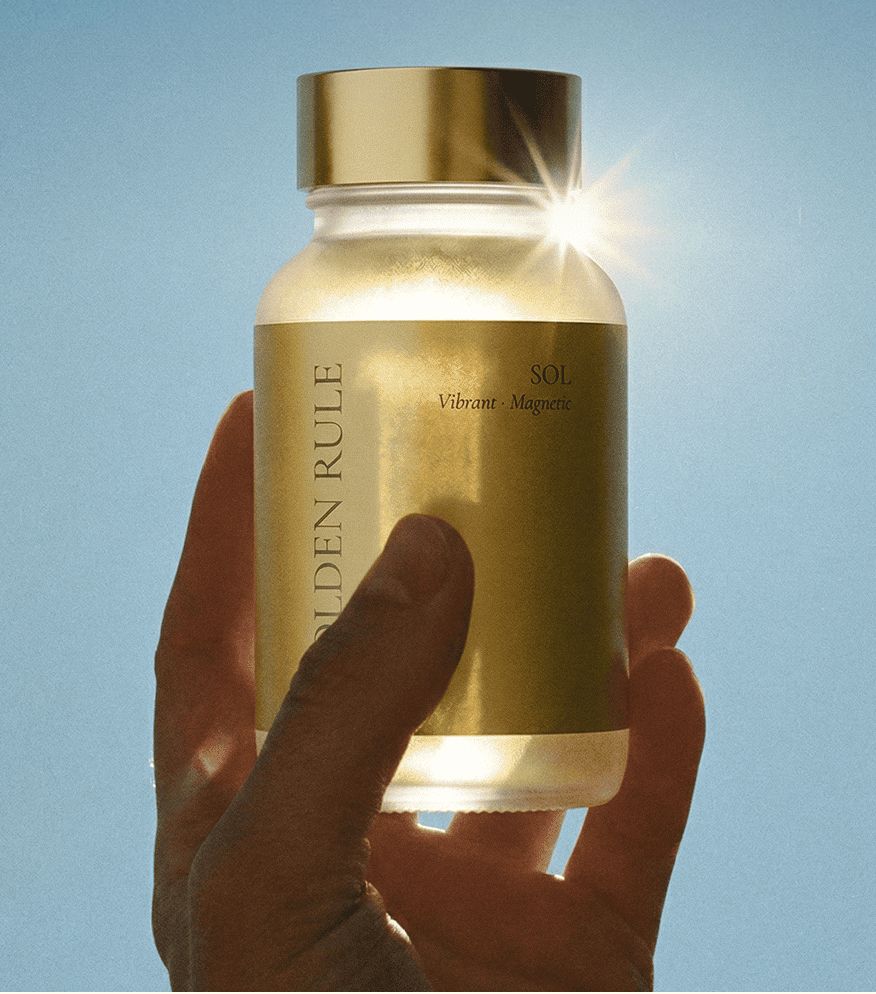
Pictured is the only easily available microdosing LSD product out there today.
It comes from Golden Rule and ships to all 50 states.
It's wild that this is now widely available.