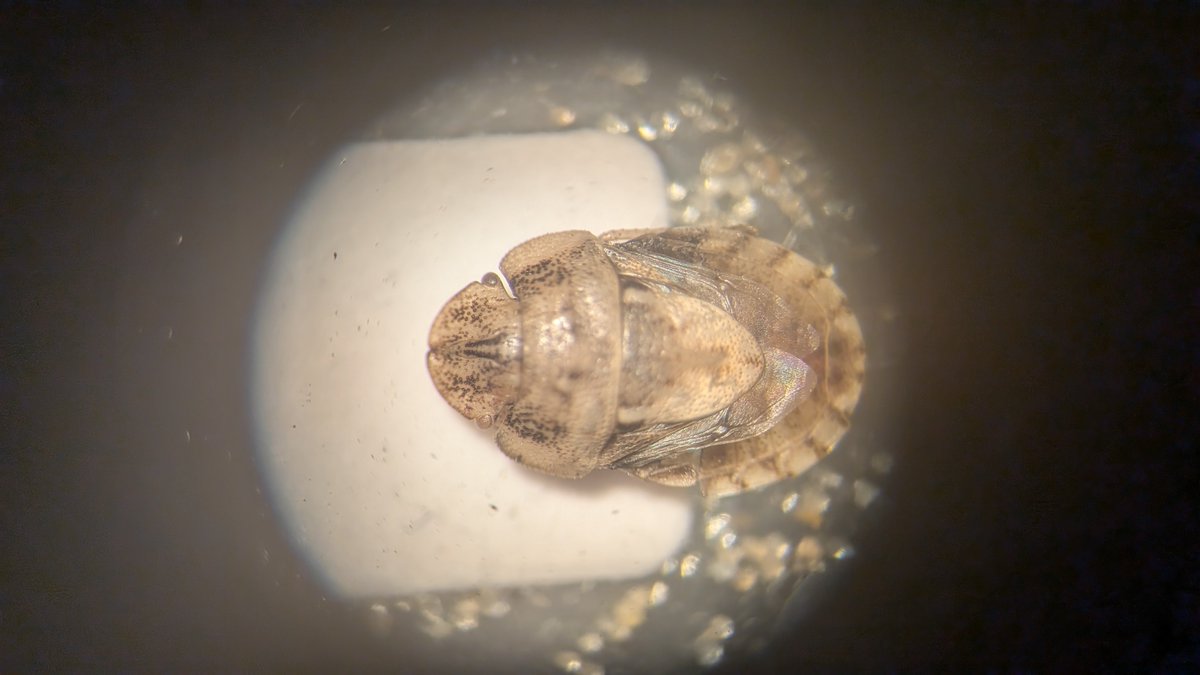
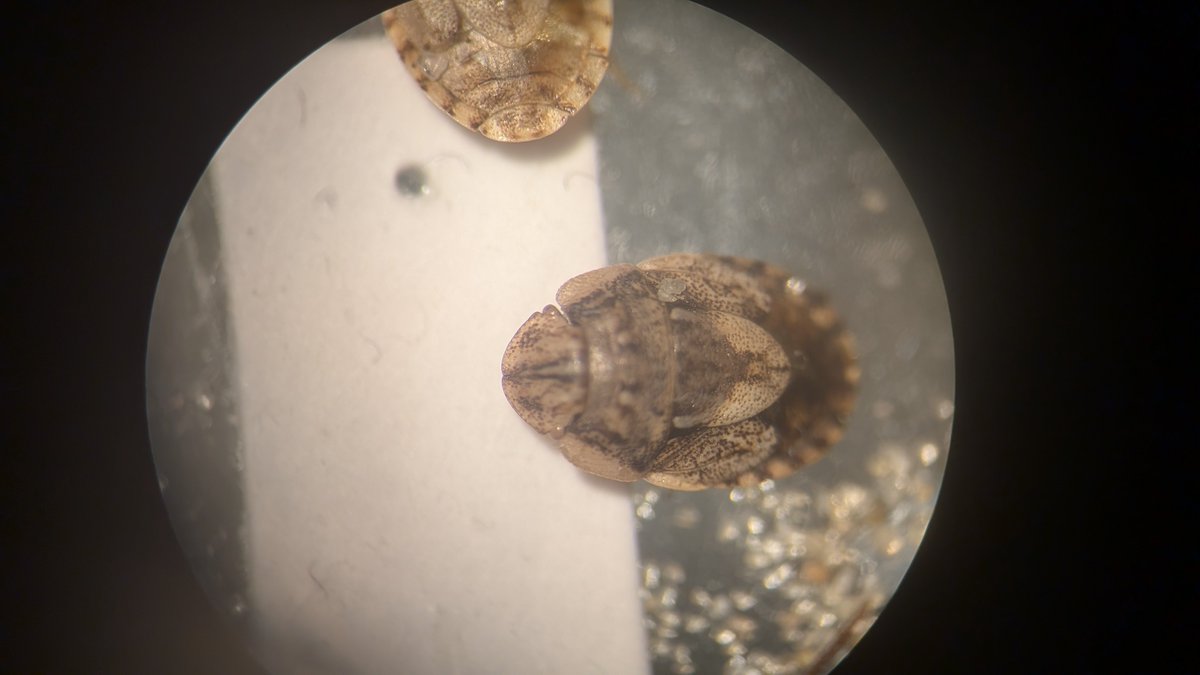
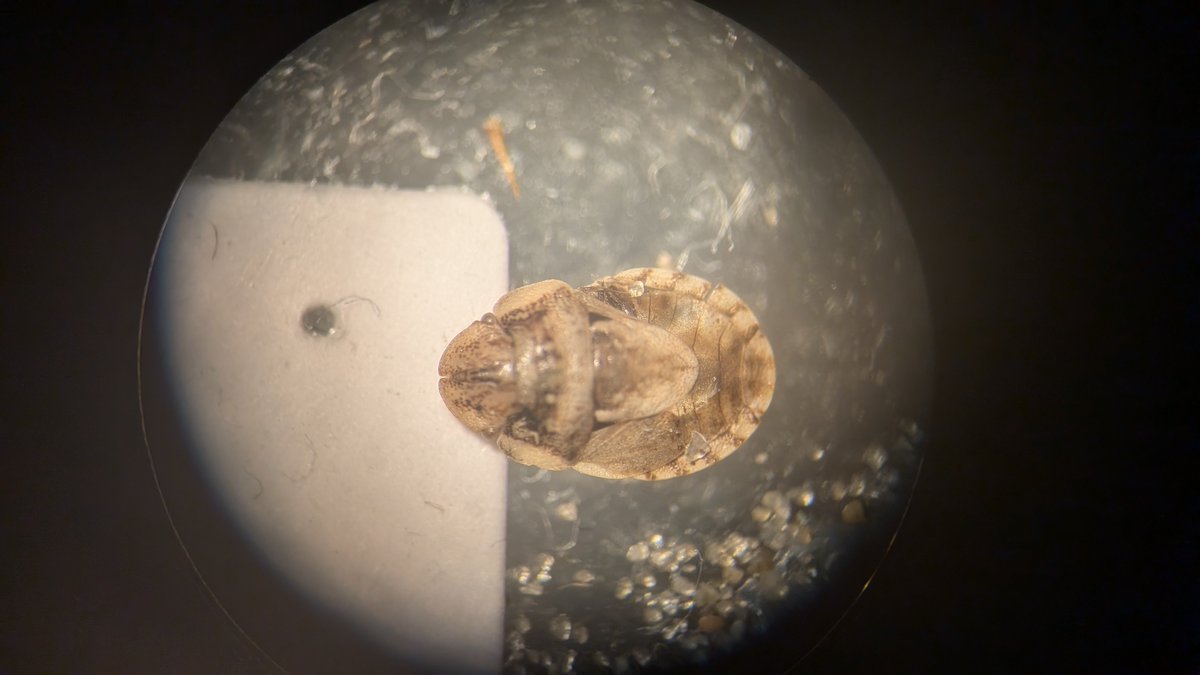
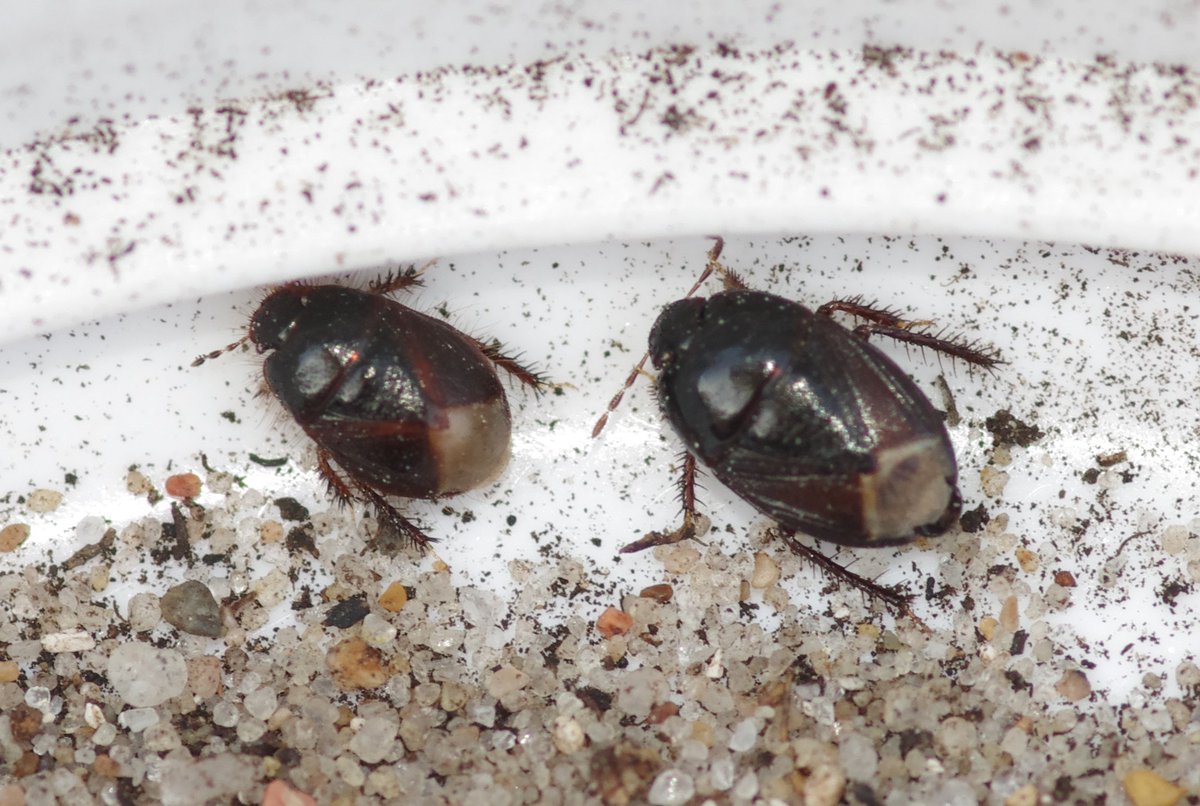
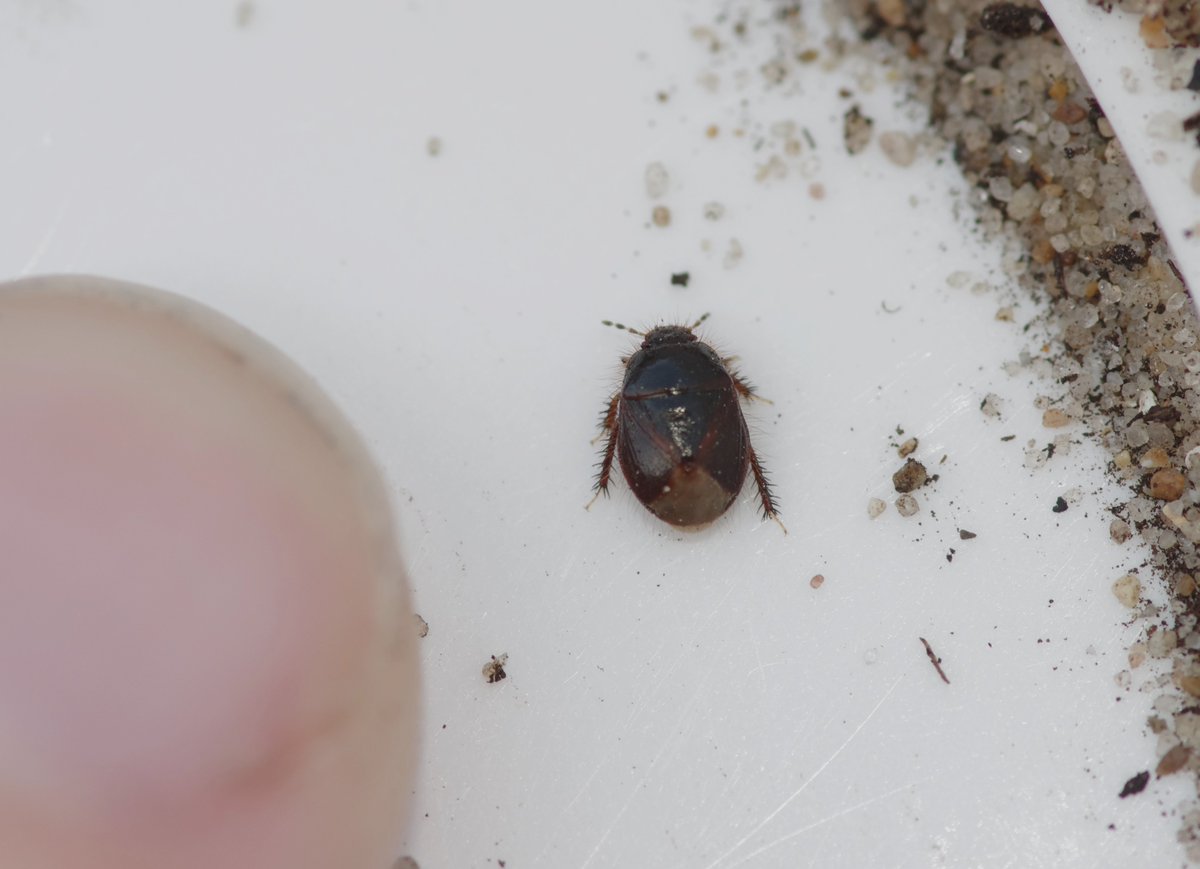
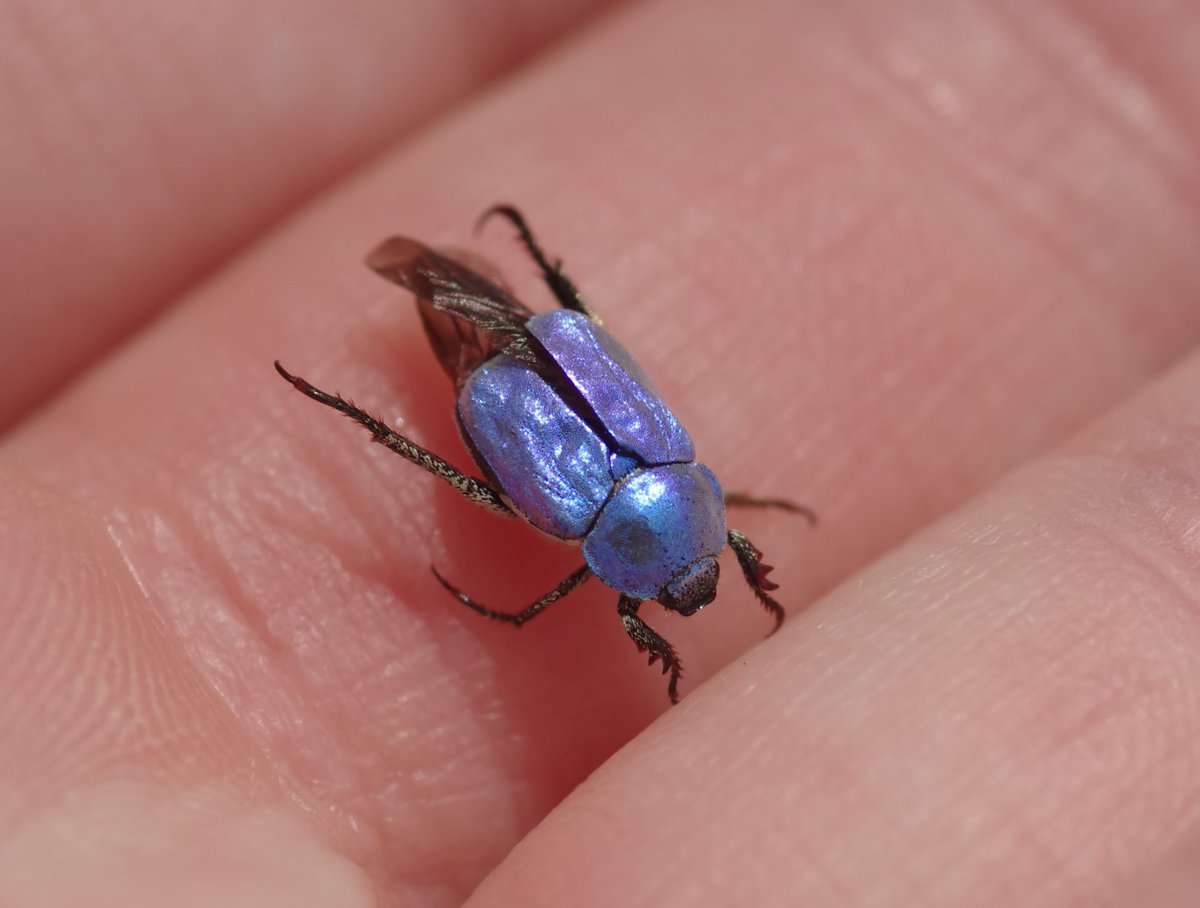
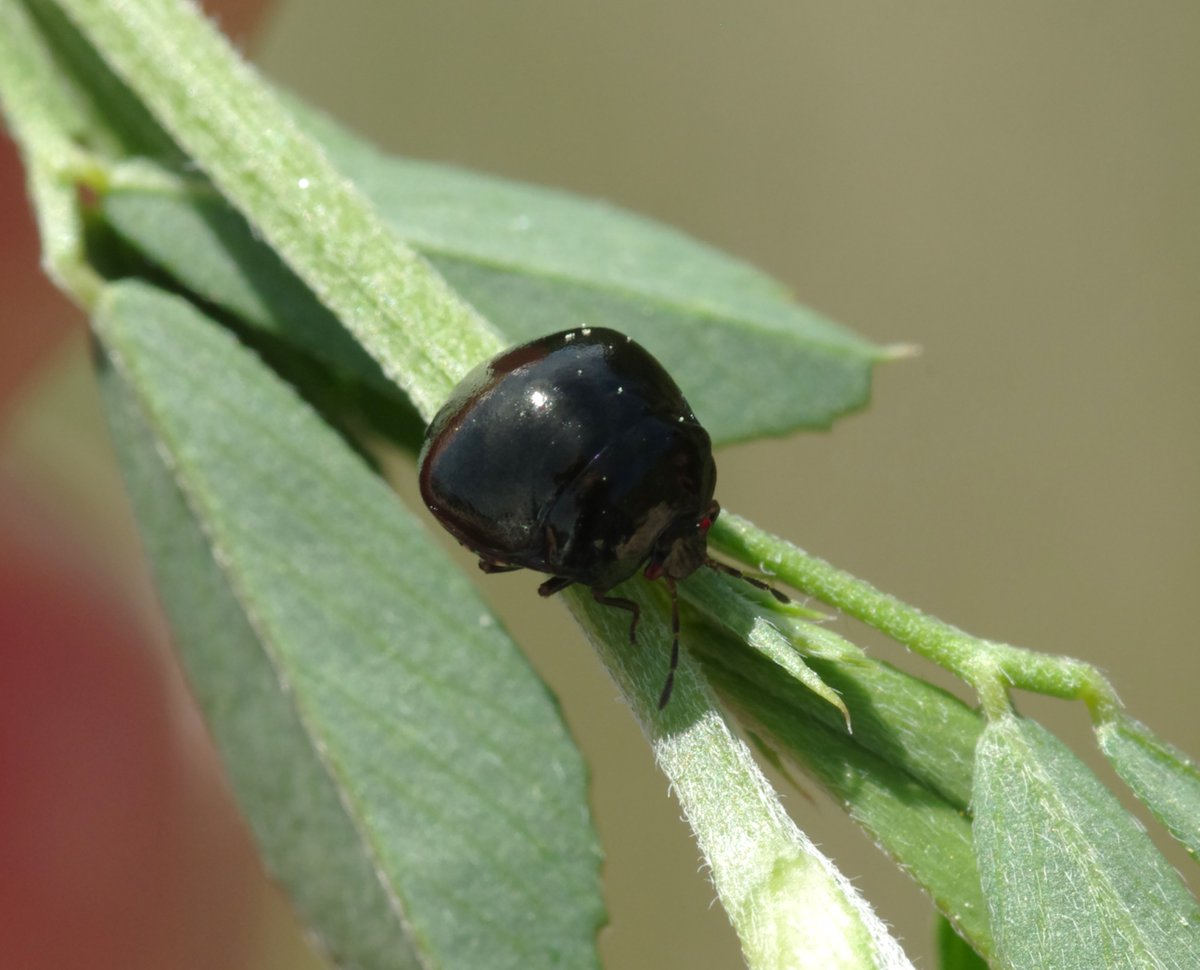
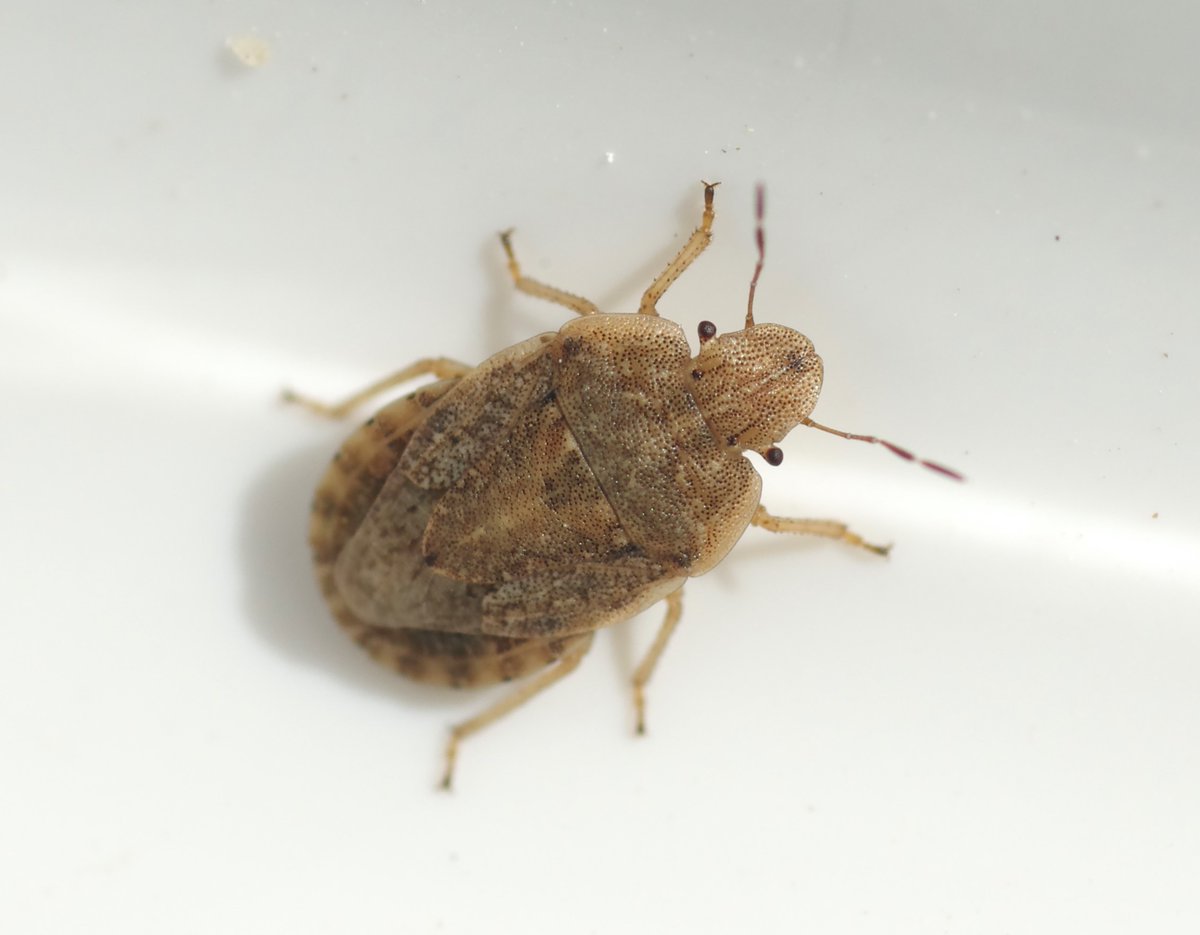
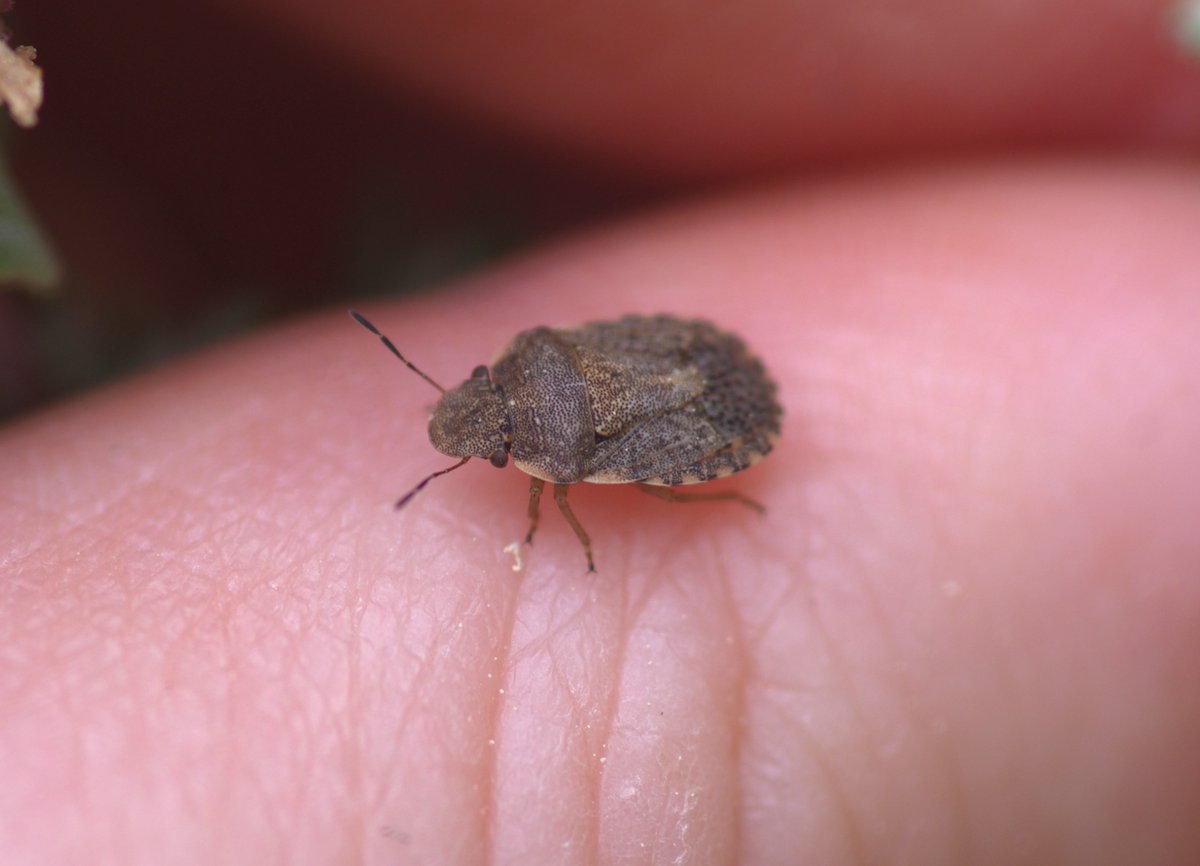
@BrianLaney2 Absolutely, I couldn't use the tray for these ones. I used a small tray with a thin layer of sand (and a lot of patience) for the fossorial species. I just had to take my chances with these while they walked about on the plant🙂
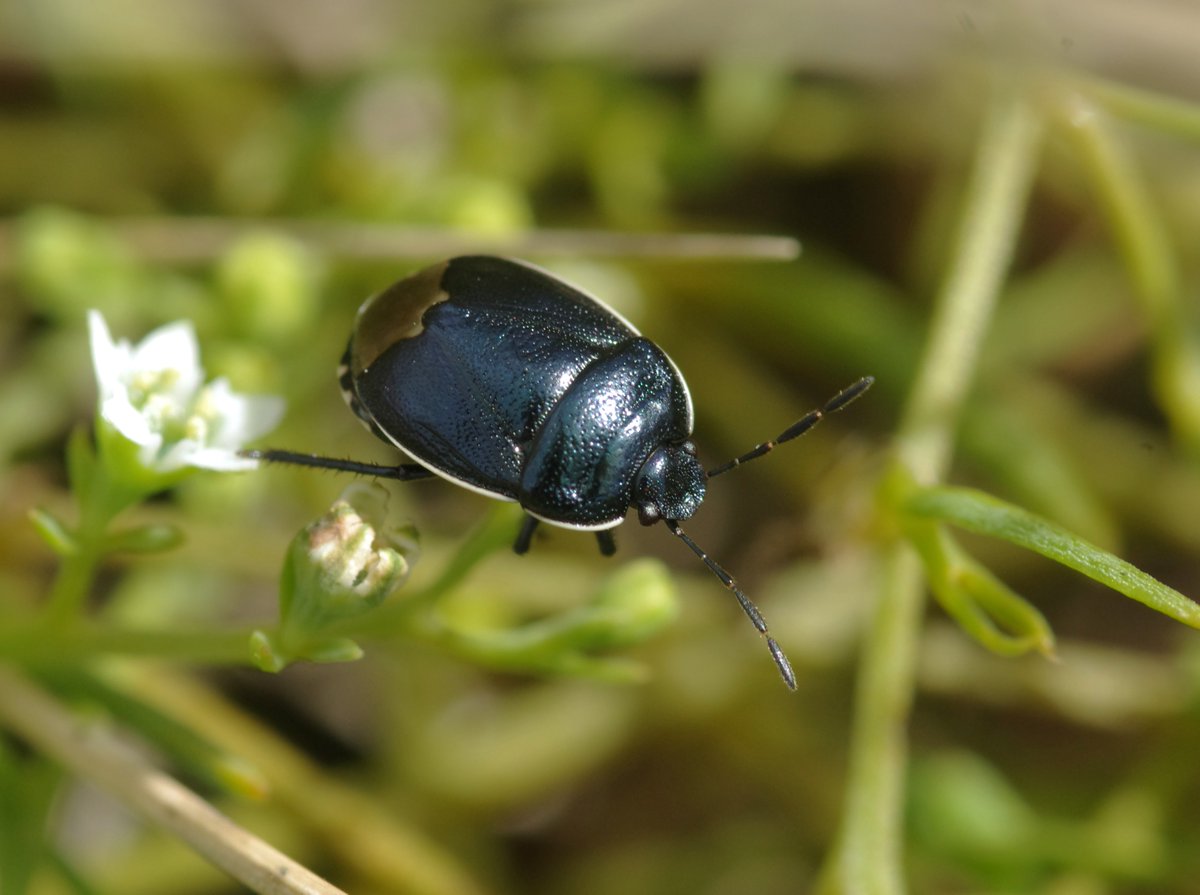
Byrsinus flavicornis (left) vs Cornish Shieldbug (Geotomus punctulatus) from Jersey CI. Byrsinus is more squat and hairy, the difference is fairly easily observed with the naked eye. Both were a right pain to photograph though!
#shieldbugs#hemiptera#cydnidae#entomology#bugs
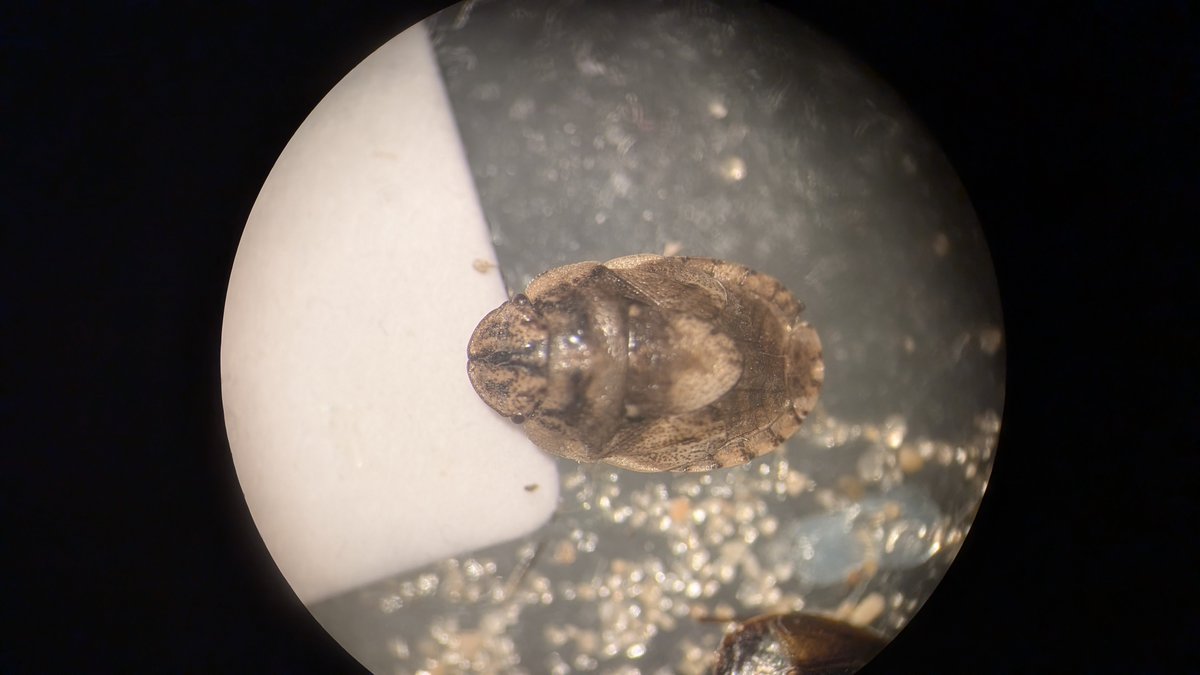
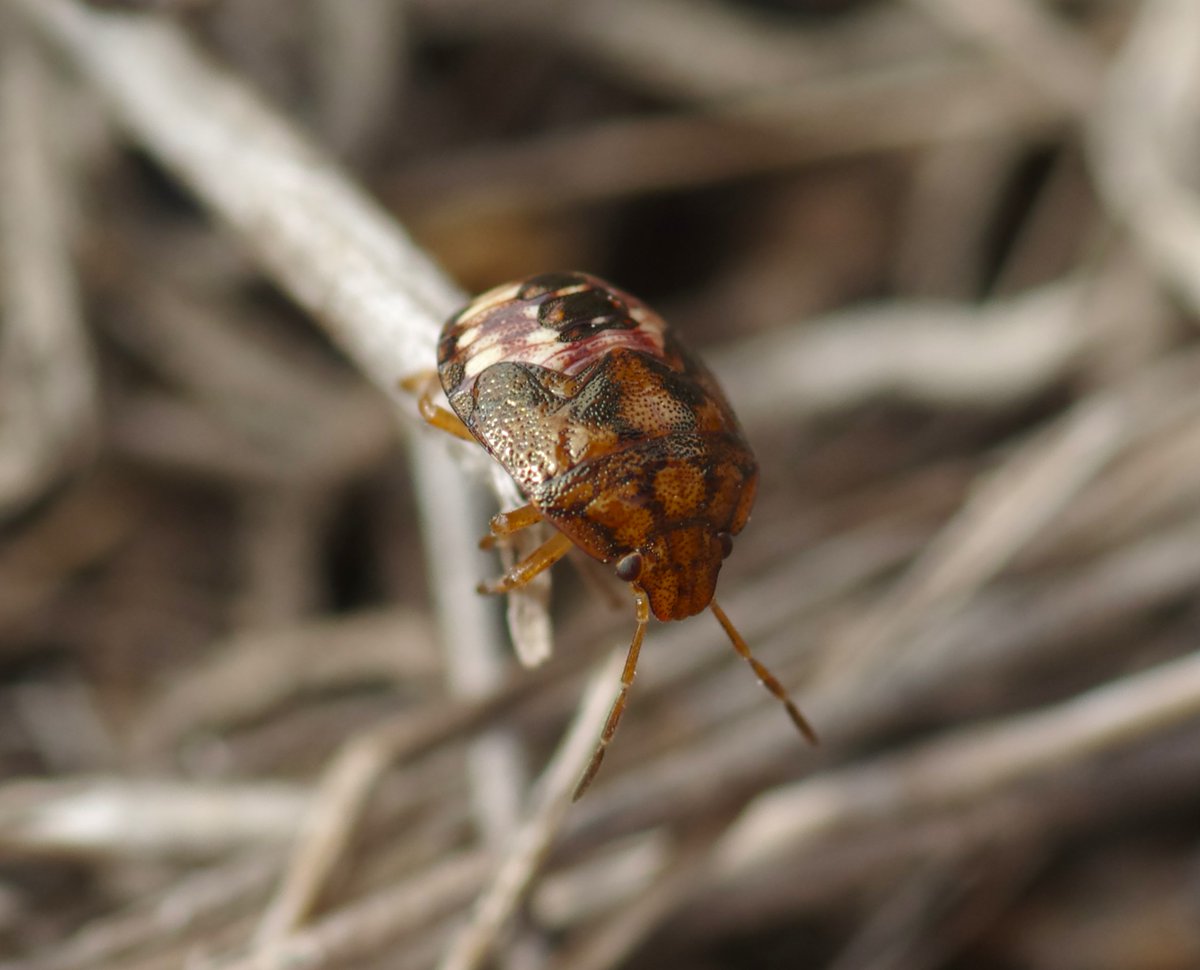
Best pictures under the scope for now but I managed to find 5 dead Menaccarus arenicola while trying to find Sciocoris in Jersey. A new species for me so certainly no complaints...
#shieldbugs#hemiptera#pentatomidae
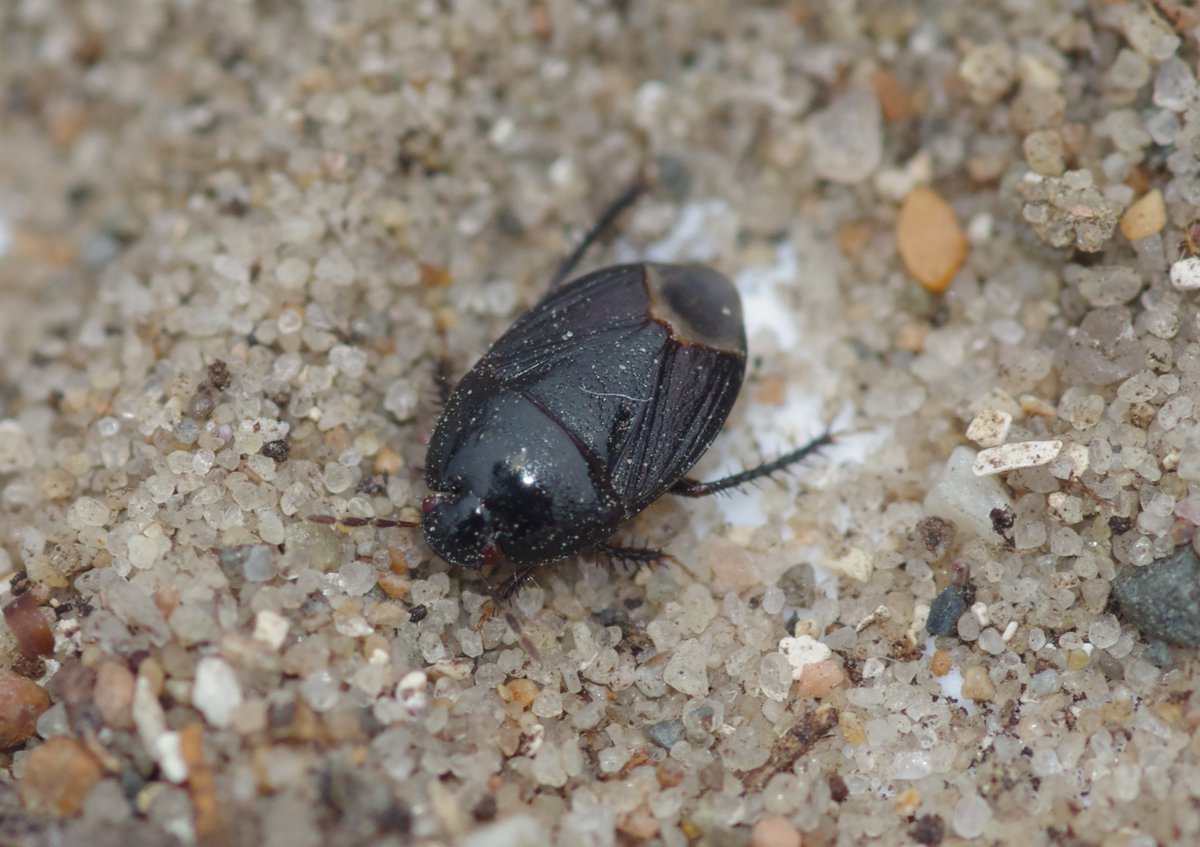
Cornish shieldbugs (Geotomus punctulatus) were just about the only active bugs during a wet and windy Jersey morning...
#hemiptera#heteroptera#cydnidae
Dryadocoris apicalis nymph, quite a rare shieldbug - no adults seen when these nymphs were found though. Feeding on Solanaceae. #spain#bugs#pentatomidae#hemiptera
This is amazing - I looked for this 30 yrs ago as a student in Yorkshire but never found it, obviously. I had this feeling to go north, but not north enough! Incredible what's out there waiting to be found! @BritishBugs
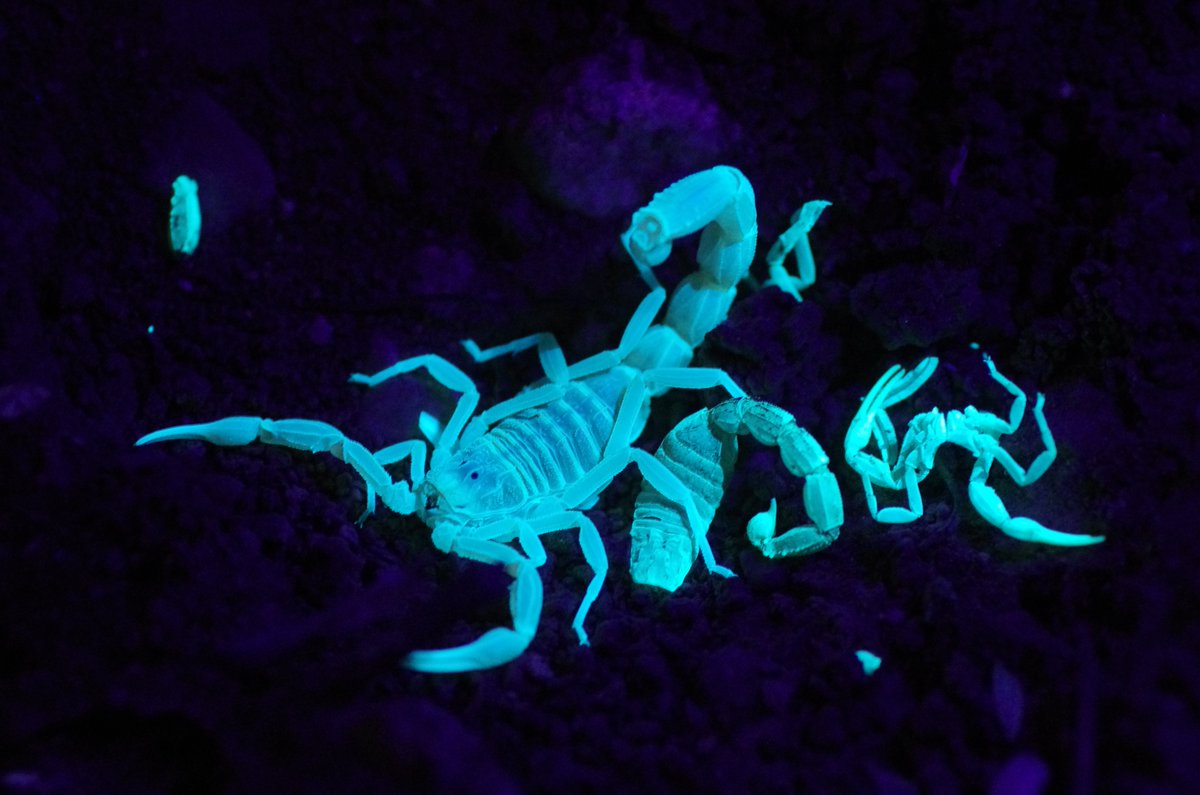
Buthus sp. doing what it does best - glowing under UV light. As seen from the pieces of shed exoskeleton lying around, this guy was fresh and ready for action😄
#scorpions#arachnids#spain#entomology#invertebrates
@VesicaBrasa I believe they reproduce via facultative parthenogenesis, so mostly asexual reproduction (bypassing the need for courtship) but can occasionally produce males (as per this paper - https://t.co/6f8jpzccWr)
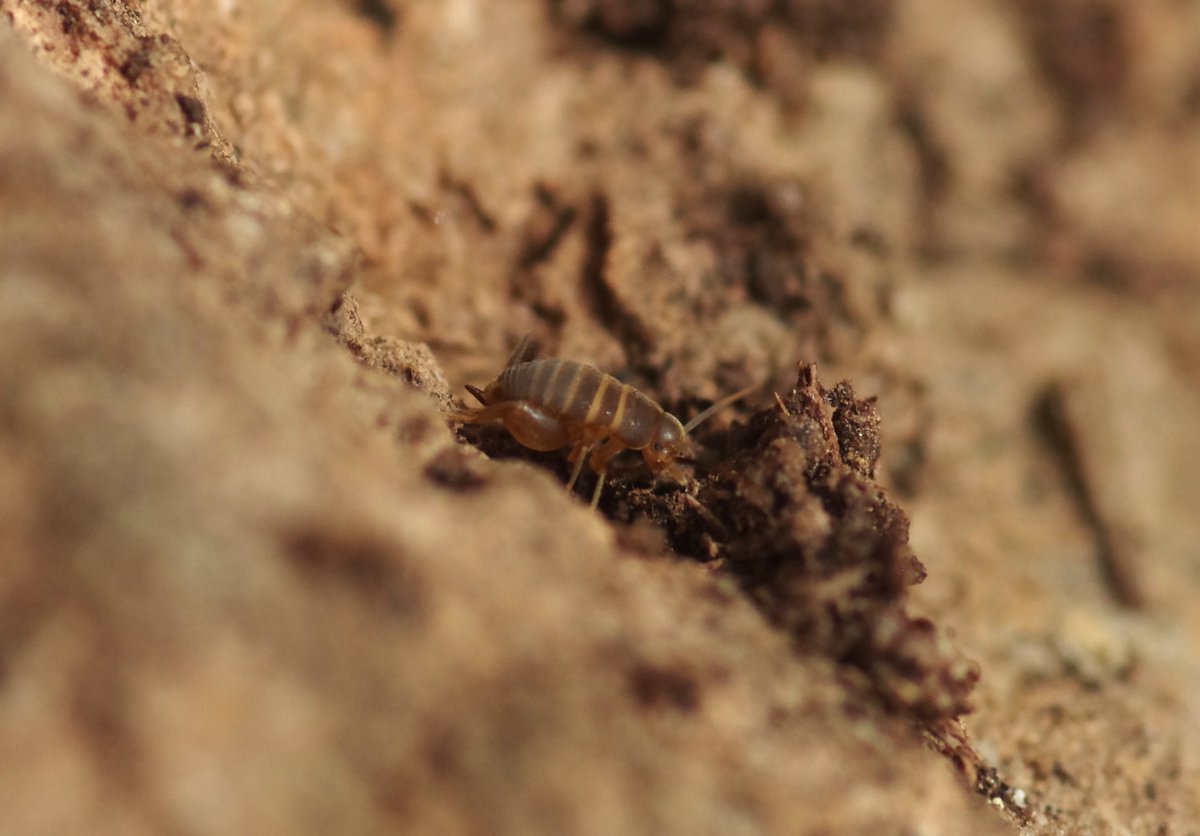
Myrmecophilus acervorum is possibly Europe's smallest cricket, and completely lacks stridulatory organs and wings, living inside ant nests. This was one of 10+ found in Spain in a Lasius nest under a rock.
#orthoptera#insects#entomology
@quietest1one It's an example of kleptoparasitism (or commensalism, depending on opinion) so the cricket benefits from the protection and shelter offered by the ants, eating ant prey and the occasional egg or larva, but the ant colony is probably not significantly damaged by the crickets.
The other Sciocoris (from this trip) - S. macrocephalus - feeding on Knautia fruit. The broader, longer head shape, pale shoulders and choice of foodplant seem to be fairly reliable indicators for this species. #shieldbugs#hemiptera#entomology#spain
Sciocoris maculatus from wild thyme. This one has several distinctive features including the head shape and large spots on the wing membrane. One of two Sciocoris species we found. #shieldbugs#hemiptera#entomology#spain