FREE access to my 275 Product Management Sources!
Books, Videos, Articles, Podcasts, Templates, Tweets.
All about Product Roadmaps, Discovery, Strategy and a lot more.
Get access today!
Like + Retweet + Reply "Sources"
(Follow so I can send the link)
14 templates covering topics such as product vision, strategy, roadmap.
I got them all.
Get your FREE copy!
Like + Retweet + Reply "Templates"
(Follow so I can send the link)
Learn 10 product management fundamentals in this one single thread:
1.Getting into PM
2.Product Roadmaps
3.User Personas
4.Product Marketing
5.Product Analytics
6. Building MVPs
7. Product Market Fit
8. Product Design
9. Product Launch
10. Product Strategy
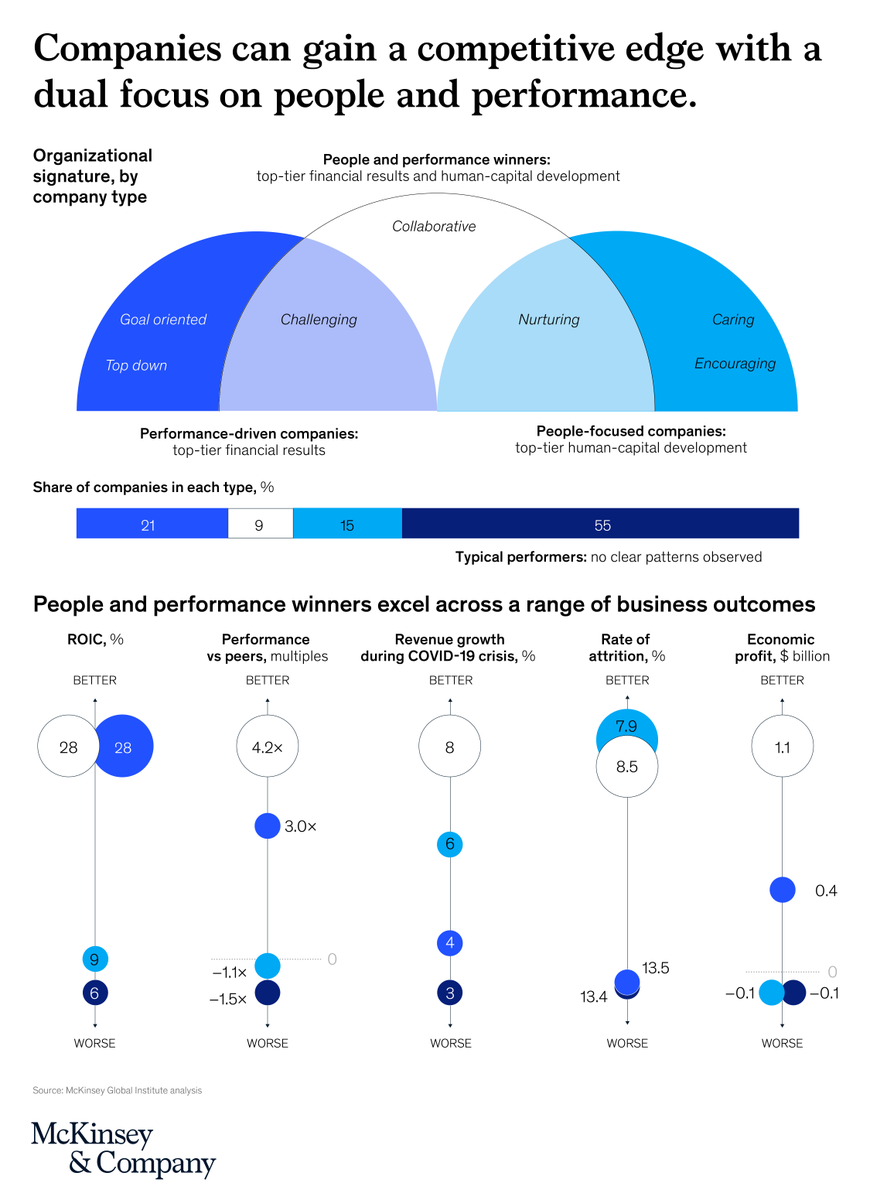
How does developing talent affect financial returns for firms? Our research is clear: Companies that successfully develop people and manage them well can gain a long-term performance edge 🏆https://t.co/DY8qapv2IL
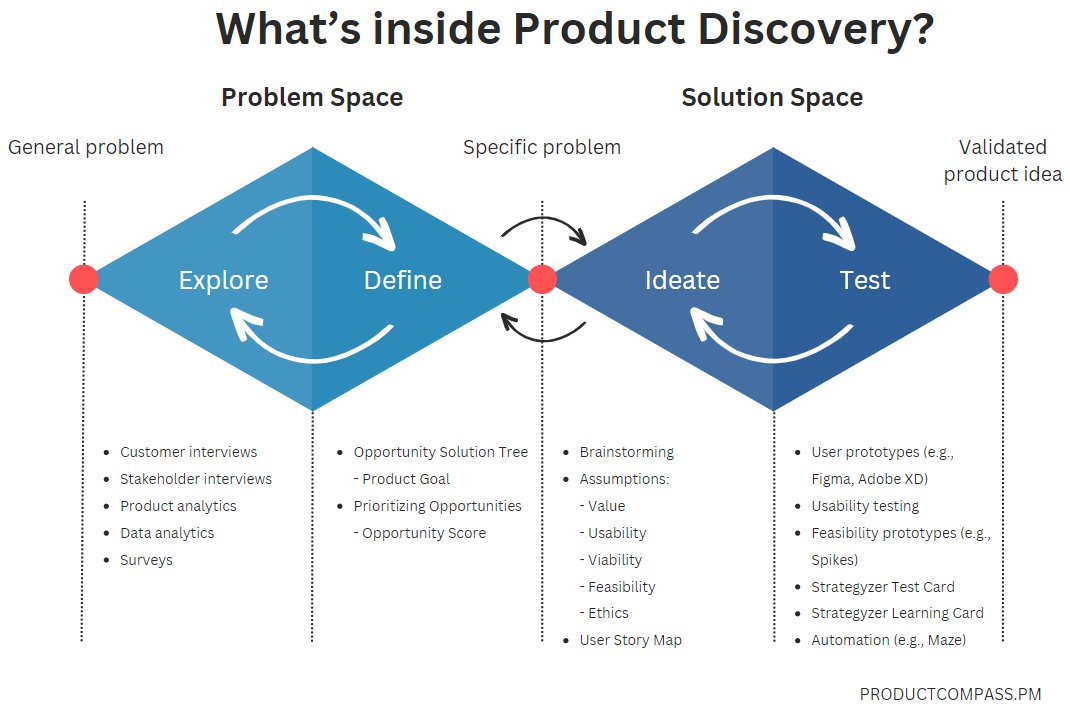
Product Discovery is the most important area for a Product Manager.
But it's often misunderstood.
People waste time and energy rushing to deliver features that don't work and don't drive the expected outcomes.
The feature factory.
It often looks like this:
- Product Manager asks customers about the requirements
- She creates detailed user stories and gets an estimation
- The ideas that seem promising are selected for the Sprint
- Developers do the magic
- Designers make the thing prettier (it's like lipsticking a pig)
- When everything is ready, nothing changes, or things become even worse
Some say "the risk is limited to the length of the Sprint."
But this will happen every Sprint.
And the best ideas might not even be on the list.
-
Here's how to fix this:
1. Prerequisites:
- Start with the product goal. My favorite approach is using OKRs.
- Product Discovery is not a task for a single person. The Product Trio (Product Manager, Designer, and at least one Engineer) must work together.
2. Problem Space:
- Every week, interview customers to identify opportunities (problems, needs) that, when solved, will drive the desired product outcome.
- Map opportunities using the Opportunity Solution Tree
- Prioritize opportunities. My favorite approach is using the Opportunity Score by Dan Olsen.
3. Solution Space:
- Brainstorm possible solutions. The more, the better. The best approach is brainstorming individually and combining the results in a group.
- Identify risks related to value, usability, feasibility, viability, and ethics. A great technique is using a User Story Map.
- Test the riskiest hypotheses by experimenting. I love Strategyzer Test and Learning cards.
-
Product Discovery results in a validated Product Backlog. High-risk assumptions are tested before the implementation.
-
Tips:
- People are biased. Ask about specific situations. Prioritize facts and behaviors over opinions.
- Talk to the sales, success, customer support, and founders. They spend hundreds or thousands of hours with your customers every month.
- Product analytics will tell you WHAT people are doing across their customer journey. Interviewing customers will help you understand WHY they are doing it.
- Don’t verify every hypothesis. Factors that suggest you should test a hypothesis: high risk, low test cost, and a short time.
- Eliminate waste by automating your UX testing. I fell in love with Maze, which allows you to test ideas and also recruit participants.
Hope that helps!
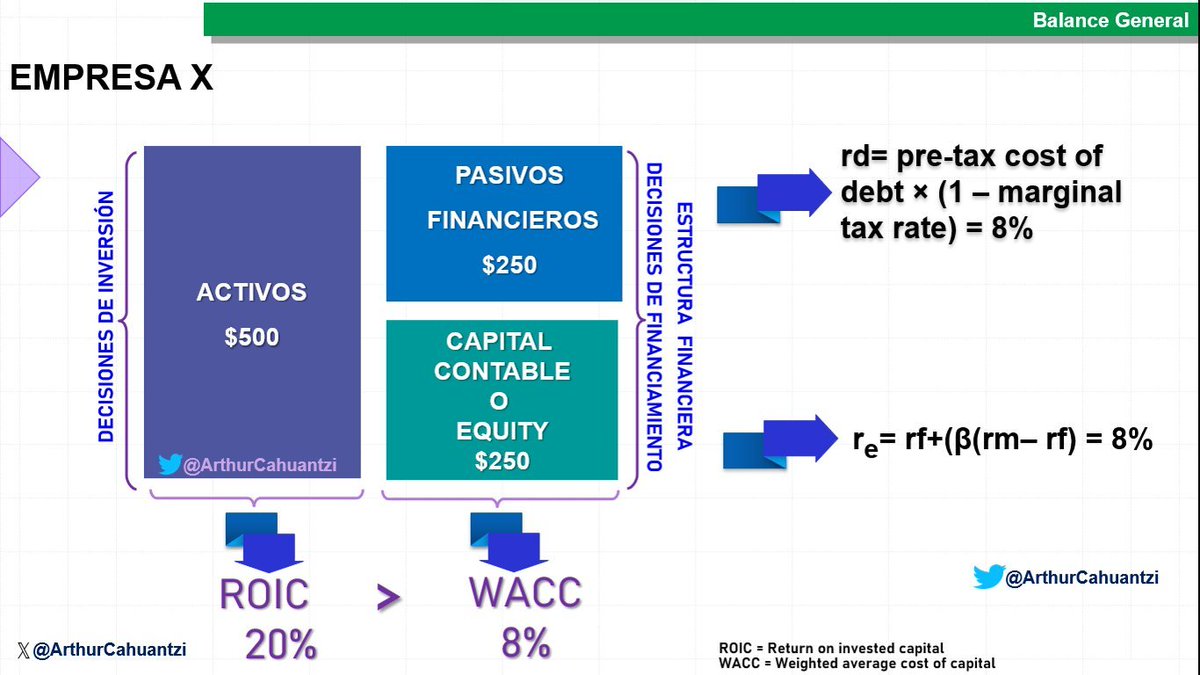
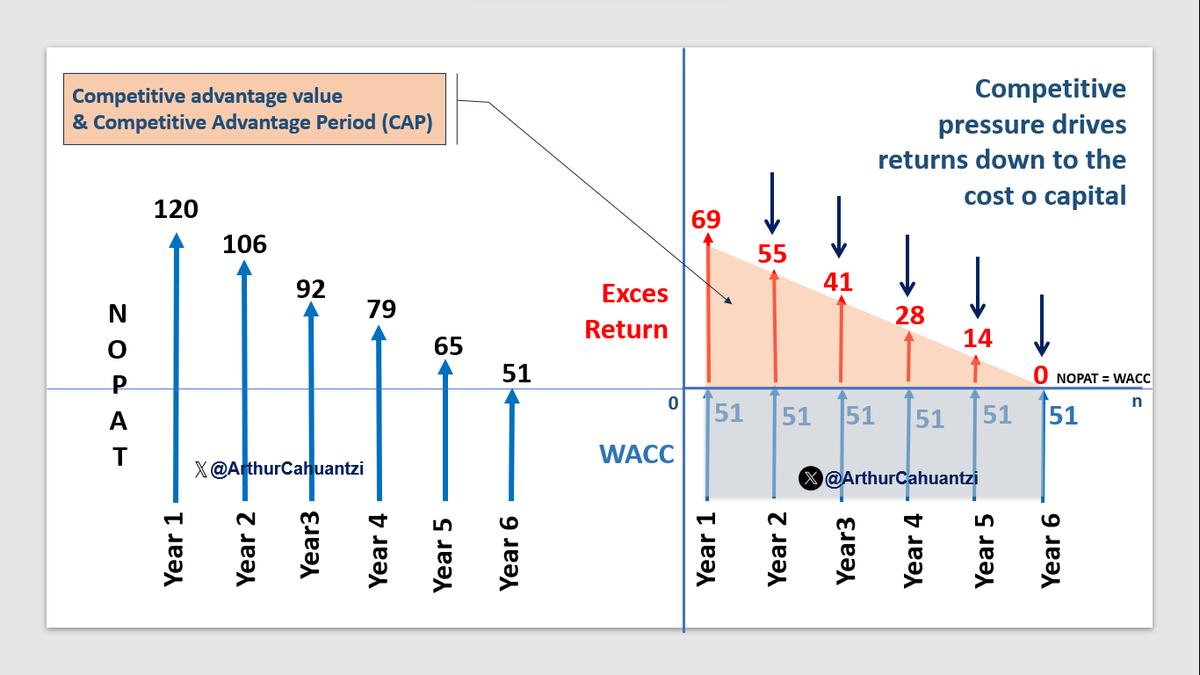
Estratégica y financieramente, la mejor manera de definir una ventaja competitiva es una combinación única de factores o atributos que permite a una empresa generar rendimientos superiores a su costo de capital (WACC). ¿Cómo cuantificar un foso o moat? ↓:
https://t.co/0Qp9I9sTnv
1-Min Course: 𝗜𝗻𝗳𝗹𝘂𝗲𝗻𝗰𝗲 𝗪𝗶𝘁𝗵𝗼𝘂𝘁 𝗔𝘂𝘁𝗵𝗼𝗿𝗶𝘁𝘆
🔹 Ask questions to guide them vs. telling them.
🔹 Focus on helping, not pushing your agenda.
🔹 Use information and insights, not demands.
🔹 Make them think it was their idea.
🔹 Appeal to their self-interest.
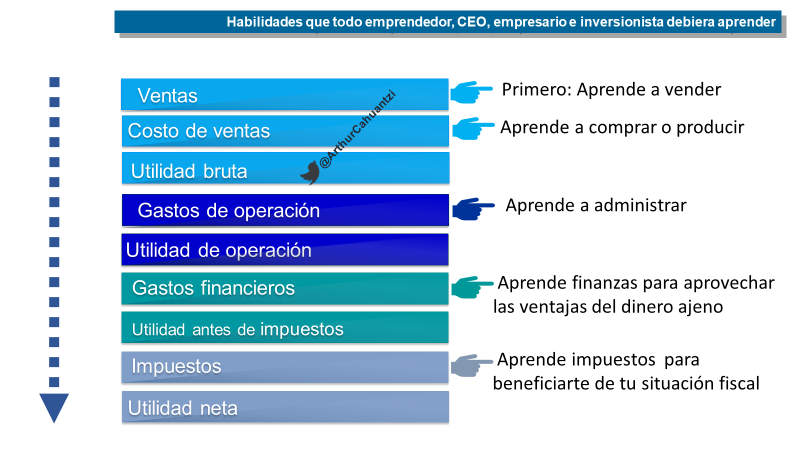
1/ El estado de resultados está estructurado por 4 niveles de utilidad de manera escalonada. Gestionar cada nivel requiere de habilidades diferentes, priorizadas en orden descendente, que todo founder, empresario, CEO y administrador debería aprender, desarrollar y dominar ↓:
@nacho_herranz Y bueno... una vez tienes la estrategia... bajarla a lo operativo e iterarla junto al mundo real esa ya es otra dimensión que el PowerPoint ya no soporta
@DanielBurrus@EvanKirstel Looks like a natural next step complementing smartphones.
Let's see how evolves! At first glance, 5 days of battery life seems too short to fit properly in the market.
Great material that helps the team to get things done at a higher value flow rate.
It's not about the amount of work done. It's about the value you are able to generate. There's no value without focus and prioritization.
Introducing DRICE: A modern prioritization framework from @dariusmc and @alexeymk
Everything you need to run a reliable prioritization process based on a distillation of techniques from Darius and Alexey's experience driving growth at @Facebook, @Dropbox, @Airtable, @Opendoor, and @MasterClass, where they saw this approach double their team's impact.
Inside:
1. How to use the industry-standard prioritization process RICE (Reach, Impact, Confidence, Effort)
2. How to refine the top ideas using “DRICE” (Detailed RICE)
3. How to make the most of these two frameworks
Link to full post in comment below.
Inmenso artículo de @XavierMarcet
El management humanista es entender una empresa como una comunidad de personas que viajan de un propósito a un legado.
https://t.co/MJG2qI2tW9