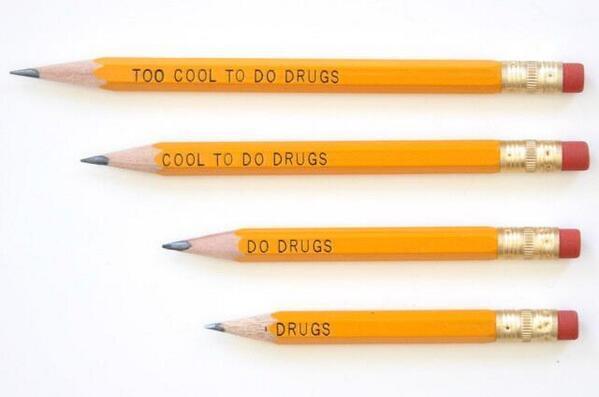
This is what happens when product messages go awry. The words are constantly "on point" but it makes the wrong point too easily, too soon. #foundonlinkedin https://t.co/w0mxxCl7Ox
She looked like a farm girl. Blonde braids, shy smile, barely 16—or so they thought. She was 22, a history student, and one of the deadliest assassins in Warsaw. The Gestapo called her "Little Wanda." They put 150,000 złoty on her head. She kept killing them anyway.
In 1943, Niuta Teitelbaum walked into a Gestapo apartment on Chmielna Street in central Warsaw.
She wore her blonde hair in two long braids. A kerchief tied around her head. The look of a Polish farm girl—innocent, harmless, maybe a little embarrassed to be there.
Three Nazi officers looked up when she entered.
She blushed. Smiled meekly.
Then she pulled out a gun and shot all three of them.
Two died instantly. One survived, wounded.
Niuta wasn't satisfied.
She found a physician's coat. Walked into the hospital where the wounded Nazi was being treated. Entered his room—where a police officer stood guard—and shot them both dead.
Then she walked out, braids swinging, still looking like a farm girl who wouldn't hurt a fly.
This was Niuta Teitelbaum at 24 years old. History student turned assassin. The woman the Gestapo called "Little Wanda with the Braids" and put on every most-wanted list in Warsaw.
The woman who, in one single day in 1943, shot and killed five Nazi soldiers.
Niuta was born in Warsaw in 1917 to a devout Jewish family. She studied history at Warsaw University, the kind of brilliant young woman who should have had a future writing books, teaching, building a quiet academic life.
Then Germany invaded Poland in September 1939.
Niuta was 22 years old. Petite. Baby-faced. She looked closer to 16.
She could have fled. Many did. She didn't.
Instead, she walked into the Polish underground resistance headquarters in October 1939—one of the first volunteers—and said: "I am a Jew. My place is in the struggle against the Nazis for the honor of my people and for a free Poland!"
They looked at this tiny blonde girl with braids and probably wondered what she could possibly do.
She showed them.
Niuta joined Gwardia Ludowa, the Communist underground resistance. And she discovered something powerful: her appearance was a weapon.
The Nazis expected resistance fighters to look dangerous. Hardened. Male. Military.
Niuta looked like a schoolgirl. Sweet. Harmless. The kind of girl who'd giggle and blush if you spoke to her.
So she leaned into it.
She wore her blonde hair in long braids—a style that screamed "innocent Polish peasant." She dressed simply. She perfected a shy, embarrassed demeanor.
And she walked straight into Nazi headquarters, offices, and homes—and killed them.
One of her most audacious early missions: she approached the guards outside a Nazi officer's headquarters, looking flustered and embarrassed.
"I need to speak with [officer's name]," she said quietly, blushing. "It's... a personal matter."
The guards assumed she was pregnant. A scared farm girl who'd gotten involved with a Nazi officer and now needed help.
They waved her through.
She walked into the officer's office, pulled out a pistol with a silencer, and shot him in the head while he sat at his desk.
Then she smiled meekly at the guards on her way out.
They had no idea what had just happened.
For nearly three years, Niuta operated across Warsaw. She transported weapons. Smuggled Jews to safe houses. Carried messages between resistance cells.
And she killed Nazis. Methodically. Efficiently. Without mercy.
The Gestapo knew someone was doing it. They called her "Little Wanda with the Braids." They put her on every most-wanted list. They offered 150,000 złoty—a massive bounty—for information leading to her capture.
But they couldn't find her. Because they were looking for a dangerous criminal, and she looked like a girl selling vegetables at the market.
In January 1943, Niuta was part of a special unit that planted a bomb in Kammerlichtspiele Cinema—a theater frequented by Nazi soldiers. The bomb went off during a screening. Nazis died.
In April 1943, she was trapped in the Warsaw Ghetto when the famous uprising began. Most of the ghetto fighters knew it was a suicide mission. They fought anyway, determined to die fighting rather than be sent to death camps.
Thousands died. Niuta survived and escaped.
She kept killing.
But in July 1943, the Gestapo finally tracked her down.
They burst into her hiding place before she could swallow the cyanide pill she always carried—the last escape route for resistance fighters who knew what capture meant.
They arrested her. Interrogated her. Tortured her for weeks.
She told them nothing.
No names. No safe houses. No operations. No information about any other resistance fighters.
They broke her body. They couldn't break her will.
Niuta Teitelbaum was executed by the Germans in late 1943. She was 25 years old.
She'd spent three years as one of Warsaw's most effective resistance fighters. She'd killed at minimum five Nazi soldiers and officers—some sources say more. She'd bombed a Nazi cinema. She'd smuggled weapons and people. She'd survived the Warsaw Ghetto Uprising.
And she'd done it all while looking like a girl who should be studying for exams, not executing Gestapo officers.
The Polish underground called her "Heroine of Warsaw."
The Nazis called her "Little Wanda with the Braids"—the baby-faced girl they hunted for three years and couldn't catch until someone betrayed her hiding place.
For decades after the war, her story was largely forgotten. Overlooked in broader histories of the Holocaust and Jewish resistance.
Maybe because she was a woman. Maybe because she was a Communist. Maybe because acknowledging that young women—girls who looked like they belonged in classrooms, not battlefields—had been some of the most effective assassins in the resistance challenged too many comfortable narratives about war and violence.
But Niuta Teitelbaum's story is real.
She was a 22-year-old history student who watched the Nazis invade her city and decided she wouldn't run.
She turned her innocent appearance into a weapon. She walked into rooms full of armed Nazis, smiled shyly, and killed them.
She survived longer than most resistance fighters. Killed more Nazis than many soldiers.
And when they finally captured her, tortured her, demanded she betray her comrades—she told them nothing.
Because she'd meant what she said in 1939: her place was in the struggle against the Nazis, for the honor of her people and for a free Poland.
She didn't look like a soldier.
That was her greatest weapon.
And the Nazis never saw her coming—until it was too late.
🚨 AFRICA DELIVERS THE TALENT, THE WEST DELIVERS THE BARRIERS.
🇸🇳 Senegalese authorities have officially confirmed to AFP that ZERO official supporter delegations will travel to the 2026 World Cup due to widespread, blanket visa rejections by the host nations.
Let the absolute absurdity of this sink in: Senegal’s Ministry of Sports stepped in with full state financial coverage just to secure visas for the presidents of the main supporters' associations. THEY WERE DENIED.
This is the true face of the Western "rules-based order":
• They happily market African football stars to sell tickets, merchandise, and TV rights.
• They lecture the Global South on "unity," "fair play," and global cooperation.
• Yet, they slam the visa door firmly shut on the very people whose passion and energy make the beautiful game electric.
They want our talent, but they build walls against our people. The sportswashing project cannot hide this blatant hypocrisy. The world is changing, and the Global South will no longer beg for entry into an empire that treats our citizens with systemic contempt.
On June 9, 1944, the French Resistance captured a senior SS officer named Helmut Kämpfe near Limoges. The next morning, his unit, the 2nd SS Panzer Division Das Reich, was looking for a response. They had already hanged 99 men from the balconies of Tulle the day before, chosen at random from townspeople, leaving them to strangle slowly in front of their families because they couldn't find enough rope for a proper drop.
Now they needed something more.
On June 10, Sturmbannführer Adolf Diekmann led his men to Oradour-sur-Glane. Some historians believe he confused it with Oradour-sur-Vayres, a different village where the Resistance was actually active. Others believe he knew exactly where he was. Either way, at 2pm his soldiers blocked every road in and out of the village.
They told everyone to gather in the marketplace for a routine identity check. People complied. A dentist came. A farmer left his fields. Schoolchildren were told by their teachers not to worry, they'd be back by dinner. A man cycling through town stopped to see what was happening.
By 2:30pm, around 650 people were standing in the square.
Then the soldiers separated the men.
The women and children were marched to the church. The 190 men were divided into six groups and taken to barns across the village. The mayor, Dr. Paul Desourteaux, reportedly tried to negotiate. There was nothing to negotiate.
In the barns, the soldiers opened fire but aimed deliberately at legs. At thighs. At knees. The goal was not to kill but to incapacitate. To ensure that when they piled straw over the bodies and lit it, nobody could crawl away. Men who were on fire and still conscious screamed while soldiers stood outside the doors.
Six men survived by playing dead beneath other bodies. One died from his burns days later. Five lived.
In the church, the women had been waiting almost two hours with the children. Soldiers carried in a large wooden box and placed it in the nave. They lit a fuse and left. The explosion released a thick, suffocating smoke. Soldiers then entered and opened fire on anyone still moving. Then they piled wood, straw, and chairs onto the bodies and lit everything.
The church bell rang for hours as the fire climbed the tower.
Women broke windows. Those who reached the ledge were shot before they could jump. One woman, 47-year-old Marguerite Rouffanche, crawled behind the altar, found a small window, and squeezed through. She dropped three meters to the ground. A 19-year-old named Henriette Joyeux saw her and followed, throwing her seven-month-old baby out first. Soldiers shot the baby out of the air. Then shot Henriette. Then shot Marguerite five times as she ran.
Marguerite survived by lying still beneath pea plants in a garden while the village burned around her. She lay there until the next morning. She was the only person to leave the church alive.
The youngest confirmed victim was seven days old.
After the killings, the soldiers spent the afternoon looting every building. Food, valuables, livestock, wine. Some burned homes with elderly residents still inside. Then they ate dinner. That evening. In the area.
The next morning, relatives from surrounding villages arrived looking for their families. They found 642 dead and a village of smoking ruins.
The aftermath is almost as horrifying as the massacre itself.
At the 1953 war crimes tribunal, 65 men were indicted. Only 20 could be found. Fourteen were Alsatians, French citizens, and Alsace threatened to riot if its sons were convicted. An amnesty law was quietly passed. Almost everyone walked free within a year.
Nobody spent meaningful time in prison for Oradour-sur-Glane.
By French law, nothing in the original village may be moved, repaired, or altered. The rusted cars sit in the street where they burned. The sewing machines are fused to the shop floors. The baby carriages are still there. The church stands open to the sky with a plaque listing the names of the children killed inside.
You can walk through it today.
82 years ago this morning, those 642 people had no idea. The dentist was thinking about his afternoon appointments. The teachers were relieved the children were behaving. The man on the bicycle was annoyed about the delay.
By 6pm they were all dead, and the soldiers who killed them were eating dinner.
Never forget Oradour-sur-Glane.
Master Sgt. Tobias Jackson, stationed in Japan for the past three years, secretly flew back to Birmingham, Alabama, just in time for his son Branden’s graduation at Huffman High School.
Branden thought his dad couldn’t make it and was prepared to watch online. The moment exploded when Tobias appeared on stage right after Branden received his diploma — the shock, the hug, the tears… pure father-son love.
But the surprises didn’t stop there. The very next day, after Branden got his driver’s license, his dad handed him the keys to a brand new car.
This is real fatherhood sacrifice, presence, and showing up big time.
We love to see it! Proud dad vibes forever. 👏🏾👏🏾
@gavinjoneslive@Nick___Collins Wirtz and Isak are retail deals though. We paid market rates. Isak went on strike to force the move. Where's the nous, because it's not in the negotiated amount.
We didn't exactly build a balanced squad either.
Today at #PMQs I raised the 32 dodgy UK ‘charities’ who’ve sent almost £30m to illegal Israeli settlements.
Constituents will be appalled that they, the taxpayer, have likely subsidised this by over £5m.
Why is @ChtyCommission asleep at the wheel when their job is to stop this?
You have noticed it. ChatGPT feels dumber than it used to. Your prompts that worked six months ago produce worse results now. The writing sounds flatter. The ideas sound safer. The internet itself feels like it is shrinking. Every article reads the same. Every email sounds the same. Every answer sounds like it was written by the same voice.
You thought it was you. It is not you.
Researchers at Oxford and Cambridge published a paper in Nature proving what is happening. They call it Model Collapse.
Here is the mechanism in one sentence. AI trained on AI-generated data gets dumber every generation until it forgets what real human data looked like.
The internet is filling with AI-generated content. Blog posts. Articles. Reviews. Comments. Social media. AI companies scrape the internet to train the next generation of models. Which means the next generation of AI is being trained on the output of the current generation.
Each cycle loses information. Not randomly. It loses the rarest, most unusual, most creative parts first. The researchers call these the "tails of the distribution." The weird ideas. The unexpected perspectives. The things that made the internet feel human. Those disappear first.
What remains is the average. The safe. The expected. The bland.
Then the next generation trains on that. And loses more. And the next generation trains on that. And loses more. The researchers proved this is not a slow decline. Major degradation happens within just a few iterations. Even when some of the original human data is preserved.
They tested it on large language models. On image generators. On statistical models. The pattern was the same every time. The output converges toward a narrow, flattened version of reality that looks nothing like the original data.
The lead researcher put it plainly. "Large language models are like fire. A useful tool. But one that pollutes the environment."
The pollution is invisible. You cannot see which sentence on the internet was written by a human and which was written by AI. Neither can the AI that is about to train on it. And once the tails are gone, they do not come back. The damage is irreversible.
This is not a prediction anymore. It is a diagnosis.
The internet you grew up on was built by humans writing things no algorithm would have written. Strange, personal, imperfect, alive. That internet is being diluted. One generation of AI at a time. And the models trained on what remains are learning a smaller and smaller version of the world.
Model Collapse is not a technical problem. It is a cultural one. The thing that made the internet worth reading is the thing that disappears first.
FIFA President Gianni Infantino has refused to apologise to fans who feel 'ripped off' over ticket prices, claiming 'every dollar that comes in, goes back into the development of football'.
Sky's sports correspondent @RobHarris reports ⬇️
Read more: https://t.co/WmdJ7jI7Ya
🇺🇸 Infantino Surrenders His Own FIFA World Cup to Trump's "Aggressive World"
Asked by the BBC if he had lost control, FIFA's president didn't deny it. He told the world to "chill" and "trust us," then admitted: "Sometimes we manage, other times not." Here's what he's managing:
🇮🇷 Iran: granted visas, forced to leave the U.S. immediately after their game
🇸🇴 Omar Artan, Africa's best referee: denied entry
🇺🇿 Uzbekistan: drug-sniffing dogs, metal detector checks, full body searches
🇸🇳 Senegal: pulled off the plane, treated as "criminals," degraded on the tarmac
🇮🇶 Talal Salah, Iraq team photographer: held 10 hours, then denied entry
🇮🇶 Ayman Hussein, Iraqi footballer: held and questioned 7 hours at O'Hare
He handed Trump a peace prize while Trump handcuffs his tournament. This isn't FIFA's World Cup anymore.
Could this be the most expensive and corrupt World Cup - in History?
US World Cup tickets cost up to $11.5 million — you could get into the last World Cup for $1.00.
This time FIFA could rake in $13 billion using dynamic pricing, resales, and lax U.S. rules.
This video journalist found FIFA President Gianni Infantino funneling that money into keeping himself in power.
Credit:
Follow Sam Ellis's work by subscribing to @SearchParty .
And read more of Talib Visram's reporting at https://t.co/3xtrLWzFDZ
Infantino was asked by a BBC journalist if he's embarrassed by what has come to pass and does he accept he's lost control of his tournament here.
His response: “in 2035, the Women’s World Cup, I think, will be in the UK. Would you find it normal that FIFA will dictate to the British government who to let in the country and who not to let in?”
#FIFAWorldCup
Richard Burgon just exposed the most glaring double standard in British policy
"Imagine if this weekend in London there was a Russian real estate event selling Ukrainian land. The government would ban it immediately.
Instead, we have an Israeli real estate event openly advertising the illegal sale of land in occupied Palestinian territories. The government recognizes Palestine. Why isn't this banned?"
Blatter: Raw, old-school crook exposed in the biggest bribery scandal in sports history — cash envelopes, rigged bids, total chaos. Stepped down in disgrace.
Infantino: The refined coward in a sharp suit. Promises reform, delivers Qatar cash grabs, ignores African voices, selective 'human rights' silence, and endless hypocrisy while African talents still fight for scraps.
Blatter was blatant. Infantino perfected the art of smiling betrayal.
@FIFAcom never changes — just better PR. Who's the real villain? Both. But the current one wears the crown of sophisticated corruption. ⚽💰
In 1873, a painfully shy Yale professor published a series of dense, mathematical papers that practically no one in America could understand.
He was so obscure that his university didn't even bother to pay him a salary for the first nine years of his career.
Yet Albert Einstein later called him "the greatest mind in American history."
His name was J. Willard Gibbs.
He didn't invent a new machine or discover a new particle. Instead, he did something far more profound: he took the invisible, chaotic chaos of chemical reactions and turned it into a breathtaking geometric map.
In doing so, he quietly laid the foundation for modern chemistry, metallurgy, and the materials that built the 20th century.
In the late 19th century, chemistry was a mess of trial and error. Scientists knew that if you mixed certain elements together under heat and pressure, things happened. Sometimes they exploded. Sometimes they froze. Sometimes they morphed into entirely new substances.
But no one knew why. There was no universal formula to predict if a chemical reaction would happen spontaneously or require external energy.
The scientific establishment was trying to solve this by treating chemistry like a giant cookbook, memorizing thousands of individual recipes.
Gibbs looked at this chaotic kitchen and realized they were missing the underlying architecture.
He introduced a radical new concept that we now call Gibbs Free Energy. He proved that every chemical system has a hidden, mathematical bank account of energy available to do work.
But his true genius wasn't just the math; it was how he visualized it.
Gibbs realized that you could map a substance’s temperature, pressure, and energy onto a three-dimensional geometric surface.
Suddenly, the messy, unpredictable behavior of matter became a landscape.
A chemical reaction wasn’t a mysterious magical event anymore. It was just a ball rolling down a hill. If the geometric slope leaned downward, the reaction would happen naturally (spontaneous). If the slope went upward, the reaction was impossible without forcing it. Water turning to ice, iron turning to rust, coal turning to diamond, all of it was just matter navigating the hidden topography of Gibbs' geometry.
When Gibbs sent his work to Europe, the legendary physicist James Clerk Maxwell was so struck by its genius that he literally sculpted a 3D plaster model of Gibbs’ thermodynamic surface with his own hands and mailed it to Gibbs' house in Connecticut.
The philosophical blueprint Gibbs left behind is a game-changer for navigating complex decisions:
You cannot master a chaotic system by memorizing every possible outcome. You master it by mapping the terrain.
Most people approach their life decisions, their careers, investments, or habits like 19th-century chemists. They treat every new situation as an isolated recipe. They ask, "If I mix X and Y today, will it explode?" They look for specific formulas for specific moments.
But life, like chemistry, is governed by an underlying energetic terrain.
If you stop looking at individual events and start looking at the energetic slope of your choices, everything changes. Some habits have a downward geometric slope, they require almost zero effort to maintain once they start rolling, naturally producing massive results. Other goals have an impossible upward slope because you are fighting the natural friction of your environment.
Success isn't about forcing an explosion through sheer willpower. It’s about altering the geometry of your environment so that the outcomes you want become the path of least resistance.
What is a goal in your life right now that feels like an impossible, exhausting uphill battle? Stop trying to force the mixture to react. How can you change the pressure, the environment, or the underlying structure of your day so that success becomes a ball rolling down a hill?



![CrazyVibes_1's tweet photo. She looked like a farm girl. Blonde braids, shy smile, barely 16—or so they thought. She was 22, a history student, and one of the deadliest assassins in Warsaw. The Gestapo called her "Little Wanda." They put 150,000 złoty on her head. She kept killing them anyway.
In 1943, Niuta Teitelbaum walked into a Gestapo apartment on Chmielna Street in central Warsaw.
She wore her blonde hair in two long braids. A kerchief tied around her head. The look of a Polish farm girl—innocent, harmless, maybe a little embarrassed to be there.
Three Nazi officers looked up when she entered.
She blushed. Smiled meekly.
Then she pulled out a gun and shot all three of them.
Two died instantly. One survived, wounded.
Niuta wasn't satisfied.
She found a physician's coat. Walked into the hospital where the wounded Nazi was being treated. Entered his room—where a police officer stood guard—and shot them both dead.
Then she walked out, braids swinging, still looking like a farm girl who wouldn't hurt a fly.
This was Niuta Teitelbaum at 24 years old. History student turned assassin. The woman the Gestapo called "Little Wanda with the Braids" and put on every most-wanted list in Warsaw.
The woman who, in one single day in 1943, shot and killed five Nazi soldiers.
Niuta was born in Warsaw in 1917 to a devout Jewish family. She studied history at Warsaw University, the kind of brilliant young woman who should have had a future writing books, teaching, building a quiet academic life.
Then Germany invaded Poland in September 1939.
Niuta was 22 years old. Petite. Baby-faced. She looked closer to 16.
She could have fled. Many did. She didn't.
Instead, she walked into the Polish underground resistance headquarters in October 1939—one of the first volunteers—and said: "I am a Jew. My place is in the struggle against the Nazis for the honor of my people and for a free Poland!"
They looked at this tiny blonde girl with braids and probably wondered what she could possibly do.
She showed them.
Niuta joined Gwardia Ludowa, the Communist underground resistance. And she discovered something powerful: her appearance was a weapon.
The Nazis expected resistance fighters to look dangerous. Hardened. Male. Military.
Niuta looked like a schoolgirl. Sweet. Harmless. The kind of girl who'd giggle and blush if you spoke to her.
So she leaned into it.
She wore her blonde hair in long braids—a style that screamed "innocent Polish peasant." She dressed simply. She perfected a shy, embarrassed demeanor.
And she walked straight into Nazi headquarters, offices, and homes—and killed them.
One of her most audacious early missions: she approached the guards outside a Nazi officer's headquarters, looking flustered and embarrassed.
"I need to speak with [officer's name]," she said quietly, blushing. "It's... a personal matter."
The guards assumed she was pregnant. A scared farm girl who'd gotten involved with a Nazi officer and now needed help.
They waved her through.
She walked into the officer's office, pulled out a pistol with a silencer, and shot him in the head while he sat at his desk.
Then she smiled meekly at the guards on her way out.
They had no idea what had just happened.
For nearly three years, Niuta operated across Warsaw. She transported weapons. Smuggled Jews to safe houses. Carried messages between resistance cells.
And she killed Nazis. Methodically. Efficiently. Without mercy.
The Gestapo knew someone was doing it. They called her "Little Wanda with the Braids." They put her on every most-wanted list. They offered 150,000 złoty—a massive bounty—for information leading to her capture.
But they couldn't find her. Because they were looking for a dangerous criminal, and she looked like a girl selling vegetables at the market.
In January 1943, Niuta was part of a special unit that planted a bomb in Kammerlichtspiele Cinema—a theater frequented by Nazi soldiers. The bomb went off during a screening. Nazis died.
In April 1943, she was trapped in the Warsaw Ghetto when the famous uprising began. Most of the ghetto fighters knew it was a suicide mission. They fought anyway, determined to die fighting rather than be sent to death camps.
Thousands died. Niuta survived and escaped.
She kept killing.
But in July 1943, the Gestapo finally tracked her down.
They burst into her hiding place before she could swallow the cyanide pill she always carried—the last escape route for resistance fighters who knew what capture meant.
They arrested her. Interrogated her. Tortured her for weeks.
She told them nothing.
No names. No safe houses. No operations. No information about any other resistance fighters.
They broke her body. They couldn't break her will.
Niuta Teitelbaum was executed by the Germans in late 1943. She was 25 years old.
She'd spent three years as one of Warsaw's most effective resistance fighters. She'd killed at minimum five Nazi soldiers and officers—some sources say more. She'd bombed a Nazi cinema. She'd smuggled weapons and people. She'd survived the Warsaw Ghetto Uprising.
And she'd done it all while looking like a girl who should be studying for exams, not executing Gestapo officers.
The Polish underground called her "Heroine of Warsaw."
The Nazis called her "Little Wanda with the Braids"—the baby-faced girl they hunted for three years and couldn't catch until someone betrayed her hiding place.
For decades after the war, her story was largely forgotten. Overlooked in broader histories of the Holocaust and Jewish resistance.
Maybe because she was a woman. Maybe because she was a Communist. Maybe because acknowledging that young women—girls who looked like they belonged in classrooms, not battlefields—had been some of the most effective assassins in the resistance challenged too many comfortable narratives about war and violence.
But Niuta Teitelbaum's story is real.
She was a 22-year-old history student who watched the Nazis invade her city and decided she wouldn't run.
She turned her innocent appearance into a weapon. She walked into rooms full of armed Nazis, smiled shyly, and killed them.
She survived longer than most resistance fighters. Killed more Nazis than many soldiers.
And when they finally captured her, tortured her, demanded she betray her comrades—she told them nothing.
Because she'd meant what she said in 1939: her place was in the struggle against the Nazis, for the honor of her people and for a free Poland.
She didn't look like a soldier.
That was her greatest weapon.
And the Nazis never saw her coming—until it was too late.](https://pbs.twimg.com/media/HKm0VAubkAAYSw9.jpg)


