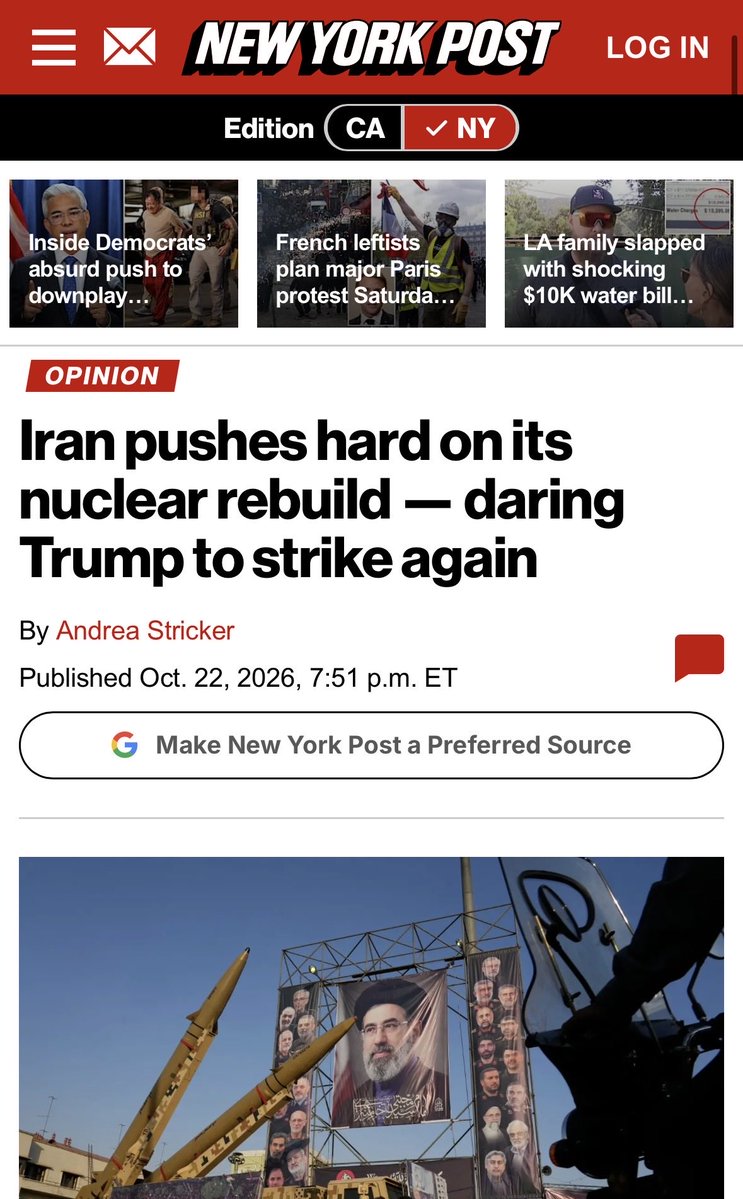
U.S. and Israeli strikes in 2025 and 2026 set Iran’s nuclear program back by more than two years.
Now the Islamic Republic is attempting to make up for lost time by rebuilding its nuclear-weapons option underground.
My latest for @NYPostOpinion: 🔗
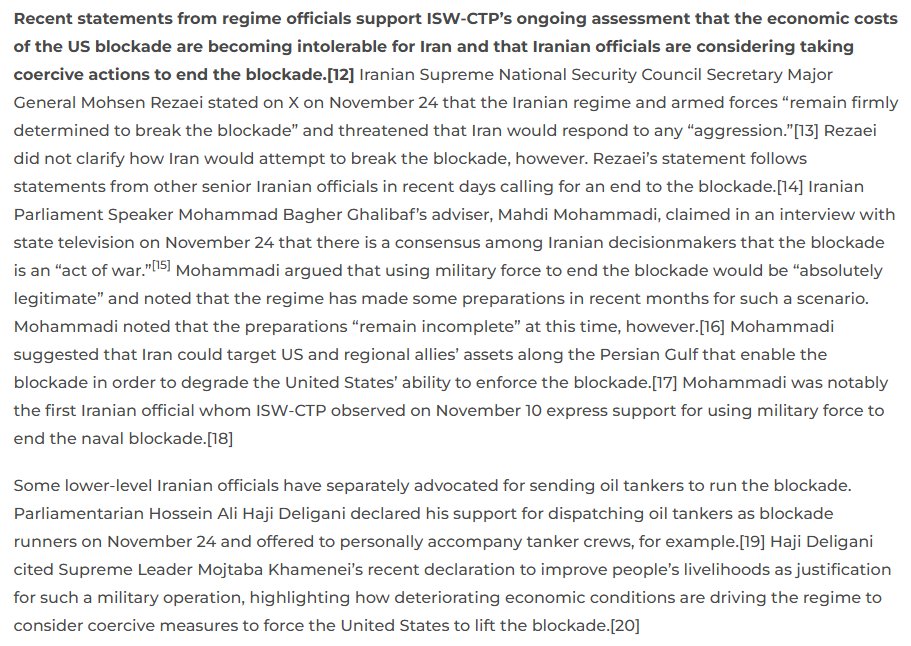
MORE: Iranian regime officials’ recent statements support ISW-CTP’s assessment that the US blockade’s economic costs are becoming intolerable for Iran and that regime officials are considering taking coercive actions to end the blockade. These proposed actions include dispatching Iranian oil tankers as blockade runners to attempt to render the US blockade illegitimate and striking US and regional assets that support the United States’ enforcement of the blockade.
I look at this headline, in which Germany will benefit from cutting edge warfighting tech made in an independent Ukraine, and I imagine people in (say) 1941 digesting this headline. It is so utterly impossible to picture what the world will look like when our children are old.
NEW from me: Confirming WSJ that U.S. officials have identified as many as 50 commercial vessels hit by cyberattacks, investigating ties to Iran. Am told they got in via Fortinet system vulnerabilities, and were able to hop from IT to OT systems.
https://t.co/sv3ZMWhOCB
A Swedish fighter jet under NATO command was cleared to shoot down a Russian cruise missile over Poland. It held fire only because bad weather blocked the pilot’s view.
Russia has now breached Polish airspace TWICE in just 4 days:
- Nov. 20: Three Russian Kh-101 cruise missiles cross into Poland. NATO scrambles jets.
- Nov. 24: A Russian drone slips in overnight. Poland gets the OK to shoot it down but holds fire after it turned back east.
Poland’s envoy briefed the White House National Security Council and renewed Warsaw’s call for a permanent U.S. troops presence in the country.
Read how close a NATO fighter jet came to shooting down a Russian missile over Poland as Warsaw pushes for permanent U.S. troops: https://t.co/zVqLSAWgR5
BREAKING: The U.S. has just issued urgent security alerts across Israel, Iran, Kuwait, Bahrain, Oman, the UAE, Jordan and Iraq, urging Americans to prepare for possible airspace closures, stockpile essential supplies and identify nearby shelters.
The alerts warn that “hostilities have the potential to escalate rapidly,” advising Americans to monitor airport operations, avoid demonstrations and stay away from windows during aerial attacks. U.S. citizens in Israel are also urged to download the Home Front Command app for real-time alerts.
MORE:
The National-Geospatial Intelligence Agency was also affected by the breach, sources say.
The AI hacking tool ARTEX is believed to have been used in attack, sources say.
And early clues suggest China may be responsible, but the investigation is in very early stages.
As former Biden administration officials call on Congress to cut funding for the Iran war, potentially ending the naval blockade, consider the strategic balance sheet:
-Iran’s nuclear weapons program has been severely degraded. Uranium enrichment has reportedly stopped for the first time in approximately two decades. Key enrichment facilities and nuclear weapons sites and scientists have been badly damaged or eliminated. Pickaxe remains a major concern.
-Iran’s ballistic missile program has sustained significant damage, including to its missile production capacity. The pre-war trajectory of Iran reaching 11,000 intermediate ballistic missiles within two years has been severely constrained.
-Iran’s terrorist proxy network has been severely weakened, with Hezbollah and Hamas facing significant military and organizational challenges. The Iraqi government is moving for the first time to assert control over Iran-backed Iraqi Shiite militias. The Houthis remain a serious threat.
-Iran’s economy is in deep crisis. The rial has plunged to over 2.8 million to the U.S. dollar. Annual inflation is approaching 90%. The naval blockade is squeezing Tehran’s vital oil revenues to zero. The aviation and land blockades are tightening.
-There is overwhelming popular opposition to the Islamic Republic. The regime is deeply fearful of another massive uprising.
-The regime is almost completely isolated diplomatically in the region and even its two closest allies Russia and China are doing the bare minimum to help it.
Now consider the costs to the United States:
-23 American military fatalities and hundreds wounded in the Iran War. As historical context, the U.S. military has averaged 387 accidental fatalities annually between 2006 and 2021, and recorded 225 accidental deaths in 2025 alone (every one of these death is a tragedy).
-Approximately $48 billion in military expenditures, equivalent to just under 5% of the Pentagon’s FY2026 budget request.
-Average U.S. gasoline prices during Trump’s second administration thus far are virtually identical to the average during Biden’s four years in office.
The debate over ending the war must weigh these costs against the degradation of Iran’s nuclear, military, terrorist and economic capabilities, as well as the potential consequences of lifting the blockade and relinquishing negotiating leverage over Tehran.
It would be helpful to know what types of chemical weapons Iran is developing as a contingency.
Is it their modern focus of weaponizing and aerosolizing pharmaceutical-based agents such as fentanyl and medetomidine to attack the central nervous system?
https://t.co/MSHJyjXGb4
Katz said Israel has learned that Iran is in the process of developing chemical weapons as a “game-changer” against Israel and countries in the region.
“It intends to develop this capability, which is a severe, non-conventional weapon.”
The intelligence has been known for some time and was shared with the US. Katz stressed that Israel is determined not to allow Iran to acquire it.
Additional points from the briefing:
• Iran is working to revive its nuclear program.
• Israel’s assessment is that if Iran acquires a chemical weapons capability, it will use it.
• Katz said the Iranians are actively working to assassinate President Trump and harm other senior American officials on American soil.
Bottom line from Katz:
“The sooner we act to eliminate Iran's missile-launch capabilities, the easier our defensive mission will be.”
On the urgency:
“If we thought this was already an imminent event, we would have acted.”
He also warned that such a capability would give Iran both a deterrent against Israel and others, and another means of advancing its nuclear program. Israel must ensure nothing is being produced.
Katz said Israel has learned that Iran is in the process of developing chemical weapons as a “game-changer” against Israel and countries in the region.
“It intends to develop this capability, which is a severe, non-conventional weapon.”
The intelligence has been known for some time and was shared with the US. Katz stressed that Israel is determined not to allow Iran to acquire it.
The director-general of the Organization for the Prohibition of Chemical Weapons (OPCW) has announced cuts to critical activities beginning next month. The austerity measures stem in part from the U.S. failure to pay its assessed annual contribution for 2026.
My new @FDD Policy Brief: https://t.co/PNlZJQwQm5
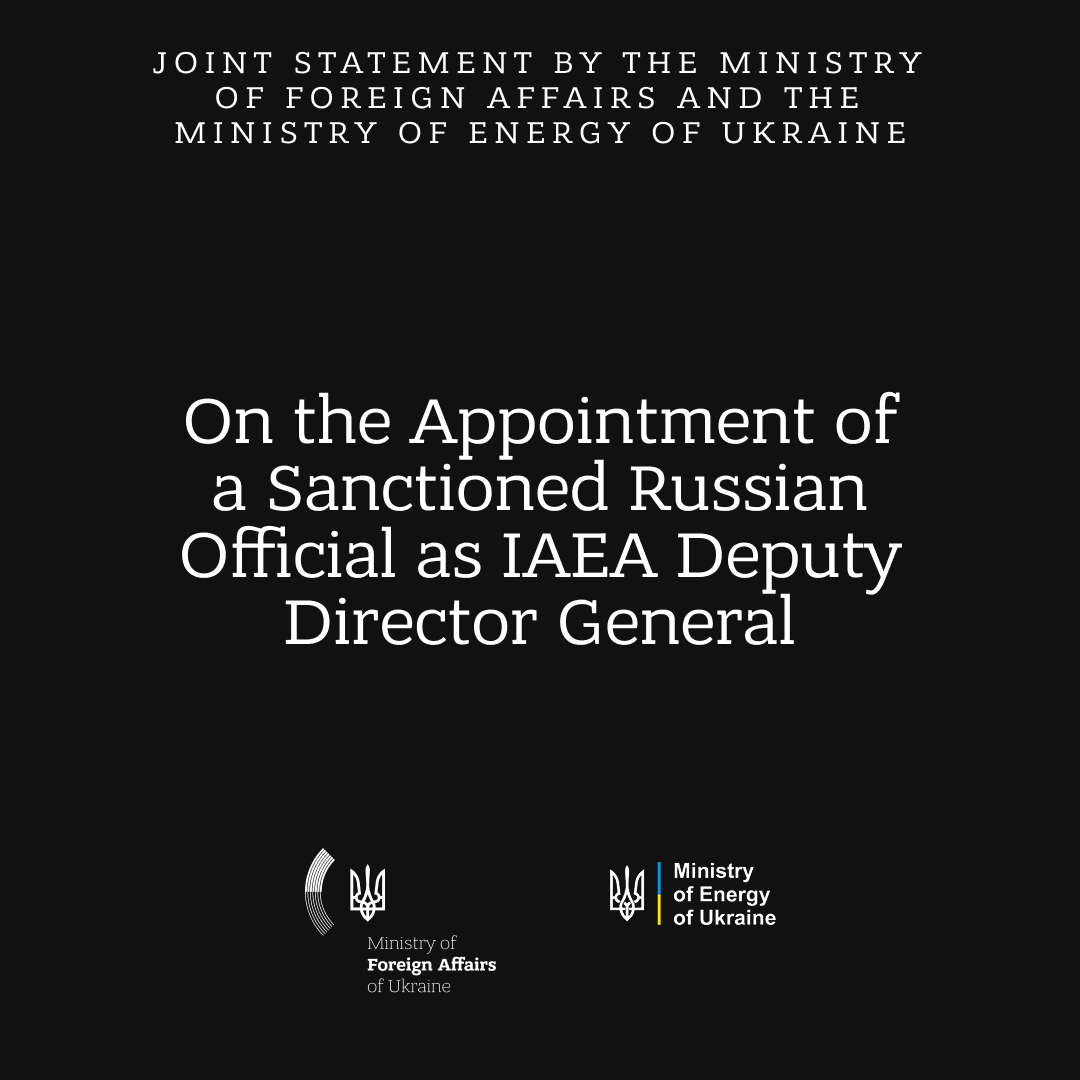
The Ministry of Foreign Affairs and the Ministry of Energy of Ukraine express deep outrage at the decision of the IAEA Director General to appoint as his deputy Oleksii Ferapontov, a sanctioned Russian official and Deputy Head of the Federal Service for Environmental, Technological and Nuclear Supervision of the Russian Federation (Rostekhnadzor).
This Russian official is involved in actions by Russian state bodies aimed at legitimising the illegal seizure of the Zaporizhzhia Nuclear Power Plant and extending Russian regulatory control over it. Ukraine imposed personal sanctions on him by Presidential Decree No. 75/2023 of 12 February 2023.
As a result of the Russian seizure, Europe's largest nuclear power plant has become a constant threat to nuclear and radiation safety.
Appointing a representative of a state body directly involved in undermining nuclear safety principles to one of the IAEA's highest leadership positions fundamentally contradicts the Agency's very mandate.
Ukraine has repeatedly made clear to the IAEA leadership that such an appointment is categorically unacceptable. It did so through diplomatic channels and in public statements by the leadership of the Ministries of Foreign Affairs and Energy.
This personnel decision runs counter to the principles and standards set out in Article VII of the IAEA Statute. The Article makes the highest standards of professional competence and integrity the paramount consideration in recruiting staff. It also guarantees the independence of the Director General and the Agency's staff from outside influence.
The appointment also contradicts the spirit and objectives of the resolutions of the IAEA General Conference and Board of Governors on nuclear safety, nuclear security and safeguards in Ukraine.
An international organisation tasked with protecting the world from nuclear threats cannot entrust leadership powers to representatives of state bodies involved in creating those threats.
The Director General's decision shows institutional weakness at a time that demands leadership, independence and accountability. It undermines the IAEA's authority and trust in its impartiality. It also sets a dangerous precedent for the entire international nuclear safety system. What is needed now is integrity, not spinelessness.
The Ministries of Foreign Affairs and Energy of Ukraine strongly protest this unacceptable personnel decision and demand that it be reversed immediately.
We call on IAEA Member States, above all the members of the Board of Governors, to publicly give a principled assessment of this appointment. We also call on them to use the mechanisms provided for in the Agency's Statute to have the decision reviewed.
Respect for the fundamental principles of nuclear safety, international law and integrity cannot be subject to political compromise.
It is deeply troubling when, amid all the discussions about how to end the war, Starshield works one moment and faces restrictions the next, while missiles for Patriot systems are not only becoming scarcer, but additional steps are also being taken that prevent deliveries. All this is happening while Putin's plan is focused on winter. All the intelligence on this is available, and our intelligence agencies are sharing the relevant information. Putin is counting on breaking Ukraine. Kyiv, Dnipro, Odesa, Kharkiv, Zaporizhzhia – these cities above all. Breaking us through a lack of protection and forcing Ukraine to withdraw from Donbas.
This cannot be happening at the same time as the American side is not signing off on deliveries of anti-ballistic interceptors. Because America is putting itself in a very unpleasant situation. Politically, it looks as if it is on a course aligned with what Putin wants: forcing Ukraine into unfavorable compromises. But life and history extend far beyond friendship, business, or partnership with a single person who is an aggressor. Far beyond.
From an interview with Bloomberg. (2/3)
Trump administration officials are internally debating whether the U.S. military should target top Iranian leaders in an attempt to remove so-called hardliners from the regime, according to a U.S. official and a person with knowledge of the discussions. https://t.co/mQG0oYe4c1
🚨Seven senators led by @timkaine and @JeffMerkley have penned a letter to @SecRubio calling for immediate payment of the United States' outstanding ~$14 million dues to the @OPCW. It has paid only 20% of $17 million owed for 2026.
@OPCW_DG has warned that due to member state payment shortfalls amounting to 1/4 of its budget, cuts to critical OPCW activities will start next month, including work to dismantle the Assad regime's chemical weapons program in Syria and possibly ongoing assistance to Ukraine amid 14,000+ Russian chemical attacks.
Failure to pay dues to the global chemical-weapons watchdog is an own-goal that makes us all less safe — especially as Washington may want to call on the OPCW to investigate Iran's chemical weapons program and threats against the U.S. homeland and senior officials.
https://t.co/irQFR04oxh
https://t.co/eh1bAra3FK
Positive news from the @OPCW Conference of States Parties, ongoing this week in The Hague: Russia has failed for the fourth year in a row to secure a seat on the Executive Council, the OPCW's policy-making body.
"Russia lost out to Poland and Estonia. Poland received 117 votes, Estonia 111, and Russia only 46."
Sidelining Moscow's influence and vote in the council has allowed the OPCW to operate more smoothly and effectively — member states should next turn to suspending Russia's voting rights and privileges altogether, an action that is long overdue given its confirmed use of chemical weapons since at least 2018.
https://t.co/qlkA2xVhXd,
https://t.co/OdPQX3VVWH
🚨🚨 Israeli defense Minister Israel Katz:
Iran is in the process of developing chemical weapons. Israel and the United States are aware of this. Israel will not allow Iran to acquire this capability.
The IDF and US Central Command are preparing for the possibility of striking Iran. The decision rests with President Trump.
Anyone who says there is no urgency either does not know the facts or is saying so for another reason.