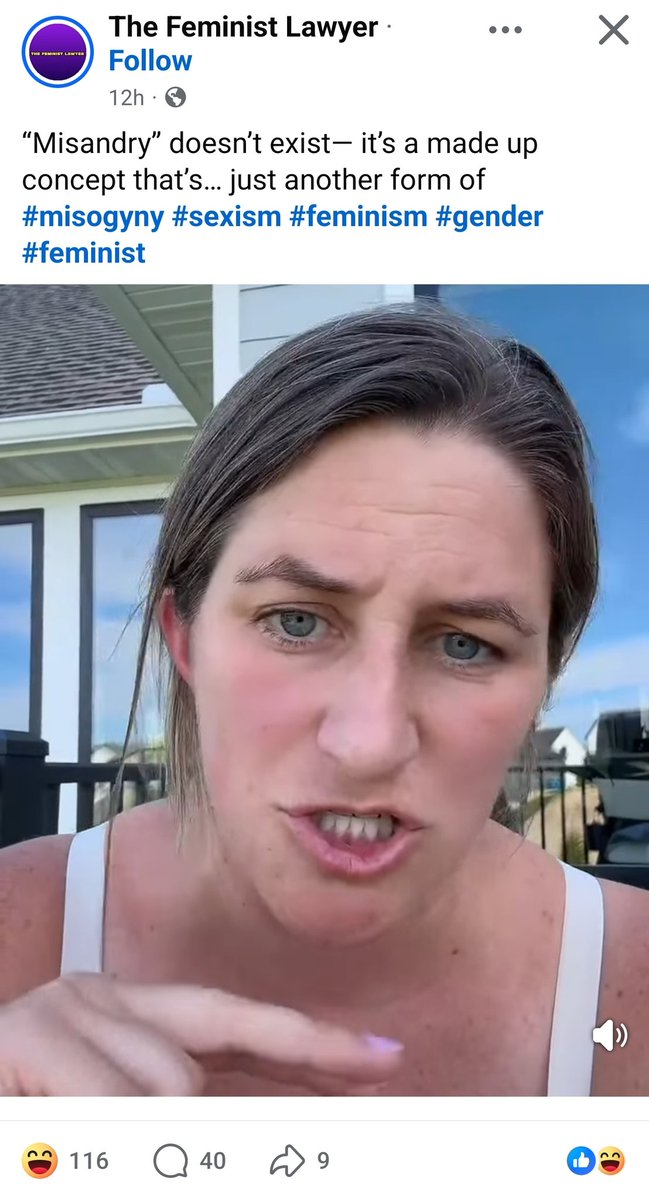
I post and retweet studies about males and issues that affect men and boys (domestic & sexual abuse, suicide, misandry, discrimination in school & workplace)
@Revive_Britain The parts I disagree with are about men's loneliness being due to a lack of emotional intelligence, and the complaint that women are carrying the "emotional labour" for men.
Men can talk about their feelings, but why would they if they are then patronised?
https://t.co/8COUamwjQ8
These 'insights' from Dr JJ Kelly are based on simplistic unhelpful misconceptions about men.
Men and women are mostly similar, but there are subtle differences that are important, such as differences in how they communicate and deal with stress.
https://t.co/7EzSkzg6vw
On rappelle que la misandrie n'est pas une opinion, gigantesque pvte
Elle n'a pas à être placée à un degré différent du validisme, du racisme ou de la misogynie
"73% of men who experienced female-perpetrated violence reported that their partner threatened to make false accusations versus less than 3% of males in the general population. Among men who experience female-perpetrated violence, 56% said their female partners actually did make false accusations that he physically or sexually abused her."
False allegations are a tool for abusive women, and we need to understand this. Abused men need protection.
https://t.co/Gvo3yISMc7
@MelissaFleming@UN I understand the sentiment in the image but context matters. The implication that feeling safe matters more than being safe, & that the safety of women/girls matters more than that of men/boys is concerning, as is the expectation of feeling safe “everywhere”
Gender and Capital Punishment in Texas
"we see across more than 14,000 capital case prosecutions in Texas that the gender of the prosecutor, victim, and defendant all were consequential. Male prosectors sought more death sentences than female prosecutors. Female victims were more likely to have a death sentence sought in their cases than male victims. Male defendants were more likely to have a death sentence sought against them than female defendants."
Findings:
"male prosecutors sought a death sentence in almost 39% of their cases, while female prosecutors sought a death sentence in just under 23% of their cases"
"Death sentences were sought against almost 38% of male defendants in capital cases compared to 27% of female defendants"
"Death sentences were sought in nearly 42% of cases with female victims compared to 34% of cases with male victims"
Prostate cancer symptoms are often subtle or undetectible by men, yet men are blamed for not seeking help for prostate cancer, even if they had no symptoms.
Routine screening would solve the problem.
It's disgraceful that men still aren't offered this.
https://t.co/oMh00QEL74
Lmfao, these people just presume oppression where there is none. Like 80% of homicide victims are male, you have to be absolutely clueless to think that women are being targeted in murders.
Coercive control is real, serious, and can be profoundly damaging. But as debate around new laws intensifies, an important question remains: how do we protect victims without creating systems that become overly subjective, gender-skewed, or harmful to healthy relationships?
This article by Felicity Stryjak raises concerns about the expanding use of coercive control laws, especially where ordinary human dynamics (persuasion, negotiation, parenting, boundary-setting, concern for safety, or conflict within intimate relationships) risk being retrospectively interpreted through a criminal lens...
Coercive control legislation and the unintended consequences for healthy human relationships
Written by Felicity Stryjak
https://t.co/alINIXvMlZ
A central argument is that domestic abuse frameworks often remain heavily gendered in research, policy and implementation, despite plentiful evidence that men are also victims of manipulation, intimidation, financial pressure, social isolation, and coercive behaviour. The article questions whether male experiences are sufficiently recognised, studied, or supported.
The piece also warns against simplistic narratives that cast one sex primarily as perpetrators and the other as victims. Healthy relationships are complex. Human beings can behave well, and badly. Lasting solutions require honesty about the experiences of women and men, not ideological blind spots.
None of this means dismissing abuse. It means striving for balance: clear laws, strong due process, recognition of male and female victimisation, better relationship education, healthier cultural norms, and approaches that strengthen trust, responsibility, and social cohesion rather than deepen division...
There is deep cynicism about the application of domestic violence laws by police and courts, suspicion about systematic bias of family law against males, sharply polarised views regarding the huge funding streams that flow to pro-female causes, and very substantial concern about the biased implementation of coercive control legislation.
If we want safer families and stronger relationships, then we need systems that are fair, evidence-based, compassionate, and genuinely inclusive of everyone.