@StandardKenya All parties to this issue must be apprehended. It should not be politicized. Fuel is a critical matter.
But again, who has ever been convicted of economic sabotage in Kenya?
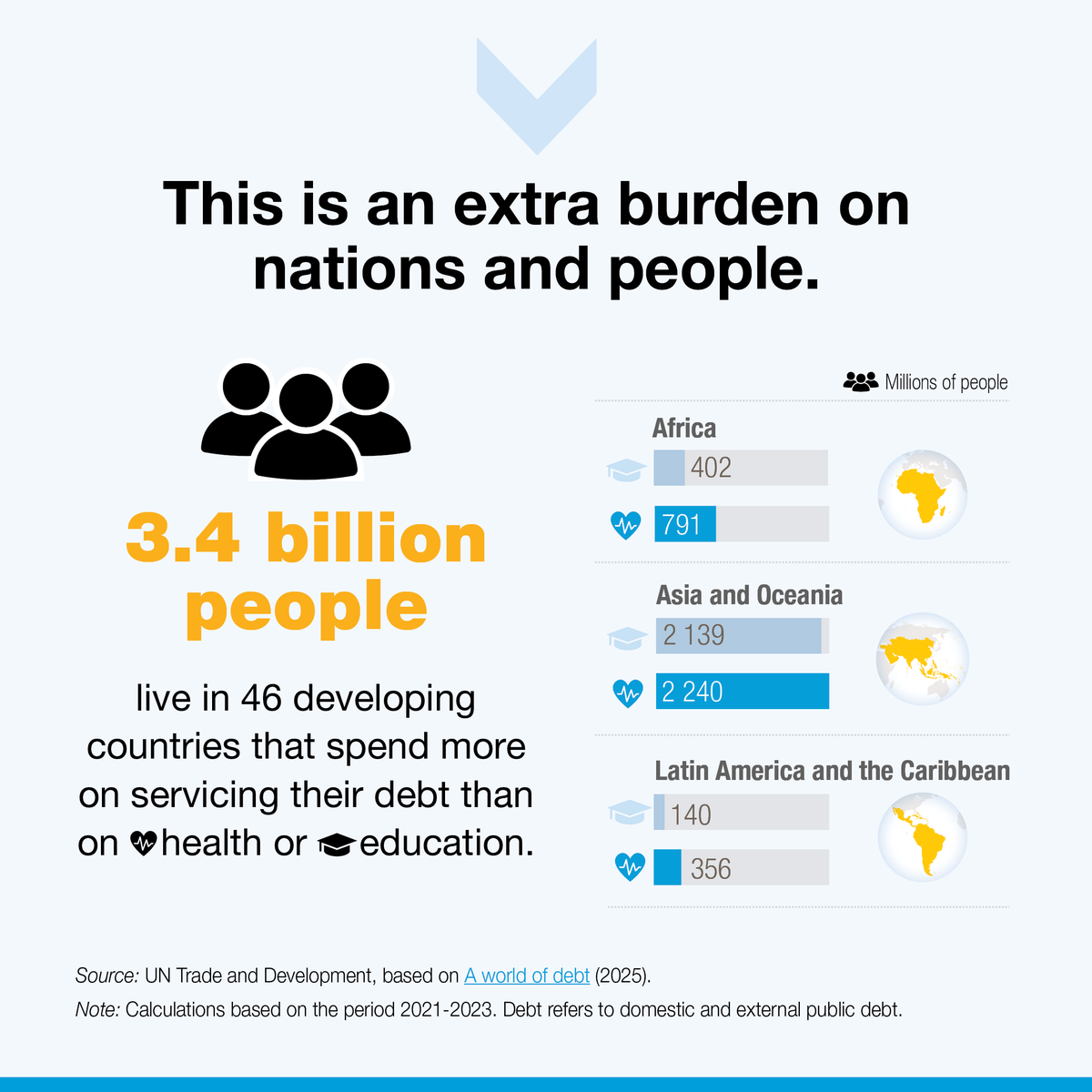
3.4 billion people live in countries where debt payments exceed health or education spending.
Strait of Hormuz disruptions – higher energy costs, weaker currencies, tighter finances – raise the risk of a broader development crisis, @UNCTAD warns.
More: https://t.co/y7CHZsl13O
@Mbwesaa Agricultural towns need to be well planned too. The GDPs of such towns are quite high because of the agricultural produce but these are terrible aesthetics
Hydro gave Ethiopia scale, but nuclear is about diversification, reliability, and industrial ambition. You do not build a serious manufacturing economy on one power source alone. Hydro can be seasonal and climate-exposed; nuclear gives stable baseload for long-term growth. That is how you move from power generation to true industrial capacity.
Most countries have no concrete long-term energy plans. That vacuum is exactly what Iran has taken advantage of by refusing to reopen the Strait despite ceasefire overtures. We now have to rethink shipping and logistics routes from the ground up. There was never a backup plan. Energy projects that were funded and designed around these now-vulnerable routes are locked into long-term financing arrangements, yet the routes themselves are under attack. The result is painful: governments and companies will have to pour even more money into building alternative distribution systems, pipelines, rail corridors, and storage hubs. All of that extra capital spending drives up the final cost of energy to consumers, fuels overspending, and pushes already high national debt levels even higher across importing economies. Fertilizer production and delivery is another casualty. With energy prices spiking and logistics disrupted, agricultural supply chains are already feeling the squeeze. Higher input costs this season will translate into lower yields and elevated food prices down the line.This is not just a short-term oil shock. It is a wake-up call that reactive policy is no substitute for strategic energy security.
Most countries have no concrete long-term energy plans. That vacuum is exactly what Iran has taken advantage of by refusing to reopen the Strait despite ceasefire overtures. We now have to rethink shipping and logistics routes from the ground up. There was never a backup plan. Energy projects that were funded and designed around these now-vulnerable routes are locked into long-term financing arrangements, yet the routes themselves are under attack. The result is painful: governments and companies will have to pour even more money into building alternative distribution systems, pipelines, rail corridors, and storage hubs. All of that extra capital spending drives up the final cost of energy to consumers, fuels overspending, and pushes already high national debt levels even higher across importing economies. Fertilizer production and delivery is another casualty. With energy prices spiking and logistics disrupted, agricultural supply chains are already feeling the squeeze. Higher input costs this season will translate into lower yields and elevated food prices down the line. This is not just a short-term oil shock. It is a wake-up call that reactive policy is no substitute for strategic energy security.
Iran’s continued closure of the Strait now looks like a bargaining chip rather than an endpoint. Despite repeated ceasefire approaches, Tehran is refusing to reopen it, positioning itself as the main aggressor in this standoff. In game theory terms, this is classic brinkmanship. Iran is maximizing its leverage by keeping global oil costs elevated without crossing into irreversible escalation that would trigger full retaliation. It maintains a credible threat while stopping short of actions that cannot be walked back. US restraint is not weakness. It is a calculated exercise in payoff control. A direct strike would spike oil prices sharply, hurt allies, and hand Iran an even greater asymmetric advantage. Washington therefore signals strength while deliberately delaying action to preserve its options. Markets are trading headlines and presidential tone. Every hawkish line pushes risk-on oil prices higher, while any hint of de-escalation quickly unwinds those gains. Right now, oil swings are far more policy-driven rather than by pure supply fundamentals.