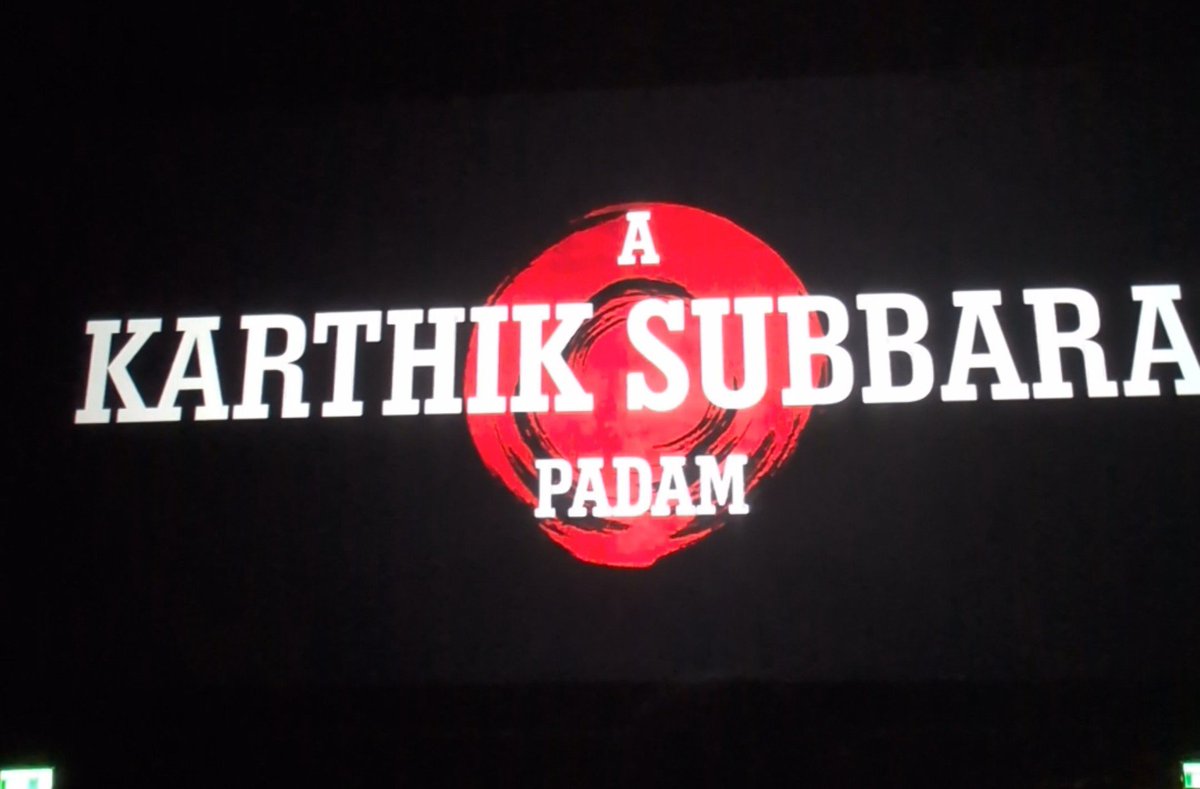
tamil cinema was never pre pa ranjith and post pa ranjith,it was always pre and post 2012 because that is when it produced two of the finest craftsmen called pa ranjith & karthik subbaraj with original ideas, revolutionary films that are deeply humane & want you to be better.
Mannnnyyyy, mannnyyyyyyy thoughts on #Dorothy
(possible spoilers, so stay away if you want to know nothing about the film):
_____
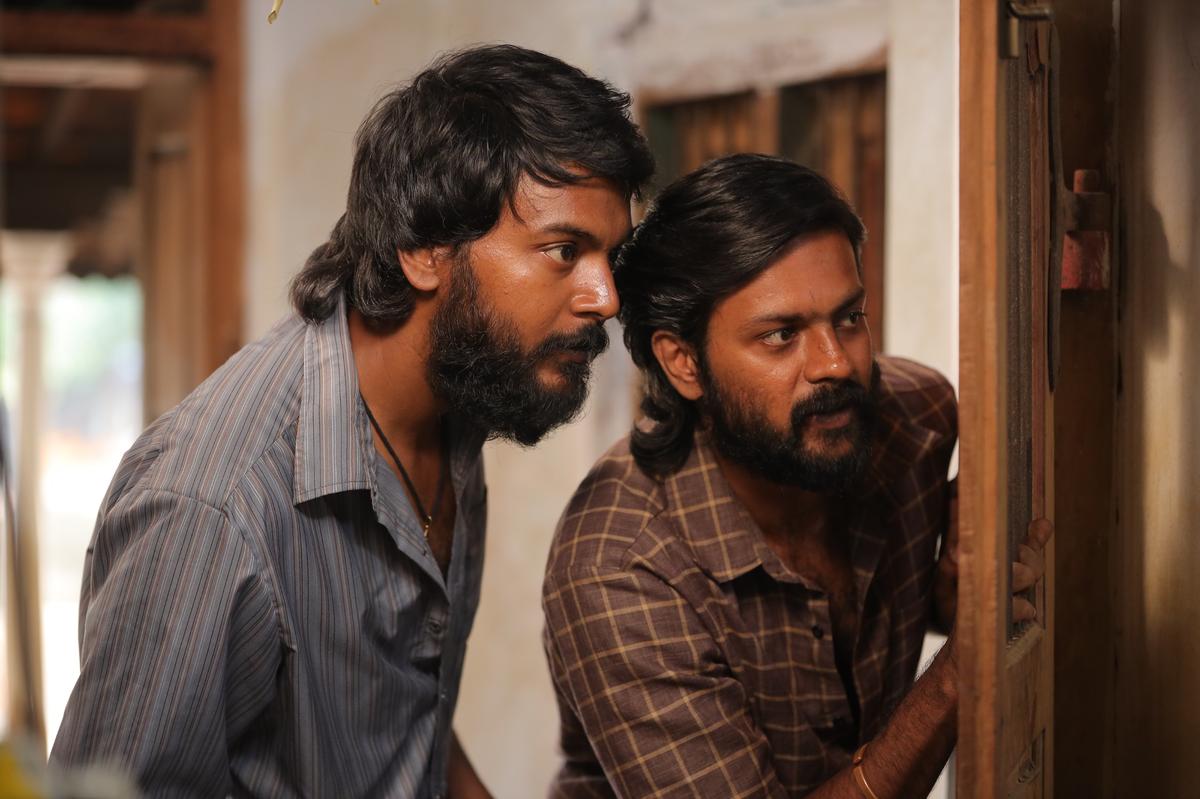
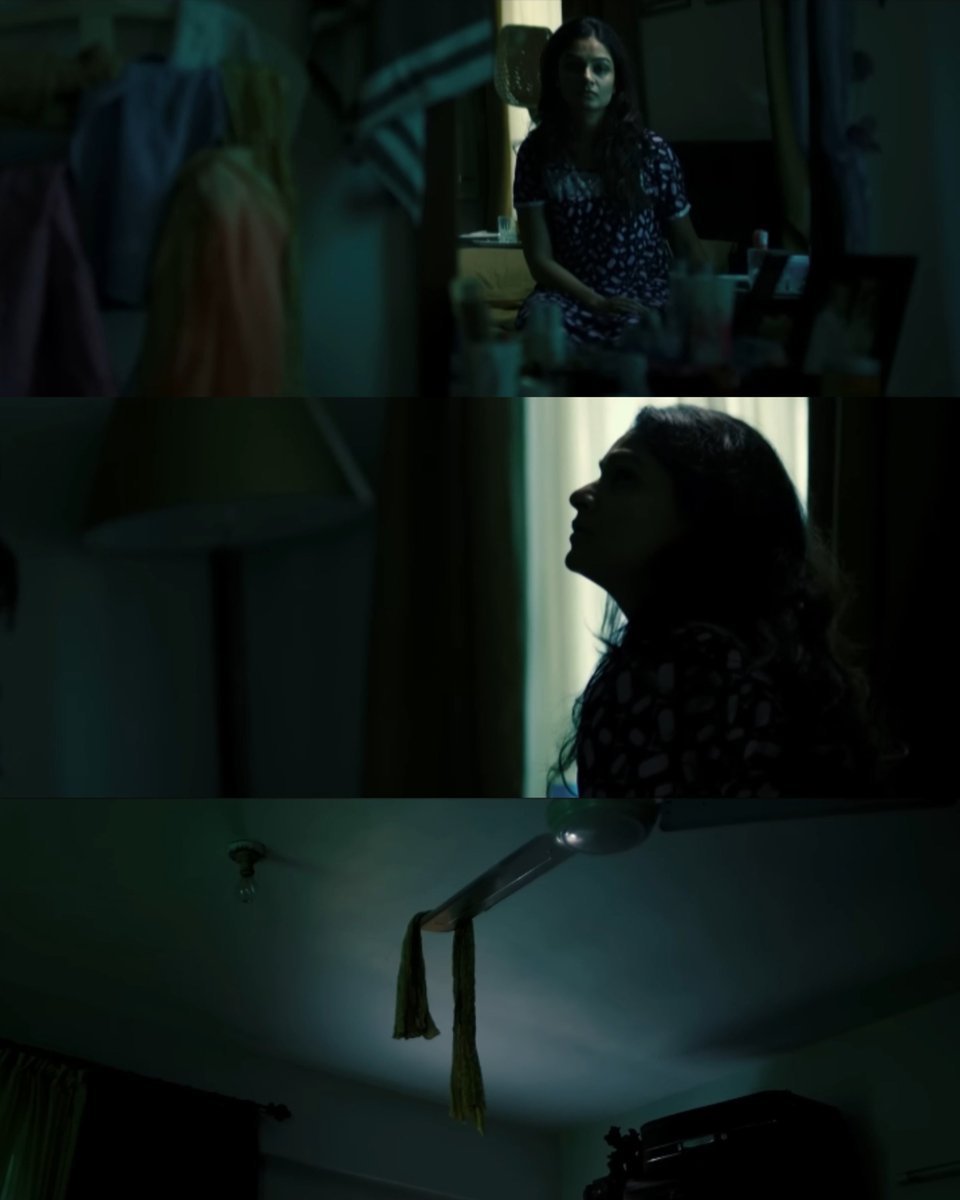
Dorothy is almost a horror film, isn’t it? The setting of period Madurai feels like a ghost town, where anecdotes of murders and suicides are casually shared. “This is where my mother and sister’s bodies were found!” says young Subbu. Something about this young boy being so nonchalant about it broke me, just as it does his friend, Karthi. But then, he gets told: “Boys don’t cry.” Because? Women do, and in this neighbourhood, the women who survive are those who become agents of the system themselves: like Dhanam’s mother, who joins her husband in beating up their daughter.
Innocence dies quickly here too, like the skinned rabbits that hang about in Subbu’s home. Love dies even faster, as Karthi (Rishikanth) discovers to his dismay. And it’s all so casually, quickly done, isn't it? A theatre owner promises to get Karthi married to his girlfriend, and in the very next shot, she’s standing as a bride. Only, she’s marrying someone else, and the theatre owner is right there, telling Karthi not to waste tears over a pottachi. The transition is almost funny. Even the editing seems to have learned the cruelty of this place. There’s no time to mourn. You move on.
You are told to toughen up, or at least, perform. And so, boys learn to perform, so they can feel like men. And like with performances, you learn the lines ("pottachi madhiri azhugaadha!"), the insults ("ajakku!"), and you win the respect of your peer group. And eventually, with time, the performers become trainers themselves, and the cycle continues on and on, with any anomalies quickly turned into casualties, while the whole system works to clean up the mess and pretend nothing strange happened.
If someone suggested the premise of a film in which there are no women, well, that sounds dystopian, frightening, no? And yet, is the world of Dorothy too different? Any woman who aims to preserve her identity in this violent world seems destined for violence. And that first big death in Dorothy is a total shock, both to us and Subbu (Sananth). I loved performances across the board (Rishikanth, Sananth, Muthukumar…), but in this scene especially, it’s gut-wrenching to see innocent Subbu walk to the husband first, and later, to his own father, examining their bodies for signs of injuries, trying to confirm to himself what he already fears and knows. There’s simply no place for ‘softness’ here, even if the commercial outlets in this ghost-town are named after women, like Angel Textiles.
It’s a film that portrays how crying has been vilified in such a society, especially when it pertains to men. There’s a curious connection to Karthik’s last film, Retro, too: there, the hero couldn’t laugh; here, he isn’t supposed to cry. Crying here means softness. Softness means femininity. Femininity means weakness. And weakness, in this world, gets humiliated. That’s why, in the aftermath of this big death, Karthi, trying to be supportive, tries to train Subbu into channelling his sadness through violence and rage.
For a brief minute, we see Subbu beating up a transwoman, and we think, maybe, he’s become one of these men. But I enjoyed how Karthik’s film leaves you with such ideas only to make you form new conclusions as it goes along: like when Karthi casually drops the ‘ajakku’ word earlier in the film and you learn its weight later. Like when Subbu fails to sustain his inner rage, unlike Karthi, and we later understand why. Subbu, you see, cries openly, constantly, and it’s a real problem for all the men around him. That’s why they’d rather have him die than become who he eventually becomes.
Those shots of the family’s outrage as they peer at him through a window… That's almost another horror-film image. They look at Subbu as though they’re staring at something monstrous, after we’ve spent all this time seeing what evil actually looks like. And when Subbu comes out, that feels straight out of a supernatural film too, almost like the spirits of many dead women are passing through him in that moment. It’s touching that Subbu is allowed to express himself only with two characters, and how both of them turn out to be women. The consequence of this softness is violence, of course. Not the kind you can tolerate for a day or two and move on from. It’s the kind of violence that wants to end you, as nature remains a detached observer.
That long fight between three men just before interval is disturbing for precisely this reason, because it captures how quickly a genuine apology can turn into a fight for survival. One man is driven by his need to protect honour; one is driven by his desire to protect a woman; and the third is driven by his desperation to save a friend. Karthik Subbaraj really takes his time with this fight, capturing its ridiculousness with wide shots that place these three men in an empty, red land. They’re fighting for their lives, and the earth seems entirely uninterested, almost seeing it for the cruel joke it is.
Like Karthi and Subbu, this film keeps finding new ways to stay alive, with the very literary device of a potential assassination looming over the entire second half. Strangely, I didn’t see these stretches as selling suspense or thrills. Instead, in this frightening film, Karthi’s struggle to deal with Subbu seemed to speak of hope to me: the hope that some inner, innate goodness might somehow prevail even when every survivalistic instinct dictates otherwise. As the film itself says at the end, “Manasu kadavul, budhdhi saathaan.”
There are so many memorable moments I’m thinking about when I consider this film. The idea of a soft man puking at violence. The visual of this man surrendering to a strange woman in tears. That gorgeous mirror shot at the end. A transwoman who’s kicked out of a hotel, being thought worthy of blessing a child just a moment later. Karthi, on the verge of unlearning his prejudices, being asked at a hospital: “Vesham erangirucha?”
Above all, there’s that gorgeous reunion when Karthi sees Subbu after a long time, as Ilaiyaraaja’s repurposed Veedu score kicks in. Good luck not sobbing your heart out. Or how about when Ilaiyaraaja’s violins take over, as Karthi’s mother offers Subbu way more kindness than Karthi ever did, perhaps because she gets him in a way that Karthi never could due to his conditioning? In a film in which people keep teaching each other how to harden, these little embraces, these little acts of kindness feel rebellious, spectacular.
Sure, perhaps there are dialogues I’d rather have let the story tell me. Like the paaliyal-paagubaadu line that gets said twice. Or a small, lecture-like speech Subbu delivers towards the end, which felt less like dialogue and more like the film making its point through him. It’s especially noticeable because Dorothy has already shown us these ideas so powerfully that it doesn’t always need to articulate them. And sure, perhaps Karthi’s final emotional transformation needed more work too, that gorgeous mirror shot notwithstanding, the awesomeness of Ilaiyaraaja's Muthumani notwithstanding. He had already processed so much by then that I wasn't sure if he would be ready for this revolutionary leap the film wanted him to take so soon.
Just before all of that though, there’s another favourite moment of mine, one that speaks to the difficulty of Subbu’s transition not just for Subbu, but for Karthi. For a moment, you sense Karthi registering the loss of his friend as he knew him. In this film of many deaths, here is a death that doesn't leave a body behind. Karthi may or may not be relieved that Subbu is alive, but somewhere inside, he's already mourning the loss of his friend. And Rishikanth beautifully sells this loss. The film allows us to recognise this grief even while questioning the prejudice that causes it.
There’s a moment when you wonder how Karthi’s conflict is going to get resolved, how his scheming and deception are going to be purged from him. What conversation would make him confess? What event would make him buckle? What twist would make him reveal his motive? But those are ideas you’d see from a lesser filmmaker. What Dorothy does is simply let this man stand there on a hill, in isolation, far away from the caustic society that shaped him, in the presence of sunlight and wind. And… this seems enough.
Away from the voices that taught him what a man must say and how he must act, perhaps Karthi could finally hear himself. Away from the trappings of stardom, from the pressures of having to create actor-focussed entertainment, with Dorothy, it feels like perhaps Karthik could finally hear himself too.
One of those rare, one-of-a-kind worlds we got to shoot… retro, anamorphic, kitsch, pulp and gloriously heightened. Guns & Gulaabs is a mood! 😎
Kudos to our amazing crew and brilliant cast! 👏🏽
And thanks to adventurous @NetflixIndia for trusting us!
#3YearsOfGunsAndGulaabs
27 years old? Producer? Too soon, people say. For them, it might be too soon. But for me, it’s been 12 years of trying hard to break in, ever since I started dreaming about cinema at 15.
Last March, this same Karuppiah was going through a midlife crisis, just wondering what’s next in life.
I had signed two films back then. Both were multistarrers, both got stuck and didn’t see the light of day. Everything felt uncertain. Somewhere in that phase, life itself started feeling a little claustrophobic.
At that point, the only dream I held onto was simple. Just to see my name on screen as a Writer–Director.
Cut to one year later…
That dream didn’t just stay a dream. It grew. It became something bigger than me.
I realized my purpose is to bring out the best cinema I enjoy to as many people as I possibly can.
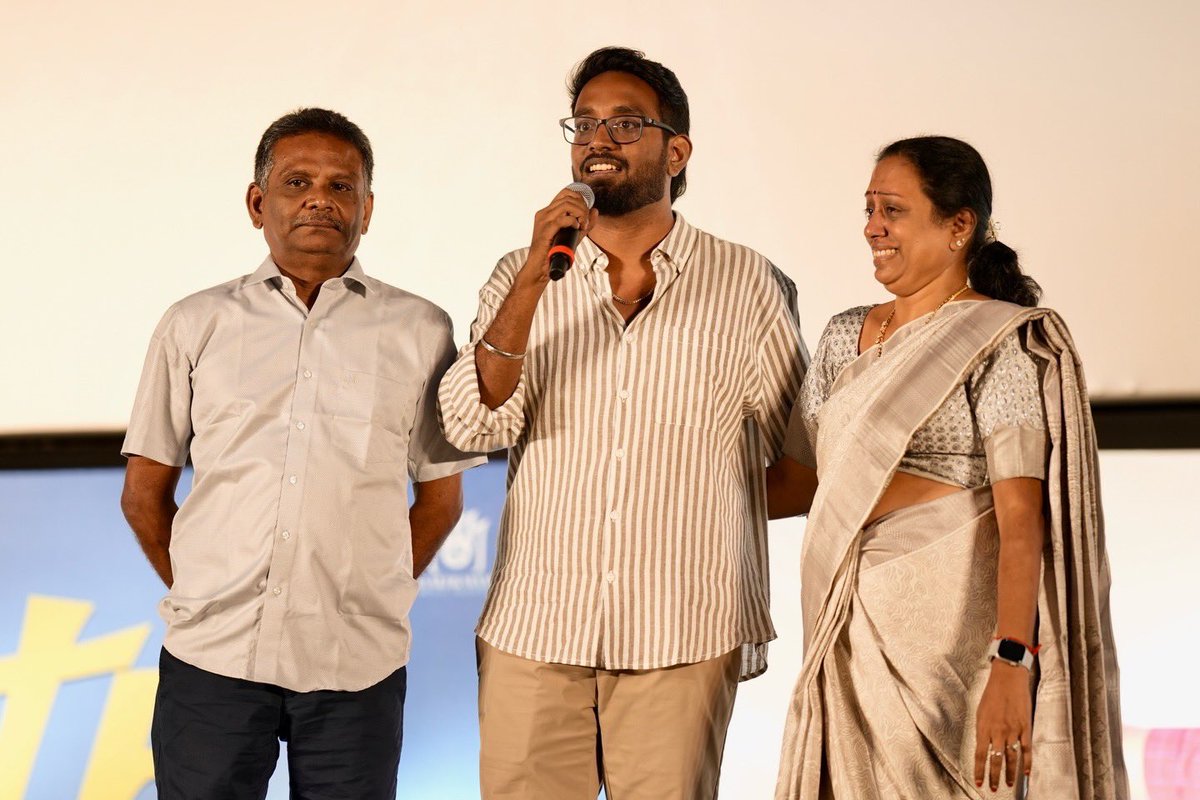
From chasing a credit to building a vision - this hard journey built me. Thank you Amma & Appa for standing beside me ❤️🤗 Grateful to be your son! This film is for both of you.
Loved cinema a little too much, so we built a company. That’s our @paarvathaaent . Thank you to my friends and core production team for being there during tough times.
Finally thank you Ken & gang for giving us #YOUTH ⭐️ @KenKarunaas he is here to slay!
Aaandddd @ammamuthu_surya thank you for introducing Ken and #Youth to us :) indebted to you forever ❤️
And this is just the beginning. We’re here, and we’re here to bring you good, honest cinema.
Tomorrow, the first step into that journey begins with a lot of hope. #Youth ❤️ is now all yours
Everytime I read an appreciation tweet for songs of #Oncemore from one person or the other.. I feel immensely loved & seen despite how testing the times have been. THANK YOU
I just hope / assure that the genuine delight in the film transcends the wait & all that it goes through.
Read somewhere that Bruce Willis no longer remembers he was once a famous actor due to dementia. Makes you think how pointless chasing fame is. Makes you see a gifted performer's work as a service — how they entertain a lot of people and made them feel good during dark phases.
Yesterday, she and I were watching a new Hindi movie on Netflix and there was a scene in a family’s living room which was lit purely by the evening sun coming through the window.
Me: This shot looks aesthetic but who switches off all the lights at home and sits like this?
She: Wow the artist in you is really dead.
I know she said it as a joke, but it felt like a slap. It made me think about the last 10 years and all the things I’ve gained, but what about the few things that were lost?
And this Sunday morning, just wanting to see what the hype was all about, I decided to go watch Saiyaara in a surprisingly housefull theater in Chennai.
Films like these may not be masterpieces. They may not change society, or travel to the Foreign Language Oscar category. But they do something different, and something probably more important.
From the first frame to the last, if there's one thing that stands out in comparison to any other piece of content these days, it's a single word: CONVICTION.
It takes conviction to take every romantic cliche in the world and celebrate it like this. It takes conviction to bring back 5, 6-minute soul-crushing songs and use them uninterrupted in a post-covid narrative without worrying about ‘audience’s attention span’. It takes conviction to use lines like “I love you forever…and ever…and ever” and deliver it with such vulnerability without worrying about being called ‘cringe’. It takes conviction to put an ultra close up on a newcomer’s face and just let her break down without cutting to the next shot. It takes conviction to show a guy and a girl look up and point at the stars in the sky in a time when we're buried in our phones.
And through this conviction, films like Saiyaara do something more important than winning any other accolade out there: they reintroduce you to a version of you that used to exist, or still exists deep inside you. It took me back to that boy who used to write love letters on handmade paper sprayed with my personal perfume. The guy who used to obsess over a single song all day and make a mixtape of his favourite songs to play them in the car while she sits in the passenger seat in the hope that it impresses her. The guy who bought the same flowers for no reason or no occasion. The guy who treated sunset and the golden hour light like the greatest gift of god that we're fortunate to experience every day.
Maybe it’s the world or circumstances that made that emotional child inside want to be more practical; that passionate fool want to be more cynical. And every now and then that version of me tries to burst out and every now and then, I try to suppress it. But watching films like these, and listening to music like this feels like someone holding up a broken mirror in front me and every broken edge of that mirror pokes me to ask the same question: “Where did that guy go? And why does he have to die for the current version of you to live?”
And for the first time ever in a movie theater, when I saw a hundred phones go up to record the title card and every song that followed, the version of me who used to look at that and say “wow that’s so pointless” went to saying “why does everything even have to have a point?”
While I listen to ‘Barbaad’ from the soundtrack for the 15th time in a row in the car while the city outside gets ready for its next rains, I feel like @mohit11481 's Saiyaara isn’t just a love letter to the good old times in Bollywood: it’s a love letter to the good old version of yourself who was forced to grow up, but doesn’t have to go away forever.
It's not just a show; it's an experience that lingers, crawling under your skin long after the credits roll.
'Khauf' is a bold, unapologetic storytelling deeply rooted in originality.
Revenge is a dish best served cold. Shreyas Iyer pulls off a heist against his former team who he captained to the title, but hardly got credits. Now defends the lowest total in IPL history against them! 🥶🥶🥶🥶🥶