Vom Professor sexuell belästigt – Von der Uni im Stich gelassen https://t.co/Fjsg0UebQF via @SRF@UniBasel Ich schäme mich für so eine Institution zu arbeiten!
👎 Traditional bridges trust third-party signatures for moving assets, compromising security.
👍 Snowbridge is trustless, relying on first-party Polkadot & Ethereum validators.
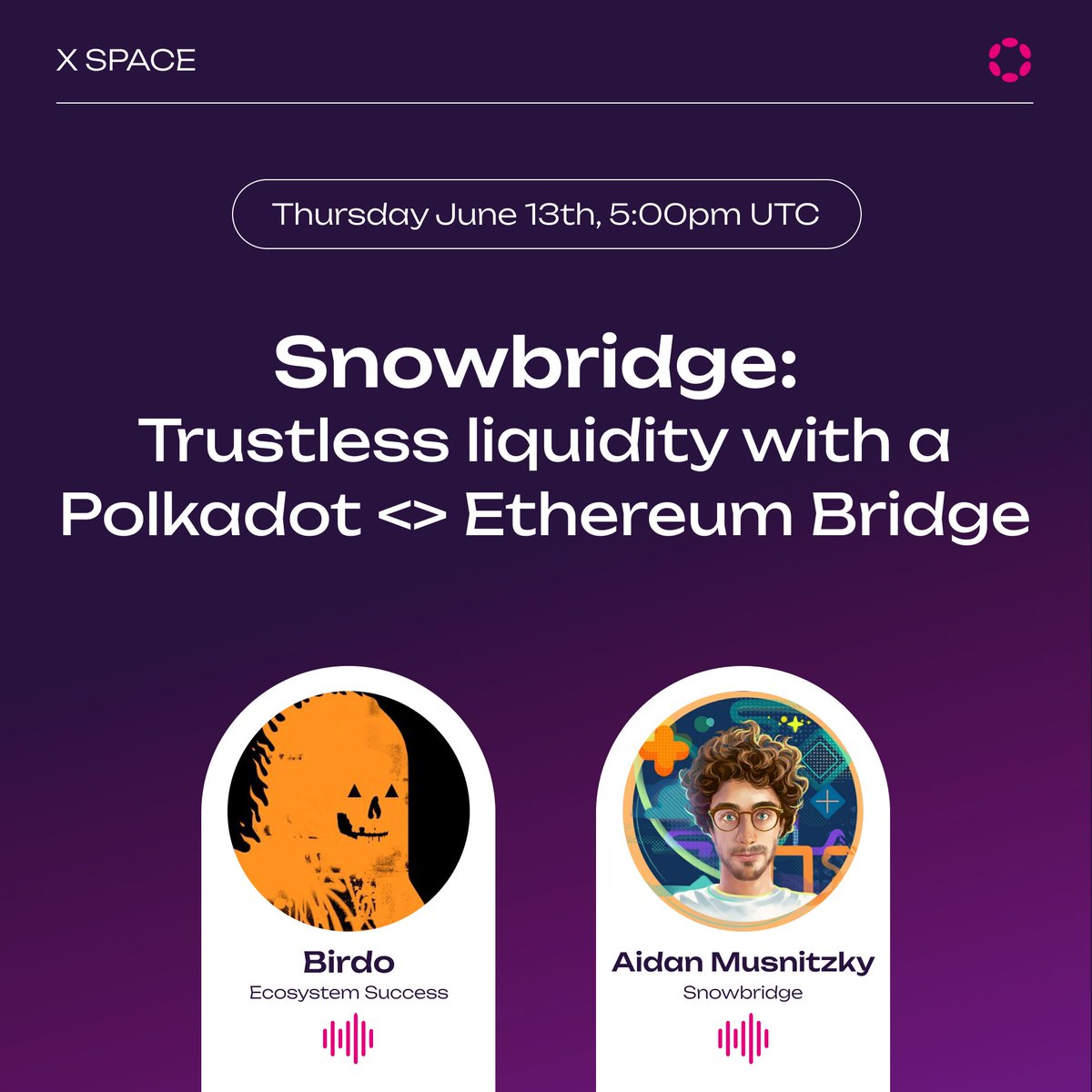
Everything you need to know about the upcoming Polkadot <> Ethereum bridge w/ @musnit & @itsbirdo_
Imagine a blockchain ecosystem where decentralization, scalability, and security are no longer limitations...
🔦✨ Spotlight on: Polkadot 2.0
Polkadot 2.0 is designed to enhance the scalability, flexibility, and efficiency of the Polkadot network. Learn how 👇
Polkadot 2.0? What's that?
Polkadot's decentralization transcends the protocol and extends to governance and operations, including marketing. The community coined the term Polkadot 2.0.
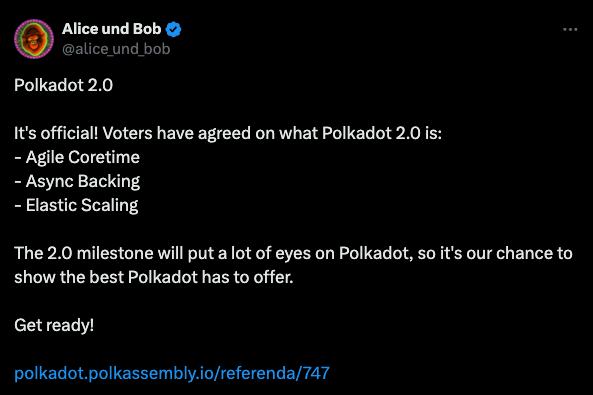
DOT holders recently voted to pass @alice_und_bob's Referenda #747, which defines Polkadot 2.0 as the next runtime upgrade, which includes Agile Coretime, Async Backing, and Elastic Scaling.
Each of these features plays a crucial role in advancing Polkadot’s mission to provide a robust platform for decentralized applications.
1. Asynchronous Backing 🔀
Boosts Polkadot’s parachain throughput and efficiency by allowing collators to build blocks on older Relay Chain blocks, creating pipelines of multiple pending blocks. This decoupling improves performance by up to 10x when combined with PoV (Proof-of-Validity) reclaim, and enables parachains to produce blocks every six seconds instead of 12, with 4x bigger blocks.
Benefits:
⏩ Higher Transaction Volumes: Supports high-throughput parachains like gaming platforms
⚙️ Optimized Consensus: Enhances efficiency without compromising security
🌐 Greater Flexibility: Parachains can handle more transactions and operations simultaneously
2. Elastic Scaling ⚙️
Allows parachains to scale dynamically based on their needs by using multiple cores per parachain, enabling higher throughput and faster transaction processing. With Agile Coretime integration, parachains can lease additional cores on short notice for varying durations. This approach offers cost-effective scaling, allowing applications to purchasing only the coretime they need.
Benefits:
🛠️ Flexible Resource Allocation: Projects can adjust their resource usage based on real-time needs
⚡ Improved Performance: Higher throughput for dapps, especially during peak usage times
✨ Reduces overall costs by avoiding the need to over-purchase coretime
3. Agile Coretime 🔧
Dynamic and flexible resource management by allocating coretime on a rental basis, eliminating the need for long-term slot auctions. Coretime can be purchased on-demand or in bulk up to 28 days in advance, and secondary markets allow for reselling unused coretime.
Benefits:
🔓 Lower entry barriers for new projects to build on Polkadot
🌱 Efficient Resource Use: Maximizes blockspace utilization, reducing waste
📈 Adaptable Scaling: Supports both early-stage projects and large-scale enterprises
Polkadot 2.0 - Why it matters 💡
👩💻 For Developers: Offers a more adaptable and cost-effective environment for building decentralized applications
🏢 For Enterprises: Provides the scalability needed to handle large volumes of transactions and users
🌐 For the Ecosystem: Encourages broader adoption and innovation within the Web3 space
Polkadot 2.0 ensures that the network can efficiently support a wide range of applications, from early-stage projects to high-demand platforms, paving the way for the next wave of Web3 adoption and innovation.
The Economics Module at the #Academy with @GehrleinJonas has been a huge success. A big shoutout to Jonas for continuously leading this module with such an innovative and engaging approach. The economics games are always a highlight - they really bring the concepts to life in a fun, interactive way.
Now, we're kicking off the second week at the Academy with the Blockchain module, led by @JoshyOrndorff .
The students are delving deeper into the world of blockchain technology. Let's keep the momentum going! 💪
1 Day until race day 🏁
Gearing up for the #Indy500 and excited to see @ConorDaly22 in the Polkadot car take to the track!
👉 Read on for a quick look at what the Indy500 is and how this sponsorship came to be…
The Indianapolis 500 car race is one of the most prestigious and iconic events in the world of motorsports. The first Indy500 was held in 1911. The race itself is a 500-mile (805 km) open-wheel racing event divided into 200 laps. The event is known for its high-speed racing, with drivers reaching speeds of over 230 miles per hour (370 km/h) 🤯
So how did Polkadot get involved?
It all started with a DM 📩 Thanks to Polkadot Community Member Chris Wade, OpenGov proposal #514 was submitted earlier this year to sponsor Conor Daly and his team at the Indianapolis 500, NASCAR Truck Series, and Nitro Rallycross.
The proposal received overwhelming support. With 95.8% approval, the community committed 290,000 DOT to cover the sponsorship fee and associated costs for Daly’s race team, securing the first-of-its-kind sports sponsorship ✅
Not only was this a big deal for the Polkadot Community, it also trailblazed a new avenue for pro sports sponsorships in a way that represents developers, investors, and communities of people instead of corporate interests.
⭐️ Check out this blog for more about the sponsorship + ways to get involved. https://t.co/cpgLFjQ7TP
Polkadot's first block was produced four years ago today, and since then...
🔹 820M+ DOT Staked
🔹 25M DOT granted by the treasury
🔹 790K+ XCM messages sent
🔹 904 OpenGov proposals
🔹 50 Polkadot Parachains
HAPPY GENESIS DAY!
Asynchronous Backing—an optimized approach for how parachain blocks are validated by the Relay Chain—has been enabled on Polkadot.
🔹 Blocks are produced 2x faster
🔹 3-5x more extrinsic per block
🔹 6-10x boost in available blockspace
🔹 Higher utilization of parachain blocks
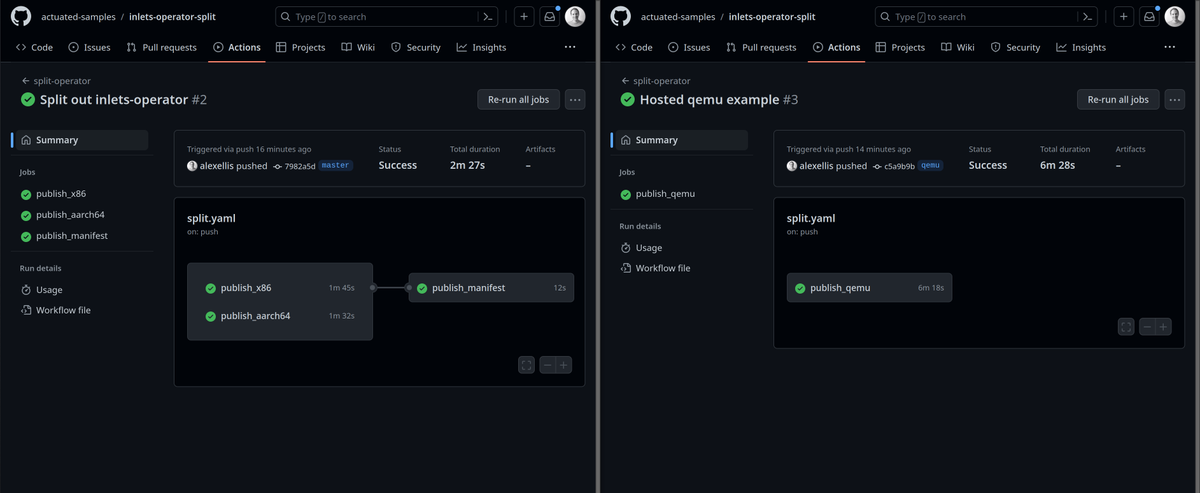
@andrenit @equinixmetal Here's the inlets-operator - the arm and x86 builds both ran in parallel and completed in just over 1m30
The QEMU build on a hosted runner took almost 6 and a half minutes
We took a quick build here, but what if yours takes 33 minutes or 6 hours? 👇
https://t.co/b5tQy5lQC0
The #Vasil upgrade is the most significant for #Cardano ever. And the entire technical community is working hard to deliver it.
Want to keep track of progress? There's a now a page for that.
We'll keep it updated regularly as we get ever closer👍
https://t.co/AlIPPzrhWW