This is what Ayurveda colleges teach young minds. They are reduced to doing this as a profession and the customers they treat become victims of (in)voluntary manslaughter. The Government wants the public to consider them clinical doctors. I really feel bad for these students. They have no future in healthcare, but only medical business (cheat patients on promises and claims) or as Instagram influencers who will make money by endorsing various products. I think this is a life not worth living because you are not helping build yourself, community or nation. Government is so cruel in promoting and teaching this. Initially I used to be annoyed and angry at them for barking (abusive trolling) at me, but now I empathize with them, because I see them as "make in India" rabid who missed the vaccine. We need to stop sending young adults to these courses which destroys their life.
A plane ✈️ is not a family hall, a train compartment, or a picnic ground. It is a sealed metal tube at 35,000 feet with strangers who did not buy a ticket to your gathering.
A group of passengers on an IndiGo flight unpacked a full homemade spread, theplas, dhoklas, samosas, plates passed across rows, people moving in the aisle, some doing nails , while other passengers sat through it.
They cleaned up afterwards. That does not make it fine. Cleaning up after you treat a cabin like a private dining room is the minimum, not a virtue.
Carrying your own snack is allowed. Turning the aisle into service, standing when you should be seated, filling the cabin with smell, noise and movement is not “culture.” It is disregard for shared space. Turbulence does not wait for your buffet to finish. Other people on that flight may be flying to a funeral, a hospital, a job interview, or simply trying to sleep after a hard week. They do not owe you an audience for your “desi swag.”
The defence that this is warmth, family, or Indianness is lazy. Warmth that only works by ignoring everyone else is not warmth. It is entitlement. The same pattern keeps showing up: loud games mid-air, standing and gossiping in the aisle, treating crew requests as optional. That is not a stereotype invented by outsiders. It is footage Indians keep posting of themselves.
Civic sense is not Western. It is the basic rule of any crowded public place: your comfort stops where someone else’s journey begins.
If the only way a group outing feels complete is by occupying the whole cabin, the problem is not the airline. It is the habit of treating other people’s silence as empty space to fill.
🚨 STOP SELECTING YOUR FRIENDS! Virender Sehwag Rips Apart Gambhir & Gill’s Biased Team Selection! 🤯🚨
- Virender Sehwag brutally exposed Gautam Gambhir and Shubman Gill for running a highly biased selection system, picking only their personal favorites instead of rewarding performance.
- Sehwag questioned why in-form experienced veterans like Bhuvneshwar Kumar and Mohammed Shami are continuously ignored despite destroying batting lineups in Domestic and IPL. Having one of them today would have completely changed the match.
- If you only want to pick players you personally like, why are others even playing domestic cricket? This is absolute clown management!
🚨 TOP WICKET TAKERS FOR INDIA IN ODI IN LAST 5 YESRS🚨
Kuldeep Yadav - 87 Wickets
Mohammed Siraj - 76 Wickets
Mohammad Shami - 66 Wickets
All three players not playing for India because of politician Gautam Gambhir.
- Gautam Gambhir successfully destroyed Indian cricket team.😭
In May 1796, Edward Jenner administered his vaccine against smallpox for the first time on James Phipps, the eight-year-old son of his gardener.
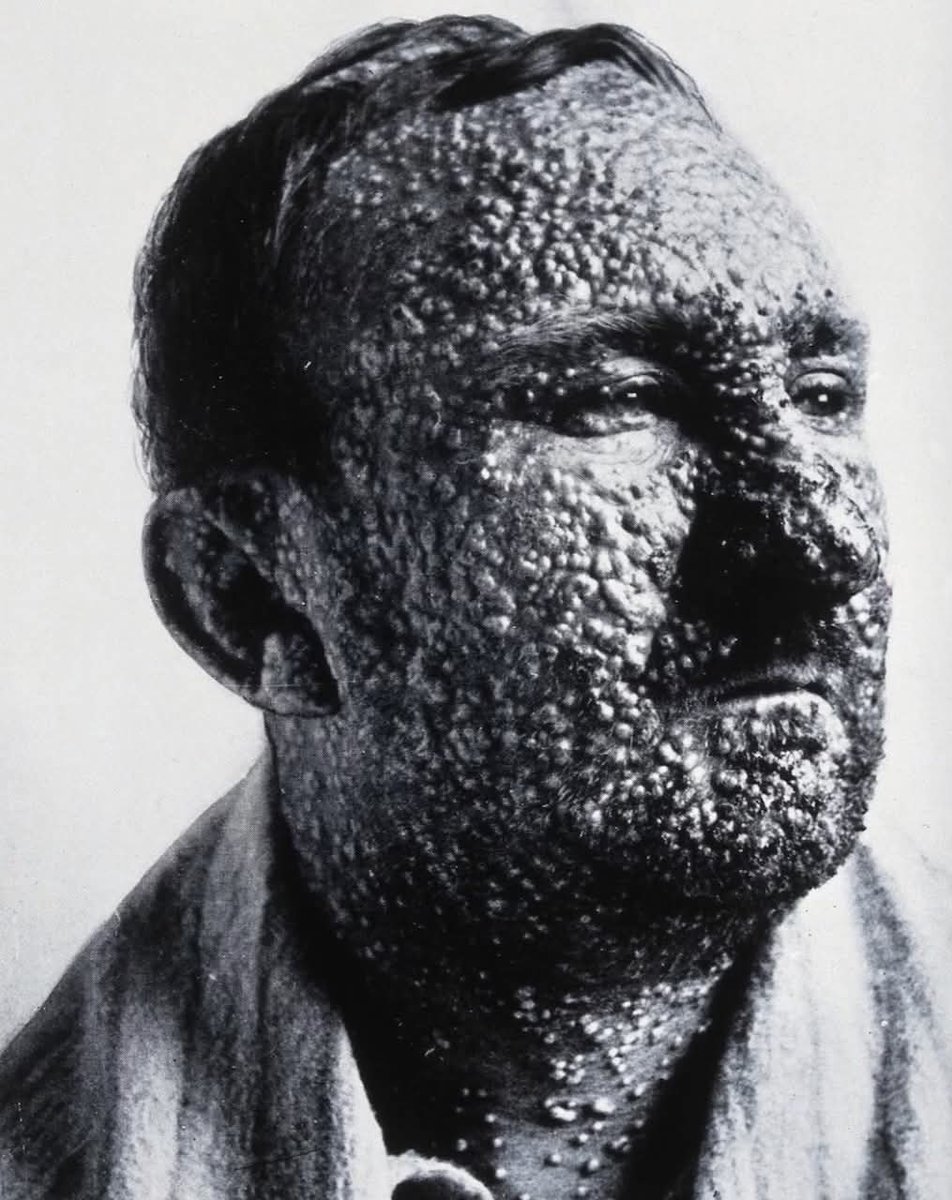
Smallpox is one of the deadliest and most contagious diseases known to man. The virus killed over half a billion people in the twentieth century alone—three times the number of deaths from all of the century’s wars combined. On 8 May 1980, the WHO announced the eradication of smallpox. This was an unprecedented event in history, signaling the first and only annihilation of a human disease.
The victory—which saved tens of millions of lives—fulfilled the lifelong dream the English physician, Edward Jenner. Jenner noticed that dairymaids who contracted cowpox never developed smallpox. Working from this, he developed a vaccine from cowpox. Indeed, the word “vaccination,” coined by Jenner in 1796, is derived from the Latin root vaccinus, meaning "of or from the cow.”
The prominent Scottish physician Sir Walter Farquhar advised Jenner that if he kept the nature of the vaccine a secret, it could yield as much as £100,000. But Jenner nurtured no such ambitions. In 1798, he had a hut built in his garden and christened it the TEMPLE OF VACCINIA. It not only became a beacon of hope for the poor who sought protection against smallpox, but it was also the site of the first public health service in Britain.
Nearly two centuries after Jenner’s first experiment, the disease that once scarred and terrorized the world had vanished. It remains one of the greatest triumphs in the history of medicine.
📷 : Illinois man in 1912 with smallpox.
#archaeohistories
A revolution is unfolding in Iran against Islamic rule. Within just a few days, the uprising has taken an extremely violent turn. According to reports from human rights organizations and independent sources, thousands of protesters have been killed and hundreds of thousands injured as state security forces moved to crush the movement. What stands out most starkly is this: the rulers are Muslims, the revolutionaries are Muslims, and those who have been killed and wounded are Muslims. Muslims are killing Muslims, and Muslims are rising up against Muslims.
This makes it clear that the conflict is not religious in nature. Rather, it is a struggle between human freedom and a system of religious law imposed by the state.
At the core of this crisis lies the enforcement of Sharia law, which forms the foundation of Iran’s political and judicial system. Sharia, originating in the seventh century, is increasingly incompatible with life in the twenty-first century. Modern societies are built on principles of individual freedom, equality before the law, freedom of expression, and universal human rights. When laws rooted in a vastly different historical and social context are imposed on a modern population, conflict becomes inevitable.
People in Iran—especially women and young generations—have experienced education, global connectivity, and awareness of human rights. They can no longer accept laws that restrict personal freedom, regulate private lives, and institutionalize inequality. Sharia-based governance systematically discriminates, particularly against women and non-Muslims, in matters of dress, testimony, inheritance, family law, and public behavior. It also legitimizes harsh punishments that are incompatible with contemporary concepts of justice and human dignity.
Although nearly two billion people around the world identify as Muslims, it must be acknowledged—just as with many other religions—that religion, when translated into state law, produces deep social inequality. In practice, such systems tend to be patriarchal, hostile to dissent, discriminatory toward minorities, and tolerant of violence in the name of divine authority. A religion born in the seventh century cannot serve as a viable legal framework for a modern, pluralistic society.
No population that has tasted freedom and benefited from modern civil rights will permanently accept the imposition of religious law. Protest may be delayed, suppressed, or bloodily crushed—but it will always return. The events unfolding in Iran prove this fundamental truth: religious law cannot coexist with modern civilization.
Iran must become a modern state governed by civil, non‑discriminatory laws. Equality before the law must replace religious hierarchy. The conflict between religion and modernity is permanent and structural. A civilized society cannot be built while preserving religious domination over law and politics. Therefore, just as Iran must remove religious rule from the state, all religion‑based states must ultimately separate religion from governance.
This is the first and indispensable condition for entering the path of civilization.
𝗜𝗻𝗱𝗶𝗮 Under Gambhir in (𝗧𝗲𝘀𝘁/𝗢𝗗𝗜𝘀)
- After 27yrs, Lost a Bilateral ODI Series vs SL
- For 1st time, Lost 30 Wickets in a 3 match ODI Series
- After 45yrs, India Remained Winless in a Calendar Year in ODIs
- After 36yrs, India Lost Test v NZ at Home
- After 19yrs, India Lost Test at Chinnaswamy
- For 1st time, Bowled out under 50 runs at home
- For 1st time, Lost Test Series v NZ at Home
- After 12yrs, Lost a Home Test Series
- After 12yrs, Lost back to back Home Tests
- After 12yrs, Lost Test match at Wankhede
- After 47yrs, Lost 3 Consecutive Home Tests
- For 1st time, Failed to Chase less than 200 Target at Home (Target 147, Wankhede)
- For 1st time, India were Whitewashed (3-0) in a Home Test Series
- After 13yrs, Lost Test match at Melbourne
- After 10yrs, Lost back to back Test Series
- After 10yrs, Lost Border Gavaskar Trophy
- After 12yrs, India Lost 3 matches against Australia in a Test Series
- Failed to qualify for WTC final for 1st time
- India Became 1st Team to Lose a Test match After Scoring 5 centuries (Leeds)
- India Failed to Defend 350+ runs only for 2nd time in 92 years of Test History (Leeds)
- Only for 2nd time, IND failed to Chase less than 200 target against England (Target 190, Lords)
- After 11yrs, Conceded 600+ runs (Manchester)
- After 17 Long Years, Lost ODI at Adelaide
- After 15yrs, Lost Test match v SA at Home
- After 8yrs, India Lost Intl match at Eden Gardens (after 9 straight wins)
- India Failed to Chase 124 Target
(Their lowest failed chase at home)
- After 25yrs, Lost Home Test Series v SA
- Registered their Biggest Defeat (408 runs)
- Conceded the highest target ever set by a visiting team in India (549)
- After 30yrs, India finished a home Test series without a single century from their batters*
- 1st time whitewashed at home Tests in back to back calendar years
- For 1st time, SA Chased 300+ Runs v IND
- SA Registered Highest Runchase v IND (359)
- NZ Registered Highest Runchase in IND (285)
- For 1st time, Lost Home ODI Series v NZ*
- For 1st time, Lost an ODI match at Indore*
- For 1st time, Lost an ODI Series Decider v NZ*
To be Continued.....
Tetanus is not a “dirty nail myth.”
It’s a medical nightmare we forgot — because vaccines worked.
Credit to Dr Richard Hirschson for highlighting this.
Tetanus is caused by Clostridium tetani, a bacterium found in soil and dust.
It does not spread person-to-person.
You don’t need a dramatic injury.
A small cut, splinter, or scrape is enough.
Once the toxin takes hold, it attacks the nervous system:
• muscles go into uncontrollable spasm
• jaw locks (“lockjaw”)
• back can arch violently (opisthotonos)
• breathing muscles can seize
• patients often remain fully conscious
There is no cure for tetanus.
Treatment is ICU care, ventilation, heavy sedation — and people still die.
As Dr Hirschson notes, he has lost patients to it.
So why don’t most of us see this anymore?
Vaccination.
The tetanus vaccine doesn’t stop injuries.
It stops the toxin from destroying your nervous system.
But protection fades over time — which is why boosters matter.
If you were vaccinated as a child but never boosted:
→ your immunity may be low
→ severe disease is still possible
That’s why adults need Tdap/Td boosters, and why doctors check tetanus status after wounds.
We’re now seeing tetanus and diphtheria re-emerge where vaccination rates fall.
Not because medicine failed —
but because memory did.
Vaccines didn’t erase these diseases.
They erased our memory of how brutal they are.
Get vaccinated. Stay boosted.
#VaccinesWork #Tetanus #Tdap #PublicHealth #Prevention
@anandmahindra Any street legal available in USA...I remember ur tweet from years ago how difficult to get bolero like vehicle here..just asking.,https://t.co/dcdBFlWSaq
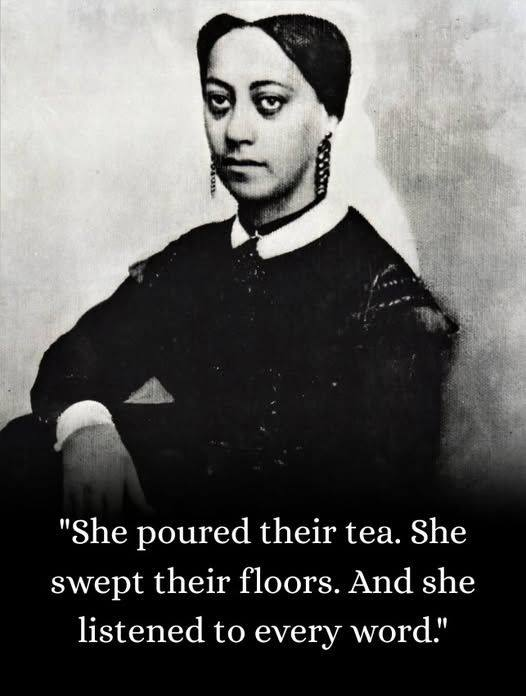
She poured their tea. She swept their floors. And she listened to every word.
San Francisco, 1850s. The Gold Rush had transformed a sleepy port into a city drunk on sudden wealth. In the grand mansions on Nob Hill, fortunes were made and lost over brandy and cigars.
And in the corner of those rooms, refilling glasses and clearing plates, was a Black woman named Mary Ellen Pleasant.
To the wealthy men talking business, she was furniture. Invisible. Forgettable.
They had no idea she was taking notes.
As they debated which banks were solid, which properties would boom, which ventures were worth risk—Pleasant absorbed everything. She understood something they didn't: information is power. And she'd been handed it for free.
She started small. A laundry here. A boarding house there. While other women scrubbed floors to survive, Pleasant was building an empire.
She bought restaurants and dairies. She acquired shares in the very banks those wealthy men discussed. When racial barriers blocked her path—and they constantly did—she partnered strategically with Thomas Bell, a white banker who held investments in her name while she made the decisions.
The invisible servant was becoming one of San Francisco's wealthiest entrepreneurs.
But Pleasant wasn't building wealth just to have it. She was building it to wield it.
While running her businesses by day, she was funding freedom by night. She supported the Underground Railroad, helping enslaved people escape to freedom. She financed civil rights cases. And when she faced discrimination herself—thrown off a San Francisco streetcar because of her race—she didn't just complain.
She sued.
In 1868, she won a landmark case that desegregated San Francisco's public transportation. Not through protests or petitions, but through the legal system—funded by the fortune she'd built from overheard conversations.
Her power made people deeply uncomfortable.
How dare this Black woman have money? Influence? The audacity to fight back?
The newspapers turned on her. They called her a "voodoo queen." They invented sinister stories. They tried to paint her power as dark magic rather than acknowledge her brilliant mind and business acumen.
Pleasant faced it all with steel in her spine.
"I'd rather be a corpse than a coward," she said.
And she meant it.
She never apologized for her wealth. Never backed down from her activism. Never pretended to be less than she was to make others comfortable.
Mary Ellen Pleasant understood something profound: real power isn't just having money. It's knowing when to be invisible and when to be impossible to ignore.
She spent years listening in silence, building her fortune in shadows. Then she used every dollar of it to fight for a world where people like her wouldn't have to hide.
You won't find her in most history textbooks. For generations, her story was deliberately erased—too complicated, too powerful, too inconvenient to the narratives people wanted to tell about who built America and who deserves credit.
But history has a way of surfacing truth.
Mary Ellen Pleasant turned silence into strategy, invisibility into influence, and overheard whispers into a fortune she used to change the world.
She swept their floors. She poured their tea.
And she built an empire they never saw coming.
In the 3rd match, Bashir took KL Rahul's wicket and got injured
In the 4th match, Stokes took KL Rahul's wicket and got injured
In the 5th match, Woakes took KL Rahul's wicket and got injured
- What's your take on this 🤔
#INDvsENG